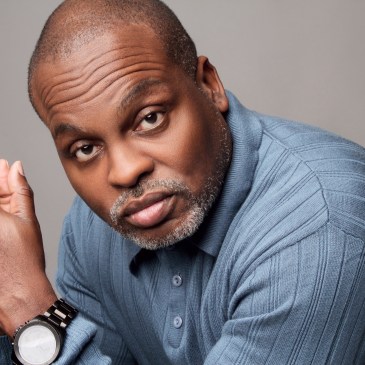
Scathing Review/Promotion: America in Black and White

In a world where so many voices get lost in the noise, America in Black and White emerges as a beacon of clarity and understanding. Hosted by the dynamic Charles King, this podcast is not just another entry in the crowded audio landscape; it’s a masterclass in dialogue, connection, and community building that you simply cannot afford to miss.

Meet the Maestro: Charles King

Charles King is not your average host. With an impeccable style of interviewing, he has a rare gift for drawing out the essence of his guests. He approaches each conversation as a unique opportunity to explore the complexities of race, culture, and community in America. His deep understanding of the issues at hand, combined with his engaging approach, leaves both guests and listeners eager for more. It’s no wonder that both audiences and guest speakers keep returning for the rich discussions and insights that only Charles can provide.

What’s on the Table?

The topics tackled on America in Black and White are nothing short of essential. While the show dives deep into current events and the voices that often go unheard, Charles also highlights the narratives around history, identity, and societal issues that are deeply relevant to our current landscape. From thought-provoking interviews with influential leaders to candid discussions about race relations, community challenges, and personal triumphs, the show is a relentless pursuit of truth and connection. Charles is not just looking to create dialogue; he’s on a mission to build communities. He understands that the only way to move forward is through inclusive conversations that genuinely bring people together, bridging the gaps that society has too long let divide us.

The Platform and the Audience

America in Black and White is built for anyone who seeks to expand their understanding of the world around them. Whether you’re looking for thought leadership, a fresh perspective on contemporary issues, or a safe space to engage in challenging conversations, this podcast is your answer. Its target audience is broad yet defined—anyone who yearns for a deeper connection with their community and a more profound understanding of the cultural dynamics at play in our society.

Join the Journey

Finding the show is simple—head over to your favorite podcast platform and delve into the episodes waiting for you. Follow America in Black and White on social media for regular updates and insights. Your support is crucial. By subscribing, following, and sharing this show, you’re not just uplifting Charles; you’re contributing to a movement of awareness, understanding, and community-building that is so desperately needed today.

Be a Part of Something Bigger

Charles King truly wants to include you in this journey. He believes that every listener is a vital part of this mission, and your engagement can help amplify these critical conversations. By participating in the community that America in Black and White fosters, you become an agent for change—someone who can help dismantle barriers and build bridges. So why wait? Listen to American in Black and White today, and become part of a conversation that matters. Your voice, your support, and your engagement can make a difference, and together, we can shape a brighter future. Don’t just sit on the sidelines; jump into the dialogue, challenge your perspectives, and help uplift Charles and the community he strives to build. This is more than a podcast; it’s a movement, and you are invited to be a part of it.

You can connect and follow on Social Media:

americainblackandwhitepodcast@gmail.com

Facebook https://www.facebook.com/profile.php?id=100069304193527

IG https://www.instagram.com/americainblackandwhite/

X https://x.com/CharlesZackary4

BSKY https://bsky.app/profile/amibw.bsky.social

Writing Update: Exciting Developments Ahead!

Hello, dear readers and fans! I hope this message finds you well and excited! As we journey together through the world of storytelling, I wanted to take a moment to update you on the progress of my upcoming projects. There’s a lot happening behind the scenes, and I can’t wait to share it with you!

A Deep Dive into the Series

First off, I’m thrilled to announce that the journey of my 6-part book series has officially begun! The first installment is already out, and I’m so grateful for the positive feedback you’ve shared. Your enthusiasm fuels my passion to keep going! Currently, I have Books 2 and 3 completed and ready to go. However, I’ve decided to hold off on sending them to the publishing company for now. This is due to some logistical challenges and a few disturbances with my current publishing partner. I want to ensure that we have the right approach before moving forward. I promise that this series will keep you on the edge of your seat, drawing you deeper into the world I’ve created with every turn of the page!

Future Projects on the Horizon

Beyond the ongoing series, I have a treasure trove of ideas! There are 10 other book projects lined up on my shelf, each crafted with care and creativity, waiting to be perfected. My goal is to create stories that resonate with all segments of our great nation. And for those of you who love a twist of imagination, I am excited to dip my toes into Science Fiction! The technological era we’re living in provides such a rich canvas for creativity, and I can’t wait to explore it. Additionally, I’m working on my autobiography, which will be released in two parts. Sharing my journey with you has been a dream of mine, and I hope to provide insights into both the challenges and triumphs that have shaped who I am today.

I am also in the process of starting up my Book Club. For those of you that love reading and get excited about what we read, I want you especially to join the club. For all of you that are ready to connect and ready to read, lets do it. We will decide together what we will read and go forward. Please connect with me by emailing me at ckstoriesfromtheheart@gmail.com.

The Screenwriting Adventure

In exciting news, I’m also venturing into the realm of screenwriting! I’m currently developing scripts for both movies and television. One of these scripts is based on my first book series, and I can assure you it’s bursting with excitement and potential. The adaptation process is thrilling, and I can’t wait for you to see how it all comes to life on screen!

Stay Updated!

As you can see, there’s a lot in the pipeline, and I’m committed to making each project the best it can be. I encourage you to follow along for updates as they happen. Your support means everything to me, and it keeps my creativity alive. I can promise you that the finished products will be just what the doctor ordered—entertaining, engaging, and unparalleled in the worlds they create. Thank you for your unwavering support. I can’t wait to continue this journey with you, and I look forward to sharing more snippets of my work as we move forward. Let’s stay connected! Warmest regards, Charles Zackary King

My contact and Social:

ckstoriesfromtheheart@gmail.com

Facebook https://www.facebook.com/authorczking/

IG https://www.instagram.com/charleszackaryking/

LinkedIn https://www.linkedin.com/in/c-z-king-889218209/

X https://x.com/CZKing14

The State of Sports in Pittsburgh: A City at a Crossroads

Pittsburgh has long been known as a sports city, with a rich history in professional athletics and a passionate fan base that lives and breathes for the Steelers, Penguins, and Pirates. However, in recent years, the once-proud franchises have all experienced a notable decline, leaving fans concerned about the future. As the city grapples with its identity as a sports powerhouse, it’s hard not to notice the mediocrity that seems to have taken hold.

The Steelers: From Dominance to Despondency

For decades, the Pittsburgh Steelers were synonymous with success in the NFL. Under the leadership of legendary coaches Chuck Noll and Bill Cowher, the team set a standard for excellence, winning a combined six Super Bowl titles. But after winning their last championship in 2006, the team finds itself at a pivotal juncture. The glory days appear to be behind them, and the once-feared franchise has now become a team that other squads approach with optimism rather than trepidation. Head Coach Mike Tomlin has played an integral role in this transition, leading the team for over 19 years, making him the third-longest tenured coach in the franchise’s history. However, Tomlin’s tenure begs the question: Has the time come for a change at the helm? Fan frustrations have mounted, particularly regarding the Steelers’ inability to secure a playoff win since 2011. As other franchises in smaller markets—like the Green Bay Packers and Kansas City Chiefs—have made strategic moves that kept them competitive, the Steelers seem to have fallen into a rut.

Quarterback Conundrum

One area where ineffectiveness has been most glaring is at the quarterback position. Tomlin’s decisions regarding player development have left much to be desired. The case of Justin Fields is particularly telling: after leading the team to a promising start at 4-2, Tomlin’s reluctance to fully commit to Fields ultimately cost the franchise a chance at development and success. Similarly, the choice to trade away George Pickens—one of the league’s promising young wide receivers—only adds to the discontent. With the team’s reliance on older quarterbacks like Aaron Rodgers, who has communicated hesitancy in joining the Steelers, the franchise’s future at the position appears bleak.

The Penguins: A Rollercoaster of Hope and Disappointment

The Pittsburgh Penguins have seen more recent success, winning the Stanley Cup in 2016 and 2017, but their competitive edge has dulled in the last few seasons. With the team failing to make the playoffs in the past three years and recently parting ways with their coach, the organization is now in a state of flux. Once known for their electric offense and playoff prowess, the Penguins struggle to stay relevant in a increasingly competitive league.

The Pirates: A Longing for Passionate Play

The Pirates have a storied history that boasts five World Series championships, yet it has been a long time since the city felt the thrill of postseason baseball. The team last hoisted the championship trophy in 1979. While they occasionally show flashes of competitiveness, these moments often end in disappointment. The recent departure of their manager indicates that the Pirates are searching for an identity amid relentless mediocrity.

The Changing Landscape of Pittsburgh Sports

As fans of the Steelers, Penguins, and Pirates look around at more successful franchises across the league, it’s impossible not to feel a twinge of frustration. Teams in smaller markets, like the Cincinnati Bengals and Nashville Predators, have managed to thrive and remain competitive, proving that smart decision-making, teamwork, and a dedicated coaching staff can lead to success regardless of a team’s market size. The landscape of Pittsburgh sports is crying out for change: whether it’s a fresh coaching direction for the Steelers or new leadership for the Pirates, the city can’t afford to sit idly by while its teams sink deeper into mediocrity. The time has come for the city of bridges to build some pathways to success once again, embracing the winning legacy while adapting to remain relevant in the 21st century.

Final Thoughts: A Call to Action

As Pittsburgh embraces therapeutic change, it’s essential for fans and stakeholders alike to advocate for strategic decisions that prioritize long-term success. The Steelers may stand at a crossroads with Mike Tomlin, while the Penguins and Pirates must also find their footing. Pittsburgh’s proud sports history deserves a bright future where its teams can once again inspire fear in their opponents and pride in their fans. As the city watches how these organizations navigate their respective dilemmas, there lies an open question: Will Pittsburgh once again become the fierce sports land it used to be, or will mediocrity continue to reign? The collective spirit of Pittsburgh sports fans speaks loud and clear: they crave success, and it’s time for their teams to deliver.

The Opening of Cop City: Implications for Urban Communities in Atlanta

On July 1, 2023, the long-debated “Cop City,” officially known as the Public Safety Training Center, opened its doors in Atlanta, igniting intense discussions about policing, community safety, and the future of urban areas across the city. While proponents tout it as a necessary step toward enhanced police training and accountability, many marginalized communities view its inception as a harbinger of military-style enforcement tactics that threaten to deepen existing inequalities.

A Step Backward Amidst Protests

The journey to the opening of Cop City was fraught with public outcry and dissent. Activists rallied against the development, arguing that resources should be allocated to community services rather than militarized policing. Protesters highlighted how increased funding for law enforcement detracts from essential services like education, healthcare, and housing. Despite these fervent protests, which included direct actions and community organizing against the facility, the city proceeded with its plans, raising concerns about the disregard for community voices and lived experiences. Tragically, the protests surrounding Cop City became synonymous with violence, culminating in the fatal shooting of activist Manuel Paez Teran by police during a raid in January 2023. The incident sparked outrage, highlighting the severe power imbalances in how law enforcement interacts with communities of color. Critics argue that this militarized response only exemplifies the systemic disregard for black and brown lives, raising questions about the ethical implications of maintaining a heavily armed police force equipped with the latest training techniques while vulnerable communities continue to face socioeconomic challenges.

The Shadow of Militarization

The opening of Cop City signals a shift in how policing will be carried out in urban Atlanta. With specialized training that emphasizes a militaristic approach, residents fear they will bear the brunt of aggressive tactics that come with purportedly enhanced officer preparedness. The facility is designed to teach law enforcement advanced techniques, including tactical maneuvers and crowd control, raising alarm bells about potential overreach and brutality in handling situations in marginalized neighborhoods. Persistent fear looms over communities already grappling with high levels of police presence and aggression. With Cop City operational, there is a growing apprehension that its implications will exacerbate racial profiling, wrongful arrests, and instances of violence – continuing the cycle of distrust between law enforcement and the very communities they are meant to serve. Residents of Atlanta’s marginalized communities are left questioning the consequences of militarized policing when they were already experiencing systemic oppression.

The Broader Impact on Urban Areas

The repercussions of Cop City extend beyond Atlanta into urban areas nationwide. The facility serves as a template for cities considering similar initiatives, regardless of the detrimental effects experienced in communities subjected to over-policing. In recent years, the cries for police reform and defunding have taken center stage, calling for a reevaluation of public safety priorities. The emergence of Cop City represents a contradictory narrative; rather than redirecting funds into community development and social services, the city has chosen to solidify its commitment to a more militarized approach to policing. With cities across America grappling with issues of systemic racism and inequality, the opening of Cop City could inspire a nationwide trend where cities move away from community-centric solutions. Urban areas might find themselves at a crossroads, where priorities shift toward protecting property and maintaining order over addressing the root causes of crime, such as poverty and lack of access to education.

A Call for Accountability and Change

As the community navigates the reality of a new training facility designed to bolster policing practices, it is imperative to continue advocating for accountability and reform. Residents must pressure local officials to ensure that Cop City does not become a tool for further marginalization but rather a catalyst for meaningful dialogue about safety, equity, and justice. The ongoing conversation surrounding public safety requires a comprehensive approach that prioritizes community input, resources for grassroots organizations, and effective solutions that promise real change. As Atlanta moves forward, it stands as a crucial moment for the city’s leadership to reevaluate its stance on policing and consider innovative approaches that empower, rather than intimidate, its diverse communities. In conclusion, while Cop City signifies a new era of law enforcement training, the implications of this shift must be critically examined. Elected officials must prioritize the voices and experiences of marginalized communities while holding law enforcement accountable to prevent a dystopian future where militarization rules over community welfare—before it’s too late.