Real Stories. Real Breakthroughs. Now Seeking Guests for “America in Black and White”

At America in Black and White, we’re not chasing headlines—we’re chasing heart. If you’ve endured adversity, risen above it, and now stand in your truth as a builder, a healer, or a voice for your community, we want to hear from you.

We’re searching for individuals who are making real impact—uplifting others, contributing to community strength, and walking the road less traveled toward breakthrough. This podcast is your space to share that journey.

Here’s what we’re looking for:

  • You have a webcam-enabled computer.
  • You’re comfortable speaking live and sharing your story with purpose.
  • You’ll actively promote your episode using our promo packets and tag Charles King in all social media posts.
  • Attire: Men—collared shirts. Women—dress comfortably (just no tank tops or shorts, please).
  • You’re prepared for a thorough vetting process. We take this seriously—because your story deserves that kind of respect.

If this speaks to you or someone you know, reach out. Email:

americainblackandwhitepodcast@gmail.com or czkenterprise7@gmail.com Subject Line: Podcast Guest Include: Full Name, Address, Phone Number, and a short description of your work and community contributions.

We’re not for show—we’re for the soul.

Follow and subscribe to our podcast family:

  • @americainblackandwhite8299
  • @ChangingTrendsandTimes-zx8te
  • @CKStoriesFromTheHeart

And don’t forget to stay connected through our blog: changingtrendsandtimesblog.wordpress.com

“When the Badge Is a Mask: White Violence, Political Terror, and the Cost of Silence”

On a quiet June morning in Minnesota, the illusion of safety shattered.

State Representative Melissa Hortman and her husband, Mark, were assassinated in their Brooklyn Park home. Just hours earlier, State Senator John Hoffman and his wife, Yvette, were shot multiple times in their Champlin residence. Both couples were targeted by a man who wore the uniform of trust—a police vest, a badge, a Taser—and carried the intent of terror.

The gunman, Vance Luther Boelter, 57, was no stranger to public service. A former appointee to the Governor’s Workforce Development Council and a security contractor, Boelter used his knowledge of law enforcement to orchestrate what officials now call a “politically motivated assassination”2.

He stalked his victims like prey. He drove a black SUV outfitted with police lights. He wore a hyper-realistic mask. He knocked on doors claiming to be an officer responding to a shooting. And when those doors opened, he opened fire.

Melissa and Mark Hortman died in their home. The Hoffmans survived after emergency surgery. Their daughter’s quick call to 911 may have saved countless lives.

Authorities found a manifesto in Boelter’s vehicle—a hit list with nearly 70 names, including abortion providers, lawmakers, and activists across multiple states. This wasn’t random. It was ideological. It was white violence, cloaked in authority, fueled by grievance, and executed with chilling precision.

Why Did It Take So Long?

Despite early warnings and a shootout with police, Boelter evaded capture for nearly two days. He fled on foot, ditching his weapon, body armor, and mask behind the Hortman home. The manhunt—described as the largest in Minnesota history—involved local police, the FBI, and federal marshals. He was eventually found near his rural property in Green Isle, Minnesota, after a neighbor spotted him on a trail camera2.

The delay in apprehension raises painful questions: How does a man with a known political agenda, military-style gear, and a fake police cruiser slip through the cracks? What systems failed to flag his radicalization? And why is it so hard to name this for what it is—domestic white terrorism?

A Pattern, Not an Anomaly

This is not an isolated incident. Over the past five years, white supremacist violence has surged. From the 2022 Buffalo supermarket massacre to the 2023 Jacksonville shooting targeting Black shoppers, the pattern is clear: white grievance, often masked as patriotism, is metastasizing into political violence.

According to the Pew Research Center, public support for racial justice movements has declined since the 2020 murder of George Floyd—ironically, also in Minnesota. DEI programs have been rolled back. Extremist rhetoric has gone mainstream. And many Americans now express doubt that Black people will ever achieve equal rights.

This erosion of empathy is not accidental. It is the soil in which white violence grows.

The Cost to Community

Minnesota is grieving. Flowers and flags now mark the Capitol steps. Children are asking why someone dressed like a protector became a predator. And lawmakers are wondering if their names are on the next list.

But this isn’t just about Minnesota. It’s about a nation that refuses to confront the violence it breeds. A nation where white men with guns are too often seen as “troubled” instead of “terrorists.” A nation where the badge can be a mask—and the silence, complicit.

Call to Action: Name It. Confront It. Dismantle It.

  • Name it: This was white domestic terrorism. Say it.
  • Confront it: Demand accountability from law enforcement and elected officials.
  • Dismantle it: Support policies that track and prosecute hate crimes with the same urgency as foreign threats.

We cannot heal what we refuse to name. And we cannot protect our future if we keep rewriting our past.

Melissa and Mark deserved more. The Hoffmans deserve justice. And our communities deserve the truth.


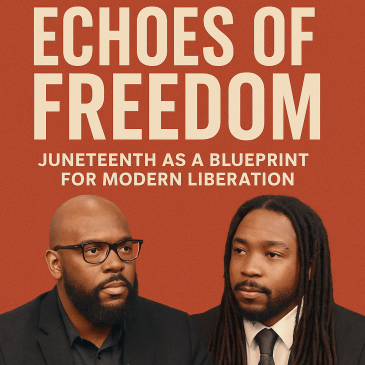
“Echoes of Freedom: Juneteenth as a Blueprint for Modern Liberation”


Juneteenth is more than a historical marker—it is a mirror and a mandate. A mirror to reflect how far we’ve come, and a mandate to carry the work forward. Through Season 3, Episodes 59 and 60 of America in Black and White, we hear two voices—Anthony Potter Jr. and Councilman Maurice Hairston—who embody this truth with urgency and grace.

Part 1: Financial Literacy as Freedom – A Conversation with Anthony Potter Jr.

Anthony Potter Jr. paints a vivid picture of economic resilience, rooted in personal struggle and generational responsibility. In his view, Juneteenth is not only the end of slavery, but the beginning of economic emancipation. He reframes financial literacy as a birthright—something to be passed down alongside our stories, our culture, and our survival.

“Every budgeted dollar is an act of protest. Every savings account, a brick in the foundation of generational wealth,” Anthony says. His message is both practical and revolutionary. For communities historically excluded from the wealth-building conversation, he insists we must not just participate—we must lead.

Charles Zackary King skillfully draws out the connection between financial autonomy and historical justice, reinforcing that true emancipation cannot be declared without economic equity.

Part 2: Bridging the Gap with Revolutionary Love – A Conversation with Councilman Maurice Hairston

Councilman Hairston’s words are laced with heart and heritage. Coming from Glenarden, Maryland, his journey as both policymaker and local artist bridges generational and ideological divides. He speaks of lost family values, disconnection among youth, and the urgency to restore identity within the Black community.

Hairston doesn’t just talk about change—he lives it. As a rapper, he speaks their language. As a legislator, he enacts their hopes. “You can’t lead a community you haven’t served,” he says. His concept of revolutionary love urges us to radically invest in each other—with truth, presence, and accountability.

Under Charles’s guidance, this conversation moves beyond politics. It becomes a soul-deep discussion about healing fractured communities and reclaiming cultural agency.


The Pulse of Juneteenth: Why These Stories Matter

These aren’t just interviews. They’re blueprints. They show us how Juneteenth isn’t confined to 1865—it’s alive today, in our decisions, our advocacy, and our vision for tomorrow.

Potter teaches us that financial literacy is the new civil rights frontier. Hairston reminds us that unity is the cornerstone of that frontier. And through these dialogues, America in Black and White becomes a platform not only for remembrance but for realignment.


Call to Action: Your Freedom Requires Fuel

  • Teach financial literacy. Start in your home, your church, your schools.
  • Bridge the gaps. Listen to your elders. Mentor the youth. Lead with love.
  • Support Black leadership. Vote. Donate. Share stories that uplift truth.

Let Juneteenth be more than reflection. Let it be a resolution.


“What America Refuses to Owe: The Price of Black Suffering”


“What America Refuses to Owe: The Price of Black Suffering”

In the heart of every empire lies a contradiction. In America, it is this: We teach about justice, but we rarely practice it for the people who built the foundation of this country—enslaved Africans and their descendants.

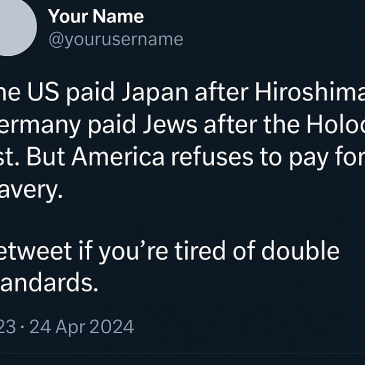
America has written checks for tragedies abroad. But for slavery—a horror that happened here, in the soil, sweat, and blood of the South—there is no apology, no compensation, no closure.

When Injustice Was International, America Opened Its Wallet

Let’s look at the historical receipts.

  • After the U.S. dropped the atomic bomb on Hiroshima, Japan received billions in aid, development grants, and favorable trade agreements. A nation devastated by American military might was helped back onto its feet.
  • Following the Holocaust, Germany began reparations in 1952. To date, it has paid over $90 billion to Holocaust survivors and the Israeli state. An atrocity committed in Europe.
  • Even Japanese Americans, who were unjustly interned during WWII on U.S. soil, received a formal apology and $20,000 per survivor in 1988.

Yet descendants of enslaved Africans—whose entire existence was commodified and whose labor built the wealth of the United States—have received nothing.

Why?

The American Lie: That Slavery Is Over, And Therefore Forgotten

Slavery was not merely a period—it was a system of trauma. For 246 years, Black people were whipped, raped, auctioned, beaten, and banned from reading and writing. Their children were sold. Their backs bore the burden of a nation’s ascent.

But the injustice didn’t stop in 1865. It mutated.
From Jim Crow laws to redlining, from COINTELPRO to mass incarceration, America has continued to extract from Black communities while denying restitution.

Meanwhile, schoolchildren are more likely to learn the names of European dictators than the enslaved people who shaped their country’s highways, railroads, and economy. To add insult to injury, in some states, teachers are banned from even discussing this legacy with nuance.

We are forced to learn about atrocities that happened elsewhere, while those that happened here are buried beneath patriotic myth.

How Much Is Owed? The Rough Numbers Tell a Billion-Dollar Truth

Economists and scholars, including Dr. William Darity, estimate that the U.S. government owes Black Americans anywhere from $13 trillion to $17 trillion when adjusting for stolen labor, compounded over centuries, and exclusion from land ownership and wealth accumulation.

Compare that to the $90 billion Germany has paid for the Holocaust—an atrocity the U.S. had no direct part in causing.

Let’s be clear: reparations for one people should never preclude reparations for another. But the refusal to acknowledge Black suffering while uplifting other global tragedies reveals a truth too many are afraid to face:

America is more comfortable condemning crimes it didn’t commit than atoning for the ones it did.

What Can Be Done? Here’s Where the Cry Gets Louder

If we want justice, we must demand it. Silence has never saved us. Politeness never bought us freedom. We need more than conversations—we need disruption.

Take Action:

  • Email your representatives: Demand support for reparations legislation like H.R. 40.
  • Speak up locally: Press school boards and libraries to teach the full truth of slavery and Reconstruction.
  • Vote with purpose: Elect candidates who aren’t afraid to talk about systemic repair.
  • Support Black-led orgs fighting for economic equity and educational justice.
  • Use your platform—podcast, IG, YouTube, or block parties—to spread truth, not silence.

🖤 America doesn’t have an amnesia problem—it has an empathy problem.
And until this country sees Black pain as worthy of repair, the debt remains.

Let the cry get louder.


The Forgotten Founders: Reclaiming the Legacy of the Etruscans

Long before the grandeur of Rome dazzled the world, there thrived a mysterious and affluent civilization on the Italian peninsula: the Etruscans. Flourishing between the 8th and 3rd centuries BCE, the Etruscans laid the bedrock for much of what the Roman Empire would later claim as its own. Yet history has quietly erased them—leaving only fragments of their brilliance buried beneath the empire that swallowed them.

A People of Sophistication and Spirit

The Etruscans were more than just precursors to Rome—they were innovators in urban planning, religion, art, and governance. Their cities, nestled in what is now Tuscany and parts of Umbria and Lazio, featured advanced road systems, drainage infrastructure, and public squares. They introduced the arch into architecture and influenced many religious rituals the Romans adopted, from augury (interpreting the will of the gods) to gladiatorial games, which began as funerary rites.

Women in Etruscan society held unusually high status for the ancient world—participating in banquets, owning property, and maintaining independent identity. This, of course, scandalized the patriarchal Greeks and Romans, who later rewrote Etruscan narratives through their own biased lenses.

Wealth and the Wounds of Conquest

Etruscan cities prospered through metalwork, trade, and cultural ingenuity. Their tombs were filled with gold, jewelry, and finely crafted pottery, testifying to their immense wealth. But with prosperity came peril. As Rome grew hungry for expansion, it absorbed and suppressed the Etruscans over a few centuries—confiscating lands, pillaging tombs, and eventually erasing their language and identity.

The final blow wasn’t just military—it was historiographical. Much of what we know about the Etruscans comes from the victors who subdued them. And like many erased peoples across time, their story was rewritten, then forgotten.

Legacy in the Shadows

Despite the attempted erasure, traces of Etruscan influence remain etched into Italy’s DNA. The Romans built their republic—its laws, its rituals, its military customs—upon Etruscan blueprints. The toga? Etruscan. The Roman alphabet? Adapted from Etruscan script, which itself was adapted from Greek. Even the cultural ideal of dignitas, a Roman virtue of honor and worth, echoes the Etruscan spirit.

Their disappearance is a stark reminder that wealth and brilliance alone don’t preserve a people’s memory—only storytelling does.

Why We Must Remember

In many ways, the Etruscans mirror others throughout history who were culturally rich yet politically overrun—societies like those of West Africa before colonization, or Black Wall Street before the 1921 Tulsa massacre. Their fall reveals the fragility of legacy without vigilance.

Let us remember the Etruscans not as a footnote to Rome, but as visionaries in their own right—a people of ceremony, city-building, and sacred purpose, whose silence today speaks volumes about the way history is written.

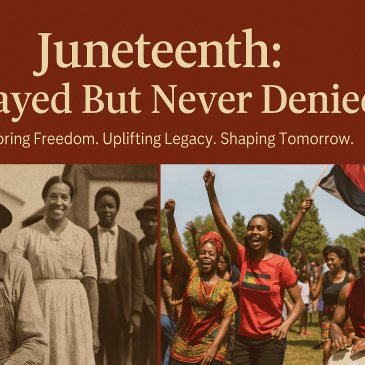
Juneteenth: The Freedom That Echoed Late, but Never Lost Power

On June 19, 1865, Union troops arrived in Galveston, Texas, delivering a message that should have been old news: enslaved Black Americans were free. That message—long delayed—was not simply a declaration. It was liberation, finally delivered by force, not goodwill. And so, Juneteenth was born—not from celebration, but from necessity.

More than two years after Lincoln signed the Emancipation Proclamation, justice still hadn’t reached the last corners of this country. But when it did, it came with the force of righteous reckoning. Since then, Juneteenth has become a symbol not just of emancipation, but of resilience, delayed justice, and the unshakable spirit of a people who dared to dream of freedom in the shadow of slavery.

Today, we’re still reckoning. We’re still pushing against systems that delay freedom in more subtle forms—economic injustice, generational trauma, educational disparity. But just as our ancestors gathered to sing, feast, and speak names out loud that history tried to forget, we gather today not just to remember—but to reclaim.

So what does Juneteenth mean now, in this era of shifting cultural narratives and historical erasure? It means we double down on truth-telling. We turn platforms into pulpits. We ensure our stories aren’t just told—they’re owned.

At Changing Trends and Times, we aren’t simply observing a holiday—we’re honoring a movement. And through America in Black and White, we continue to highlight the voices, victories, and visions shaping our shared legacy.

This is not just history. These are the instructions. This is the blueprint. This is us.

This Juneteenth, the work continues. Through Changing Trends and Times and America in Black and White, we’re committed to remembering boldly, speaking truthfully, and uplifting relentlessly.

Subscribe to stay engaged. Listen to the stories that shape our struggle and celebrate our strength.

Share this post. Share the history. Share the torch.

Because freedom delayed… is a story still being written.

#Juneteenth #ChangingTrendsAndTimes #LegacyOfLiberation #AmericaInBlackAndWhite #TruthTellers #BlackHistory365

[🔗 Link to Podcast Episode]

June 19, 2025, @6PM EST PT1 Just click to join the show live

June 20, 2025, @6PM EST PT2 Just click to join the show live

[🔗 Link to Subscribe]

Please follow/subscribe/get all notifications on our YouTube Channels:

Each Channel broadcasts the show live

@americainblackandwhite8299

@ChangingTrendsandTimes-zx8te

@CKStoriesFromTheHeart

The Enduring Truth: Black Lives Matter and the Resilience of Black Culture

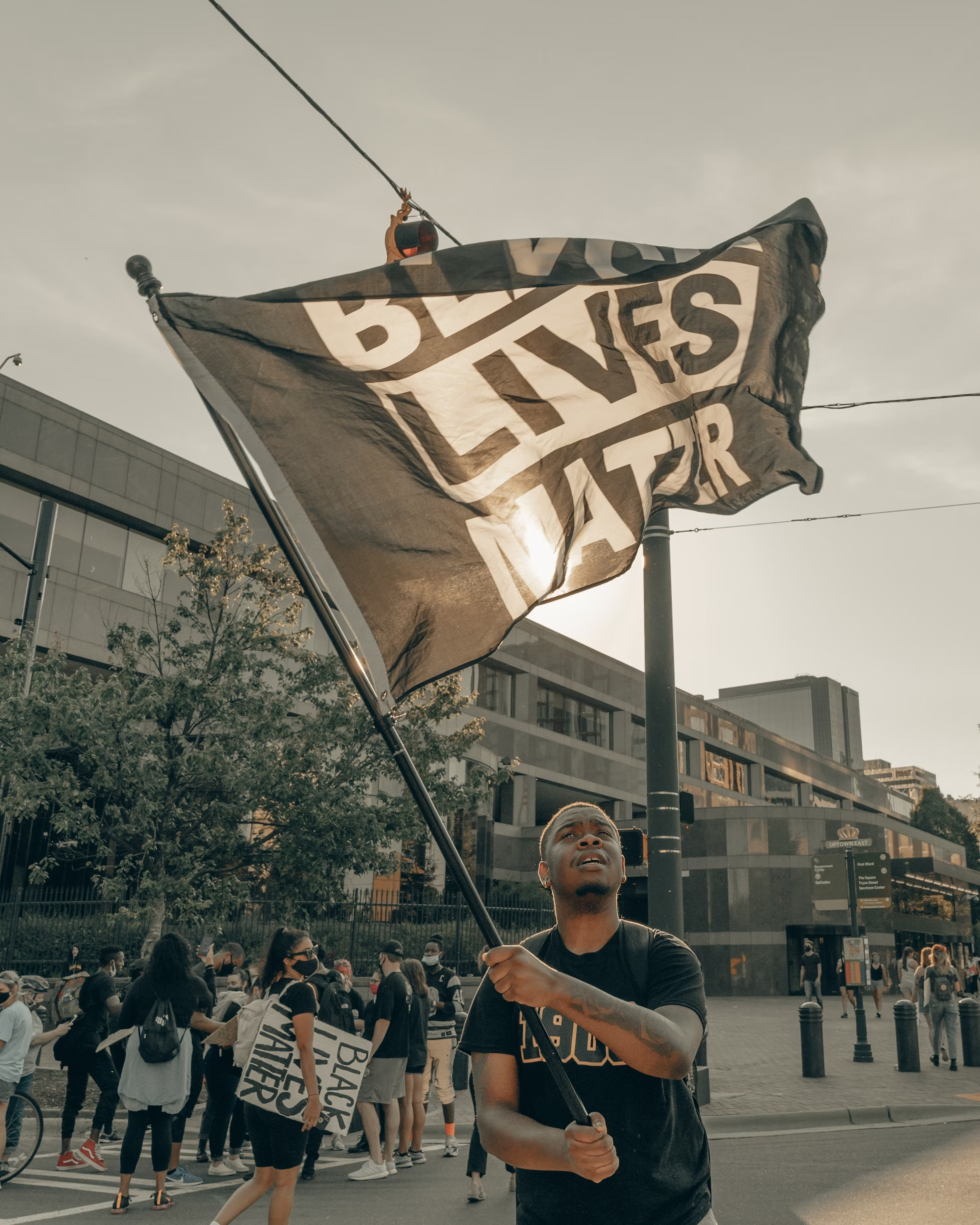
In the tapestry of American history, the struggles and triumphs of Black people are woven with threads of resilience, pain, and unmatched creativity. The journey began with the brutal enslavement of our ancestors, who were forcibly ripped from their homes and subjected to unimaginable horrors. Ever since, the legacy of those struggles has echoed through generations, shaping an identity that is rich, vibrant, and unyielding. Today, as we navigate the complexities of modern life, we stand in solidarity under the banner that Black Lives Matter—a reminder that our lives, our stories, and our culture deserve recognition and respect.

The Historical Context of the Black Struggle

The fight for Black liberation is a long and arduous road paved with countless sacrifices. From the shackles of slavery to the civil rights movement and the ongoing battles against systemic racism, we have witnessed a relentless cycle of oppression. Yet, in the face of such adversity, we have consistently demonstrated our capability to persevere. Many in our community juggle multiple jobs, often working 3-4 simultaneously, to provide for families under the constant pressure of financial insecurity and societal expectations. All while knowing that we remain targets of systemic injustice and violence.

An Ongoing Attack from Within and Without

Sadly, this struggle is not just against systemic barriers. It extends into the interactions with other minority groups. Whether it is Hispanic/Latino, Jewish, Asian, Haitian, Jamaican, or African communities, there exists a troubling tendency to overlook the unique narratives of Black history. Instead of solidarity, we often face competition and misunderstanding, sometimes leading to divisive rhetoric that exacerbates tensions. It’s a complex dynamic that needs addressing, but it is imperative to remind everyone that the Black narrative is rooted in struggle and resilience, not a commodity to be traded for convenience or perceived social capital.

Cultural Appropriation: The Theft of Black Creativity

The irony of our resilience is often overshadowed by a painful truth: the cultural contributions of Black Americans have been widely appropriated and capitalist entities have profited from our struggles. From the soul of Southern cooking to the rhythms of jazz, hip-hop, and R&B, our innovations have been co-opted by others who capitalize on our creativity while ignoring our struggles. The Hispanic/Latino community has, at points, engaged in this appropriation as well, often taking cultural elements like music, dance, and language styles from Black culture while not recognizing or acknowledging the original sources. Many popular artists and cultural icons have benefited from styles pioneered by Black entertainers without giving appropriate credit. Additionally, the adoption of Black slang, dance, and fashion trends by various groups often occurs without acknowledgment of their origins, leading to a sense of cultural dissonance.

The Political Landscape: A Fractured Community

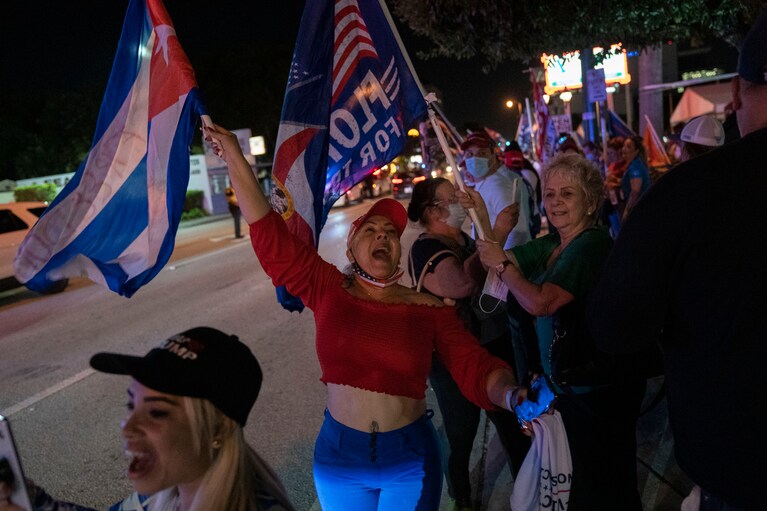
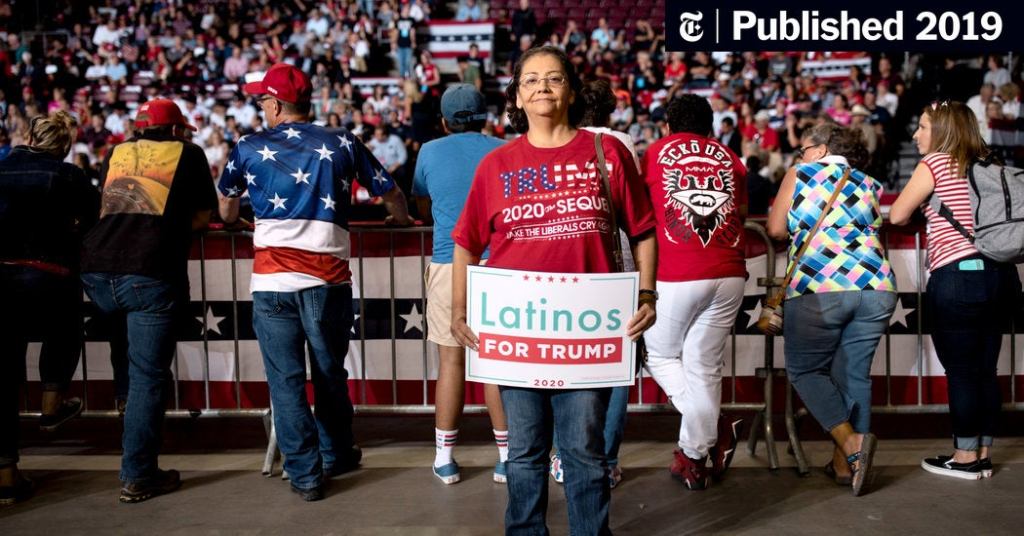
In the political arena, the decision by segments of the Hispanic community, notably Puerto Ricans, Dominicans, and Cubans, to align with candidates like Trump speaks volumes about the complexities of race relations in America. Many chose to support a figure who explicitly promised policies detrimental to Black lives, demonstrating a willingness to overlook the ramifications of their choices for the sake of perceived self-interest. When the consequences of those political decisions became apparent—rampant ICE raids, deportations, and a crackdown on immigrant rights—calls for solidarity towards Black individuals suddenly emerged. However, this raises profound questions: Why not reach out to influential figures within their own community like Jennifer Lopez, Gloria Estefan, and Eva Longoria? These figures, often championed for their success, remain conspicuously silent when it comes to the struggles faced by the broader community, especially Black individuals.

The Call for Unity and Accountability

As we stand firmly in our identity, it is crucial to confront this divide honestly. We must ask: How can healing occur from wounds inflicted by political choices and cultural theft? What message does it send when communities do not support their own representatives, leaving those in dire situations seeking help from groups they once turned their backs on? In moving forward, understanding and trust must be rebuilt on both sides. The Black community has been more than willing to support others in their struggles, but we need to have honest conversations about accountability and the reckoning that comes with shared space.

Conclusion: Can We Make it Make Sense?

This post serves as an invitation for dialogue—a chance to clarify misunderstandings and foster genuine connections. Together, we can address the historical wounds and work towards a future that celebrates diversity without appropriation, solidarity without betrayal. Let’s engage, respond, and reflect on how we can move from division to unity. The time for honest conversations is now; the future of our communities depends on it. Black Lives Matter, and so does the truth of our culture. Let’s make it count.

Help Us Make a Difference: Back-to-School Fundraiser by Mr. NIL

As the summer draws to a close and the excitement of a new school year begins, many families in the Midlands/Columbia, SC area face the challenge of securing essential school supplies. To address this need, Chase Ransom, under the initiative “Mr. NIL Gives Back,” is spearheading a Back-to-School Giveaway—a community-driven effort aimed at uplifting our youth and supporting local families.

📚 What’s Happening?

We’re thrilled to announce our Back-to-School Giveaway! This initiative is designed to provide students with the tools they need to succeed. Your generous donations will help supply:

  • Book bags to carry their essentials
  • Pencils & crayons for creative expression
  • Colored pencils to make their work pop
  • Binders and more to keep organized

Every contribution, big or small, has the potential to impact a child’s life positively—making that first day back at school a bit brighter!

🎯 Our Goal

Our primary goal is to support as many families as possible in the Midlands/Columbia area. We believe that every child deserves access to the necessary supplies to jumpstart their academic journey. With your help, we can make this possible!

💸 How You Can Help

Making a difference is simple! We invite you to donate through Cash App at $Chaserans6. 100% of your contributions go directly to purchasing school supplies—ensuring that every dollar counts toward uplifting our community’s youth.

📍 Location

This giveaway is focused on serving families in the Midlands/Columbia, SC area. By rallying together, we can create a supportive environment for our students as they gear up for a productive school year.

Let’s Make a Difference—Together!

Join us in making a lasting impact. Spread the word by reposting this message, tagging friends, or connecting with us on social media. Let’s work hand in hand to ensure that every child in our community starts the school year off right! 📲 Follow and connect with Chase Ransom:

Thank you for your generosity and support! Together, we can uplift our youth and create a brighter future. 💪🏾❤️ #MrNILGivesBack #BackToSchoolGiveaway #SupportOurYouth

The Dying Music Industry: A Journey Through Time

The music industry has undergone a seismic shift from the 1950s through the late 1990s, evolving through myriad styles, influential artists, and the introduction of new technology—all of which have significantly shaped how we listen to and appreciate music. However, a deeper concern looms: has the industry lost its spark? As we delve into the decades that shaped modern music, we can’t help but notice a decline in longevity and creativity amongst today’s artists.

The Foundations: 1950s to 1970s

The 1950s laid the groundwork for rock and roll, with artists like Otis Redding, Sam Cooke, and Aretha Franklin breaking barriers with their soulful melodies and powerful performances. Franklin’s anthemic “Respect” became a cornerstone of not only music but also civil rights and feminism. Coming from the 1960s, groups like The Supremes and solo artists like Diana Ross showcased the power of Motown. Their catchy hooks and polished images captivated the world. The 1970s introduced funk with bands such as Sly and the Family Stone and Earth, Wind & Fire, whose grooves set dance floors ablaze. Barry White popularized the “Love Unlimited” sound, blending orchestral arrangements with powerful basslines, creating timeless classics. This decade also saw the emergence of disco, influencing the music landscape and nightlife culture.

The 1980s: Explosion of New Genres

The 1980s were particularly revolutionary for music. This era saw the explosion of genres like hip-hop, pop, and R&B. Prince redefined what it meant to be a solo artist, combining rock, funk, and pop in ways that had never been done before. Songs like “Purple Rain” emphasized not just musical skill but also theatricality, shaping how artists interacted with their audience. Michael Jackson emerged as a global icon, with “Thriller” breaking records and paving the way for future pop phenomena. His music videos transformed into art forms of their own. Meanwhile, the likes of Anita Baker and Sade brought smooth jazz and soul into the mainstream, proving that emotional depth could resonate with audiences. This decade is often celebrated for its vibrant creativity, with the emergence of new technologies such as the synthesizer, which introduced entire new sounds and textures. Artists like Madonna, a quintessential pop star, used the music video format to express social issues and personal identity—an approach that pushed boundaries.

The 1990s: Enter the Digital Age

As we moved into the 1990s, the music landscape continued to diversify with the arrival of grunge and hip-hop, spearheaded by iconic figures such as Tupac Shakur and Notorious B.I.G. R&B artists like R. Kelly and TLC crafted hits that defined the sound of a generation. The era was marked by lyrical depth and musical experimentation, blending styles and influences into a unique tapestry. However, the late 1990s also marked a pivotal downturn for the music industry. With the rise of digital music formats and the internet, music listening became more about consuming singles rather than albums. The traditional revenue models began to crumble, sparking legal battles and leading to the pivot toward auto-tuned vocals and electronic beats. As a consequence, artistry began to drift, giving way to a reliance on sampling and rehashing classic sounds rather than creating new ones.

The Decline: The Rise of Short-Lived Fame

Fast forward to today, and the music industry faces a crucial challenge. The artists who once commanded the charts, such as Prince, Michael Jackson, and Marvin Gaye, were not just musicians; they were cultural icons who created movements. Today’s music scene seems dominated by transient stars producing a plethora of hooks with little substance beyond their debut record. The prevalence of digital tools often sacrifices originality for formulaic music-making. Many contemporary artists emerge with one hit and then fade into obscurity, a stark contrast to the old school stars who still thrive in sold-out arenas around the world, performing their classic hits. These legends—like Gladys Knight, Diana Ross, and Earth, Wind & Fire—prove that while music may evolve, the essence of true artistry remains timeless. The audience craves that deep connection that music brings—something that today’s quick hits often fail to provide.

Conclusion: The Future of Music

So, what lies ahead for the music industry? As we reflect on the achievements and transformations of the past, we must acknowledge the talents and innovations that have come and gone. While technology offers unprecedented access and avenues for emerging artists, it is essential to hold on to the authenticity and creativity that have historically defined great music. For the music industry to thrive once again, it may need to cycle back to its roots—celebrating artistry, innovation, and the human experience over mere commercial success. Only then can we find new voices that resonate and endure in the hearts of listeners for generations to come.

Are the USDA and FDA Failing Us? A Growing Concern Over Food Safety in America

In recent months, the safety of the food supply in the United States has come under increasing scrutiny, particularly regarding egg recalls. Alarmingly, June has already seen three major recalls of eggs, with each incident becoming larger in scope. The most recent recall involved a distributor—whose name will remain anonymous for now—that sold eggs to multiple retailers, including Walmart, during the critical time frame of February 3rd to May 15th. It begs the question: How is it possible that in just a few months, the USDA and the FDA—the agencies tasked with protecting American consumers—seem to be dropping the ball on food safety?

Egg Recall Targets

The eggs in question have sell-by dates ranging from March 4th to June 4th, and one recall even includes dates as late as June 19th. These recalls are attributed to the presence of Salmonella, a bacteria that can be life-threatening, especially for vulnerable populations such as children, the elderly, and those with compromised immune systems. Alarmingly, this is the third major egg recall within the first half of the year. Despite the escalating risk, there has been no equivalent focus on recalls for chicken, even though birds are often the source of salmonella infections. How can it be that eggs have tested positive for Salmonella, yet there is no parallel investigation or recall concerning potentially infected chicken? This raises concerns about the oversight of poultry safety standards and the health risks posed to consumers.

A Pattern of Recalls and Inaction

The sheer volume of recalls presents a troubling pattern that makes one wonder about the current state of food safety in America. Walmart’s name has cropped up more than once in major food recalls, which raises eyebrows. While this article is not accusing Walmart or any retailer of intentional wrongdoing, the frequency of these incidents begs for scrutiny. In addition to the egg recalls, a slew of other food safety alerts have appeared. Just recently, Bornstein Seafoods issued a recall for 45,000 pounds of cooked and peeled shrimp meat due to potential Listeria contamination. This particular bacteria can also lead to serious infections, particularly in at-risk populations. Meanwhile, Coca-Cola’s Topo Chico Mineral Water was recalled for possible contamination with Pseudomonas, a bacterium naturally found in water sources that has the potential to cause serious infections.

A Call for Accountability

So, what is happening with the USDA and the FDA? Once regarded as the frontline defenders against foodborne illnesses and unsafe food practices, both agencies appear to be struggling with enforcement and rapid response to these issues. The question arises: Are regulatory standards being sufficiently upheld, or have they been diluted under the pressures of economic interests? The current administration brings back memories of the last time we saw significant regulatory rollbacks, which many believe have made the American public more vulnerable to foodborne illnesses. As recalls pile up, it is puzzling that the regulatory agencies haven’t taken visible, decisive actions to ensure consumer safety.

Trust in Our Food Supply

For consumers, the implications of these food recalls are nothing short of alarming. It raises trust issues surrounding the very systems put in place to ensure our food is safe. As we read about these recalls, it’s easy to feel overwhelmed or exposed to risks that should have been managed by authorities. Questions must be raised: Why are recalls happening at such a frequent pace? What can be done to bolster consumer protection? Where are the calls for regulatory reform to bring the USDA and FDA back to their original mandate of protecting the public? As the landscape of food safety continues to evolve, it is paramount that consumers remain vigilant, proactive, and informed. The time has come for a serious examination of our food safety regulations and for agencies to reassert their commitment to public health. The health and well-being of American consumers depend on it.