There is no complete family structure without the presence and leadership of a father. This truth is especially poignant in Black households around the world, where fatherhood has been under siege—not by choice, but by design.
Beginning with slavery and continuing through Jim Crow, redlining, mass incarceration, and economic gatekeeping, Black families have endured generational repression. Systems were built to break the home—emasculate the father, overload the mother, and confuse the child.
The Breaking Point
Fathers stripped of jobs, dignity, and access to opportunity
Mothers forced into dual roles without adequate support
Children growing up witnessing survival-mode instead of stability
It wasn’t uncommon for families to crumble under pressures they weren’t equipped to navigate. The pain wasn’t personal—it was systemic.
It’s time to break down this destruction decade by decade. We must understand:
Who orchestrated these policies
When they took root
Where the pressure hit hardest
Why these patterns persist
How we can repair, reclaim, and rebuild
The Damage is Economic and Emotional
Rifts run deep. Family members divided by shame, silence, or survival. Communities stereotyped and criminalized. The planting of drugs in Black neighborhoods wasn’t coincidence—it was a strategy. The criminalization of poverty birthed the “thug” narrative. Redlining was a red flag we still live beneath.
And through it all, the Black Father stood tall—whether he was seen or not.
Celebrating Black Fathers: Kings in Every Sense
Today, we stand to declare: Black Fathers are Kings. They are not failures—they are foundational.
They navigate impossible odds with courage.
They pour into communities with wisdom and strength.
They deserve not just celebration, but reverence.
The time to honor them isn’t next month, next year, or someday. It’s now. And it starts with us.
What if history bent the other way—not as fantasy, but as justice fulfilled? In a world where Black brilliance, strategy, compassion, and cultural legacy shaped modern governance, economics, and education, what truths would emerge? What wounds would heal?
We call this Reversing Fate—a speculative meditation on what the world might look like if Black leadership wasn’t stolen, stifled, or shadowed. It’s not escapism. It’s a reckoning.
Power Reimagined
Cities built on ancestral wisdom, where innovation honors heritage.
Justice systems centered on restoration, not punishment.
Education led by griots and scholars with deep cultural fluency.
Media platforms amplifying truth, joy, and generational resilience.
Economic Structures Under Black Rule
Wealth distributed through communal equity models rooted in Ubuntu.
Black-owned banks and cooperatives reshaping global finance.
Reparative economic policy that doesn’t just “close the gap”—it flips the board.
Cultural Currency
Language, fashion, and music as global standard bearers.
Afrocentric curriculum as core instruction worldwide.
The seat of world diplomacy hosted in Dakar, Nairobi, or Atlanta.
This isn’t a utopia. It’s a challenge. A challenge to imagine beyond what we’ve been told is fixed. A challenge to look at systemic exclusion not as a closed door, but a call to rebuild from the ground up.
And maybe most importantly—it’s a tribute. To every ancestor whose brilliance was buried. To every living visionary forging futures in spite of broken beginnings.
On July 4, 2025, while fireworks lit the sky, the United States quietly enacted one of the most sweeping cuts to its social safety net in decades. Dubbed the “One Big Beautiful Bill,” this legislation has a name that evokes hope — but its true impact could be catastrophic for millions of Americans. Seniors, working-class families, and impoverished communities now face an uncertain future as Medicaid, Medicare, and SNAP undergo deep structural reductions.
As headlines celebrate “economic discipline” and “government efficiency,” communities on the margins brace for what may become a humanitarian crisis. This blog post explores what’s at stake, who is most vulnerable, and what steps we must take to protect our neighbors and our nation.
What’s Being Cut — and Who Pays the Price
Medicaid
Cuts totaling $930 billion over the next decade
Imposed work requirements of 80 hours/month for adults aged 19–64
Heightened eligibility reviews and reduced state flexibility
Strained provider budgets, risking access to care
Medicare
$533 billion slashed due to automatic PAYGO reductions
Shrinking provider reimbursements and higher out-of-pocket costs
Seniors may struggle to maintain critical care and medication regimens
SNAP (Supplemental Nutrition Assistance Program)
Reductions of $295 billion
New work rules apply to recipients up to age 64
States now must partially fund SNAP, risking coverage gaps
School meal programs also face uncertainty
Real-Life Consequences: Health, Hunger, and Homelessness
For seniors living on fixed incomes, these cuts aren’t just policy shifts — they’re life-altering.
Over 17 million older adults rely on Medicaid
Nearly 11 million use SNAP to combat food insecurity
Thousands of veterans, disabled individuals, and rural residents depend on these programs for survival
With fewer protections:
Mental health and substance abuse services will disappear
Food banks will become overwhelmed
Families will face impossible choices — rent or medicine, dinner or doctor’s appointments
A spike in homelessness and medical emergencies is likely
How You Can Prepare
While lawmakers battle in Washington, communities must mobilize on the ground:
For Individuals
Organize your documents: Health records, work hours, income proofs — they’ll be critical for eligibility reviews
Tap into local aid: Visit food banks, free clinics, and legal aid organizations
Explore ACA alternatives: The Health Insurance Marketplace may still offer options
For Communities
Churches and nonprofits: Provide meals, shelter, and spiritual care
Local clinics: Prepare to see increased demand — support their expansion efforts
Advocacy networks: Share resources and unite across racial, generational, and economic divides
How We Can Prevent This Disaster
It’s not too late — but it demands collective action.
Policy Remedies
Congress can repeal or delay the bill’s harshest provisions
State governors may apply for waivers to protect their residents
Litigation by civil rights and health advocacy groups may challenge legality
Civic Activism
Call and write your representatives. Let them know you’re watching.
Support organizations defending seniors, children, and marginalized groups
Mobilize voters ahead of the 2026 midterm elections
Final Thoughts: Will We Stand Up for One Another?
What’s beautiful about America isn’t austerity — it’s compassion, community, and care. The “Big Beautiful Bill” may claim to balance budgets, but it does so on the backs of those least able to bear it. This blog isn’t just a warning — it’s a rallying cry.
History will ask: when the most vulnerable were under attack, did we speak out? Did we organize? Did we rise?
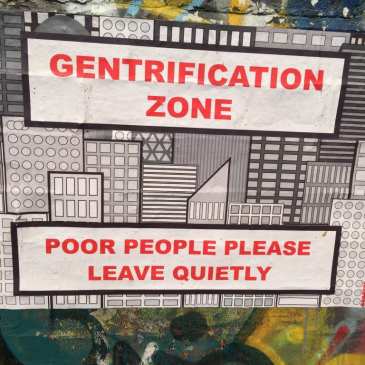
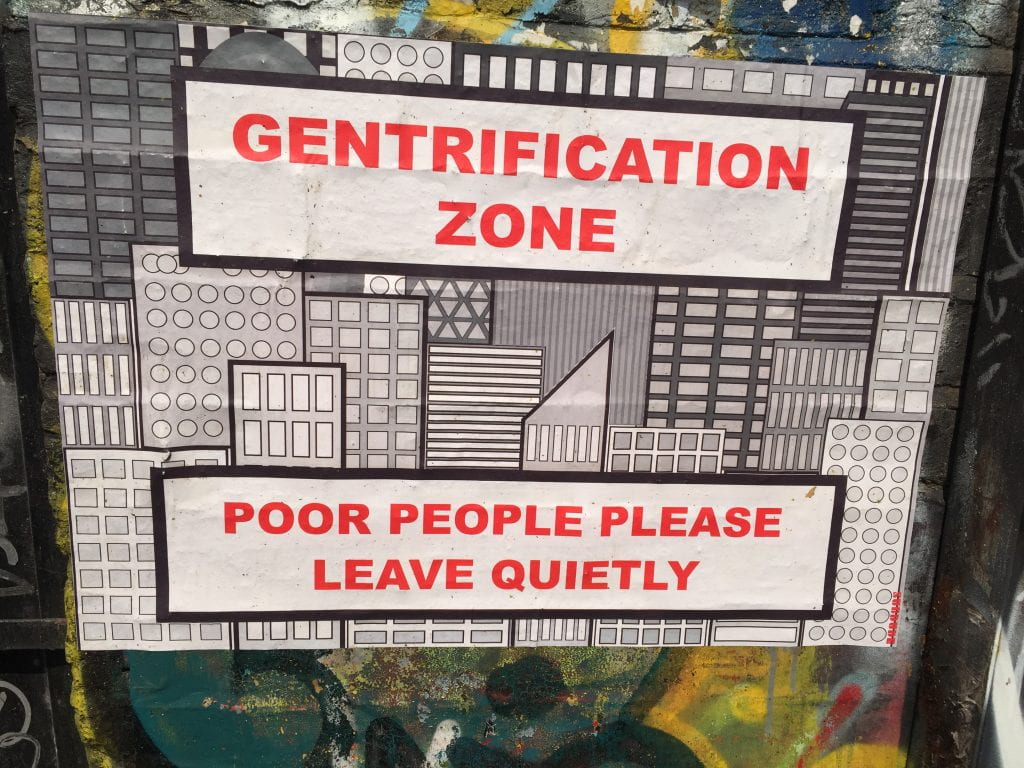
When we think of gentrification, we picture shiny new coffee shops and bike lanes popping up in “revitalized” urban neighborhoods. But scratch beneath the surface and you’ll find a brutal truth: those same neighborhoods were once thriving Black communities—reduced by decades of redlining and now reshaped for white comfort. This isn’t development. It’s a takeover.
Mainstream media sensationalizes Black neighborhoods, painting them as dangerous wastelands. But has anyone stopped to ask why? How do generations of systemic neglect, economic exclusion, and criminalization magically become cause for removal instead of repair?
The answer starts with Redlining.
Redlining: The Blueprint of Exclusion
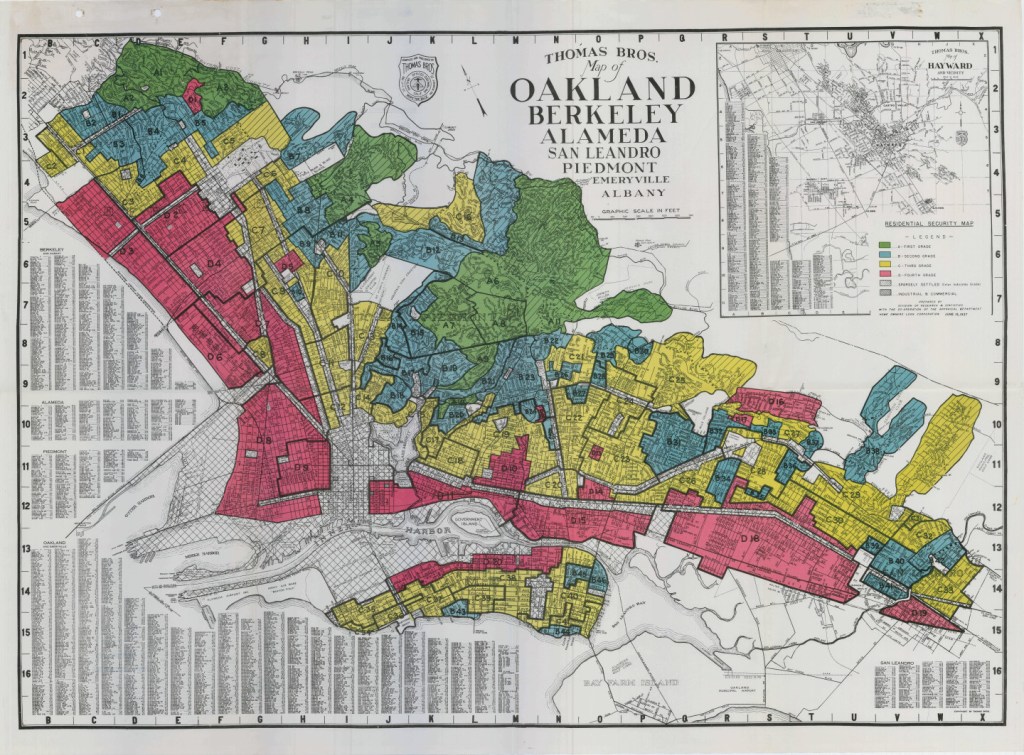
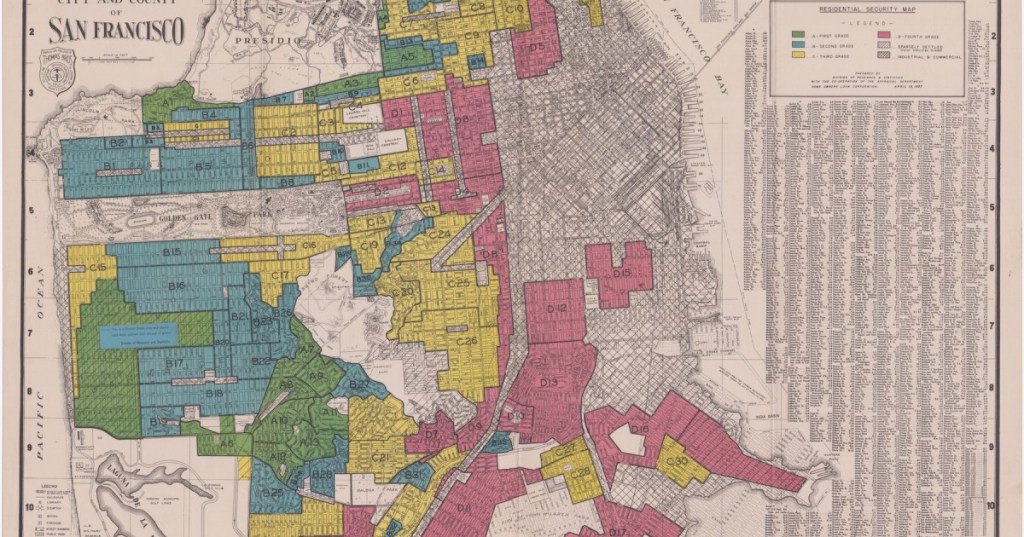
In the 1930s, the Home Owners’ Loan Corporation created color-coded maps to rank neighborhoods by “investment risk.” Black neighborhoods—regardless of actual economic strength or community value—were labeled “hazardous,” outlined in red, and denied loans and public resources. Chicago became the template for this practice, and cities from coast to coast followed.
Redlining wasn’t just about denying mortgages. It was about denying opportunity. While white neighborhoods expanded with parks, schools, and hospitals, Black communities were blocked from investment, overpoliced, and under-resourced. And yes, despite paying taxes like everyone else, those dollars rarely came back home.
Gentrification: The New Colonization
Today, those same neglected neighborhoods are suddenly “valuable.” But not for the communities that built them. Property developers and city planners now frame gentrification as “urban renewal,” ushering in new businesses, new buildings—and new people. Translation: Black displacement.
Families who weathered the storms of structural violence—policing, wage theft, environmental racism—are priced out of their own communities. Their cultural anchors turned into boutique yoga studios and wine bars. And the original residents? Forgotten. Evicted. Erased.
This isn’t progress. It’s erasure disguised as elevation.
Why It Hurts So Deep
Gentrification is not just about losing your apartment. It’s losing generational memory. It’s losing the corner store that gave out free water in the summer, the church that kept the youth out of trouble, the mural that told the neighborhood’s story. It’s being told—once again—that your existence is disposable.
Meanwhile, white newcomers are praised for “discovering” these areas. Culture becomes commodity. History becomes real estate. And the trauma? Continues.
Call to Action
We can’t afford to be passive. It’s time to challenge city budgets, demand fair housing policies, and support Black-owned development. We must:
Sponsor community land trusts to keep neighborhoods in the hands of residents.
Support housing justice organizations and eviction defense.
Hold urban planning boards accountable for displacement outcomes.
Elevate media platforms that show real Black narratives—not sensationalized fiction.
If Black lives matter, then so must Black neighborhoods.
Since the founding of America, the education system has served not as a beacon of truth, but as a tool of erasure. For generations, Black children have sat in classrooms designed not to empower, but to mislead—shaped by curricula that glorify European conquest while silencing African legacy.
Let’s be clear: the lie began with religion. American schools rarely teach that Christianity’s origins trace back to Ethiopia, where the oldest known Bible—written in Ge’ez—is preserved. Instead, they peddle the King James Version, a European interpretation that paints Jesus as white and frames whiteness as divine. This isn’t just a distortion; it’s a calculated form of supremacy. When Black children are taught this version of faith, it sets the stage for self-erasure and the normalization of inequality.
And then there’s history—or rather, the selective fragments of it. American slavery, one of the most defining atrocities in this nation’s past, is either sanitized or omitted entirely. Books that tell the raw truth about lynching, rape, and systemic theft are being banned under the guise of “protecting children.” But who is really being protected? Not the descendants of enslaved people—who need these stories to understand their power and their pain—but the descendants of oppressors, who fear the reckoning.
Here’s what they won’t teach:
Black civilizations predate European ones by thousands of years.
Moors taught Europeans hygiene, mathematics, and architecture during their rule in Spain.
Black inventors have created technologies that power daily American life, from traffic lights to gas masks.
The first university in the world, Sankore in Timbuktu, was built by Black scholars.
Wall Street was built over the bones of enslaved Africans.
Despite centuries of displacement, sabotage, and systemic violence, Black people continue to persevere. Black students outperform their peers when given equitable resources. Black culture—music, fashion, language, innovation—is mimicked globally. And Black resilience has turned survival into excellence.
So why teach European history as American heritage? Why frame the Holocaust as more relevant than the Transatlantic Slave Trade? Why amplify other cultures while silencing the truth about Black royalty, Black intellect, and Black triumph?
Because truth dismantles power.
When we know we are descendants of kings and queens—not the enslaved, but the enslaved AND the builders, dreamers, warriors, scientists, healers, and revolutionaries—the entire system of white supremacy begins to crack.
It’s no accident that books are banned. That accurate history is replaced by propaganda. That educational standards are manipulated to mask brilliance. This is an ideological war, and its battlefield is the mind.
Call to Action:
We must challenge our schools. Demand real curricula. Sponsor Black-led educational initiatives. Teach your children at home, in communities, in churches and mosques. Tell the story your ancestors didn’t get to tell.
Knowledge is the most radical form of resistance. And in a system built on lies, telling the truth is a revolution.
The Jacksonville Sheriff’s Office (JSO) has long been under scrutiny for its violent encounters with Black men. From documented incidents going back to 2000, a troubling pattern emerges—one that has evolved, not toward accountability, but toward escalating brutality. The recent case of William McNeil Jr. is a chilling reminder of how state-sanctioned violence against Black citizens continues with impunity.
McNeil, a biology student and member of his college marching band, was pulled over by JSO deputies for allegedly not having his daylight running lights on—a minor infraction that spiraled into terror. Footage clearly shows McNeil requesting a supervisor out of fear for his life. Instead, deputies smashed his driver-side window, punched him, forcibly opened his door, unbuckled his seatbelt, dragged him out, and savagely beat him. And despite all this, authorities declared the deputies’ actions “justified.”
Please click the link below
This is what systemic racism looks like in action. When the justice system consistently rules in favor of law enforcement—regardless of the trauma inflicted—it sends a clear message: Black pain is permissible. Black fear is ignored. Black voices are muted. And white juries, time and again, reinforce this silence through verdicts that deny humanity.
Governor Ron DeSantis’s dismissive remarks, suggesting that the viral video was merely a “narrative,” reflect an even deeper issue—one where elected officials defend brutality instead of defending the Constitution.
What does it say about a society when brutality becomes routine for one race, and due diligence is reserved for another? What does it say when cultural theft is dismissed, but cultural survival is criminalized?
This is not justice. This is normalized abuse—endorsed by silence and strengthened by indifference.
This is the Sheriff at JSO who stated in the press conference that the Deputies did their jobs properly:
Should Black People in Jacksonville be afraid for their lives? According to this man yes they should because there is no way these guys should be getting away with this. It is ok until it hits home!!!
Please click the link below
Call to Action:
We cannot afford to be spectators to injustice. It is time to mobilize. Raise your voice. Share this story. Demand independent investigations. Push for civilian review boards. Insist on diversifying juries and ending qualified immunity. Support organizations fighting for accountability and justice.
Most importantly: Organize within your community. Build networks of trust. Invest in Black-led platforms and amplify Black voices—like those of William McNeil Jr., who deserve to be heard, not brutalized.
In the heart of Milwaukee, Wisconsin, a quiet revolution in community education is taking shape — led by Integrated Community Education Consultants LLC, a firm committed to transforming lives through strategic educational support and advocacy.
Who They Are
Founded in July 2021, Integrated Community Education Consultants LLC is a Wisconsin-based limited liability company that believes education is not just a system — it’s a tool for liberation, equity, and community empowerment. The organization is helmed by Walter E. Cullin Jr., who also serves as the registered agent and primary contact for the firm.
Integrated Community Education Consultants (ICEC) is a mission-driven consultancy committed to transforming communities through equitable, culturally responsive, and sustainable educational solutions. We specialize in partnering with schools, nonprofits, and community-based organizations to develop innovative strategies that close opportunity gaps, empower educators, and elevate student success—especially in historically marginalized populations.
At ICEC, we believe that authentic change begins with collaboration. Our team of experienced educators, administrators, and community leaders brings deep expertise in curriculum development, school climate improvement, leadership coaching, and stakeholder engagement. We integrate data-driven insights with grassroots perspectives to design actionable solutions tailored to each community’s unique needs.
Whether supporting strategic planning, professional development, family engagement initiatives, or student-centered programming, ICEC stands at the intersection of education, equity, and impact. We help our partners build stronger systems, forge meaningful connections, and foster environments where all learners thrive.
In a city rich with history and resilience, Walter Cullin Jr. stands as a beacon of transformative leadership. As the founder of Integrated Community Education Consultants (ICEC) and host of the What’s Your Motive? podcast, Cullin has carved out a space where education meets equity, and collaboration replaces competition.
A Leader Rooted in Purpose
Walter’s journey spans healthcare administration, classroom teaching, and leadership roles as a dean and associate principal. With degrees in Healthcare Administration, Urban Education, and Educational Leadership, he brings a multidimensional lens to every initiative he leads. His mantra — “Intrinsically motivated with no excuses” — isn’t just a slogan; it’s a call to action for educators, students, and communities alike.
Impacting Milwaukee and Beyond
From moderating panels at Milwaukee Area Technical College to leading professional development workshops, Walter’s influence is felt across classrooms, boardrooms, and community spaces. He’s known for helping educators connect meaningfully with students, especially in urban settings, and for designing strategies that close opportunity gaps.
A Voice for Equity and Empowerment
Walter’s leadership is not just administrative — it’s deeply personal. As a devoted husband, father, and community advocate, he brings empathy and lived experience to every conversation. His work reflects the legacies of leaders like Dr. Herman Wrice and Dr. Martin Luther King Jr., blending historical reverence with modern urgency.
Expanding the Vision with Co-Founder Wyll Holloway
Integrated Community Education Consultants is not a one-man mission—it’s a dynamic partnership grounded in purpose and lived experience. Alongside Walter E. Cullin Jr., co-founder Wyll Holloway, B.S., M.S. brings over 25 years of educational leadership within Milwaukee’s inner-city schools and communities.
Wyll’s career has spanned nearly every corner of the educational landscape. Currently serving in higher education, he previously spent 13 years as a school counselor at a local elementary school, where he cultivated lasting relationships and fostered generational impact. His calm, down-to-earth demeanor and holistic approach have empowered students, families, and colleagues to discover their voices, passions, and pathways to success.
From mentoring and coaching to classroom instruction and administrative leadership, Wyll has always centered community care and personal connection. His work reflects a philosophy that educational transformation begins with trust—and thrives through collaboration.
As a mentor, tutor, basketball coach, teacher, counselor, and part-time administrator, Wyll has touched lives across diverse backgrounds. His strength lies in his ability to listen deeply, solve challenges creatively, and guide others toward meaningful growth.
Now, through ICEC, Wyll is channeling his decades of expertise into equipping educators with the skills and mindset needed to thrive in urban classrooms and beyond. He remains committed to bridging opportunity gaps and nurturing resilience through professional development and community-based solutions.
What They Do
Integrated Community Education Consultants offers a range of services designed to uplift students, families, and institutions alike. Their work includes:
Education Consulting: Tailored guidance for schools, educators, and families navigating academic challenges and opportunities.
Community Engagement: Programs that connect educational goals with local needs, fostering collaboration between schools and neighborhoods.
Strategic Planning: Support for institutions seeking to improve outcomes, equity, and long-term sustainability.
Mentorship & Advocacy: Empowering youth and educators through mentorship rooted in cultural awareness and historical context.
Professional learning workshops for educators and leaders
Student empowerment and motivation programs
Where They’re Located
The organization is based at Milwaukee, WI 53219, placing it squarely within a community that benefits from its mission-driven approach.
Why It Matters
In a time when educational equity is more urgent than ever, Integrated Community Education Consultants stands out for its commitment to Black history, community legacy, and transformative learning. Their work echoes the spirit of leaders like Dr. Herman Wrice and Dr. Martin Luther King Jr., whose influence continues to shape the educational landscape.
Podcast episodes: Please click the link and watch these episodes and subscribe to our YouTube Channel
The Big Beautiful Bill is poised to wreak havoc on the American economy — not in subtle ways, but through deep, direct harm that will ripple through generations. From cuts to essential social programs to permanent tax handouts for the ultra-rich, this bill isn’t just bad policy. It’s a betrayal of the very people who make America work.
Seniors and Struggling Families on the Chopping Block
Let’s be clear: slashing Medicare, Medicaid, and SNAP will devastate seniors, retirees, low-income families, and the working poor. These programs are often lifelines — not luxuries.
Without Medicare and Medicaid, many seniors and low-income individuals will be left untreated, unfed, and unseen.
Without SNAP, families will go hungry, children will suffer, and local economies will crumble.
Retirement communities will face collapse as residents can no longer afford housing, healthcare, or basic needs.
America was built on the promise of caring for its people. This bill burns that promise to the ground.
Unraveling the Fabric of Society
Social programs form the social safety net — a system designed to prevent mass poverty and homelessness. Cutting them unleashes a domino effect:
Homelessness surges.
Families fall into survival mode.
Local economies suffer as spending power disappears.
This is not a hypothetical future. The fear is real, and the inevitable collapse is knocking on the door.
Economic Breakdown: Micro and Macro Impacts
To understand the gravity of this bill, we must look at how economies function:
Microeconomics: The Individual Fallout
Microeconomics examines the decisions and well-being of individuals, families, and small businesses.
Cutting support means reduced consumer spending, fewer economic choices, and mounting financial stress.
Local shops, health clinics, and services will feel the squeeze as their customers disappear.
Macroeconomics: National Consequences
Macroeconomics evaluates the economy as a whole — GDP, unemployment, inflation.
Slashing aid while handing tax breaks to the rich shrinks national demand, risking recession.
GDP falls, inequality rises, and the country’s economic health deteriorates.
The Policy That Fuels the Fire
Let’s break down the mechanisms driving this bill’s destructive force:
Fiscal Policy: Taxation and Spending
Fiscal policy should drive growth through strategic spending and fair taxation.
This bill entrenches a regressive system, privileging the elite while pushing the working class deeper into survival mode.
Instead of stimulating economic resilience, it funnels wealth upward, leaving the rest to crumble.
Monetary Policy: Too Little, Too Late
Monetary policy affects interest rates and money supply — but it can’t fix poor fiscal choices.
Even if the Federal Reserve lowers rates, it won’t restore SNAP or ensure Grandma can afford her insulin.
In short: the Fed can’t repair a shredded safety net.
⚠️ A Warning to America
Many who voted for Donald Trump are facing the stark reality of broken promises. He told us what he intended to do — and now it’s happening. Whether you feel blindsided or not, the truth is here.
This bill also:
Makes tax cuts for the top 1% permanent, pushing the burden to the middle class and poor.
Downgrades America’s credit rating by worsening debt and killing revenue.
Weakens small businesses despite enshrining their tax structure — temporary relief, permanent pain.
Undermines manufacturing through misguided tariffs, slowing production and raising costs.
Time to Rise
We must organize, advocate, and demand accountability. The everyday man and woman — the teachers, caregivers, cashiers, veterans, and dreamers — must come together to fix what’s being broken in plain sight.
When history is written on this era of the NFL, let it be known: Justin Fields was built for greatness. A freak athlete with a high football IQ, arm strength that can deliver every throw in the book, and legs that turn broken plays into highlights — Fields isn’t just a quarterback, he’s a weapon.
Yet somehow, the conversation around him is shaped by skeptics who choose criticism over context.
A Talent Undermined
From the jump, Chicago didn’t understand what they had. Drafting a dynamic playmaker like Fields only to surround him with subpar weapons and a defensive-minded head coach was malpractice. Despite that, Fields managed to shine — winning games off sheer instinct and grit, flashing potential that terrified defensive coordinators and excited true analysts.
Chicago’s decision to decline his fifth-year option was baffling. Worse yet was Pittsburgh’s failure to maximize him when given the opportunity. After leading the team to a strong 4–2 start while playing clean football, Fields was benched for Russell Wilson — a move that ultimately cost them momentum, their season, and their credibility.
No spark. No accountability. No justice for the QB who gave them life.
The Rebirth in New York
Then came redemption. The New York Jets — now under Head Coach Aaron Glenn — saw what others overlooked. Fields was signed to a well-deserved 2-year, $40 million contract ($30M guaranteed) and handed the keys. Finally, a franchise is building around him with intention, belief, and vision.
But even now, in this moment of rebirth, the media noise is deafening.
Calling Out the Critics
Commentators like LeSean McCoy constantly tear Fields down — but when did a running back become the voice of quarterback expertise? McCoy’s own playing days were riddled with drama and questionable leadership. If this is brotherhood, it’s broken.
Eric Mangini — whose head coaching career boasts a sub-.500 record and playoff futility — claimed Fields “isn’t an NFL quarterback.” The same Mangini who led teams to irrelevance and only holds Super Bowl rings thanks to Belichick’s genius. That’s not credibility; that’s proximity to success.
And then there’s Craig Carton from FS1, suggesting Fields should be a wide receiver. Let’s be honest — Fields has more athleticism in one toe than Carton has in his entire résumé. It’s embarrassing that this kind of commentary dominates airwaves while real football minds stay silent.
The Truth They Can’t Deny
Justin Fields is the kind of quarterback who redefines matchups, demands respect, and plays with heart. You don’t teach what he brings — you build around it. And when that happens, championship-caliber teams emerge.
Let the critics eat crow when the lights shine brightest. Because Justin Fields isn’t just here to prove people wrong — he’s here to show what belief, talent, and opportunity can do.
Whether you’re just getting started or approaching your golden years, retirement planning isn’t one-size-fits-all—it’s a journey with milestones tailored to each season of life. Here’s how to stay financially empowered through every decade.
Your 20s: Foundation First
You’re young, full of potential, and time is your most valuable asset.
Enroll in your company 401(k): Even small contributions grow powerfully with compound interest.
Opt into auto-savings: Automation removes guesswork—pay yourself first.
Keep debt under control: Minimize high-interest credit card debt and student loan burdens.
Build an emergency fund: Aim for 3–6 months of expenses to avoid derailing your savings goals.
Open a Health Savings Account (HSA): Triple tax advantages make it a smart move if you’re in a high-deductible health plan.
Pro Tip: Starting early—even with just $25 a month—gives your money decades to work for you.
Your 30s & 40s: Balance & Boundaries
This phase is demanding—career, family, and financial responsibilities often compete for your attention.
Cut back on costly habits: Curb lifestyle inflation and reevaluate recurring expenses.
Avoid financial temptations: Shopping sprees and impulse upgrades can hinder long-term progress.
Prioritize your future self: Make your retirement contributions non-negotiable.
Stop raiding your savings: Dipping into retirement accounts now could mean penalties and missed growth later.
Revisit your budget: Adjust as your income grows and your priorities shift.
Mindset Shift: “Pay yourself like you pay your bills.”
Your 50s: The Double Down Era
Retirement is no longer abstract—it’s on the horizon. Now’s the time to go hard.
Make catch-up contributions: If you’re 50+, you can invest more in your 401(k) and IRA.
Maximize your HSA: Use it as a stealth retirement tool by covering future medical expenses.
Convert to a Roth IRA (strategically): Paying taxes now could shield your withdrawals later.
Save more in a taxable brokerage: Flexibility matters—especially for early retirement goals or unplanned costs.
Estimate your retirement needs: Get specific about lifestyle, healthcare, and travel dreams.
Consider long-term care insurance: Protect your legacy and reduce potential burdens.
Do regular check-ins: Monitor progress and adjust allocations as needed.
Your 60s: The Homestretch
Now it’s about protecting what you’ve built and planning the distribution strategy.
Continue catch-up contributions: Every dollar counts toward closing any savings gap.
Build a cash cushion: Prepare for unexpected expenses without tapping investment accounts.
Plan your income streams: Understand how retirement accounts, pensions, and investments will pay out.
Strategize for Social Security: Timing your claim can significantly impact lifetime benefits.
Apply for Medicare: At 65, enroll to avoid penalties and secure coverage.
Momentum Matters: Small decisions now impact your quality of life later.
Your 70s: You Made It
Retirement is here—but the planning doesn’t stop.
Start Required Minimum Distributions (RMDs): Avoid IRS penalties by taking the right amount from retirement accounts.
Reassess your plan annually: Adapt to changing expenses, markets, and goals.
Explore charitable giving: Qualified charitable distributions (QCDs) can reduce your taxable income and support causes you love.
Leave a legacy: Consider estate planning updates and beneficiary reviews.
Celebrate This Chapter: You’ve earned the chance to live with purpose, joy, and financial peace.











 Changing Trends and Times