From Stokely to Kwame: The Revolutionary Journey of a Black Power Prophet

By Charles Zackary King
Changing Trends and Times | America in Black and White

In the story of Black liberation, few names echo with as much fire and clarity as Stokely Carmichael, later known as Kwame Ture. His life was a masterclass in transformation: from immigrant child to civil rights warrior, from SNCC chairman to global Pan-Africanist. His journey was not just political, it was spiritual, cultural, and unapologetically Black.

Origins: From Trinidad to the Bronx
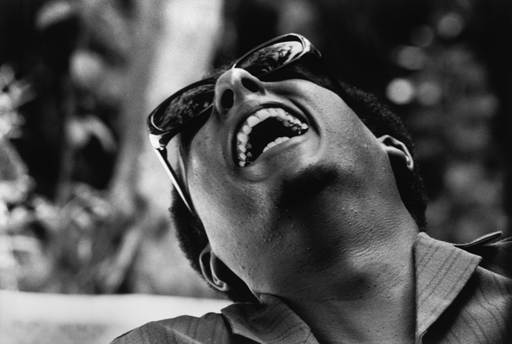
Born June 29, 1941, in Port of Spain, Trinidad and Tobago, Stokely Standiford Churchill Carmichael immigrated to Harlem at age 11 to reunite with his parents. Raised by his grandmother and aunts, he arrived in the U.S. with sharp intellect and sharper instincts. He later attended the prestigious Bronx High School of Science, where he began questioning the racial and social structures around him.

Awakening at Howard University

Carmichael enrolled at Howard University in 1960, studying philosophy and absorbing the teachings of professors like Sterling Brown and Toni Morrison. But it was outside the classroom, in the streets and churches of the South, that his activism took root. He joined the Student Nonviolent Coordinating Committee (SNCC) and became a Freedom Rider, risking his life to desegregate interstate travel.
Black Power Rises

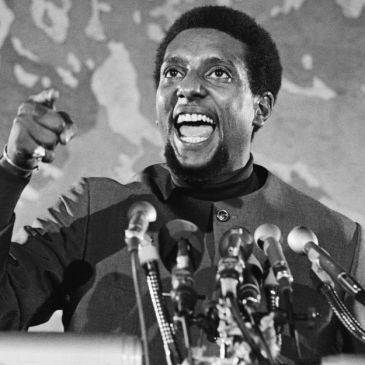
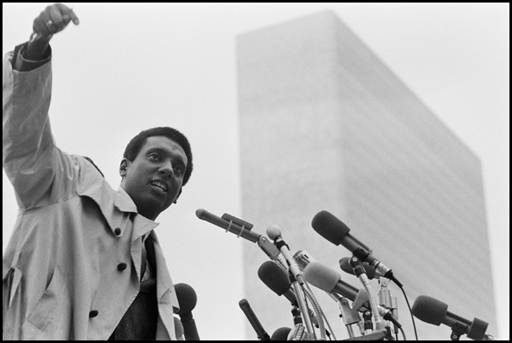
By 1966, Carmichael had become chairman of SNCC, succeeding John Lewis. That same year, during a march in Mississippi, he delivered the rallying cry that would define a generation:

“What we want is Black Power.”
This slogan wasn’t just rhetoric, it was a demand for self-determination, racial pride, and political autonomy. Carmichael’s stance marked a shift from integrationist strategies to radical resistance, challenging both white supremacy and liberal complacency.

What Mattered Most: Liberation Over Assimilation

For Carmichael, the Civil Rights fight was never just about access, it was about ownership. He believed that integration, as framed by white society, often meant assimilation into systems that were fundamentally anti-Black. What mattered most to him was:

  • Black control over Black communities—from schools and housing to policing and economics.
  • Political independence—building all-Black political organizations like the Lowndes County Freedom Organization.
  • Economic justice—shaking the foundations of exploitation and demanding reparative systems.
  • Cultural pride—rejecting the notion that whiteness was the standard and embracing African heritage unapologetically.
  • Global solidarity—connecting the Black struggle in America to liberation movements in Africa, the Caribbean, and beyond.

He once wrote:

“For racism to die, a totally different America must be born.”
This wasn’t a call for reform, it was a call for revolution.

The Name Change: Kwame Ture

In 1969, Carmichael left the U.S. and settled in Guinea, West Africa, alongside his then-wife, South African singer Miriam Makeba. There, he adopted the name Kwame Ture—a tribute to Kwame Nkrumah of Ghana and Sékou Touré of Guinea, two titans of Pan-Africanism.
The name change was more than symbolic. It marked a rebirth—a rejection of colonial identity and an embrace of African unity, revolutionary socialism, and global Black consciousness.

Building Pan-African Futures

In Guinea, Ture co-founded the All-African People’s Revolutionary Party (A-APRP), advocating for a united Africa free from imperialism. He traveled extensively, speaking in Cuba, Ghana, and across Europe, always centering the plight of oppressed peoples and the power of collective liberation.

Final Years and Enduring Legacy

Kwame Ture died of prostate cancer on November 15, 1998, in Conakry, Guinea, at age 57. But his voice still reverberates, in classrooms, protests, podcasts, and policy debates. His writings, including Stokely Speaks and Ready for Revolution, remain essential texts for understanding Black resistance and global solidarity.

Why Kwame Ture Still Matters

In today’s climate of racial reckoning and global unrest, Ture’s life offers a roadmap. He taught us that identity is political, that liberation is global, and that Black Power is not a moment, it’s a movement. His transformation from Stokely to Kwame wasn’t just personal, it was prophetic.
The Fire of Freedom: If Sékou Touré Had His Way

By Charles Zackary King
Changing Trends and Times | America in Black and White

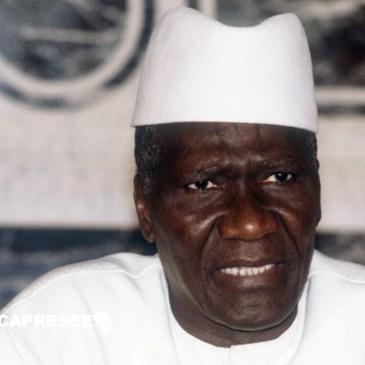
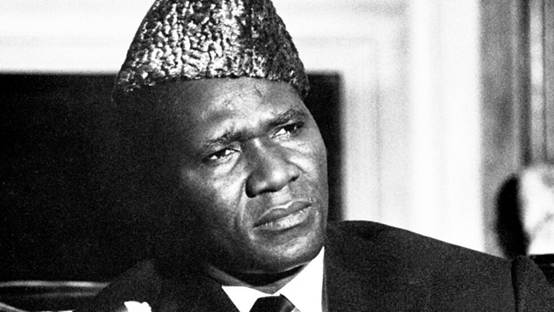
In the pantheon of Black liberation, President Ahmed Sékou Touré stands as both architect and agitator, a man who dared to dream of an Africa unshackled from colonial chains. As Guinea’s first president, Touré didn’t just lead a nation; he attempted to rewire its soul. But what if his vision had fully taken root? What if Guinea had become the model Pan-African republic he imagined?

Let’s step into that alternate reality.

Guinea Reimagined: Touré’s Dream Realized

Imagine a Guinea where African socialism flourished, not as a reaction to colonial abandonment, but as a proactive blueprint for communal prosperity. In this Guinea:

  • Education is free and Afrocentric, with children learning the legacies of Samori Touré, Nkrumah, and Harriet Tubman alongside math and science.
  • Healthcare is universal, rooted in both modern medicine and indigenous healing traditions.
  • Art and culture are sacred, with griots, dancers, and sculptors honored as national treasures.
  • Women lead, not just in homes but in parliament, academia, and diplomacy.
  • Pan-African unity is tangible, with open borders for African nations, shared currencies, and joint infrastructure projects.
  • Guinea becomes a cultural capital, hosting global festivals of Black art, music, and resistance.

In this version of history, Guinea is not isolated, it’s exalted. Touré’s rejection of neocolonialism inspires a domino effect. Senegal, Mali, Ghana, and Congo follow suit, forming a United States of Africa, with Guinea as its moral compass.

The Real Guinea: Courage and Contradiction

Of course, history took a different path. After Guinea’s bold “No” to France in 1958, Touré faced economic sabotage, diplomatic isolation, and internal dissent. His response was fierce: nationalization, cultural revival, and alignment with socialist allies. But his regime also became authoritarian. Dissenters were imprisoned, and Camp Boiro became a symbol of repression.

Touré’s dream was noble, but his methods, at times, were brutal. The Guinea that emerged was proud, but wounded. Independent, but surveilled.

Why Touré Still Matters

Today, as Black communities worldwide fight for autonomy, dignity, and representation, Touré’s legacy offers both inspiration and caution. His vision of self-reliance, cultural pride, and continental unity remains relevant. His flaws remind us that liberation must be paired with compassion and accountability.

For creatives and advocates like Jean-Patrick Guichard, Touré’s influence is personal. His insistence on cultural sovereignty echoes in every curated exhibit, every community dinner, and every act of legacy-building.

Conclusion: The Fire Still Burns

Touré died in 1984, in Cleveland, Ohio, while undergoing heart surgery. But the fire he lit still burns, in classrooms, galleries, protests, and podcasts. His story is not just history, it’s a mirror, a map, and a challenge.

If Touré had his way, Guinea might have become the heartbeat of a liberated Africa. But even in reality, his defiance carved a path that others still walk. And in that, his legacy lives on.

From Chains to Crowns: The Legacy of William Dorsey Swann

By Charles Zackary King
America in Black and White | Changing Trends and Times

In the tapestry of Black history and LGBTQ+ resistance, few threads shine as defiantly as that of William Dorsey Swann. Born into slavery in March 1860 in Hancock, Maryland, Swann would become the first known American to self-identify as a “queen of drag”—and the first to lead a documented queer resistance group in the United States Wikipedia Smithsonian Magazine.

Childhood in Chains

Swann was the fifth of thirteen children in a Protestant family enslaved by Ann Murray. His mother, Mary Jane Younker, was a housekeeper, and his father, Andrew Jackson Swann, farmed wheat. After emancipation, the Swann family purchased land and began farming, but poverty and racial barriers loomed large. William, like many formerly enslaved children, was denied formal education and began working young Boundary Stones.

Early Adulthood & Convictions

In his twenties, Swann moved to Washington, D.C., working as a hotel waiter and janitor. He was arrested in 1882 for petty larceny—stealing books and household items—but his employers and even the sentencing judge vouched for his character, describing him as “industrious, refined, gentle, and courteous.” This moment revealed Swann’s hunger for knowledge and dignity, even in the face of criminalization Rediscovering Black History.

The Queen of Drag

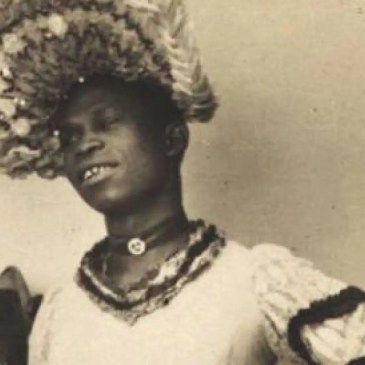
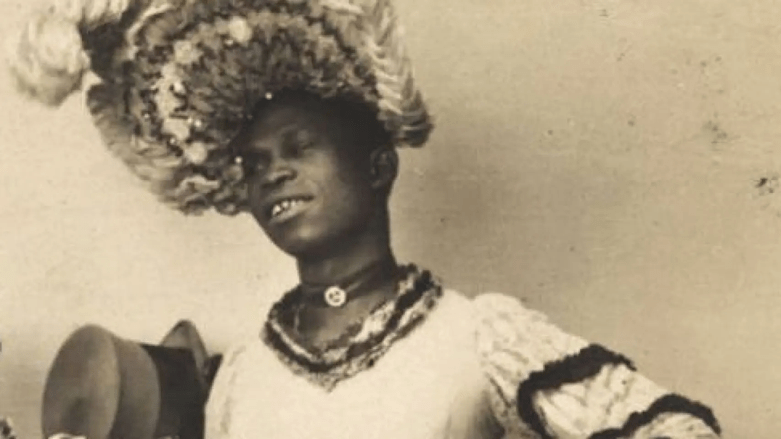
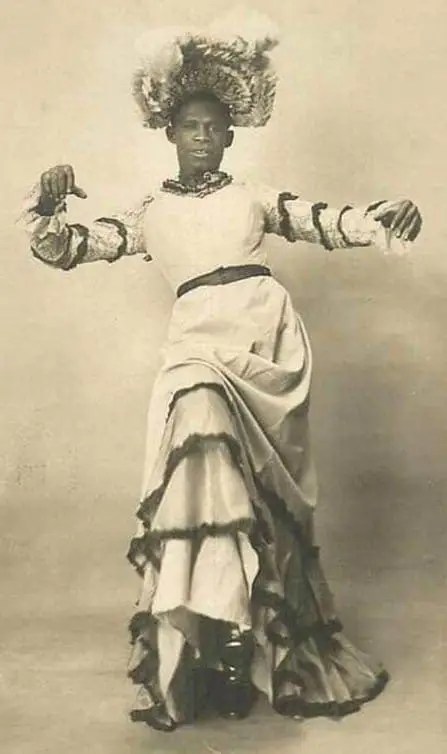
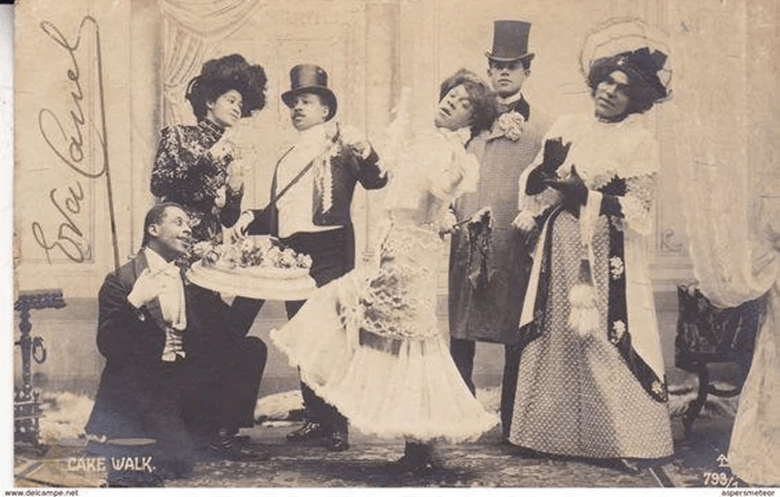
By the late 1880s, Swann was hosting secret drag balls in D.C.—lavish, defiant celebrations of identity and joy. These gatherings, attended by formerly enslaved Black men, featured silk gowns, corsets, and the iconic cakewalk dance, a precursor to modern voguing. Swann called himself the “queen of drag,” and his events became sanctuaries of self-expression and resistance Wikipedia Smithsonian Magazine.

On April 12, 1888, during his 30th birthday celebration, police raided the party. Swann, dressed in cream-colored satin, resisted arrest and famously declared to an officer, “You is no gentleman.” This act of defiance is now recognized as one of the earliest documented instances of queer resistance in U.S. history Wikipedia.

Legal Resistance & Legacy

In 1896, Swann was convicted of “keeping a disorderly house”—a euphemism for running a brothel, though he was simply hosting another drag ball. He petitioned President Grover Cleveland for a pardon, making him the first American to take legal action to defend the LGBTQ+ community’s right to gather. Though denied, his courage laid the groundwork for future civil rights battles Rediscovering Black History.

Swann’s later years were quieter, but his legacy endured. His brother Daniel continued making drag costumes for decades. Swann died around December 23, 1925, at age 65. After his death, local officials burned his home—a final act of erasure that history is now reversing Wikipedia.

Influence on Today’s LGBTQ+ Culture

Swann’s drag balls were the blueprint for the ballroom culture that flourished in Harlem and beyond. His use of the cakewalk, his unapologetic identity, and his insistence on joy and community in the face of oppression echo in today’s voguing, drag pageantry, and queer activism.

In an era where drag is both celebrated and politicized, Swann’s story reminds us that Black queer resistance is not new—it is foundational.

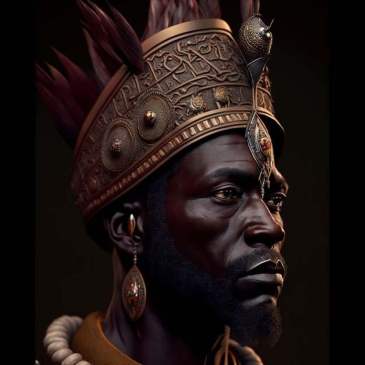
Mansa Musa: The Legacy of the Lion King of Mali

By Charles Zackary King
Founder & CEO, America in Black and White | Blogger, Changing Trends and Times

Introduction

In a world where wealth is often measured by fleeting trends and digital valuations, the story of Mansa Musa stands as a timeless reminder of legacy, leadership, and cultural stewardship. Known as the richest man in recorded history, Musa’s reign over the Mali Empire in the 14th century was not just about gold, it was about vision, education, and the elevation of a people.

The Rise of a Legend

Mansa Musa ascended to power in 1312, inheriting an empire already rich in resources and influence. But under his leadership, Mali expanded its borders, deepened its cultural roots, and became a beacon of prosperity in West Africa. His empire stretched across modern-day Mali, Senegal, Guinea, Mauritania, and parts of Niger—making it one of the largest and most powerful of its time.

Wealth Beyond Imagination

Musa’s wealth was legendary. His empire controlled vast gold mines and taxed trans-Saharan trade routes dealing in salt, ivory, and other commodities. But it was his pilgrimage to Mecca in 1324 that truly stunned the world. Traveling with an entourage of 60,000 people and distributing gold so generously in Cairo that it disrupted the region’s economy for years, Musa’s journey was both a spiritual mission and a global statement.

A Builder of Culture and Faith

Upon returning from Mecca, Mansa Musa invested heavily in Islamic scholarship and architecture. He commissioned the construction of mosques, schools, and libraries—most notably the Djinguereber Mosque in Timbuktu. He invited scholars and architects from across the Muslim world, transforming Timbuktu into a center of learning and culture that would influence generations.

Legacy That Lives On

Mansa Musa died around 1337, but his legacy endures. He proved that African leadership could be visionary, global, and deeply rooted in cultural pride. His story challenges the erasure of African excellence from mainstream narratives and reminds us that wealth is not just material—it’s historical, intellectual, and communal.

Why Mansa Musa Matters Today

In the spirit of America in Black and White and Changing Trends and Times, Mansa Musa’s legacy speaks directly to our mission:

  • Civic education: His governance model emphasized justice, scholarship, and diplomacy.
  • Advocacy: He uplifted his people through infrastructure, faith, and international recognition.
  • Legacy-building: His impact was generational, not transactional.

As we continue to tell stories that empower and enlighten, let Mansa Musa be a reminder: Black history is global history. And legacy is built, not bought.

Derrick Jackson’s Bold Bid for Governor: Legacy, Leadership, and a Vision for Black Georgia

By Charles Zackary King
Founder, America in Black and White | AMIBW The Magazine

The original article titled “Derrick Jackson Discusses Campaign for Governor” was written by Christopher Smith and published on News & Talk WAOK.

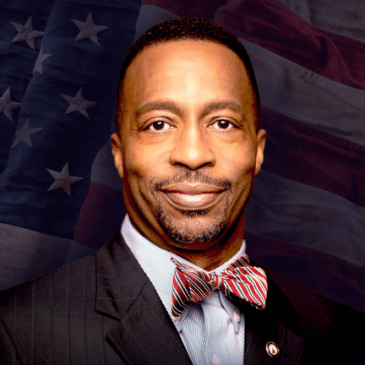
Georgia State Representative Derrick Jackson isn’t just running for governor, he’s running on legacy, lived experience, and a moral obligation to serve. With a 42-year career that spans military command, corporate leadership, and legislative advocacy, Jackson’s campaign is rooted in justice, equity, and empowerment for all Georgians, especially Black communities historically left behind.

A Life of Service and Strategy

Jackson is a husband, father of seven, and retired U.S. Navy Lieutenant Commander with 22 years of service, including seven deployments. After a decade in the corporate sector with General Electric, he transitioned into public service, winning election to the Georgia House of Representatives in 2016. He represented District 64 until 2023, and now serves District 68, marking nearly a decade of legislative leadership.

His record includes fighting for voting rights, women’s rights, LGBTQ+ protections, and small business support. But Jackson’s work in underserved communities goes deeper, he’s been a consistent voice for economic justice, healthcare access, and educational equity.

Legislative Impact: Raising the Floor for Black Georgians

Among Jackson’s most impactful legislative efforts is his sponsorship of a bill to raise Georgia’s minimum wage to $27/hour by 2028. The bill proposed a phased increase, starting at $15/hour and rising annually, designed to uplift working-class families, especially Black workers disproportionately affected by wage stagnation and attacks on diversity initiatives.

This legislation, though stalled in committee, remains a cornerstone of his campaign. It directly addresses the economic disparities that have long plagued Black communities in Georgia, where over half a million Black jobs were lost in the past year due to rollbacks in equity programs.

Campaign Agenda: A Georgia That Works for Us

Jackson’s gubernatorial platform is built on eight pillars, each designed to help Georgia families thrive. For Black Georgians, his agenda includes:

  • Medicaid Expansion to close healthcare gaps and prevent rural hospital closures
  • Repealing Harmful Laws like the six-week abortion ban and rent control restrictions
  • Investing in Black Farmers, Small Businesses, and Nonprofits with access to capital and policy inclusion
  • Environmental Justice to protect communities from pollution and neglect
  • Education Reform & Workforce Development with expanded access to trades, apprenticeships, and technical education
  • Reparations Advocacy, proposing 33% of Georgia’s $16B budget be allocated to Black families as a fulfillment of broken promises

Jackson’s message is clear: “We’re not just building a Georgia for business, we’re building a Georgia for families.”

Inspired by Legacy: John Lewis and the Spirit of Service

Jackson cites civil rights icon John Lewis as a moral compass for his campaign. “I have a moral obligation to run for governor,” he said on WAOK, invoking Lewis’s legacy of courage and conscience. His leadership style blends executive discipline with grassroots empathy, qualities he believes make him the only candidate truly qualified to serve as Georgia’s Commander-in-Chief.

A Call to Action

Jackson’s campaign isn’t powered by million-dollar donors, it’s powered by people. He urges Georgians to “Tell 10 to Tell 10,” mobilize their communities, and vote for a future rooted in dignity, equity, and opportunity.

For Black Georgians, this race is more than political, it’s generational. It’s about reclaiming the promise of Georgia and ensuring that every child, every elder, and every entrepreneur has a seat at the table.

When the Music Paused: Remembering D’Angelo’s Genius and Grace

By Charles Zackary King | America in Black and White

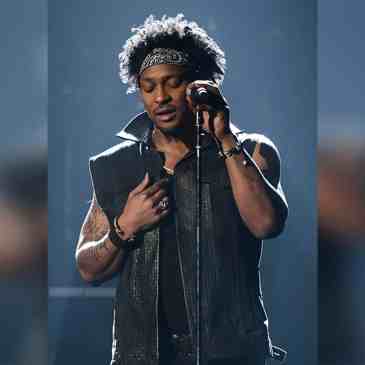
On October 14, 2025, the world lost one of its most enigmatic and electrifying voices. Michael Eugene Archer, known to us as D’Angelo, passed away at the age of 51 after a private and courageous battle with pancreatic cancer. His death marks not just the end of a life, but the silencing of a sound that redefined Black music for a generation.

The Rise of a Neo-Soul Prophet

Born in Richmond, Virginia, D’Angelo was raised in a deeply religious Pentecostal household. His musical gifts emerged early, nurtured by gospel traditions and sharpened by a hunger for authenticity. By 1995, he had already changed the game with Brown Sugar, a debut album that fused the rawness of hip-hop with the sensuality of classic soul. It wasn’t just music, it was a movement.

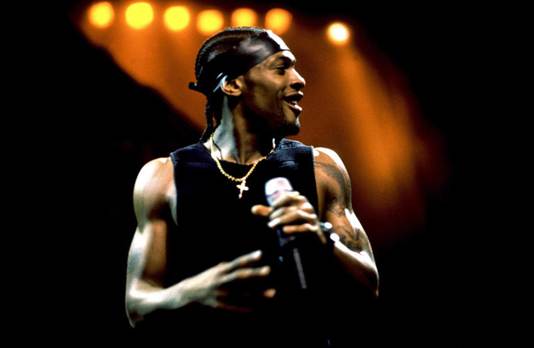
His follow-up, Voodoo (2000), was a masterclass in musical alchemy. Collaborating with the Soulquarians collective, D’Angelo summoned the spirits of Marvin Gaye, Jimi Hendrix, and Prince, while forging a sound entirely his own. The album’s standout track, “Untitled (How Does It Feel),” became iconic, not just for its stripped, down video, but for its emotional vulnerability and vocal brilliance.

But fame came with a price.

The Vanishing Act

After Voodoo, D’Angelo disappeared. The pressures of being a sex symbol, the weight of public expectation, and personal battles with addiction led him into a long hiatus. He became a recluse, rarely seen, often rumored, and deeply missed.

Then, in 2014, he returned with Black Messiah, an album that was both a political statement and a spiritual reckoning. Released during a time of social unrest, it became a soundtrack for resistance, echoing the cries of a community demanding justice.

The Father Behind the Fame

Though fiercely private, D’Angelo was a devoted father. He leaves behind three children:

  • Michael Archer Jr. (aka Swayvo Twain), his son with the late Angie Stone, who died in a tragic car accident in March 2025
  • Imani Archer, a gifted musician in her own right, who shared a touching tribute to her father after his passing
  • Morocco Archer, his youngest son, who has largely remained out of the public eye

His children now carry the torch of his legacy, not just in music, but in the quiet strength he modeled as a father.

Why the Industry Will Never Be the Same

D’Angelo didn’t flood the market with content. He gave us only three studio albums across three decades. But each one was seismic. He reminded us that Black music could be raw, spiritual, erotic, political, and timeless, all at once.

He was the heartbeat of neo-soul. A bridge between the sacred and the secular. A man who could make a Fender Rhodes whisper and a falsetto scream.

Artists like Lauryn Hill, Questlove, Raphael Saadiq, and Jay-Z collaborated with him, not just because of his talent, but because of his truth. He was one of one.

Rest in Power, D

D’Angelo’s passing leaves a void that no algorithm can fill. His music was never just about melody, it was about memory. About the ancestral pulse that lives in every chord, every lyric, every silence between the notes.

As we mourn, we also celebrate. Because D’Angelo didn’t just make music. He made moments. And those moments will echo for generations.

“We are eternally grateful for the legacy of extraordinarily moving music he leaves behind.” D’Angelo’s family