By Charles Zackary King
Changing Trends and Times | America in Black and White
In the pantheon of Black liberation, President Ahmed Sékou Touré stands as both architect and agitator, a man who dared to dream of an Africa unshackled from colonial chains. As Guinea’s first president, Touré didn’t just lead a nation; he attempted to rewire its soul. But what if his vision had fully taken root? What if Guinea had become the model Pan-African republic he imagined?
Let’s step into that alternate reality.
Guinea Reimagined: Touré’s Dream Realized
Imagine a Guinea where African socialism flourished, not as a reaction to colonial abandonment, but as a proactive blueprint for communal prosperity. In this Guinea:
- Education is free and Afrocentric, with children learning the legacies of Samori Touré, Nkrumah, and Harriet Tubman alongside math and science.
- Healthcare is universal, rooted in both modern medicine and indigenous healing traditions.
- Art and culture are sacred, with griots, dancers, and sculptors honored as national treasures.
- Women lead, not just in homes but in parliament, academia, and diplomacy.
- Pan-African unity is tangible, with open borders for African nations, shared currencies, and joint infrastructure projects.
- Guinea becomes a cultural capital, hosting global festivals of Black art, music, and resistance.
In this version of history, Guinea is not isolated, it’s exalted. Touré’s rejection of neocolonialism inspires a domino effect. Senegal, Mali, Ghana, and Congo follow suit, forming a United States of Africa, with Guinea as its moral compass.
The Real Guinea: Courage and Contradiction
Of course, history took a different path. After Guinea’s bold “No” to France in 1958, Touré faced economic sabotage, diplomatic isolation, and internal dissent. His response was fierce: nationalization, cultural revival, and alignment with socialist allies. But his regime also became authoritarian. Dissenters were imprisoned, and Camp Boiro became a symbol of repression.
Touré’s dream was noble, but his methods, at times, were brutal. The Guinea that emerged was proud, but wounded. Independent, but surveilled.
Why Touré Still Matters
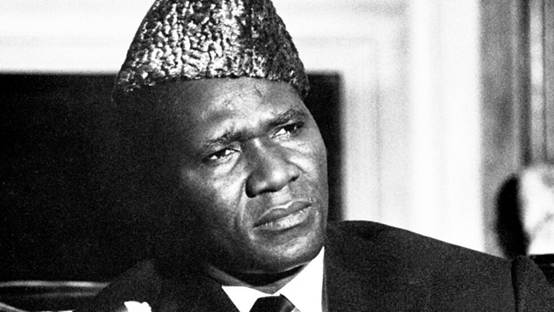
Today, as Black communities worldwide fight for autonomy, dignity, and representation, Touré’s legacy offers both inspiration and caution. His vision of self-reliance, cultural pride, and continental unity remains relevant. His flaws remind us that liberation must be paired with compassion and accountability.
For creatives and advocates like Jean-Patrick Guichard, Touré’s influence is personal. His insistence on cultural sovereignty echoes in every curated exhibit, every community dinner, and every act of legacy-building.
Conclusion: The Fire Still Burns
Touré died in 1984, in Cleveland, Ohio, while undergoing heart surgery. But the fire he lit still burns, in classrooms, galleries, protests, and podcasts. His story is not just history, it’s a mirror, a map, and a challenge.
If Touré had his way, Guinea might have become the heartbeat of a liberated Africa. But even in reality, his defiance carved a path that others still walk. And in that, his legacy lives on.
 Changing Trends and Times