From Bondage to Brotherhood: The Enduring Legacy of Lyon Farm and the Unhealed Wounds of Slavery

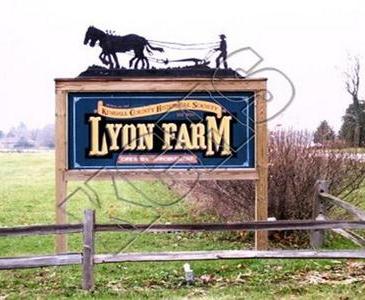
In the quiet hills of Georgia’s Arabia Mountain National Heritage Area stands Lyon Farm—a place where pain and perseverance are etched into the soil. What began as a site of bondage in the 1820s became the birthplace of Flat Rock, one of Georgia’s oldest African American communities. But beneath the triumph of survival lies a deeper truth: slavery leaves a scar that time cannot erase.

A Farm Built on Forced Labor

Joseph Emmanuel Lyon, a former British soldier turned landowner, won his property through the Georgia Land Lottery. He brought 17 enslaved Africans to toil on his farm, forcing them to build the very home they were crammed into. For nearly four decades, Lyon Farm produced cotton, apples, muscadines, and sorghum—all harvested through the brutal labor of people denied their humanity.

This was not just agriculture. It was exploitation. It was trauma. And it was the beginning of a legacy that would shape generations.

Freedom Came—But So Did Hard Choices

When the Civil War ended and the Emancipation Proclamation took effect, the enslaved people of Lyon Farm faced a cruel paradox: freedom in a land that had never treated them as free. Many chose to stay—not out of comfort, but out of necessity. They clung to the only land they knew, forming a tight-knit community for protection and survival.

That decision birthed Flat Rock—a place where Black families built schools, churches, and civic groups during Reconstruction. But even as they laid the foundation for progress, the shadow of slavery loomed large.

Building Community Amidst Hostility

The newly freed families shared everything—tools, knowledge, labor. They turned sharecropping into a lifeline and created informal networks of support. Families like the Hill Lyons, Shumakes, Christians, and Syphos migrated to Flat Rock, drawn by whispers of safety and solidarity.

Flat Rock Methodist Episcopal Church, founded in 1896, became the heartbeat of the community. It wasn’t just a place of worship—it was a school, a meeting hall, a sanctuary from the racism that surrounded them.

Yet even education was a battleground. White Georgians opposed Black literacy, and when Flat Rock School was burned down in the 1930s, the community refused to surrender. They kept teaching, kept learning, kept resisting.

Land Ownership as Liberation

In the 1920s, Theodore Arthur Bryant Sr. changed the game. He bought 45 acres from a former slave-owning family and sold parcels to neighbors at fair prices. His vision was clear: keep families together, build wealth, and fight the tide of the Great Migration that threatened to empty the South of its Black soul.

Bryant’s farm was burned down by jealous white neighbors—but he rebuilt. Because land wasn’t just property. It was power. It was proof that Black people could own, thrive, and lead.

Joy, Resistance, and Legacy

Weekend baseball games, church picnics, and community gatherings became acts of joy and resistance. Spenser Bryant rented the field to Atlanta churches, turning recreation into revenue. These moments of celebration were not distractions—they were declarations of dignity.

Today, the Flat Rock Archives preserve this story. Founded by T.A. Bryant Jr. and Johnny Waits, the museum stands in the very house Bryant Sr. built in 1917. Visitors walk through slave quarters, view family photographs, and trace the lineage of a people who refused to be erased.

Why Slavery Still Hurts

Slavery wasn’t just physical bondage—it was psychological warfare. It stripped generations of their names, their languages, their gods, and their dreams. Even after emancipation, Black communities faced systemic barriers designed to keep them poor, uneducated, and invisible.

The scars of slavery show up in housing disparities, educational gaps, health outcomes, and the criminal justice system. They show up in the trauma passed down through stories, silences, and survival strategies.

Flat Rock is a miracle—but it’s also a reminder. A reminder that the resilience of Black people does not erase the cruelty they endured. That healing requires truth-telling. And that honoring the past means confronting the pain, not just celebrating the progress.

🪑 Fade in the Water: Remembering the Montgomery Riverboat Brawl Two Years Later


Two years ago today, the calm waters of the Alabama River became the backdrop for a moment that would ripple across the nation. On August 5, 2023, a confrontation at Montgomery’s Riverfront Park escalated into what is now known as the Riverboat Brawl—a flashpoint that exposed deep racial tensions, ignited viral solidarity, and reminded us that history is never far from the present.

What Sparked the Brawl?

The Harriott II riverboat, carrying over 200 passengers, was returning from a dinner cruise when it found its designated docking space blocked by two pontoon boats. Despite repeated announcements over the public address system, the boaters refused to move. After nearly an hour of waiting mid-river, co-captain Dameion Pickett and 16-year-old deckhand Daniel Warren went ashore to resolve the issue.

Accounts differ on whether Pickett asked the boaters to move or attempted to shift the vessels himself. What’s clear is that a white man shoved Pickett, and the co-captain responded. Warren tried to intervene and was punched. What followed was a chaotic melee involving fists, kicks, and a now-iconic folding chair. A Black teenager swam across the river to help—earning the nickname “Black Aquaman”—and Pickett’s airborne hat became a symbol of resistance.

The Viral Aftermath

Captured by dozens of phones aboard the Harriott II, the footage spread like wildfire. Social media lit up with memes, reenactments, and commentary. The brawl was dissected on talk shows, podcasts, and comedy stages. For many, it wasn’t just a fight—it was a cultural reckoning.

Stand-up comics likened the moment to a Marvel-style call to arms. “Who knew Wakanda was in Alabama?” joked Josh Johnson. The folding chair became a symbol of Black defense, and Pickett’s hat toss was seen as ancestral invocation.

Legal Outcomes & Community Response

The FBI found no evidence of a hate crime, but the court cases played out over months. Richard Roberts, who threw the first punch, served 32 days in jail and completed 100 hours of community service. Others received suspended sentences, fines, or anger management orders.

Montgomery responded with increased surveillance and security around the riverfront. On the first anniversary, a commemorative walk was held to promote healing. Women wore yellow and pink, laying roses in remembrance. Organizer Candyce Anderson called it “an opportunity to bring some much-needed positive energy”.

Residual Effects Today

Two years later, the Riverboat Brawl remains a cultural touchstone. It sparked conversations about race, respect, and community accountability. It also inspired creative works—from aquatic-themed comic books to spoken word pieces and visual art.

The incident reminded us that Black history isn’t confined to textbooks or museum walls—it lives in the everyday, in the resistance, in the refusal to be disrespected. It also showed how quickly solidarity can rise when injustice is visible and visceral.

As we mark this anniversary, we honor not just the moment, but the movement it sparked. The Montgomery Riverboat Brawl was more than a fight—it was a mirror. And what we saw in it continues to shape how we show up, speak out, and stand together.


“Echoes of Freedom: Juneteenth as a Blueprint for Modern Liberation”


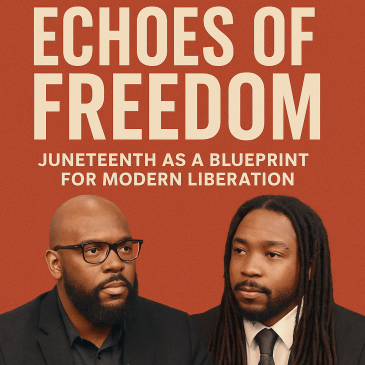
Juneteenth is more than a historical marker—it is a mirror and a mandate. A mirror to reflect how far we’ve come, and a mandate to carry the work forward. Through Season 3, Episodes 59 and 60 of America in Black and White, we hear two voices—Anthony Potter Jr. and Councilman Maurice Hairston—who embody this truth with urgency and grace.

Part 1: Financial Literacy as Freedom – A Conversation with Anthony Potter Jr.

Anthony Potter Jr. paints a vivid picture of economic resilience, rooted in personal struggle and generational responsibility. In his view, Juneteenth is not only the end of slavery, but the beginning of economic emancipation. He reframes financial literacy as a birthright—something to be passed down alongside our stories, our culture, and our survival.

“Every budgeted dollar is an act of protest. Every savings account, a brick in the foundation of generational wealth,” Anthony says. His message is both practical and revolutionary. For communities historically excluded from the wealth-building conversation, he insists we must not just participate—we must lead.

Charles Zackary King skillfully draws out the connection between financial autonomy and historical justice, reinforcing that true emancipation cannot be declared without economic equity.

Part 2: Bridging the Gap with Revolutionary Love – A Conversation with Councilman Maurice Hairston

Councilman Hairston’s words are laced with heart and heritage. Coming from Glenarden, Maryland, his journey as both policymaker and local artist bridges generational and ideological divides. He speaks of lost family values, disconnection among youth, and the urgency to restore identity within the Black community.

Hairston doesn’t just talk about change—he lives it. As a rapper, he speaks their language. As a legislator, he enacts their hopes. “You can’t lead a community you haven’t served,” he says. His concept of revolutionary love urges us to radically invest in each other—with truth, presence, and accountability.

Under Charles’s guidance, this conversation moves beyond politics. It becomes a soul-deep discussion about healing fractured communities and reclaiming cultural agency.


The Pulse of Juneteenth: Why These Stories Matter

These aren’t just interviews. They’re blueprints. They show us how Juneteenth isn’t confined to 1865—it’s alive today, in our decisions, our advocacy, and our vision for tomorrow.

Potter teaches us that financial literacy is the new civil rights frontier. Hairston reminds us that unity is the cornerstone of that frontier. And through these dialogues, America in Black and White becomes a platform not only for remembrance but for realignment.


Call to Action: Your Freedom Requires Fuel

  • Teach financial literacy. Start in your home, your church, your schools.
  • Bridge the gaps. Listen to your elders. Mentor the youth. Lead with love.
  • Support Black leadership. Vote. Donate. Share stories that uplift truth.

Let Juneteenth be more than reflection. Let it be a resolution.


The Forgotten Founders: Reclaiming the Legacy of the Etruscans

Long before the grandeur of Rome dazzled the world, there thrived a mysterious and affluent civilization on the Italian peninsula: the Etruscans. Flourishing between the 8th and 3rd centuries BCE, the Etruscans laid the bedrock for much of what the Roman Empire would later claim as its own. Yet history has quietly erased them—leaving only fragments of their brilliance buried beneath the empire that swallowed them.

A People of Sophistication and Spirit

The Etruscans were more than just precursors to Rome—they were innovators in urban planning, religion, art, and governance. Their cities, nestled in what is now Tuscany and parts of Umbria and Lazio, featured advanced road systems, drainage infrastructure, and public squares. They introduced the arch into architecture and influenced many religious rituals the Romans adopted, from augury (interpreting the will of the gods) to gladiatorial games, which began as funerary rites.

Women in Etruscan society held unusually high status for the ancient world—participating in banquets, owning property, and maintaining independent identity. This, of course, scandalized the patriarchal Greeks and Romans, who later rewrote Etruscan narratives through their own biased lenses.

Wealth and the Wounds of Conquest

Etruscan cities prospered through metalwork, trade, and cultural ingenuity. Their tombs were filled with gold, jewelry, and finely crafted pottery, testifying to their immense wealth. But with prosperity came peril. As Rome grew hungry for expansion, it absorbed and suppressed the Etruscans over a few centuries—confiscating lands, pillaging tombs, and eventually erasing their language and identity.

The final blow wasn’t just military—it was historiographical. Much of what we know about the Etruscans comes from the victors who subdued them. And like many erased peoples across time, their story was rewritten, then forgotten.

Legacy in the Shadows

Despite the attempted erasure, traces of Etruscan influence remain etched into Italy’s DNA. The Romans built their republic—its laws, its rituals, its military customs—upon Etruscan blueprints. The toga? Etruscan. The Roman alphabet? Adapted from Etruscan script, which itself was adapted from Greek. Even the cultural ideal of dignitas, a Roman virtue of honor and worth, echoes the Etruscan spirit.

Their disappearance is a stark reminder that wealth and brilliance alone don’t preserve a people’s memory—only storytelling does.

Why We Must Remember

In many ways, the Etruscans mirror others throughout history who were culturally rich yet politically overrun—societies like those of West Africa before colonization, or Black Wall Street before the 1921 Tulsa massacre. Their fall reveals the fragility of legacy without vigilance.

Let us remember the Etruscans not as a footnote to Rome, but as visionaries in their own right—a people of ceremony, city-building, and sacred purpose, whose silence today speaks volumes about the way history is written.