Dr. Keyimani Alford: Reclaiming Narratives, Empowering Voices

Dr. Keyimani Alford is more than a leader; he is a storyteller, healer, and advocate whose life’s work bridges the worlds of education, authorship, and empowerment. Born in Oakland, California, and raised in Milwaukee, Wisconsin, Dr. Alford grew up navigating instability, poverty, and family absence. Those early challenges shaped his belief that education is not only a pathway to freedom but also a tool for rewriting one’s story.

As a first-generation college graduate who went on to earn his Ph.D. in Education, Dr. Alford understands the barriers faced by students from marginalized backgrounds. His research focuses on retention and persistence for first-generation and minority male students at predominantly White institutions, emphasizing that relationships and belonging are critical to success. Today, as Associate Vice President of Student Access & Success at Madison College, he leads initiatives that help students overcome financial, systemic, and personal obstacles so they can thrive. His leadership is rooted in empathy, accountability, and the conviction that systems should serve students, not the other way around.

Championing Underserved Communities

Dr. Alford’s commitment extends far beyond campus walls. Through his involvement in organizations such as WASFAA, College Goal Wisconsin, and MASFAA (where he serves as President-Elect), he advocates for policies that expand access and equity in higher education. His work ensures that underserved students, veterans, first-generation learners, and minority communities, have the support they need to persist and graduate.

He also founded Keywords Unlocked, LLC, a publishing and coaching company designed to amplify everyday voices, particularly Black and underrepresented authors. By equipping writers with tools and strategies to move from manuscript to marketplace, Dr. Alford is dismantling barriers in the publishing industry and ensuring that marginalized stories are not only told but celebrated.

Author and Storyteller

Dr. Alford’s own catalog of books reflects the power of storytelling as a tool for healing and leadership:
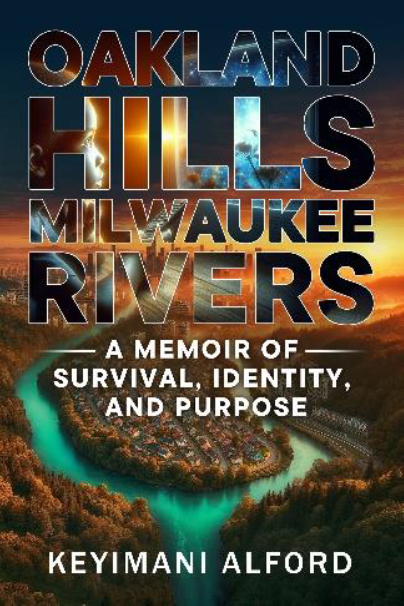
Oakland Hills, Milwaukee Rivers: A Memoir of Survival, Identity, and Purpose

In Oakland Hills, Milwaukee Rivers, I invite readers into the quiet rooms, crowded churches, and complicated family moments that shaped me as a Black boy learning to survive, belong, and believe in his own worth. This memoir walks through childhood trauma, father loss, religious shame, identity questions, and the hidden weight of silence, while tracing how grace kept showing up in unexpected people and places. It reads like sitting across from a friend who is finally telling the whole story, not the edited version.

Readers will see their own questions on these pages. The book helps them name what hurt, grieve what was taken, and begin to reclaim their voice with honesty and dignity. They walk away with language for things they have carried for years, a deeper understanding of how identity and faith can coexist with pain, and a renewed belief that their story is not over. This memoir becomes a mirror and a map for anyone who has ever felt unseen, misunderstood, or afraid to be fully themselves.

Unshaken Leadership: A Practical Blueprint for Overcoming Challenges, Learning from Mistakes, and Growing in Confidence

Unshaken Leadership pulls back the curtain on what leadership really feels like when the title sounds good, but the pressure is heavy. Drawing from more than two decades in higher education, community, and faith-based spaces, I walk readers through the unspoken realities of leading people, managing politics, navigating conflict, and making hard decisions when you still feel like you are figuring it out yourself. Each chapter blends story, reflection, and practical strategy so readers see the lessons in real situations, not just theory on a page.

This book is written for new and growing leaders who are tired of pretending they have it all together and are ready to lead with honesty, courage, and emotional intelligence. Readers gain language for the challenges they are facing, tools for balancing vision and boundaries, and frameworks they can immediately apply with their teams. The goal is simple: to help leaders stand firm when things shake around them, learn from their missteps without shame, and grow into a version of leadership that feels both effective and authentic.
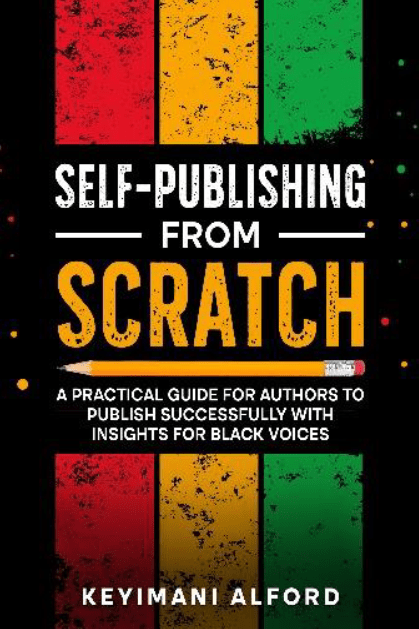
Self-Publishing from Scratch: A Practical Guide for Authors to Publish Successfully with Insights for Black Voices

Self-Publishing from Scratch is a step-by-step roadmap for everyday people who feel called to write a book and have no idea where to start. I walk readers through the full journey from idea to published book in plain language, breaking down what to write, how to edit, how to find a cover, how ISBNs work, what platforms to choose, and how to price and promote their work. Along the way, I share real stories, checklists, and behind-the-scenes lessons from my own publishing journey so readers avoid costly mistakes and gain the confidence to hit “publish” with clarity.

This book especially centers Black and underrepresented voices who have been told their stories are “too much,” “too specific,” or “too risky” for traditional publishing. Readers come away with practical tools, a realistic plan, and the encouragement that they do not have to wait for permission to become an author. By the end, they understand the business and the heart of self-publishing, and they know exactly what to do next to turn a manuscript, a journal, or even a set of notes on their phone into a book in readers’ hands.

Mile Markers of Life: A 100-Day Christian Devotional for Direction and Strength

Mile Markers of Life is a 100-day devotional born from years of driving Wisconsin highways and noticing how the mile markers along the road mirrored the seasons of my own life. Each entry starts with a real-life scene and then connects it to Scripture, reflection, and a short prayer, helping readers see that God has been present in both the ordinary and painful parts of their journey. The readings are honest and accessible, designed for people who are carrying a lot and need encouragement that fits into real schedules and real emotions.

Readers will experience a devotional that speaks to fatigue, grief, uncertainty, hope, and new beginnings with gentle clarity. Every day offers direction for the heart and a small step they can take to move forward, whether that is letting something go, forgiving themselves, or daring to dream again. By the time they reach Day 100, they have traced their own “mile markers,” recognized how far they have come, and rediscovered that even in detours and delays, God has been guiding them toward healing and purpose.

A Voice of Hope and Action

Whether speaking in lecture halls, boardrooms, sanctuaries, or behind a microphone, Dr. Alford blends truth-telling with practical tools. His keynote themes, leadership with integrity, healing from trauma, equity in higher education, and empowering everyday voices, resonate because they are lived experiences, not abstract theories. Audiences leave not only inspired but equipped with frameworks and next steps to move forward.

Across every platform, Dr. Alford reminds people that their story still has chapters left and that hope is always within reach. His work as an author and advocate continues to light the way for underserved communities, proving that beginnings do not define destinies.

Connect with Dr. Keyimani Alford

Name: Dr. Keyimani Alford

Email: drkeyspeaks@gmail.com

Speaking & Books: www.drkeyspeaks.com

Publishing Company: www.keywordsunlocked.com

Social Media:

  • YouTube: @drkeyspeaks
  • Instagram: @drkeyspeaks
  • TikTok: @drkeyspeaks
  • Facebook: @drkeyspeaks
  • LinkedIn: Dr. Keyimani Alford (search on LinkedIn by name)

Lenacapavir: A Breakthrough HIV Prevention Tool Held Back by Global Funding Cuts

Adapted from reporting by Rachel Schraer, The Independent (Rethinking Global Aid Project)

The closest thing we have to an HIV vaccine has finally arrived. Lenacapavir, a long-acting injectable medication that can prevent nearly 100% of HIV infections when administered twice yearly, is being hailed as revolutionary. Yet despite its promise, only a fraction of the people who need it will gain access.

The Numbers Behind the Breakthrough

  • Current plans by Gilead and international funders will provide lenacapavir to 2 million people over three years, about 666,000 annually.
  • Research by Dr. Andrew Hill (University of Liverpool) shows this rollout could avert 165,000 infections, but scaling up to 10 million people annually could prevent half a million infections and put us on track to ending HIV transmission.
  • The challenge: funding cuts, particularly from the U.S. under President Donald Trump, have left prevention efforts severely under-resourced.

The Cost and Access Challenge

  • In the U.S., a course of lenacapavir costs $28,000.
  • Thanks to advocacy and licensing agreements, the drug will be sold at no profit in low-income countries, with costs reduced to around $40 per person per year.
  • Gilead’s plan to reach 2 million people by 2028 is described as an “initial step,” with hopes that generic manufacturers will expand access further.

Why This Matters Globally

Anne Aslett, CEO of the Elton John AIDS Foundation, called the rollout “unprecedented,” noting that doses are arriving in Eswatini at the same time as in the U.S., a sharp contrast to the early AIDS crisis, when African nations waited more than a decade for antiretroviral drugs.

Still, she warns that funding gaps threaten progress. Vulnerable populations, young women, LGBTQ communities, sex workers, and people who use drugs, are often excluded from prevention services. Without reaching these groups, the epidemic cannot be contained.

Innovation in Delivery

  • Foundations are experimenting with drone deliveries of drugs and testing kits.
  • Digital pilots in London are making PrEP accessible directly to consumers, by passing traditional clinics.
  • Sub-Saharan Africa is now pioneering models of care that are more advanced than those in parts of the Global North.

🇬🇧 The UK’s Role

Mike Podmore, CEO of STOPAIDS, emphasizes that UK contributions are not just charity, they fuel domestic research and innovation. Agencies like Unitaid have invested £250m into UK universities over the past decade, strengthening both global and local HIV responses.

The UK has set a goal to end new HIV transmissions by 2030, and expanding access to lenacapavir will be critical to achieving it.

The Call to Action

Ending HIV is within reach, but only if global leaders step up. Dr. Hill and advocates worldwide are urging wealthy nations to contribute to a proposed $400m fund to expand access without undermining existing HIV programs.

This is a pivotal moment: decades of research and advocacy have brought us closer than ever to a cure. But without adequate funding, only 7% of those who need lenacapavir will receive it.

What you can do:

  • Sign petitions demanding governments protect and expand HIV funding.
  • Share this story widely to raise awareness.
  • Pressure policymakers to prioritize vulnerable populations in prevention programs.

Together, we can ensure that this breakthrough doesn’t stall at the starting line. Let’s end HIV and make life better for all.

Original reporting by Rachel Schraer, The Independent, as part of the “Rethinking Global Aid” project.

Seventh HIV Remission Sparks Hope, and Raises Questions About U.S. LeadershipOriginal reporting by Michelle Starr, Nature

A German man known as “Berlin 2 (B2)” has remained in remission from HIV for six years after a stem cell transplant to treat leukemia. This marks the seventh known case of long-term HIV remission worldwide. Unlike earlier cases, B2’s donor carried only one copy of the CCR5 Δ32 mutation, previously thought insufficient for durable resistance. His remission challenges assumptions and opens new pathways for understanding how HIV reservoirs can be eliminated.

Globally, 40.8 million people were living with HIV in 2024, with 1.3 million new infections and 630,000 AIDS-related deaths. In the U.S., 39,201 new diagnoses were reported in 2023, disproportionately impacting Black and Latino communities, especially in the South.

These breakthroughs abroad raise urgent questions:

  • Why are Germany and Switzerland leading in remission cases, while the U.S. lags behind?
  • Why does America, supposedly the global leader in R&D, appear to be playing second fiddle in HIV cure research?
  • Is the lack of universal healthcare in the U.S. a factor in limiting access to experimental treatments?
  • Why does Big Pharma continue to prioritize lifelong drug regimens over potential cures?

For those living with HIV/AIDS, these questions are not abstract, they are about survival. If you are reading this and living with HIV, ask your doctor about the current status of cure research. Demand transparency.

Stem cell transplants are not scalable cures, but they prove that reservoir reduction, graft-versus-reservoir responses, and partial CCR5 protection can lead to remission. The challenge now is whether America will invest in replicating these mechanisms through gene editing and pharmaceutical innovation or continue to let others lead while its citizens wait.

The Empowerment and Resilience Framework: A New Era of Healing for Black Women

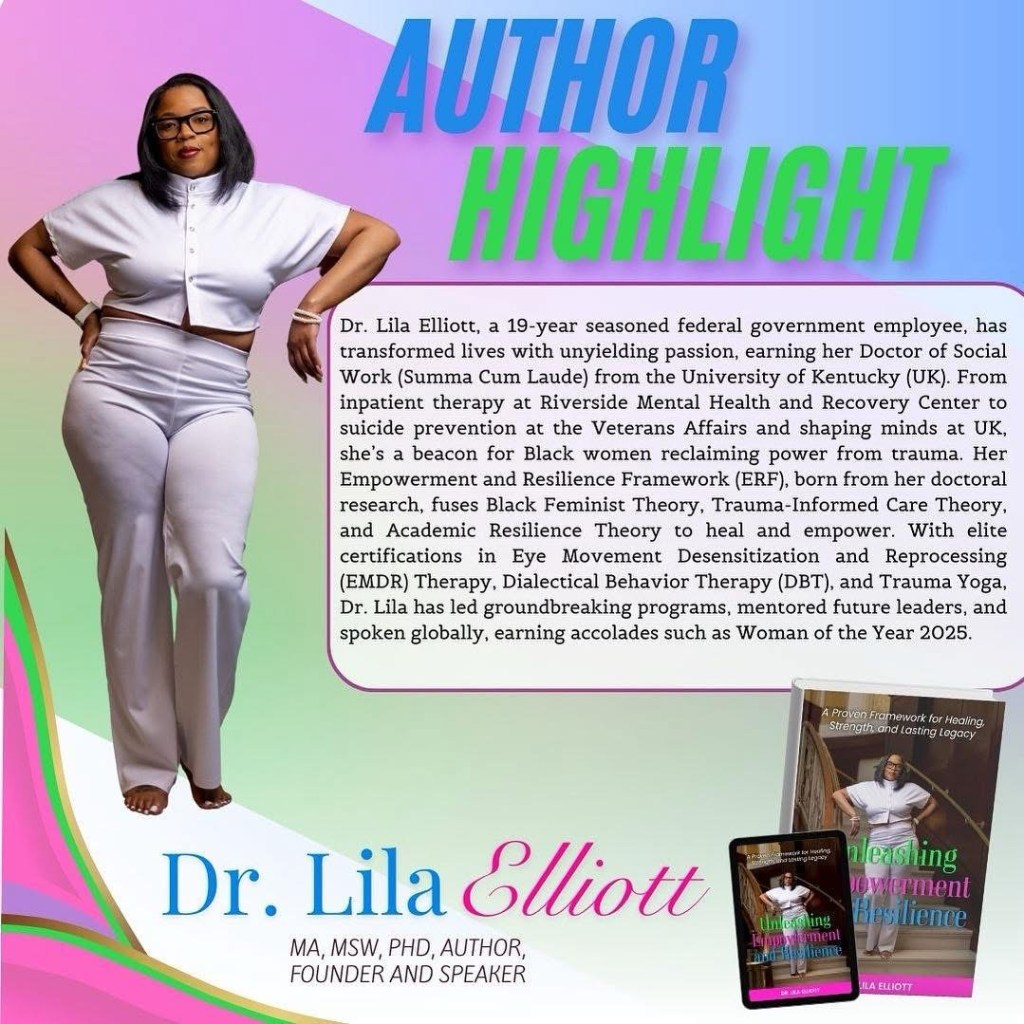
Climbers, y’all know I love amplifying powerful Black women who are doing transformational work and today I’m honored to spotlight my colleague, friend, and fellow doctor, Dr. Lila Elliott.

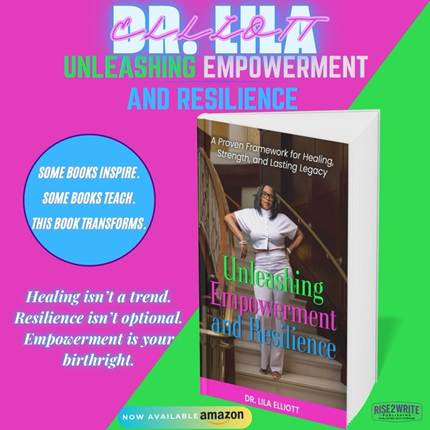
Her brand-new self-help journal, Unleashing Empowerment and Resilience, is officially OUT on Amazon and it is a must-have for anyone serious about healing, breaking cycles, and stepping into their birthright of strength.

Dr. Elliott is more than an author, she’s a visionary. With 19 years of clinical practice, research, and her doctoral capstone, she created the Empowerment and Resilience Framework (ERF), a groundbreaking model that blends Black Feminist Theory, Trauma-Informed Care, and Academic Resilience into a practical blueprint for real life.

This journal is not just for social workers or therapists. It’s for:

  • Black women healing childhood trauma
  • Corporate leaders rising above burnout
  • Teachers building safe spaces
  • Hairstylists listening to stories every day
  • Veterans, parents, and anyone ready to stop surviving and start thriving

Inside, you’ll find:

  • Practical strategies you can apply immediately
  • Journaling prompts to guide reflection and growth
  • Stories from women who reclaimed their power
  • Tools you can use in your home, workplace, community, and relationships

Dr. Elliott recently joined me on America in Black and White, where she shared how her work is rooted in truth-telling, resilience, and the power of Black women’s voices. Her insights reminded us that healing is not just personal, it’s communal, and it’s historical.

This book transforms you from the inside out. Imagine having a guide that teaches you to turn your pain into power, your voice into your weapon, and your story into a legacy. That’s exactly what Unleashing Empowerment and Resilience delivers.

Grab your copy today: Amazon link
Learn more about Dr. Elliott’s work: Her website

If you have a sister, coworker, friend, or colleague who needs a reminder of who she is, gift her this journal. Healing starts with one choice. One self-help journal. One moment.

Let’s support this incredible Black woman author and help get this book into the hands of every person ready to rise. 

7 Smart Holiday Spending Tips for Uncertain Times

By Charles Zackary King – America in Black and White / AMIBW The Magazine

The holidays are a time of joy, connection, and celebration. But for many in underserved, marginalized, and LGBTQ communities, they can also bring financial stress. Rising costs, economic uncertainty, and the pressure to “keep up” can make this season feel overwhelming. The truth is: prosperity isn’t about how much you spend, it’s about how wisely you manage what you have.

Here are 7 smart holiday spending tips to help you celebrate without financial regret:

1️ Set a Holiday Budget, and Stick to It

  • Decide how much you can realistically spend before shopping.
  • Break it down into categories: gifts, food, travel, and entertainment.
  • Remember: a budget is not a restriction, it’s a roadmap to peace of mind.

2️ Prioritize Meaning Over Money

  • The most valuable gifts are time, love, and presence.
  • Consider homemade gifts, shared experiences, or community service.
  • Focus on creating memories, not debt.

3️ Avoid Credit Card Traps

  • High-interest debt can linger long after the holidays.
  • Use cash or debit when possible to stay grounded in reality.
  • If you must use credit, pay it off quickly to avoid long-term costs.

4️ Shop Smart and Early

  • Compare prices online before buying.
  • Take advantage of community markets and small businesses that often offer affordable, unique items.
  • Avoid last-minute shopping, it leads to overspending.

5️ Protect Your Future Goals

  • Don’t let holiday spending derail long-term plans like saving for a home, investing, or retirement.
  • Ask yourself: Will this purchase bring lasting value, or just temporary satisfaction?
  • Keep your financial priorities front and center.

6️ Build Community Wealth

  • Support local LGBTQ-owned and minority-owned businesses.
  • Every dollar spent in your community strengthens its future.
  • Think of holiday spending as an investment in legacy.

7️ Plan for the New Year

  • Start January with a financial reset: review what worked and what didn’t.
  • Set savings goals early to avoid repeating holiday stress.
  • Remember: prosperity is a journey, not a one-time event.

Closing Thought

This season, let’s choose prosperity over pressure. Being smart with your money is not just about surviving uncertain times, it’s about building a future where our communities thrive. Joy doesn’t come from overspending; it comes from knowing we are protecting our legacy, our families, and our futures.

Celebrate wisely. Spend intentionally. Prosper together.

The “Big Beautiful” Bill Is a Devastating Blow to Everyday Americans

By Charles Zackary King | AMIBW Magazine Blog


On July 4, 2025, while fireworks lit the sky, the United States quietly enacted one of the most sweeping cuts to its social safety net in decades. Dubbed the “One Big Beautiful Bill,” this legislation has a name that evokes hope — but its true impact could be catastrophic for millions of Americans. Seniors, working-class families, and impoverished communities now face an uncertain future as Medicaid, Medicare, and SNAP undergo deep structural reductions.

As headlines celebrate “economic discipline” and “government efficiency,” communities on the margins brace for what may become a humanitarian crisis. This blog post explores what’s at stake, who is most vulnerable, and what steps we must take to protect our neighbors and our nation.


What’s Being Cut — and Who Pays the Price

Medicaid

  • Cuts totaling $930 billion over the next decade
  • Imposed work requirements of 80 hours/month for adults aged 19–64
  • Heightened eligibility reviews and reduced state flexibility
  • Strained provider budgets, risking access to care

Medicare

  • $533 billion slashed due to automatic PAYGO reductions
  • Shrinking provider reimbursements and higher out-of-pocket costs
  • Seniors may struggle to maintain critical care and medication regimens

SNAP (Supplemental Nutrition Assistance Program)

  • Reductions of $295 billion
  • New work rules apply to recipients up to age 64
  • States now must partially fund SNAP, risking coverage gaps
  • School meal programs also face uncertainty

Real-Life Consequences: Health, Hunger, and Homelessness

For seniors living on fixed incomes, these cuts aren’t just policy shifts — they’re life-altering.

  • Over 17 million older adults rely on Medicaid
  • Nearly 11 million use SNAP to combat food insecurity
  • Thousands of veterans, disabled individuals, and rural residents depend on these programs for survival

With fewer protections:

  • Mental health and substance abuse services will disappear
  • Food banks will become overwhelmed
  • Families will face impossible choices — rent or medicine, dinner or doctor’s appointments
  • A spike in homelessness and medical emergencies is likely

How You Can Prepare

While lawmakers battle in Washington, communities must mobilize on the ground:

For Individuals

  • Organize your documents: Health records, work hours, income proofs — they’ll be critical for eligibility reviews
  • Tap into local aid: Visit food banks, free clinics, and legal aid organizations
  • Explore ACA alternatives: The Health Insurance Marketplace may still offer options

For Communities

  • Churches and nonprofits: Provide meals, shelter, and spiritual care
  • Local clinics: Prepare to see increased demand — support their expansion efforts
  • Advocacy networks: Share resources and unite across racial, generational, and economic divides

How We Can Prevent This Disaster

It’s not too late — but it demands collective action.

Policy Remedies

  • Congress can repeal or delay the bill’s harshest provisions
  • State governors may apply for waivers to protect their residents
  • Litigation by civil rights and health advocacy groups may challenge legality

Civic Activism

  • Call and write your representatives. Let them know you’re watching.
  • Support organizations defending seniors, children, and marginalized groups
  • Mobilize voters ahead of the 2026 midterm elections

Final Thoughts: Will We Stand Up for One Another?

What’s beautiful about America isn’t austerity — it’s compassion, community, and care. The “Big Beautiful Bill” may claim to balance budgets, but it does so on the backs of those least able to bear it. This blog isn’t just a warning — it’s a rallying cry.

History will ask: when the most vulnerable were under attack, did we speak out? Did we organize? Did we rise?

Let’s answer with action.


The Big Beautiful Bill: A Blueprint for Economic Devastation


The Big Beautiful Bill is poised to wreak havoc on the American economy — not in subtle ways, but through deep, direct harm that will ripple through generations. From cuts to essential social programs to permanent tax handouts for the ultra-rich, this bill isn’t just bad policy. It’s a betrayal of the very people who make America work.

Seniors and Struggling Families on the Chopping Block

Let’s be clear: slashing Medicare, Medicaid, and SNAP will devastate seniors, retirees, low-income families, and the working poor. These programs are often lifelines — not luxuries.

  • Without Medicare and Medicaid, many seniors and low-income individuals will be left untreated, unfed, and unseen.
  • Without SNAP, families will go hungry, children will suffer, and local economies will crumble.
  • Retirement communities will face collapse as residents can no longer afford housing, healthcare, or basic needs.

America was built on the promise of caring for its people. This bill burns that promise to the ground.

Unraveling the Fabric of Society

Social programs form the social safety net — a system designed to prevent mass poverty and homelessness. Cutting them unleashes a domino effect:

  • Homelessness surges.
  • Families fall into survival mode.
  • Local economies suffer as spending power disappears.

This is not a hypothetical future. The fear is real, and the inevitable collapse is knocking on the door.

Economic Breakdown: Micro and Macro Impacts

To understand the gravity of this bill, we must look at how economies function:

Microeconomics: The Individual Fallout

Microeconomics examines the decisions and well-being of individuals, families, and small businesses.

  • Cutting support means reduced consumer spending, fewer economic choices, and mounting financial stress.
  • Local shops, health clinics, and services will feel the squeeze as their customers disappear.

Macroeconomics: National Consequences

Macroeconomics evaluates the economy as a whole — GDP, unemployment, inflation.

  • Slashing aid while handing tax breaks to the rich shrinks national demand, risking recession.
  • GDP falls, inequality rises, and the country’s economic health deteriorates.

The Policy That Fuels the Fire

Let’s break down the mechanisms driving this bill’s destructive force:

Fiscal Policy: Taxation and Spending

Fiscal policy should drive growth through strategic spending and fair taxation.

  • This bill entrenches a regressive system, privileging the elite while pushing the working class deeper into survival mode.
  • Instead of stimulating economic resilience, it funnels wealth upward, leaving the rest to crumble.

Monetary Policy: Too Little, Too Late

Monetary policy affects interest rates and money supply — but it can’t fix poor fiscal choices.

  • Even if the Federal Reserve lowers rates, it won’t restore SNAP or ensure Grandma can afford her insulin.
  • In short: the Fed can’t repair a shredded safety net.

⚠️ A Warning to America

Many who voted for Donald Trump are facing the stark reality of broken promises. He told us what he intended to do — and now it’s happening. Whether you feel blindsided or not, the truth is here.

This bill also:

  • Makes tax cuts for the top 1% permanent, pushing the burden to the middle class and poor.
  • Downgrades America’s credit rating by worsening debt and killing revenue.
  • Weakens small businesses despite enshrining their tax structure — temporary relief, permanent pain.
  • Undermines manufacturing through misguided tariffs, slowing production and raising costs.

Time to Rise

We must organize, advocate, and demand accountability. The everyday man and woman — the teachers, caregivers, cashiers, veterans, and dreamers — must come together to fix what’s being broken in plain sight.


#EconomicJustice #TruthInPolitics #BigBeautifulBill #AmericanEconomy
#FiscalFailure #SurvivalOfTheFittest #SeniorsMatter #EndPovertyCuts
#SpeakTruthToPower #WakeUpAmerica #BuyersRemorse #JusticeForAll


Financial Insight Newsletter: Retirement Planning by the Decade: A Savings Guide

Whether you’re just getting started or approaching your golden years, retirement planning isn’t one-size-fits-all—it’s a journey with milestones tailored to each season of life. Here’s how to stay financially empowered through every decade.

Your 20s: Foundation First

You’re young, full of potential, and time is your most valuable asset.

  • Enroll in your company 401(k): Even small contributions grow powerfully with compound interest.
  • Opt into auto-savings: Automation removes guesswork—pay yourself first.
  • Keep debt under control: Minimize high-interest credit card debt and student loan burdens.
  • Build an emergency fund: Aim for 3–6 months of expenses to avoid derailing your savings goals.
  • Open a Health Savings Account (HSA): Triple tax advantages make it a smart move if you’re in a high-deductible health plan.

Pro Tip: Starting early—even with just $25 a month—gives your money decades to work for you.

Your 30s & 40s: Balance & Boundaries

This phase is demanding—career, family, and financial responsibilities often compete for your attention.

  • Cut back on costly habits: Curb lifestyle inflation and reevaluate recurring expenses.
  • Avoid financial temptations: Shopping sprees and impulse upgrades can hinder long-term progress.
  • Prioritize your future self: Make your retirement contributions non-negotiable.
  • Stop raiding your savings: Dipping into retirement accounts now could mean penalties and missed growth later.
  • Revisit your budget: Adjust as your income grows and your priorities shift.

Mindset Shift: “Pay yourself like you pay your bills.”

Your 50s: The Double Down Era

Retirement is no longer abstract—it’s on the horizon. Now’s the time to go hard.

  • Make catch-up contributions: If you’re 50+, you can invest more in your 401(k) and IRA.
  • Maximize your HSA: Use it as a stealth retirement tool by covering future medical expenses.
  • Convert to a Roth IRA (strategically): Paying taxes now could shield your withdrawals later.
  • Save more in a taxable brokerage: Flexibility matters—especially for early retirement goals or unplanned costs.
  • Estimate your retirement needs: Get specific about lifestyle, healthcare, and travel dreams.
  • Consider long-term care insurance: Protect your legacy and reduce potential burdens.
  • Do regular check-ins: Monitor progress and adjust allocations as needed.

Your 60s: The Homestretch

Now it’s about protecting what you’ve built and planning the distribution strategy.

  • Continue catch-up contributions: Every dollar counts toward closing any savings gap.
  • Build a cash cushion: Prepare for unexpected expenses without tapping investment accounts.
  • Plan your income streams: Understand how retirement accounts, pensions, and investments will pay out.
  • Strategize for Social Security: Timing your claim can significantly impact lifetime benefits.
  • Apply for Medicare: At 65, enroll to avoid penalties and secure coverage.

Momentum Matters: Small decisions now impact your quality of life later.

Your 70s: You Made It

Retirement is here—but the planning doesn’t stop.

  • Start Required Minimum Distributions (RMDs): Avoid IRS penalties by taking the right amount from retirement accounts.
  • Reassess your plan annually: Adapt to changing expenses, markets, and goals.
  • Explore charitable giving: Qualified charitable distributions (QCDs) can reduce your taxable income and support causes you love.
  • Leave a legacy: Consider estate planning updates and beneficiary reviews.

Celebrate This Chapter: You’ve earned the chance to live with purpose, joy, and financial peace.

“What America Refuses to Owe: The Price of Black Suffering”


“What America Refuses to Owe: The Price of Black Suffering”

In the heart of every empire lies a contradiction. In America, it is this: We teach about justice, but we rarely practice it for the people who built the foundation of this country—enslaved Africans and their descendants.

America has written checks for tragedies abroad. But for slavery—a horror that happened here, in the soil, sweat, and blood of the South—there is no apology, no compensation, no closure.

When Injustice Was International, America Opened Its Wallet

Let’s look at the historical receipts.

  • After the U.S. dropped the atomic bomb on Hiroshima, Japan received billions in aid, development grants, and favorable trade agreements. A nation devastated by American military might was helped back onto its feet.
  • Following the Holocaust, Germany began reparations in 1952. To date, it has paid over $90 billion to Holocaust survivors and the Israeli state. An atrocity committed in Europe.
  • Even Japanese Americans, who were unjustly interned during WWII on U.S. soil, received a formal apology and $20,000 per survivor in 1988.

Yet descendants of enslaved Africans—whose entire existence was commodified and whose labor built the wealth of the United States—have received nothing.

Why?

The American Lie: That Slavery Is Over, And Therefore Forgotten

Slavery was not merely a period—it was a system of trauma. For 246 years, Black people were whipped, raped, auctioned, beaten, and banned from reading and writing. Their children were sold. Their backs bore the burden of a nation’s ascent.

But the injustice didn’t stop in 1865. It mutated.
From Jim Crow laws to redlining, from COINTELPRO to mass incarceration, America has continued to extract from Black communities while denying restitution.

Meanwhile, schoolchildren are more likely to learn the names of European dictators than the enslaved people who shaped their country’s highways, railroads, and economy. To add insult to injury, in some states, teachers are banned from even discussing this legacy with nuance.

We are forced to learn about atrocities that happened elsewhere, while those that happened here are buried beneath patriotic myth.

How Much Is Owed? The Rough Numbers Tell a Billion-Dollar Truth

Economists and scholars, including Dr. William Darity, estimate that the U.S. government owes Black Americans anywhere from $13 trillion to $17 trillion when adjusting for stolen labor, compounded over centuries, and exclusion from land ownership and wealth accumulation.

Compare that to the $90 billion Germany has paid for the Holocaust—an atrocity the U.S. had no direct part in causing.

Let’s be clear: reparations for one people should never preclude reparations for another. But the refusal to acknowledge Black suffering while uplifting other global tragedies reveals a truth too many are afraid to face:

America is more comfortable condemning crimes it didn’t commit than atoning for the ones it did.

What Can Be Done? Here’s Where the Cry Gets Louder

If we want justice, we must demand it. Silence has never saved us. Politeness never bought us freedom. We need more than conversations—we need disruption.

Take Action:

  • Email your representatives: Demand support for reparations legislation like H.R. 40.
  • Speak up locally: Press school boards and libraries to teach the full truth of slavery and Reconstruction.
  • Vote with purpose: Elect candidates who aren’t afraid to talk about systemic repair.
  • Support Black-led orgs fighting for economic equity and educational justice.
  • Use your platform—podcast, IG, YouTube, or block parties—to spread truth, not silence.

🖤 America doesn’t have an amnesia problem—it has an empathy problem.
And until this country sees Black pain as worthy of repair, the debt remains.

Let the cry get louder.


The Dying Music Industry: A Journey Through Time

The music industry has undergone a seismic shift from the 1950s through the late 1990s, evolving through myriad styles, influential artists, and the introduction of new technology—all of which have significantly shaped how we listen to and appreciate music. However, a deeper concern looms: has the industry lost its spark? As we delve into the decades that shaped modern music, we can’t help but notice a decline in longevity and creativity amongst today’s artists.

The Foundations: 1950s to 1970s

The 1950s laid the groundwork for rock and roll, with artists like Otis Redding, Sam Cooke, and Aretha Franklin breaking barriers with their soulful melodies and powerful performances. Franklin’s anthemic “Respect” became a cornerstone of not only music but also civil rights and feminism. Coming from the 1960s, groups like The Supremes and solo artists like Diana Ross showcased the power of Motown. Their catchy hooks and polished images captivated the world. The 1970s introduced funk with bands such as Sly and the Family Stone and Earth, Wind & Fire, whose grooves set dance floors ablaze. Barry White popularized the “Love Unlimited” sound, blending orchestral arrangements with powerful basslines, creating timeless classics. This decade also saw the emergence of disco, influencing the music landscape and nightlife culture.

The 1980s: Explosion of New Genres

The 1980s were particularly revolutionary for music. This era saw the explosion of genres like hip-hop, pop, and R&B. Prince redefined what it meant to be a solo artist, combining rock, funk, and pop in ways that had never been done before. Songs like “Purple Rain” emphasized not just musical skill but also theatricality, shaping how artists interacted with their audience. Michael Jackson emerged as a global icon, with “Thriller” breaking records and paving the way for future pop phenomena. His music videos transformed into art forms of their own. Meanwhile, the likes of Anita Baker and Sade brought smooth jazz and soul into the mainstream, proving that emotional depth could resonate with audiences. This decade is often celebrated for its vibrant creativity, with the emergence of new technologies such as the synthesizer, which introduced entire new sounds and textures. Artists like Madonna, a quintessential pop star, used the music video format to express social issues and personal identity—an approach that pushed boundaries.

The 1990s: Enter the Digital Age

As we moved into the 1990s, the music landscape continued to diversify with the arrival of grunge and hip-hop, spearheaded by iconic figures such as Tupac Shakur and Notorious B.I.G. R&B artists like R. Kelly and TLC crafted hits that defined the sound of a generation. The era was marked by lyrical depth and musical experimentation, blending styles and influences into a unique tapestry. However, the late 1990s also marked a pivotal downturn for the music industry. With the rise of digital music formats and the internet, music listening became more about consuming singles rather than albums. The traditional revenue models began to crumble, sparking legal battles and leading to the pivot toward auto-tuned vocals and electronic beats. As a consequence, artistry began to drift, giving way to a reliance on sampling and rehashing classic sounds rather than creating new ones.

The Decline: The Rise of Short-Lived Fame

Fast forward to today, and the music industry faces a crucial challenge. The artists who once commanded the charts, such as Prince, Michael Jackson, and Marvin Gaye, were not just musicians; they were cultural icons who created movements. Today’s music scene seems dominated by transient stars producing a plethora of hooks with little substance beyond their debut record. The prevalence of digital tools often sacrifices originality for formulaic music-making. Many contemporary artists emerge with one hit and then fade into obscurity, a stark contrast to the old school stars who still thrive in sold-out arenas around the world, performing their classic hits. These legends—like Gladys Knight, Diana Ross, and Earth, Wind & Fire—prove that while music may evolve, the essence of true artistry remains timeless. The audience craves that deep connection that music brings—something that today’s quick hits often fail to provide.

Conclusion: The Future of Music

So, what lies ahead for the music industry? As we reflect on the achievements and transformations of the past, we must acknowledge the talents and innovations that have come and gone. While technology offers unprecedented access and avenues for emerging artists, it is essential to hold on to the authenticity and creativity that have historically defined great music. For the music industry to thrive once again, it may need to cycle back to its roots—celebrating artistry, innovation, and the human experience over mere commercial success. Only then can we find new voices that resonate and endure in the hearts of listeners for generations to come.