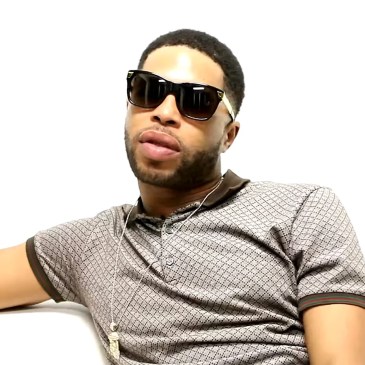
17 Shots in the Back, When Will Justice Come?

Credit: Original reporting by Joe Walker (@joewalkr, The Independent)

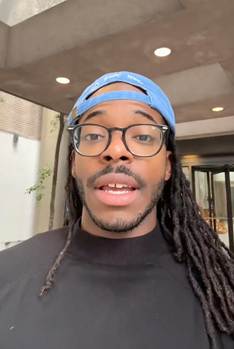
Atlanta rapper B Green, born Linton Blackwell, was shot and killed on October 11th outside Five Paces Inn in Buckhead. The autopsy revealed a chilling truth: he was shot 17 times in the back by off-duty police officer Gerald Walker, who was working security at the bar.

Police claim Walker was responding to reports of a “disruptive person.” They allege that Green attempted to re-enter the bar through a rear entrance and later placed an item in the small of his back. Commands were issued “in reference to a gun,” and moments later, Green was gunned down. Investigators later found a firearm, but the autopsy makes clear: every single bullet entered his back.

Green’s manager and friend, Timothy Coleman, expressed disbelief: “I just couldn’t believe it was 17 times in the back. There’s not one shot in the front. If he wasn’t pointing a gun at you or doing anything, what does that have to do with shooting him in the back 17 times? That means he wasn’t facing you. He wasn’t a threat.”

Green was a father of twin girls, a family man, and an artist who left behind a legacy, including his final album PTSD: Vietnam Vet released in 2020.

The Larger Issue

This is not just about one man. This is about a system that continues to allow police officers, sworn to protect, to kill Black men with impunity.

  • Seventeen shots in the back is not self-defense. It is execution.
  • When officers fire this many times, it reveals not fear, but intent.
  • The justice system has repeatedly failed to hold officers accountable, creating what feels like a license to kill.

And what makes this even more painful is the reality that Black officers, too, have participated in this cycle of violence against their own communities. The badge, in too many cases, has become a shield for abuse rather than a symbol of protection.

The Questions We Must Confront

  • What will make a person shoot another human being 17 times in the back?
  • How can the justice system continue to justify these killings?
  • Why are Black men still being killed, while the officers responsible walk free?
  • When will police departments stop operating like mafia hit squads, taking lives whenever they feel like it?

A Call for Accountability

It is long past time to demand change. Calls to “defund” are not about chaos, they are about redirecting resources away from militarized policing and toward community safety, mental health, education, and opportunity.

Every time another Black man is killed, we are reminded that reform alone is not enough. Accountability must be real. Justice must be enforced. And communities must be empowered to protect themselves from the very institutions that claim to serve them.

Timeline of Police Killings of Black Men (2014–2025)

2014 – Michael Brown (Ferguson, Missouri)

  • Shot and killed by Officer Darren Wilson.
  • His death sparked nationwide protests and helped ignite the Black Lives Matter movement Statista.

2015 – Walter Scott (North Charleston, South Carolina)

  • Shot five times in the back while fleeing a traffic stop.
  • Officer Michael Slager was eventually sentenced to 20 years in prison CBC.

2016 – Alton Sterling (Baton Rouge, Louisiana)

  • Shot outside a convenience store while pinned to the ground.
  • Federal prosecutors declined to charge the officers involved CBC.

2016 – Philando Castile (Falcon Heights, Minnesota)

  • Shot during a traffic stop after informing the officer he was legally carrying a firearm.
  • The aftermath was streamed live on Facebook by his girlfriend. Officer Jeronimo Yanez was acquitted CBC.

2016 – Terence Crutcher (Tulsa, Oklahoma)

  • Shot while his hands were raised near his stalled vehicle.
  • Officer Betty Shelby was acquitted of manslaughter CBC.

2020 – George Floyd (Minneapolis, Minnesota)

  • Murdered when Officer Derek Chauvin knelt on his neck for over nine minutes.
  • His death sparked global protests against police brutality Wikipedia.

2020 – Rayshard Brooks (Atlanta, Georgia)

  • Shot in the back by police after being found asleep in his car at a Wendy’s drive-thru.
  • His killing reignited protests in Atlanta Wikipedia.

2022 – Patrick Lyoya (Grand Rapids, Michigan)

  • Shot in the back of the head during a traffic stop.
  • Officer Christopher Schurr was charged with second-degree murder Wikipedia.

2025 – Linton “B Green” Blackwell (Atlanta, Georgia)

  • Shot 17 times in the back by off-duty officer Gerald Walker outside Five Paces Inn.
  • His autopsy confirmed no shots to the front, raising questions of execution rather than defense mappingpoliceviolence.us.

https://www.statista.com/statistics/585152/people-shot-to-death-by-us-police-by-race/

https://www.cbc.ca/news/world/list-police-related-deaths-usa-1.4438618

https://mappingpoliceviolence.us/

What This Timeline Shows

  • Pattern of excessive force: From Ferguson to Atlanta, Black men are disproportionately killed by police.
  • Lack of accountability: Many officers are acquitted or never charged, reinforcing systemic impunity.
  • Escalation of violence: Shooting someone 17 times in the back, as in B Green’s case, is not policing — it is execution.
  • Community impact: Each killing leaves families devastated and communities traumatized, fueling mistrust of law enforcement.

Closing Thought

This timeline makes clear: B Green’s killing is not an isolated tragedy. It is part of a decades-long crisis of police violence against Black men. Until accountability is real and systemic change is enforced, these killings will continue.

Sources: Wikipedia CBC Statista mappingpoliceviolence.us

Closing Thought

B Green’s death is not just a tragedy, it is a symptom of a system that continues to devalue Black lives. Seventeen shots in the back is not policing. It is murder.

The question remains: When will justice finally come?
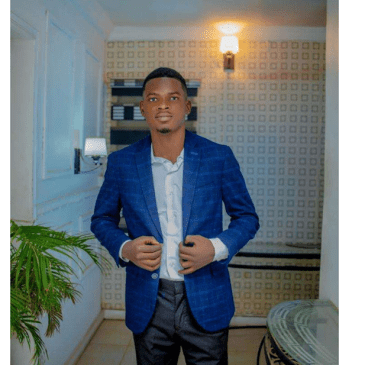
Samuel Adegboyega: Building Digital Bridges Between Stories, Strategy & Sales

In an era where digital presence defines influence, Samuel Adegboyega is helping brands and authors do more than just show up helping them stand out.

Since 2020, Samuel has worked across platforms like Fiverr, Upwork, and independent collaborations, empowering businesses and creatives to scale their online presence, drive consistent sales, and build lasting communities. His approach is rooted in strategy, creativity, and a deep respect for storytelling as a tool for transformation.

The Strategist Behind the Screen

Samuel’s digital marketing expertise is both broad and precise. He specializes in:

  • On-page SEO and backlink building to boost organic visibility
  • Content creation and social media management that spark engagement
  • Facebook and Instagram ads that convert attention into action

Whether launching a new product or revitalizing a legacy brand, Samuel blends organic growth with paid campaigns to deliver results that matter.

Championing Authors, One Page at a Time

For authors and publishing brands, Samuel is more than a marketer, he’s a partner in purpose. His services include:

  • Book editing, rewriting, and cover design
  • Cinematic book trailers and publishing support
  • Tailored marketing strategies to build readership and drive sales

He understands that every book is a legacy, and every author deserves a platform that honors their voice.

Visuals That Speak Volumes

With a creative edge in store design, photography, and digital art, Samuel crafts immersive brand experiences that resonate. His visuals don’t just look good, they tell stories, evoke emotion, and drive connection.

 Where Education Meets Innovation

Armed with a degree in Educational Technology from the University of Ilorin, Samuel integrates learning, tech, and marketing to deliver digital solutions that educate, inspire, and convert. His work reflects a belief that knowledge is power, and that power should be accessible, actionable, and beautifully delivered.

In a time of shifting trends and rising voices, Samuel Adegboyega is helping creators and businesses navigate the digital age with clarity, creativity, and conviction. Because in the end, it’s not just about being seen, it’s about being remembered.

Please connect with Samuel by clicking the links below:

fiverr.com/sammysprom

https://www.facebook.com/share/17pTW4ktYC/?mibextid=wwXIfr

“When Familiarity Becomes a Filter: CBS, Race, and the Cost of Corporate Realignment”

Credit: Original reporting by Ariel Zilber for the New York Post. Additional sourcing from Yahoo News, Deadline, and NewscastStudio. Radio & Television Business Report Yahoo NewscastStudio Deadline

In a moment that demands clarity, courage, and accountability, former CBS News associate producer Trey Sherman has ignited a firestorm with his viral TikTok alleging race-based layoffs at CBS News following sweeping cuts by its new parent company, Paramount Skydance. Sherman, who is Black, claims that every producer laid off from his team was a person of color, while white colleagues were reassigned or retained, a pattern he says reflects not just bias, but systemic exclusion.

This post is based on reporting by Ariel Zilber for the New York Post, and we encourage readers to review the original article for full context Yahoo.

https://www.facebook.com/reel/1499782587879656

Sherman’s allegations come on the heels of a corporate merger that has reshaped the media landscape. David Ellison, son of tech billionaire and Trump ally Larry Ellison, now serves as Chairman and CEO of Paramount, which controls a vast portfolio of media brands including:

  • CBS News
  • CBS Entertainment
  • CBS Sports
  • Paramount Pictures
  • Paramount Television
  • Nickelodeon
  • MTV
  • Paramount+
  • Pluto TV
  • Showtime Networks
  • CBS Media Ventures (home to Entertainment Tonight, Inside Edition, The Mike Douglas Show, and The Insider) Radio & Television Business Report NewscastStudio Deadline

The new executive team includes:

  • Jeff Shell – President
  • Andy Gordon – Chief Strategy Officer & COO
  • George Cheeks – Chair of TV Media
  • Dana Goldberg – Co-Chair of Paramount Pictures & Chair of Paramount Television
  • Josh Greenstein – Co-Chair of Paramount Pictures & Vice Chair of Platforms
  • Cindy Holland – Chair of Direct-to-Consumer
  • Stephanie Kyoko McKinnon – General Counsel
  • Jim Sterner – Chief People Officer
  • Melissa Zukerman – Chief Communications Officer
  • Andrew Warren – Interim CFO NewscastStudio Deadline

But the real story isn’t just about names, it’s about values.

Sherman’s account paints a troubling picture: a Race & Culture Unit dissolved, African coverage shifted from Johannesburg to London, and a CBS executive allegedly admitting that retention decisions were based on “familiarity”, not merit, not equity, not excellence. Familiarity, in this case, seems to have favored whiteness.

And while Bari Weiss, the newly appointed editor-in-chief of CBS News, claims she wasn’t involved in the layoffs, her public stance against DEI initiatives, calling them “illiberal” and “anti-merit”, aligns with the broader dismantling of diversity efforts across the network Yahoo.

This raises urgent questions:

  • Why wasn’t CBS sold to someone like Byron Allen, whose media empire centers Black voices and legacy storytelling?
  • Why are major networks increasingly aligning with conservative agendas, including what some describe as a “repression bid” by President Donald Trump?
  • What does it mean when legacy media platforms silence the very voices they once promised to uplift?

We invite our readers, especially those who care about equity, truth, and representation, to reflect and respond:

 Do you still support CBS, Paramount+, and their affiliated media brands?
 Do you believe these layoffs reflect racial bias or corporate pragmatism?
 Should we be demanding ownership shifts toward leaders who reflect our communities and values?

This isn’t just a media story. It’s a legacy story. And legacy, as we know at AMIBW, must be protected, not erased.

Let us know your thoughts. Comment below. Share widely. And stay tuned for more coverage in Changing Trends and Times, America in Black and White, and AMIBW The Magazine.

The Adrian N. Havelock Empire: Elevating Communication, Sales & Leadership Across Borders

When it comes to transforming businesses and empowering individuals, few names carry the weight and impact of Adrian N. Havelock. A master sales trainer, best-selling author, and dynamic speaker, Adrian has built a multi-corporation legacy that spans industries and continents, all rooted in his signature philosophy: “Selling – It’s Simple Communication.”

His Corporations: A Multi-Faceted Powerhouse

Adrian N. Havelock leads several impactful ventures, each designed to serve a unique purpose in the world of training, media, and personal development:

Corporation NameFocus AreaLocation(s)
Present to LeadCorporate sales training, public speaking, leadership developmentTrinidad & Tobago, Canada
Adrian N. Havelock ConsultingBusiness consulting, branding, marketing, and strategic growthGlobal (virtual & in-person)

These entities work in harmony to deliver high-impact services across industries such as:

  • Finance
  • Energy & Oil
  • Manufacturing
  • Fast Food & Retail
  • Automotive
  • Labels & Packaging
  • Gambling & Entertainment
  • Out-of-Home Advertising

Books That Inspire Action

Adrian’s best-selling book, “You Can Do This! How to Succeed in Sales and in Life”, is a powerful guide for anyone looking to master the art of influence. It teaches:

  • How to sell through authentic communication
  • How to build lasting relationships
  • How to align with the right people to grow your business

This book earned Adrian a Quilly Award and a place in the National Academy of Best-Selling Authors (Hollywood, LA).

Services That Deliver Results

Whether you’re a startup or a Fortune 500 company, Adrian’s services are designed to elevate your team and your brand:

  • Corporate Sales Training
  • Public Speaking Coaching
  • Keynote Speaking Engagements
  • Train-the-Trainer Workshops
  • Online Sales Courses
  • Brand Strategy & Marketing Consulting

Connect & Collaborate

Locations:

  • Trinidad and Tobago 🇹🇹
  • Canada 🇨🇦
  • Global (Virtual)

Contact:

  • M: +1-868-744-9731 (Trinidad and Tobago)
  • M: +1-647-521-9731 (Canada)
  • E: author.adrianhavelock@gmail.com
  • W: adrianhavelock.com

Social Media:

  • Instagram, Facebook, LinkedIn, X (formerly Twitter), YouTube
  • Search: Adrian N. Havelock

What Clients Say

“Adrian’s training transformed our sales team. His energy, insight, and authenticity made a lasting impact.”
— Corporate Client, Energy Sector

“His book changed how I approach both business and life. It’s a must-read for anyone serious about growth.”
— Entrepreneur, Canada

Ready to Elevate Your Brand?

Whether you’re booking a workshop, reading his book, or tuning into his media productions, Adrian N. Havelock is your partner in transformation.

Visit adrianhavelock.com to get started
Call or email to book your session today

Let Adrian help you turn potential into performance.

Democracy on Trial: Louisiana, the Supreme Court, and the Fight for Voting Rights

By Charles Zackary King | August 17, 2025


The Supreme Court has once again placed the Voting Rights Act on the operating table—this time in a case out of Louisiana that could redefine how race is considered in redistricting. The Court has requested supplemental briefs and scheduled a re-argument for the fall term, asking whether the creation of a second majority-Black district violates the Fourteenth or Fifteenth Amendments.

Let’s be clear: this is not just a legal debate. It’s a moral reckoning.

Civil rights groups and legal scholars have sounded the alarm. If the Court narrows protections under Section 2 of the Voting Rights Act—the last remaining shield after Shelby County v. Holder gutted Section 5—we could see a rollback of minority voting power across the South. Alabama, Louisiana, Mississippi, and South Carolina are already in the crosshairs. And while some federal courts have upheld the need for race-conscious remedies, the Supreme Court’s posture suggests a willingness to revisit—and potentially reverse—decades of precedent.

What the People Are Saying

Public sentiment is growing restless. Many voters, especially in Black communities, feel betrayed by a system that seems more invested in preserving power than protecting rights. Legal experts warn that the Court’s actions could “turn the clock back to the early 1960s,” as Professor Richard Hasen put it. Justice Elena Kagan cautioned that unchecked gerrymandering could “irreparably damage our system of government.”

And yet, where is the outrage from Democratic governors? Where is the coordinated resistance from blue states that claim to champion equity and justice?

California has taken steps to protect minority representation. Texas, under Trump-aligned leadership, continues to redraw maps with impunity. But too many Democratic-led states remain silent, watching from the sidelines as the foundation of democracy is chipped away.

A Call to Action

We cannot afford complacency. This is a moment for moral courage—not political calculation.

  • To Democratic Governors: Use your platforms. File amicus briefs. Mobilize your legal teams. Speak out publicly.
  • To Civil Rights Organizations: Amplify the voices of those most affected. Host town halls. Educate communities.
  • To Everyday Citizens: Call your representatives. Share this story. Demand accountability.
  • To Faith Leaders and Advocates: Remind the nation that justice is not negotiable. That silence is complicity.

This is not just about Louisiana. It’s about every voter whose voice is being diluted, dismissed, or denied. It’s about the soul of our democracy.

Let us not wait for history to judge us. Let us act now—boldly, unapologetically, and together.


Nick of Time: The Heart and Vision of Nate Paxton Jr.


In a world that often celebrates noise over substance, Nate Paxton Jr. stands out as a man of quiet strength and unwavering purpose. Rooted in faith, family, and a deep sense of responsibility, Nate doesn’t just show up—he shows up with intention. Whether mentoring young leaders, supporting community initiatives, or simply offering a listening ear, he brings compassion and clarity to every space he enters.

Nate is known not just for what he does, but for how he makes people feel—heard, valued, and inspired. His leadership is grounded in resilience and a commitment to growth, always striving to be better for himself, his loved ones, and the legacy he’s building. At his core, he’s a connector—someone who sees the potential in others and helps them rise.

That spirit of connection and purpose is the foundation of his nonprofit, Nick of Time.


The Mission Behind Nick of Time

Nick of Time was born out of a simple but powerful truth: too many student athletes in under-resourced communities are overlooked—not just in sports, but in life. Nate saw the gap and decided to build a bridge.

The organization’s mission is clear:

To mentor, guide, and advance the academic and athletic careers of underprivileged young student athletes. Through personalized mentorship programs, comprehensive educational support, and first-class marketing systems, Nick of Time creates scholarship opportunities and prepares youth for life beyond the game.

This isn’t just about getting recruited. It’s about being equipped—for college, for careers, for adulthood.


Vision for a Greater Future

Nick of Time envisions a world where student athletes aren’t defined solely by their performance on the field or court. Instead, they’re empowered to become professionals in whatever trade or endeavor they choose once their playing career ends.

By providing tools, resources, and mentorship, the organization helps young people transition from athletic identity to professional purpose. It’s about creating leaders—educated, equipped, and ready to succeed.


Who Nick of Time Serves

  • Male and female student athletes in low-resource environments
  • Youth from 8th to 12th grade
  • College athletes seeking career guidance beyond sports

These are young people who often lack exposure, guidance, and access. Nick of Time steps in to fill that gap—with heart, strategy, and consistency.


The Problem They’re Solving

Too many student athletes in underserved communities fall through the cracks. They have talent, drive, and dreams—but not the resources to turn those dreams into reality. Nick of Time is changing that.

By compiling academic and athletic resumes, gathering film, and distributing it to hundreds of coaches and universities weekly, the organization ensures each student finds the right fit. But it doesn’t stop there.

Weekly mentorship through Zoom calls, in-person meetups, seminars, and trips keeps students grounded and growing. Live events throughout the year bring speakers, career opportunities, and internships directly to them—building not just athletes, but professionals.


What Nick of Time Offers

  • Academic and athletic resume building
  • Film distribution to coaches and universities
  • Weekly mentorship (Zoom, in-person, seminars, trips)
  • Live events with speakers and career/internship opportunities
  • Guidance for life after sports

This holistic approach ensures that every student is seen, supported, and set up for success.


Final Thoughts

Nate Paxton Jr. is building more than a nonprofit—he’s building a movement. One that says to every overlooked student athlete: You matter. Your future matters. And we’re here to help you claim it.

Nick of Time is proof that when purpose meets preparation, lives change. Communities transform. And legacies are born.

If you’re looking for a model of mentorship, leadership, and impact, look no further than Nate Paxton Jr. and the work he’s doing—right on time.

Please click on the link below and become a part of our family and growth:


http://nickoftimementor.com/

Black Fathers Are Kings: Reclaiming the Integrity of the Black Household

There is no complete family structure without the presence and leadership of a father. This truth is especially poignant in Black households around the world, where fatherhood has been under siege—not by choice, but by design.

Beginning with slavery and continuing through Jim Crow, redlining, mass incarceration, and economic gatekeeping, Black families have endured generational repression. Systems were built to break the home—emasculate the father, overload the mother, and confuse the child.

The Breaking Point

  • Fathers stripped of jobs, dignity, and access to opportunity
  • Mothers forced into dual roles without adequate support
  • Children growing up witnessing survival-mode instead of stability

It wasn’t uncommon for families to crumble under pressures they weren’t equipped to navigate. The pain wasn’t personal—it was systemic.

It’s time to break down this destruction decade by decade. We must understand:

  • Who orchestrated these policies
  • When they took root
  • Where the pressure hit hardest
  • Why these patterns persist
  • How we can repair, reclaim, and rebuild

The Damage is Economic and Emotional

Rifts run deep. Family members divided by shame, silence, or survival. Communities stereotyped and criminalized. The planting of drugs in Black neighborhoods wasn’t coincidence—it was a strategy. The criminalization of poverty birthed the “thug” narrative. Redlining was a red flag we still live beneath.

And through it all, the Black Father stood tall—whether he was seen or not.

Celebrating Black Fathers: Kings in Every Sense

Today, we stand to declare: Black Fathers are Kings. They are not failures—they are foundational.

  • They navigate impossible odds with courage.
  • They pour into communities with wisdom and strength.
  • They deserve not just celebration, but reverence.

The time to honor them isn’t next month, next year, or someday. It’s now. And it starts with us.

Reversing Fate: Imagining the Modern World Under Black Rule


What if history bent the other way—not as fantasy, but as justice fulfilled?
In a world where Black brilliance, strategy, compassion, and cultural legacy shaped modern governance, economics, and education, what truths would emerge? What wounds would heal?

We call this Reversing Fate—a speculative meditation on what the world might look like if Black leadership wasn’t stolen, stifled, or shadowed. It’s not escapism. It’s a reckoning.

Power Reimagined

  • Cities built on ancestral wisdom, where innovation honors heritage.
  • Justice systems centered on restoration, not punishment.
  • Education led by griots and scholars with deep cultural fluency.
  • Media platforms amplifying truth, joy, and generational resilience.

Economic Structures Under Black Rule

  • Wealth distributed through communal equity models rooted in Ubuntu.
  • Black-owned banks and cooperatives reshaping global finance.
  • Reparative economic policy that doesn’t just “close the gap”—it flips the board.

Cultural Currency

  • Language, fashion, and music as global standard bearers.
  • Afrocentric curriculum as core instruction worldwide.
  • The seat of world diplomacy hosted in Dakar, Nairobi, or Atlanta.

This isn’t a utopia. It’s a challenge.
A challenge to imagine beyond what we’ve been told is fixed. A challenge to look at systemic exclusion not as a closed door, but a call to rebuild from the ground up.

And maybe most importantly—it’s a tribute. To every ancestor whose brilliance was buried. To every living visionary forging futures in spite of broken beginnings.


When Justice Is Blindfolded: The Case of William McNeil Jr. and Jacksonville’s Deepening Crisis

The Jacksonville Sheriff’s Office (JSO) has long been under scrutiny for its violent encounters with Black men. From documented incidents going back to 2000, a troubling pattern emerges—one that has evolved, not toward accountability, but toward escalating brutality. The recent case of William McNeil Jr. is a chilling reminder of how state-sanctioned violence against Black citizens continues with impunity.

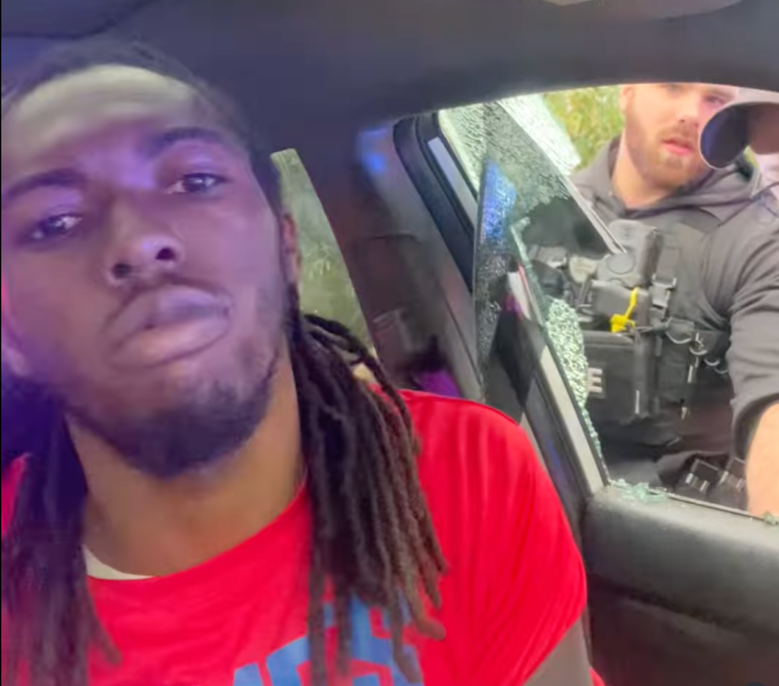
McNeil, a biology student and member of his college marching band, was pulled over by JSO deputies for allegedly not having his daylight running lights on—a minor infraction that spiraled into terror. Footage clearly shows McNeil requesting a supervisor out of fear for his life. Instead, deputies smashed his driver-side window, punched him, forcibly opened his door, unbuckled his seatbelt, dragged him out, and savagely beat him. And despite all this, authorities declared the deputies’ actions “justified.”

Please click the link below

This is what systemic racism looks like in action. When the justice system consistently rules in favor of law enforcement—regardless of the trauma inflicted—it sends a clear message: Black pain is permissible. Black fear is ignored. Black voices are muted. And white juries, time and again, reinforce this silence through verdicts that deny humanity.

Governor Ron DeSantis’s dismissive remarks, suggesting that the viral video was merely a “narrative,” reflect an even deeper issue—one where elected officials defend brutality instead of defending the Constitution.

What does it say about a society when brutality becomes routine for one race, and due diligence is reserved for another? What does it say when cultural theft is dismissed, but cultural survival is criminalized?

This is not justice. This is normalized abuse—endorsed by silence and strengthened by indifference.

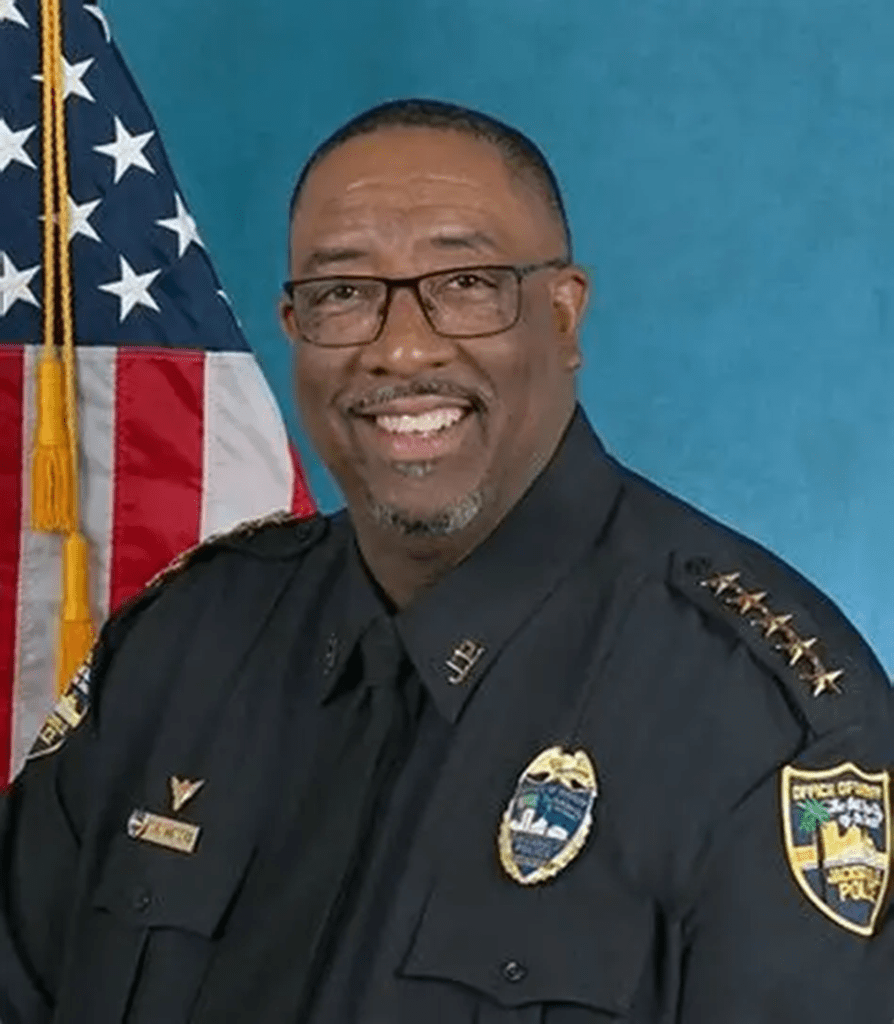
This is the Sheriff at JSO who stated in the press conference that the Deputies did their jobs properly:

Should Black People in Jacksonville be afraid for their lives? According to this man yes they should because there is no way these guys should be getting away with this. It is ok until it hits home!!!

Please click the link below

Call to Action:

We cannot afford to be spectators to injustice. It is time to mobilize. Raise your voice. Share this story. Demand independent investigations. Push for civilian review boards. Insist on diversifying juries and ending qualified immunity. Support organizations fighting for accountability and justice.

Most importantly: Organize within your community. Build networks of trust. Invest in Black-led platforms and amplify Black voices—like those of William McNeil Jr., who deserve to be heard, not brutalized.

#JusticeForWilliamMcNeil #StopJSOViolence #BlackLivesMatter #PoliceAccountability #EndQualifiedImmunity #PowerToThePeople #BlackPainIsReal #WeAreNotSafe #ProtectBlackMen #SavageSystem #AmericaInBlackAndWhite #OrganizeForJustice #MobilizeOurTribe

“When the Badge Is a Mask: White Violence, Political Terror, and the Cost of Silence”

On a quiet June morning in Minnesota, the illusion of safety shattered.

State Representative Melissa Hortman and her husband, Mark, were assassinated in their Brooklyn Park home. Just hours earlier, State Senator John Hoffman and his wife, Yvette, were shot multiple times in their Champlin residence. Both couples were targeted by a man who wore the uniform of trust—a police vest, a badge, a Taser—and carried the intent of terror.

The gunman, Vance Luther Boelter, 57, was no stranger to public service. A former appointee to the Governor’s Workforce Development Council and a security contractor, Boelter used his knowledge of law enforcement to orchestrate what officials now call a “politically motivated assassination”2.

He stalked his victims like prey. He drove a black SUV outfitted with police lights. He wore a hyper-realistic mask. He knocked on doors claiming to be an officer responding to a shooting. And when those doors opened, he opened fire.

Melissa and Mark Hortman died in their home. The Hoffmans survived after emergency surgery. Their daughter’s quick call to 911 may have saved countless lives.

Authorities found a manifesto in Boelter’s vehicle—a hit list with nearly 70 names, including abortion providers, lawmakers, and activists across multiple states. This wasn’t random. It was ideological. It was white violence, cloaked in authority, fueled by grievance, and executed with chilling precision.

Why Did It Take So Long?

Despite early warnings and a shootout with police, Boelter evaded capture for nearly two days. He fled on foot, ditching his weapon, body armor, and mask behind the Hortman home. The manhunt—described as the largest in Minnesota history—involved local police, the FBI, and federal marshals. He was eventually found near his rural property in Green Isle, Minnesota, after a neighbor spotted him on a trail camera2.

The delay in apprehension raises painful questions: How does a man with a known political agenda, military-style gear, and a fake police cruiser slip through the cracks? What systems failed to flag his radicalization? And why is it so hard to name this for what it is—domestic white terrorism?

A Pattern, Not an Anomaly

This is not an isolated incident. Over the past five years, white supremacist violence has surged. From the 2022 Buffalo supermarket massacre to the 2023 Jacksonville shooting targeting Black shoppers, the pattern is clear: white grievance, often masked as patriotism, is metastasizing into political violence.

According to the Pew Research Center, public support for racial justice movements has declined since the 2020 murder of George Floyd—ironically, also in Minnesota. DEI programs have been rolled back. Extremist rhetoric has gone mainstream. And many Americans now express doubt that Black people will ever achieve equal rights.

This erosion of empathy is not accidental. It is the soil in which white violence grows.

The Cost to Community

Minnesota is grieving. Flowers and flags now mark the Capitol steps. Children are asking why someone dressed like a protector became a predator. And lawmakers are wondering if their names are on the next list.

But this isn’t just about Minnesota. It’s about a nation that refuses to confront the violence it breeds. A nation where white men with guns are too often seen as “troubled” instead of “terrorists.” A nation where the badge can be a mask—and the silence, complicit.

Call to Action: Name It. Confront It. Dismantle It.

  • Name it: This was white domestic terrorism. Say it.
  • Confront it: Demand accountability from law enforcement and elected officials.
  • Dismantle it: Support policies that track and prosecute hate crimes with the same urgency as foreign threats.

We cannot heal what we refuse to name. And we cannot protect our future if we keep rewriting our past.

Melissa and Mark deserved more. The Hoffmans deserve justice. And our communities deserve the truth.