White Supremacy Threatens South Africa’s Sovereignty, But What About America?

By Tim Cocks (Reuters)
Blog Commentary & Call to Action

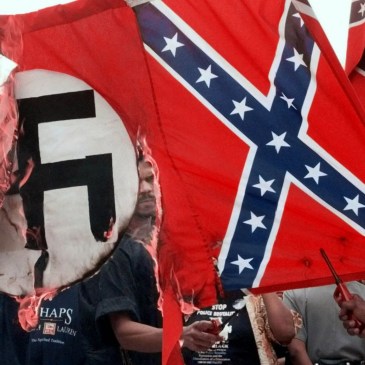
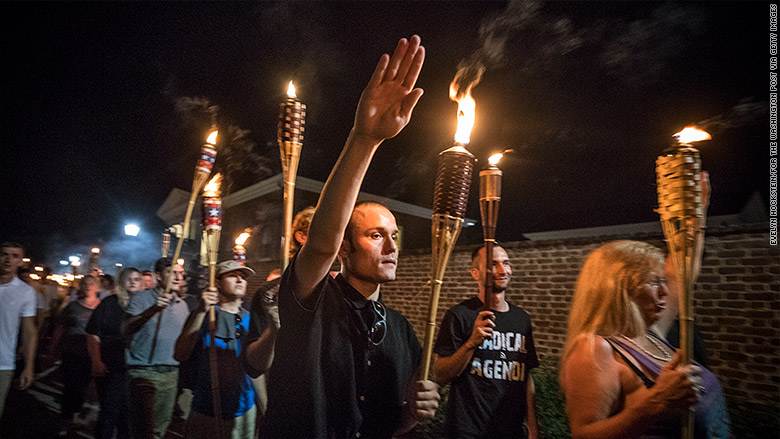
South African President Cyril Ramaphosa recently sounded the alarm: ideas of white racial superiority are not only a threat to South Africa’s post-apartheid unity, but also to its sovereignty and international relations. Speaking at an ANC conference, Ramaphosa condemned false narratives of “white persecution” that continue to circulate in far-right spaces globally. These myths, he warned, have real consequences for diplomacy and national security.

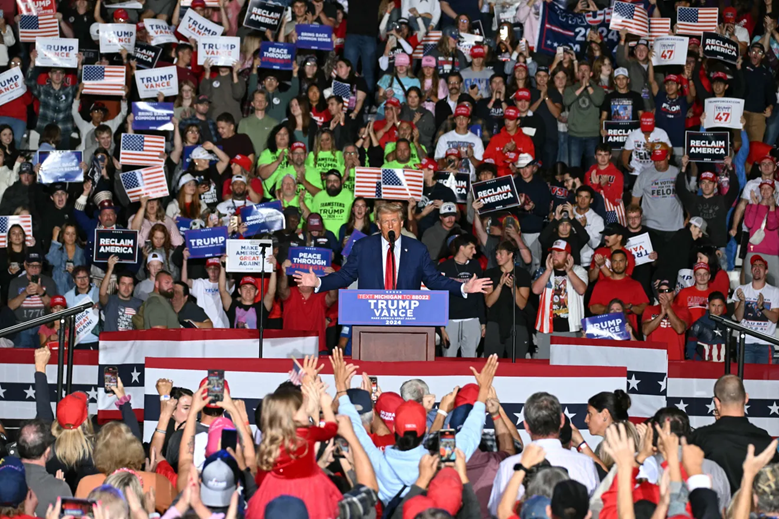
Yet while Ramaphosa calls for global efforts to debunk these lies, U.S. President Donald Trump has chosen to amplify them. Trump boycotted the G20 summit in Johannesburg, alleging without evidence that South Africa mistreats its white minority. He claimed white farmers were being “slaughtered” and their land “illegally confiscated.” These claims have been widely debunked, but they continue to fuel white supremacist rhetoric worldwide.

Here’s the hypocrisy: Trump accuses South Africa of racism against whites yet remains silent on the systemic racism and repression of Black people in America. In South Africa, a wrong was made right, apartheid was dismantled, and the nation continues to strive for unity. In America, however, racism remains deeply entrenched. Black men are killed at alarming rates, the justice system turns a blind eye, and the trauma of racial injustice grows worse every day.

Before the pot calls the kettle black, America must look inward. Stop throwing stones when you live in a glass house. The U.S. government cannot credibly lecture others on racial justice while ignoring the oppression within its own borders.

Black people in America continue to face systemic racism and deadly police violence at rates far higher than other groups, making Donald Trump’s accusations against South Africa not only hypocritical but deeply offensive.
Police Violence Against Black Americans

  • In 2024 alone, U.S. police killed 1,365 people — the deadliest year on record campaignzero.org.
  • Of those, 248 were Black, despite Black Americans making up only about 13% of the population Statista.
  • The rate of fatal police shootings among Black Americans stood at 6.1 per million per year (2015–2024), more than double that of white Americans Statista.
  • Even after the global outcry following George Floyd’s murder in 2020, police killings of Black people have actually increased in recent years NBC News.
  • Data shows that unarmed Black men are disproportionately killed by police, highlighting systemic bias in law enforcement factually.co.

Examples of Systemic Racism in America

Systemic racism is not limited to policing, it permeates nearly every aspect of American life:

  • Education: Black students are more likely to attend underfunded schools and face harsher disciplinary actions Human Rights Careers.
  • Housing: Redlining and discriminatory lending practices have left Black families with far less generational wealth Human Rights Careers.
  • Employment: Black workers earn less on average and face higher unemployment rates than white counterparts Robert F. Smith News.
  • Healthcare: Black Americans experience worse health outcomes, higher maternal mortality rates, and less access to quality care Human Rights Careers.
  • Criminal Justice: Black people are incarcerated at nearly five times the rate of white people, often for similar offenses Human Rights Careers.

Taken together, these examples show that racism in America is not incidental, it is systemic, structural, and ongoing.
Blog Post Framing

South Africa, under Ramaphosa, is working to dismantle the legacy of apartheid and build unity. Meanwhile, America continues to deny or downplay its own racial injustices. For Donald Trump to accuse South Africa of racism against whites while ignoring the daily trauma of Black Americans is the ultimate hypocrisy.

Before the pot calls the kettle black, America must confront its own house of glass. Stop throwing stones abroad while ignoring the shattered lives at home.

Sources: Statista factually.co NBC News campaignzero.org Human Rights Careers Robert F. Smith News

Call to Action

It’s time to:

  • Expose and dismantle white supremacist lies globally.
  • Hold U.S. leaders accountable for systemic racism and police violence.
  • Unite Black communities worldwide in solidarity and resistance.

So I ask again: Should Donald Trump and the U.S. government be called out for this hypocrisy? The answer seems clear, yes, loudly and globally.

Rallying Cry

No more silence, no more lies, 

We see the truth with open eyes. 

From Soweto to Harlem streets, 

Black voices rise, we won’t retreat. 

Justice delayed is justice denied, 

Too many brothers have already died. 

Glass houses crack when stones are thrown, 

America fix the rot in your own. 

Unite the people, across the land, 

Together in strength, we take a stand. 

From Cape Town’s shore to Detroit’s fight, 

Black power united will set things right. 
When Justice Is Blindfolded: The Case of William McNeil Jr. and Jacksonville’s Deepening Crisis

The Jacksonville Sheriff’s Office (JSO) has long been under scrutiny for its violent encounters with Black men. From documented incidents going back to 2000, a troubling pattern emerges—one that has evolved, not toward accountability, but toward escalating brutality. The recent case of William McNeil Jr. is a chilling reminder of how state-sanctioned violence against Black citizens continues with impunity.

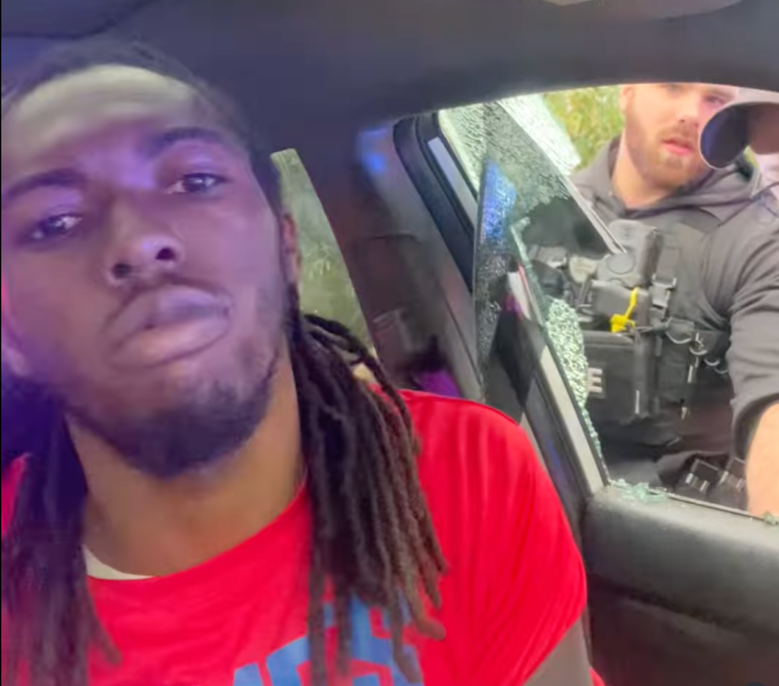
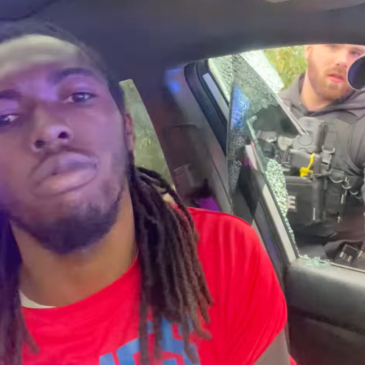
McNeil, a biology student and member of his college marching band, was pulled over by JSO deputies for allegedly not having his daylight running lights on—a minor infraction that spiraled into terror. Footage clearly shows McNeil requesting a supervisor out of fear for his life. Instead, deputies smashed his driver-side window, punched him, forcibly opened his door, unbuckled his seatbelt, dragged him out, and savagely beat him. And despite all this, authorities declared the deputies’ actions “justified.”

Please click the link below

This is what systemic racism looks like in action. When the justice system consistently rules in favor of law enforcement—regardless of the trauma inflicted—it sends a clear message: Black pain is permissible. Black fear is ignored. Black voices are muted. And white juries, time and again, reinforce this silence through verdicts that deny humanity.

Governor Ron DeSantis’s dismissive remarks, suggesting that the viral video was merely a “narrative,” reflect an even deeper issue—one where elected officials defend brutality instead of defending the Constitution.

What does it say about a society when brutality becomes routine for one race, and due diligence is reserved for another? What does it say when cultural theft is dismissed, but cultural survival is criminalized?

This is not justice. This is normalized abuse—endorsed by silence and strengthened by indifference.

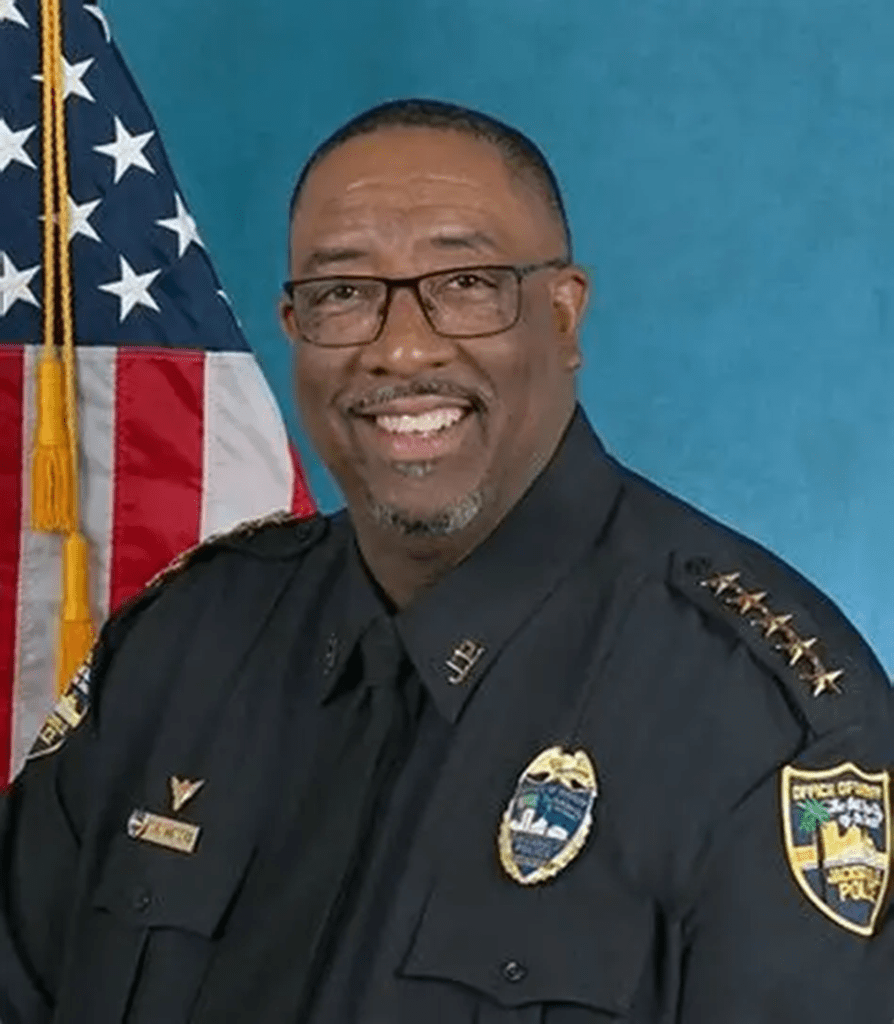
This is the Sheriff at JSO who stated in the press conference that the Deputies did their jobs properly:

Should Black People in Jacksonville be afraid for their lives? According to this man yes they should because there is no way these guys should be getting away with this. It is ok until it hits home!!!

Please click the link below

Call to Action:

We cannot afford to be spectators to injustice. It is time to mobilize. Raise your voice. Share this story. Demand independent investigations. Push for civilian review boards. Insist on diversifying juries and ending qualified immunity. Support organizations fighting for accountability and justice.

Most importantly: Organize within your community. Build networks of trust. Invest in Black-led platforms and amplify Black voices—like those of William McNeil Jr., who deserve to be heard, not brutalized.

#JusticeForWilliamMcNeil #StopJSOViolence #BlackLivesMatter #PoliceAccountability #EndQualifiedImmunity #PowerToThePeople #BlackPainIsReal #WeAreNotSafe #ProtectBlackMen #SavageSystem #AmericaInBlackAndWhite #OrganizeForJustice #MobilizeOurTribe

The Policing of Happiness: A Call for Equality and Justice

The Declaration of Independence proclaims, “We hold these truths to be self-evident, that all men are created equal, that they are endowed by their Creator with certain unalienable Rights, that among these are Life, Liberty, and the pursuit of Happiness.” These words have served as a foundational ideal of America, symbolizing the nation’s commitment to freedom, equality, and individual rights. However, while the eloquence of these words resonates throughout history, the reality for many, particularly Black Americans, has often been starkly different. The lofty ideals espoused in the Declaration were crafted in a historical context that excluded many, especially enslaved individuals and marginalized communities. As history progressed, this Declaration became a rallying cry for civil rights movements advocating for justice, equality, and inclusion. From the abolition of slavery to the fight for women’s rights and racial equality, the meanings of these rights have evolved and expanded. Yet, despite the progress we’ve made, the core issue remains: why are the rights of Black people still not fully enforced to benefit them? The policing of Black happiness is not merely a societal inconvenience; it reflects a pervasive systemic issue that affects the very essence of community life. Each time a gathering or celebration among Black individuals is interrupted by law enforcement, it speaks volumes about the insecurity of our right to life, liberty, and the pursuit of happiness. The police often show up at community events—block parties, cookouts, or simply neighbors enjoying time together—not out of protective concern, but with an underlying implication that our joy is somehow suspect. This reality creates a cycle of fear, whereby Black individuals must constantly navigate the paradox of existing in spaces meant for joy and connection while being aware that such moments can be deemed illegal. The notion that “if we are too happy, here comes the police” is not just an anecdote; it’s a lived experience for many. This policing transcends mere inconvenience—it is a grotesque manifestation of civil rights violations that roots itself in the fabric of systemic racism. Moreover, it is crucial to recognize that there are two justice systems at play, one that seems to protect and serve, and another that systematically undermines and criminalizes Black existence. Law enforcement officers often operate within a framework that grants them a license to kill without accountability, a reality starkly contrasted by how justice is meted out to other communities. When a Black person complains about an unjust encounter, they are frequently met with the dismissive retort: “That’s the law.” This blunt response strips the individual of their rights and dignity, forcing them into a position where their grievances are rendered invisible. When we examine the systemic violence that stems from these unjust practices, we must also consider the emotional toll it takes on Black communities. The constant threat of police intervention creates a climate of anxiety, where the simple act of enjoying life becomes a precarious endeavor. The fear of being stopped because one “fits a description” looms large, stifling the ability to engage fully in community life. This destruction of joy and the freedom to thrive creates a ripple effect with deeply entrenched consequences, limiting access to opportunities, hindering economic growth, and perpetuating cycles of poverty. As we continue to discuss the causes and effects of this policing of happiness, we must also look inward at the systemic structures that reinforce these injustices. It is essential to advocate for policy changes that genuinely uphold the principles outlined in the Declaration of Independence. The aim is not merely to reform the police but to dismantle the institutional barriers that keep Black people from enjoying equal rights and opportunities. The struggle for equality and a just society is ongoing, and as we look to the future, we must prioritize the enforcement of rights for all individuals, particularly those who have been historically marginalized. The call for justice cannot be one that accommodates discomfort. Rather, it should be a loud and unapologetic proclamation that Black happiness is not something to be policed but celebrated. It is a fundamental right to live freely, to enjoy the fruits of our labor, and to pursue that happiness guaranteed by the very document that serves as the cornerstone of American ideals. In conclusion, the path toward true equality requires commitment—from individuals, communities, and institutions alike—to actively challenge the status quo. It calls for a united front to raise awareness and advocate for reforms that ensure the rights outlined in the Declaration of Independence are not just empty words but real, enforced guarantees for everyone, regardless of race. We cannot allow the joy of any community to be policed. It is time to reclaim that joy and ensure it flourishes for every individual, free from shame, judgment, and fear. After all, it’s not merely a right; it’s an unalienable one.

The Opening of Cop City: Implications for Urban Communities in Atlanta

On July 1, 2023, the long-debated “Cop City,” officially known as the Public Safety Training Center, opened its doors in Atlanta, igniting intense discussions about policing, community safety, and the future of urban areas across the city. While proponents tout it as a necessary step toward enhanced police training and accountability, many marginalized communities view its inception as a harbinger of military-style enforcement tactics that threaten to deepen existing inequalities.

A Step Backward Amidst Protests

The journey to the opening of Cop City was fraught with public outcry and dissent. Activists rallied against the development, arguing that resources should be allocated to community services rather than militarized policing. Protesters highlighted how increased funding for law enforcement detracts from essential services like education, healthcare, and housing. Despite these fervent protests, which included direct actions and community organizing against the facility, the city proceeded with its plans, raising concerns about the disregard for community voices and lived experiences. Tragically, the protests surrounding Cop City became synonymous with violence, culminating in the fatal shooting of activist Manuel Paez Teran by police during a raid in January 2023. The incident sparked outrage, highlighting the severe power imbalances in how law enforcement interacts with communities of color. Critics argue that this militarized response only exemplifies the systemic disregard for black and brown lives, raising questions about the ethical implications of maintaining a heavily armed police force equipped with the latest training techniques while vulnerable communities continue to face socioeconomic challenges.

The Shadow of Militarization

The opening of Cop City signals a shift in how policing will be carried out in urban Atlanta. With specialized training that emphasizes a militaristic approach, residents fear they will bear the brunt of aggressive tactics that come with purportedly enhanced officer preparedness. The facility is designed to teach law enforcement advanced techniques, including tactical maneuvers and crowd control, raising alarm bells about potential overreach and brutality in handling situations in marginalized neighborhoods. Persistent fear looms over communities already grappling with high levels of police presence and aggression. With Cop City operational, there is a growing apprehension that its implications will exacerbate racial profiling, wrongful arrests, and instances of violence – continuing the cycle of distrust between law enforcement and the very communities they are meant to serve. Residents of Atlanta’s marginalized communities are left questioning the consequences of militarized policing when they were already experiencing systemic oppression.

The Broader Impact on Urban Areas

The repercussions of Cop City extend beyond Atlanta into urban areas nationwide. The facility serves as a template for cities considering similar initiatives, regardless of the detrimental effects experienced in communities subjected to over-policing. In recent years, the cries for police reform and defunding have taken center stage, calling for a reevaluation of public safety priorities. The emergence of Cop City represents a contradictory narrative; rather than redirecting funds into community development and social services, the city has chosen to solidify its commitment to a more militarized approach to policing. With cities across America grappling with issues of systemic racism and inequality, the opening of Cop City could inspire a nationwide trend where cities move away from community-centric solutions. Urban areas might find themselves at a crossroads, where priorities shift toward protecting property and maintaining order over addressing the root causes of crime, such as poverty and lack of access to education.

A Call for Accountability and Change

As the community navigates the reality of a new training facility designed to bolster policing practices, it is imperative to continue advocating for accountability and reform. Residents must pressure local officials to ensure that Cop City does not become a tool for further marginalization but rather a catalyst for meaningful dialogue about safety, equity, and justice. The ongoing conversation surrounding public safety requires a comprehensive approach that prioritizes community input, resources for grassroots organizations, and effective solutions that promise real change. As Atlanta moves forward, it stands as a crucial moment for the city’s leadership to reevaluate its stance on policing and consider innovative approaches that empower, rather than intimidate, its diverse communities. In conclusion, while Cop City signifies a new era of law enforcement training, the implications of this shift must be critically examined. Elected officials must prioritize the voices and experiences of marginalized communities while holding law enforcement accountable to prevent a dystopian future where militarization rules over community welfare—before it’s too late.