BOOK BANS & EDUCATIONAL RESTRICTIONS: A Growing Threat to America’s Intellectual Freedom

Across the country, a quiet but powerful movement is reshaping classrooms, libraries, and the educational experience of millions of young people. Book bans and educational restrictions, once rare and widely condemned, have surged into mainstream policy debates. And the consequences reach far beyond the walls of any single school.

What’s Happening Across the Country

In state after state, we’re seeing:
• Books removed from school libraries, often without transparent review
• Restrictions on teaching topics related to race, gender, identity, and systemic injustice
• Pressure on educators to avoid “controversial” or “sensitive” subjects
• Increased political polarization around curriculum decisions

Many of the books being targeted are written by Black, Brown, LGBTQ+, or marginalized authors, voices that have historically been underrepresented in education.

Why This Matters

Education is more than memorizing facts. It’s how young people learn to think, question, empathize, and understand the world around them. When we limit what students can read or discuss, we limit their intellectual freedom.

Censorship narrows the lens through which students see themselves and others. It restricts imagination. It weakens critical thinking. And it denies communities the opportunity to engage in honest, sometimes uncomfortable, but necessary conversations.

The Real‑World Impact

The effects are already visible:
Teachers feel pressure, fear retaliation, or self‑censor to avoid conflict
Students lose access to diverse perspectives that help them grow
Parents become more polarized as misinformation spreads
Historical understanding becomes fragmented, incomplete, and distorted

When we sanitize history, we fail to learn from it. When we silence stories, we silence people.

The Freedom Angle

At its core, this issue is about freedom, not politics.
• The freedom to learn without fear
• The freedom to read widely and critically
• The freedom to understand history fully, not selectively
• The freedom to grow into informed citizens capable of shaping the future

A society that restricts knowledge restricts its own potential.

Where We Go From Here

Communities must stay engaged. Parents, educators, and leaders must advocate for open access to information and resist efforts to narrow the educational experience. Protecting intellectual freedom is not optional, it’s essential to democracy, equity, and the future of our children.

The conversation isn’t about left or right. It’s about truth, freedom, and the responsibility we share to ensure that every young person has access to the full story of who we are as a nation.

2025 Reflections: A Year of Growth, Gratitude, and Unbreakable Community

As I look back on 2025, I’m overwhelmed, not by the challenges, but by the grace, the connection, and the extraordinary people who walked with me through this season. This year was more than another chapter of America in Black and White and Changing Trends and Times. It was a year of healing, rebuilding, and rediscovering purpose.

And that’s because of you, my guests, my supporters, my community, my family.

Season 3: A Year That Changed Me

Season 3 wasn’t just successful, it was transformational.

Every guest who sat across from me brought wisdom, vulnerability, humor, and truth. You didn’t just show up for the show; you showed up for me. You helped shape conversations that mattered, conversations that pushed culture forward, conversations that reminded us why storytelling is a form of activism.

You brought your brilliance.
You brought your courage.
You brought your heart.

And because of that, Season 3 became one of the most meaningful seasons we’ve ever produced.

Your Presence Helped Me Heal

This year also carried a deep personal weight, the passing of my mother. Losing her was one of the hardest experiences of my life. But what many of you may not know is how much your presence helped me cope.

Your interviews, your laughter, your insights, your energy, they gave me something to look forward to. They gave me purpose on days when grief felt heavy. You helped me keep going. You helped me feel connected. You helped me heal.

For that, I will always be grateful.

Looking Ahead to 2026

I’m excited for what’s coming next.

More conversations.
More community.
More truth.
More impact.

And yes, I’m looking forward to taking the show on the road. I want to meet you where you are. I want to bring these conversations into your cities, your communities, your spaces. Because this platform is not just mine, it’s ours.

You Are the Engine of This Machine

Let me be clear:

You are the reason this works.
Your stories.
Your engagement.
Your willingness to show up.
Your belief in the mission.

Together, we are building something powerful, a movement rooted in truth, empowerment, and community uplift.

SYTM Accounting & Consulting Inc: Let’s Build Together

As we move into 2026, I want to extend a personal invitation.

Many of you know me as a host, a storyteller, a community advocate, but I am also the founder of SYTM Accounting & Consulting Inc., where we support individuals and businesses with:

  • Personal tax preparation
  • Business tax services
  • Accounting and bookkeeping
  • Consulting for entrepreneurs
  • Financial strategy and planning

I would be honored to serve you, your families, and your businesses in the coming year. You’ve supported me, now let me support you.

If you need services, or simply want to explore how we can work together, reach out. Let’s make it happen.

Stay Connected

You can contact me anytime through my websites or social platforms:

Thank You

Thank you for your time.
Thank you for your trust.
Thank you for your stories.
Thank you for your love.
Thank you for helping me turn grief into purpose and purpose into impact.

Here’s to 2026, a year of growth, expansion, and community power.

“Loving a Liar”: When Hiding Becomes a Survival Skill

We don’t talk enough about what it means to love someone who is lying, not because they’re malicious, but because they’re terrified.

Terrified of being rejected.
Terrified of losing family, career, community, or safety.
Terrified of being fully seen.

In Dee Carr’s short “Loving a Liar,” we’re invited to look beyond the surface of deception and into the emotional architecture behind it. And when we connect this to the LGBTQ community, the conversation becomes even more urgent.

Because the truth is this:

Some people aren’t lying to deceive you. They’re lying to survive you.

The Code-Switching Closet

For many LGBTQ people, athletes, politicians, entertainers, clergy, business owners, and everyday folks, life becomes a constant performance. A carefully curated version of themselves is presented to the world, while their true identity stays tucked away, waiting for a safer moment that may never come.

This isn’t just “being private.”
This is code-switching as self‑protection.

It’s the athlete who dates publicly but loves privately.
The pastor who preaches authenticity but fears living his own.
The business owner who avoids pronouns in every conversation.
The entertainer who smiles on stage but cries in the dressing room.
The everyday person who edits their life to fit someone else’s comfort.

And the people who love them?
They often end up loving a version of someone that isn’t fully real, not because that person is dishonest, but because the world has taught them that honesty is dangerous.

The Emotional Cost

Loving someone who is hiding can feel like loving a ghost, present, but not fully here.

But imagine the cost on the other side:

  • Carrying two identities
  • Monitoring every word
  • Performing every day
  • Living in fear of exposure
  • Feeling unworthy of real love

This isn’t lying for manipulation.
This is lying for survival.

And survival shouldn’t have to look like this.

What Does Love Look Like Here?

Love, in this context, becomes a bridge, not a demand.

It asks:

  • How can I make space for your truth?
  • How can I be a safe place for your becoming?
  • How can we build a relationship where honesty isn’t a risk?

Love doesn’t force someone out of hiding.
Love creates a world where hiding is no longer necessary.

Let’s Talk About It

This is where you come in.

Have you ever loved someone who was afraid to be themselves?
Have you ever BEEN that person?
What does safety look like for you?
What does honesty cost in your world?

Drop your thoughts in the comments, your voice might be the one someone else needs to hear.

And if conversations like this matter to you, hit subscribe so you don’t miss the next post in this series inspired by Dee Carr’s powerful shorts.

Financial literacy for entrepreneurs: From hustle to legacy

Cash flow is the lifeblood of any business. But the skill that keeps that lifeblood flowing, through good seasons, dry spells, and unexpected shocks, is financial literacy.

For entrepreneurs, especially Black entrepreneurs who are building in the shadow of systemic gaps, financial literacy is not just about knowing your numbers. It’s about protecting your dream, paying yourself, and positioning your family and community for long-term stability and wealth.

Key takeaway: Financial literacy is not just about profit, it’s about sustainability and legacy.

Why financial literacy matters more than ever

Entrepreneurship promises freedom, flexibility, and ownership, but it also comes with risk. Without strong financial literacy, even a business with great demand, loyal customers, and visionary leadership can crumble under:

  • Poor cash flow management
  • Unhealthy debt
  • Thin or misunderstood profit margins
  • No emergency reserves

Financial literacy gives entrepreneurs the tools to:

  • Make informed decisions instead of reacting in crisis
  • Negotiate confidently with lenders, investors, and partners
  • Plan for growth instead of just surviving month to month
  • Build wealth intentionally, not accidentally

For Black entrepreneurs, this knowledge is also an act of economic resistance, closing information gaps, rewriting financial narratives, and creating pathways that weren’t designed for us to walk easily.

Understanding your numbers: Profit, cash flow, and margins

You can’t manage what you don’t measure. Three core concepts every entrepreneur must master are cash flow, profit, and profit margins.

Cash flow: The rhythm of your business

Cash flow is the movement of money in and out of your business. Revenue may look strong on paper, but if your cash is tied up in unpaid invoices or delayed contracts, you may still struggle to pay bills, staff, or yourself.

To strengthen cash flow:

  • Monitor it weekly:
    • Label: What’s coming in (sales, contracts, grants)
    • Label: What’s going out (rent, payroll, software, debt payments)
  • Shorten the time to get paid:
    • Label: Use clear payment terms (e.g., Net 15 instead of Net 30–45 when possible)
    • Label: Offer small discounts for early payment if it makes sense
  • Delay non-essential spending:
    • Label: Ask: “Does this help generate or protect cash flow right now?”

Cash flow tells you if your business can breathe today. Profit tells you if it will stay alive tomorrow.

Profit and profit margins: Are you really making money?

Profit is what’s left after you subtract all expenses from your revenue.
Profit margin is the percentage of each dollar of revenue that is profit.

  • Gross profit margin: After direct costs (materials, production, contractors tied to specific projects)
  • Net profit margin: After all costs (rent, salaries, subscriptions, marketing, taxes, debt, etc.)

To improve margins:

  • Raise prices strategically: Especially if your value has increased or your costs have gone up
  • Reduce waste: Cancel unused subscriptions, negotiate contracts, streamline operations
  • Focus on high-margin offers: Put more energy into services/products that bring in more profit, not just more sales

A financially literate entrepreneur doesn’t just ask, “Did I make money?” but “How much did I actually keep, and why?”

Debt vs. equity: Choosing the right kind of capital

Growth requires capital, but not all capital is created equal. Understanding debt vs. equity is a core financial literacy skill.

Debt financing: Borrowing with responsibility

With debt financing, you borrow money (from banks, credit unions, online lenders, even friends and family) and agree to pay it back with interest.

Pros:

  • Maintain ownership: You don’t give up equity or decision-making power
  • Predictable payments: You know what you owe and when

Risks:

  • Cash flow pressure: Payments are due even when your revenue is slow
  • Over-leverage: Too much debt makes your business fragile and stressful to run

Financial literacy means knowing your debt-to-income ratio, reading terms carefully, and understanding the true cost of borrowed money over time.

Equity financing: Sharing ownership for growth

With equity financing, you give up a portion of ownership in exchange for capital. This may come from angel investors, venture capital, or strategic partners.

Pros:

  • No monthly repayments: Investors are paid from profits or an eventual exit
  • Potential relationships and support: Strategic investors can open doors

Risks:

  • Less control: You now share decision-making power
  • Misaligned values: Not every investor understands or respects your mission

Black entrepreneurs are often underfunded and over-scrutinized. Financial literacy empowers you to evaluate opportunities, avoid predatory deals, and negotiate from an informed, confident position.

Building financial resilience: Emergency reserves and budgeting

A resilient business is prepared for surprises: a lost contract, a delayed payment, an economic downturn, or a health crisis.

Emergency reserves: Your business “safety net”

Aim to build an emergency reserve that can cover at least 3–6 months of essential business expenses, including:

  • Rent or mortgage for office/space
  • Core software and tools
  • Minimum debt payments
  • Critical contractors or staff

You don’t build this overnight. You build it by habit:

  • Set a percentage: Commit to reserving a percentage of every payment (even 3–5% to start)
  • Treat it as non-negotiable: Like a bill you pay to your future self
  • Keep it separate: Put it in a separate business savings account to avoid “accidental” spending

Budgeting strategies that actually work

A budget is not a prison, it’s a plan.

Consider a simple approach:

  • Operating budget:
    • Label: Fixed costs (rent, insurance, software, utilities)
    • Label: Variable costs (marketing, travel, contractors)
  • Revenue plan:
    • Label: How much you need to bring in monthly to cover expenses, reserves, taxes, and your pay
  • Review rhythm:
    • Label: Monthly review: What did we plan vs. what actually happened?
    • Label: Adjust instead of ignoring reality

Financial literacy is built through repetition: looking at your numbers regularly, asking questions, making adjustments, and learning over time.

Investment basics for entrepreneurs

Entrepreneurs often pour everything back into the business, but that can be dangerous if the business is your only asset. Financial literacy means thinking beyond today’s grind and building wealth in multiple ways.

Investing beyond your business

Even as you grow your company, consider long-term wealth-building vehicles such as:

  • Retirement accounts:
    • Label: SEP IRA, Solo 401(k), or other plans designed for self-employed individuals
  • Diversified investments:
    • Label: Broad-based stock or index funds (for long-term growth)
  • Real estate (where appropriate):
    • Label: Both for business use and long-term asset building

The goal is not quick flips, but steady, long-term growth that works while you sleep.

Reinvesting wisely into your business

When you do reinvest in your business, do it intentionally:

  • Prioritize revenue-generating investments: Marketing systems, sales training, automation, customer experience
  • Avoid vanity spending: High-cost branding or tools that don’t increase reach, efficiency, or income
  • Track ROI: Ask, “If I invest this dollar here, how and when will it come back?”

Financial literacy shifts your mindset from “spend to look successful” to “invest to stay successful.”

Wealth transfer and legacy planning

A truly financially literate entrepreneur thinks beyond their lifetime. Wealth transfer is about making sure what you’re building doesn’t disappear when you step away, or when life takes an unexpected turn.

Protecting what you’ve built

At a basic level, legacy planning should include:

  • A will: Clearly states what happens to your assets and business interests
  • Beneficiaries: Up-to-date on bank accounts, retirement accounts, and insurance
  • Life insurance: To provide for dependents and cover debts or taxes

For your business, consider:

  • Operating agreements: That define who owns what and what happens if someone leaves or passes away
  • Successor planning: Training someone who can carry the work forward if you step back

These conversations may be uncomfortable, but they are an act of love and responsibility.

Passing on financial literacy, not just money

Generational wealth is fragile if the next generation doesn’t understand how to manage it. Consider how you can:

  • Teach your children or younger relatives: About budgeting, saving, investing, and ownership
  • Document your systems: So your business doesn’t live only in your head
  • Model transparency: Talk openly (age-appropriately) about money, choices, risks, and values

Legacy is not only what you leave behind, it’s what you build into people while you’re here.

For Black entrepreneurs: Closing systemic gaps through literacy and power

Black entrepreneurs operate in an economic landscape shaped by redlining, employment discrimination, underfunding, and underrepresentation in traditional financial spaces. That reality is not an excuse; it’s a context, one that demands strategy.

Financial literacy becomes a tool for:

  • Closing information gaps: Understanding credit, contracts, interest rates, and terms that others were taught at their dinner tables
  • Leveraging community: Tapping into Black professional networks, mentors, and advisors who understand both culture and commerce
  • Protecting your vision: Recognizing predatory lending, exploitative partnerships, and “opportunities” that come with strings attached

Building wealth as Black entrepreneurs isn’t just personal, it’s collective. Every business that survives, scales, and sustains jobs chips away at systemic inequity and creates new models of what’s possible.

Moving from concept to action

Here are practical next steps you can start this week:

  • Review your numbers:
    • Label: Look at last month’s revenue, expenses, and cash flow
  • Calculate your margins:
    • Label: What percentage of your revenue is actually profit?
  • Set a small reserve goal:
    • Label: Decide on a percentage of every payment to move into an emergency reserve
  • Audit your debt and contracts:
    • Label: List all debts, interest rates, and key terms; identify anything that needs renegotiation or payoff priority
  • Schedule a “money meeting” with yourself:
    • Label: A recurring monthly time to review, reflect, and adjust

Over time, these small, consistent actions build financial literacy, confidence, and power.

Final thought

Financial literacy is not about perfection, advanced math, or never making mistakes. It’s about awareness, intentional decisions, and learning as you go. For entrepreneurs, and especially Black entrepreneurs, it is a core leadership skill, a shield against crisis, and a bridge from hustle to legacy.

Profit keeps your doors open. Financial literacy helps ensure your impact outlives you.

The Power of Intentional Networking: Building Relationships That Build Legacy

Networking is more than exchanging business cards or adding new connections online. At its core, networking is about building authentic relationships, relationships that open doors, share knowledge, and create opportunities that might otherwise remain out of reach.

For Black professionals, networking has always been more than a career tool. It’s a strategy for breaking barriers, amplifying voices, and strengthening community. When done intentionally, networking becomes a catalyst for influence, mobility, and long-term success.

Why Intentional Networking Matters

Intentional networking goes beyond showing up at events or collecting contacts. It requires clarity, purpose, and a commitment to mutual growth. When we build relationships rooted in authenticity and shared value, we create ecosystems, not just networks, where everyone can thrive.

Historically, Black excellence in business has been propelled by strong, interconnected communities. From the entrepreneurial hubs of Black Wall Street to today’s digital professional networks, progress has always been accelerated by collaboration, mentorship, and collective advancement.

Strategies for Expanding Your Network Across Industries

Here are a few ways Black professionals can cultivate meaningful, cross-industry connections:

  • Lead with authenticity. People connect with people, not titles. Show up as your full self.
  • Be intentional about your spaces. Attend events, join associations, and participate in communities that align with your goals and values.
  • Offer value before you ask for it. Share insights, make introductions, and support others’ work.
  • Stay curious. Engage with professionals outside your industry to broaden your perspective and uncover unexpected opportunities.
  • Follow up and follow through. Consistency builds trust—and trust builds influence.

A Legacy of Collective Advancement

Our history shows that when Black professionals unite, we create pathways that uplift entire communities. Whether through mentorship, advocacy, or shared resources, networks have always been a driving force behind our progress.

Today, organizations like the National Black Professional Networking Association continue that legacy by creating spaces where connection becomes empowerment, and empowerment becomes impact.

Key Takeaway

Strong networks are the lifeblood of sustainable success.
When we invest in relationships, we invest in our future, our community, and our collective legacy.

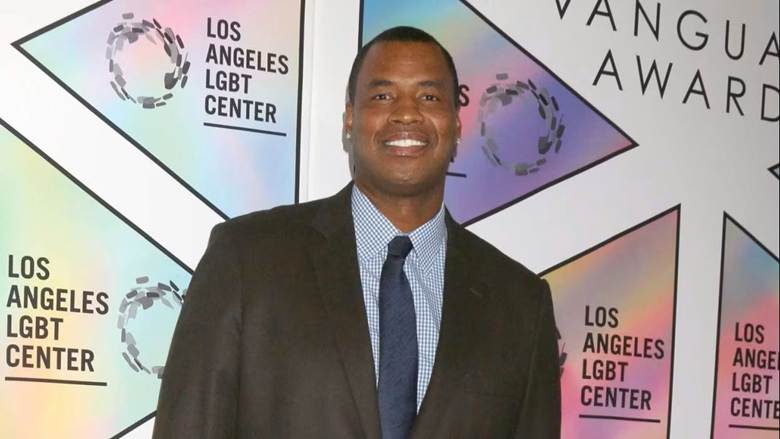
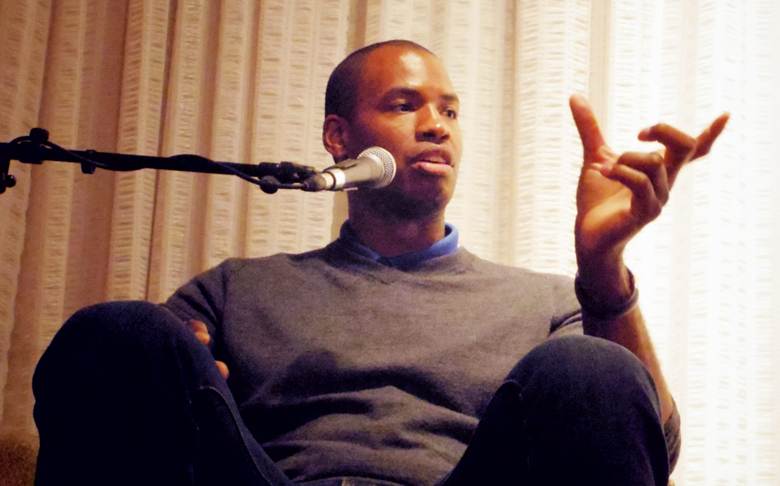
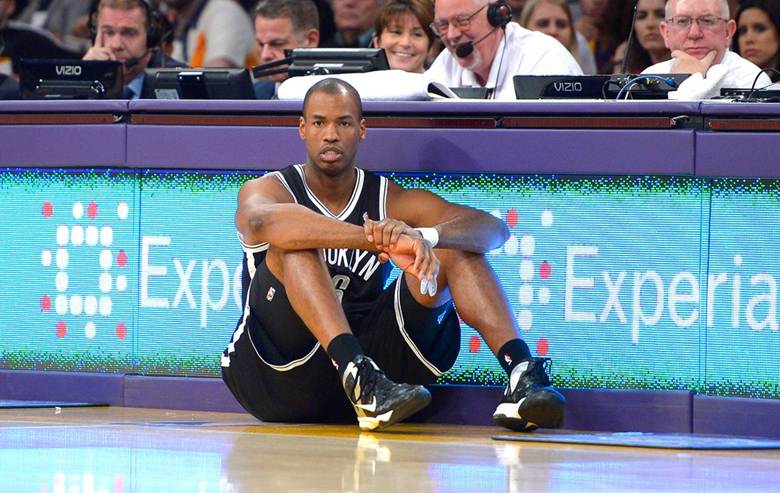
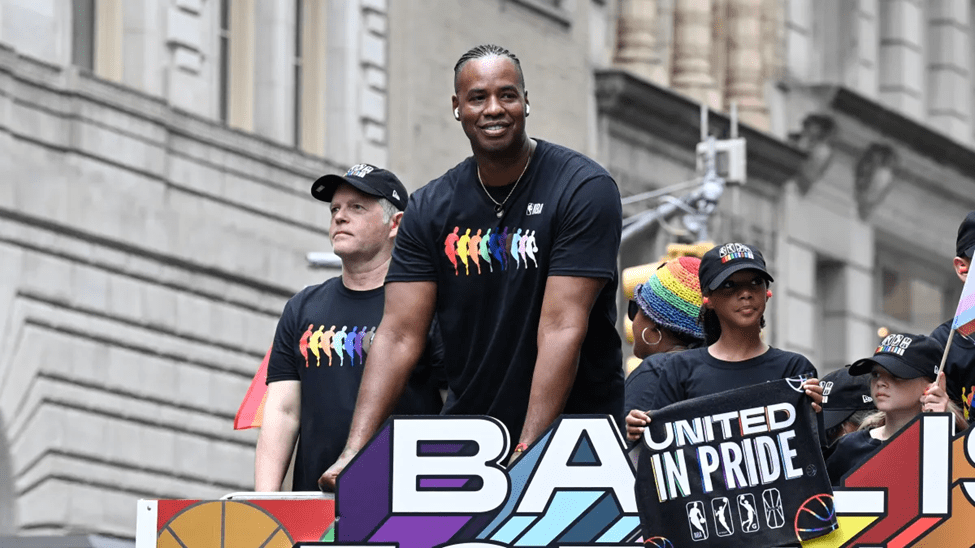
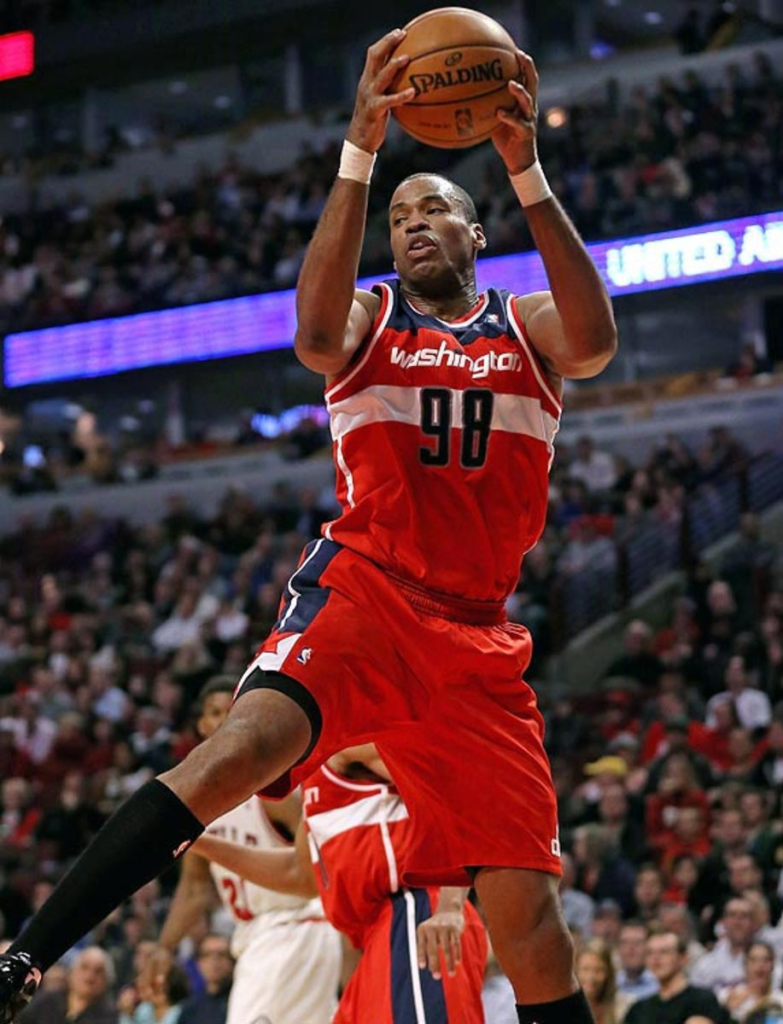
Jason Collins: Courage Beyond the Court, Resilience Against Glioblastoma

Jason Collins has always been a trailblazer. In 2013, he became the first openly gay active NBA player, shattering barriers and inspiring countless athletes and fans. Today, he faces another battle, Stage 4 glioblastoma, one of the most aggressive brain cancers known to medicine.

Collins first experienced symptoms in August 2025: confusion, memory lapses, and difficulty focusing. By September, his family announced he had a brain tumor. On December 11, Collins himself revealed the diagnosis in an ESPN essay, describing the cancer as a “monster with tentacles” spreading across his brain.

Despite the grim prognosis, median survival of 12–18 months, Collins has chosen to fight with the same toughness that defined his NBA career. Supported by his husband, Brunson Green, and buoyed by the love of his community, Collins is undergoing radiation, chemotherapy, and experimental therapies in Singapore.

Beyond basketball, Collins has always loved mentoring young athletes, advocating for LGBTQ rights, and building community. His resilience now reminds us that health is not guaranteed, and vigilance is essential.

Treatment Options

While there is no cure, treatments aim to slow tumor growth and improve quality of life:

  • Surgery: Removal of as much tumor as safely possible (not always feasible).
  • Radiation therapy: Often daily sessions over several weeks.
  • Chemotherapy: Typically combined with radiation.
  • Targeted therapy: Drugs that attack specific cancer cell mutations.
  • Tumor treating fields (TTF): Low-intensity electrical fields applied via scalp electrodes.
  • Experimental approaches: Immunotherapy, laser therapy, and clinical trials my.clevelandclinic.org mayoclinic.org mdanderson.org.

Prognosis

  • Median survival: 12–18 months after diagnosis, even with treatment.
  • Five-year survival rate: Only about 5–10% my.clevelandclinic.org mdanderson.org.
  • Challenge: Tumors almost always recur because microscopic branches spread throughout the brain, making complete removal impossible mdanderson.org.

Risks & Challenges

  • Glioblastoma affects critical brain functions (speech, movement, memory).
  • Treatments often cause side effects like fatigue, cognitive decline, or mood changes.
  • Delivering drugs is difficult because of the blood-brain barrier, which blocks many medications from reaching the tumor mdanderson.org.

In summary: Glioblastoma is one of the deadliest brain cancers, with rapid progression and limited treatment options. Jason Collins’ diagnosis highlights both the personal toll and the urgent need for continued research into more effective therapies.

Sources: my.clevelandclinic.orgCleveland Clinic mayoclinic.orgMayo Clinic mdanderson.orgMD Anderson Cancer Center

Call to Action:
We must stay on top of our health. Screenings save lives. Early detection matters. And for the LGBTQ community, rallying around Jason and his family is more than solidarity, it is a continuation of the movement he helped ignite.

Career Highlights:

  • 13-year NBA career, playing for teams including the New Jersey Nets, Atlanta Hawks, and Washington Wizards.
  • Known for his defensive grit and leadership on and off the court.
  • In 2013, became the first openly gay active NBA player.

Post-retirement: advocate for LGBTQ rights, mentor, and public speaker.

Alabama Football: Championships, Black Excellence, and the Head Coach They’ve Never Had

The University of Alabama’s football program, known as the Crimson Tide, is one of the most storied and successful in college football history, with 18 claimed national championships and 29 SEC titles spanning from its founding in 1892 to the modern era

Introduction
The University of Alabama football program is celebrated as one of the greatest dynasties in sports history. From Wallace Wade’s Rose Bowl triumph in 1925 to Nick Saban’s six national championships in the modern era, the Crimson Tide has defined college football dominance. But beneath the trophies and tradition lies a deeper story: the contributions of Black athletes who carried Alabama to glory, and the glaring absence of a Black head coach in its 133-year history.

Timeline of Success and Integration

  • 1892–1969: All-white rosters, 10 national championships.
  • 1970–71: Integration begins with Wilbur Jackson and John Mitchell.
  • 1970s–1980s: Black athletes rise to prominence, reaching ~40–50% of the roster.
  • 1992: Gene Stallings wins a title with a roster nearly half Black.
  • 2000s–Present: Nick Saban’s dynasty built on rosters ~60–75% Black, producing Heisman winners Mark Ingram, Derrick Henry, DeVonta Smith, and Bryce Young.

Timeline: Championships + Racial Integration

Era / CoachChampionshipsRacial Makeup
1892–1969 (Pre‑Integration)1925, 1926, 1930 (Wade); 1945 (Thomas); 1961, 1964, 1965, 1973, 1978, 1979 (Bryant)100% white players
1970–1971 (Integration Begins)1970: Wilbur Jackson signed (first Black scholarship player). 1971: Jackson & John Mitchell play (first Black varsity players).
1970s–1980s (Gradual Growth)By late 1970s, ~10–20% Black players. By 1980s, ~40–50%.
1992 (Gene Stallings)National Championship~40–50% Black players
2000s–Present (Nick Saban Era)2009, 2011, 2012, 2015, 2017, 2020~60–75% Black players; majority of roster, including Heisman winners Ingram, Henry, Smith, Young

The Contribution of Black Players

From Jackson and Mitchell breaking barriers in 1971 to Derrick Henry bulldozing his way to a Heisman in 2015, Black athletes have not only participated — they have defined Alabama football. They are the stars, the playmakers, the faces of the program. Without them, Alabama’s dynasty would not exist.

Yet, despite their central role, Alabama has never entrusted its program to a Black head coach. The message is clear: Black athletes are good enough to win games, sell tickets, and generate millions, but not to lead.

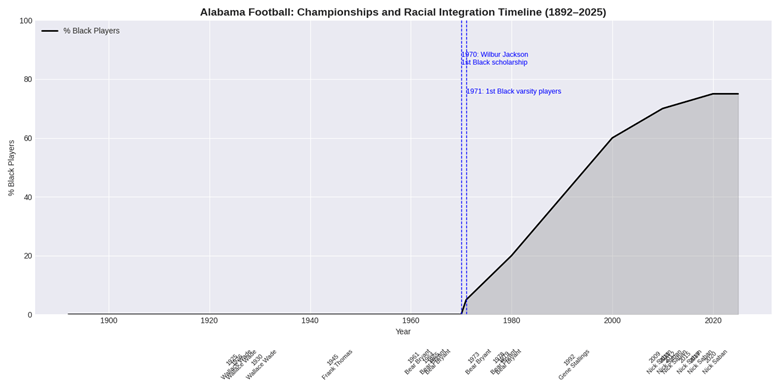
  • Layer 1 (Red dots): Marks championship years and the coach who led them.
  • Layer 2 (Black line): Shows the percentage of Black players, from 0% before 1970 to ~75% today.
  • Blue markers: Highlight the breakthrough years of Wilbur Jackson (1970) and John Mitchell (1971).

This visualization makes the contrast undeniable: Alabama’s dynasty was built on Black athletes after integration, yet leadership has remained exclusively white.

Why No Black Head Coach?

This is the uncomfortable truth. Alabama football thrives on the labor, talent, and brilliance of Black athletes, but leadership remains guarded by tradition. The program reflects a broader pattern in college football: Black players dominate the field, but white coaches dominate the sidelines.

Is this simply “tradition”? Or is it exploitation, using Black faces to win and profit, while denying them the authority to lead? As the saying goes: if you can get the milk for free, why buy the cow? Alabama has built its empire on Black excellence, but refuses to acknowledge that excellence in leadership.

  • Wallace Wade (1923–1930): 3 national titles, including the landmark 1925 Rose Bowl win.
  • Frank Thomas (1931–1946): Guided Alabama through WWII, winning the 1945 championship.
  • Bear Bryant (1958–1982): Built a dynasty with 6 national titles, cementing Alabama’s dominance.
  • Gene Stallings (1990–1996): Captured the 1992 championship, restoring Alabama’s glory.
  • Nick Saban (2007–2023): Another dynasty, with 6 national titles in the modern playoff era.

Call to Action

Football is supposed to be about unity, teamwork, and trust. But Alabama’s refusal to hire a Black head coach reveals a deeper fracture. If the Crimson Tide truly believes in “team,” then it must extend that belief beyond the field. Until then, the program’s legacy will remain incomplete, a dynasty built on Black talent but limited by old traditions.

Black America: The Blueprint of Global Culture and Opportunity

Introduction

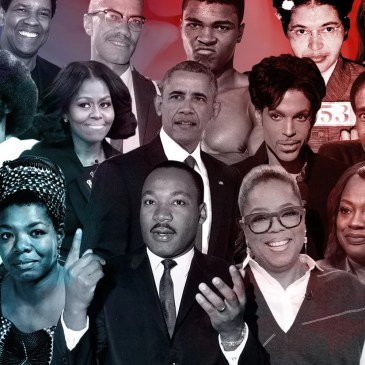
Black America has always been the heartbeat of democracy, culture, and progress. Yet, too often, our contributions are overlooked, minimized, or outright stolen. From the Civil Rights Movement to the African Diaspora, Black Americans have paved the way for immigrant communities, global liberation movements, and cultural revolutions. It is time to reclaim that truth.

Civil Rights Legacy and Immigration

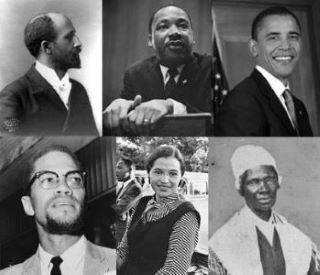
The Civil Rights Movement, led by Malcolm X, Dr. Martin Luther King Jr., and countless others, did more than secure rights for Black Americans. It opened doors for immigrant communities. The Immigration and Nationality Act of 1965 was born out of the Civil Rights struggle, allowing Cubans, Latinos, Caribbeans, Nigerians, Asians, Somalians, and others to enter the U.S. in greater numbers. Without Black America, those opportunities would not exist.

Identity and Assimilation

Yet, many of these groups distance themselves from Blackness, seeking acceptance by aligning with whiteness. Statements like “I’m not Black, I’m Jamaican” or “I’m Nigerian, not African American” fracture solidarity. Assimilation for survival may be understandable, but denial of identity undermines collective power.

The Diaspora and World Culture

The African Diaspora is not just about migration, it is about influence. Black America is the epicenter of global culture. Hip-hop, born in the Bronx, is now the most consumed music genre worldwide. Jazz, gospel, and R&B shaped entire industries. Fashion trends rooted in Black creativity dominate global markets. Even social justice movements abroad borrow language and tactics from the Civil Rights Movement.

Cultural Appropriation vs. Scrutiny

Black culture is celebrated globally but often stolen and repackaged by others. TikTok dances created by Black teens go viral, but influencers from other groups profit. Streetwear, rooted in Black creativity, is now a billion-dollar industry. Meanwhile, Black youth are stereotyped as “criminals” for the same creativity. The hypocrisy is undeniable: the world profits from Black culture while vilifying Black people.

Politics and Immigration

Many immigrant groups supported Donald Trump, believing his promises. Yet, his administration deported thousands from Latin America, Africa, and Asia. The irony is sharp: communities that distanced themselves from Black solidarity were targeted by the same system they empowered.

Global Impact of Black America

Black America is not just a cultural force, it is a political and social catalyst. Civil rights victories inspired global liberation movements, from South Africa to the Caribbean. Marcus Garvey’s Pan-African vision, Dr. King’s dream of justice, and Malcolm X’s call for dignity continue to resonate worldwide.

Conclusion

Black America is the foundation, the heartbeat, and the blueprint. We are not just culture, we are culture. We paved the way for the world politically, socially, and culturally. It is time for the world to recognize, respect, and honor that legacy.

White Supremacy Threatens South Africa’s Sovereignty, But What About America?

By Tim Cocks (Reuters)
Blog Commentary & Call to Action

South African President Cyril Ramaphosa recently sounded the alarm: ideas of white racial superiority are not only a threat to South Africa’s post-apartheid unity, but also to its sovereignty and international relations. Speaking at an ANC conference, Ramaphosa condemned false narratives of “white persecution” that continue to circulate in far-right spaces globally. These myths, he warned, have real consequences for diplomacy and national security.

Yet while Ramaphosa calls for global efforts to debunk these lies, U.S. President Donald Trump has chosen to amplify them. Trump boycotted the G20 summit in Johannesburg, alleging without evidence that South Africa mistreats its white minority. He claimed white farmers were being “slaughtered” and their land “illegally confiscated.” These claims have been widely debunked, but they continue to fuel white supremacist rhetoric worldwide.

Here’s the hypocrisy: Trump accuses South Africa of racism against whites yet remains silent on the systemic racism and repression of Black people in America. In South Africa, a wrong was made right, apartheid was dismantled, and the nation continues to strive for unity. In America, however, racism remains deeply entrenched. Black men are killed at alarming rates, the justice system turns a blind eye, and the trauma of racial injustice grows worse every day.

Before the pot calls the kettle black, America must look inward. Stop throwing stones when you live in a glass house. The U.S. government cannot credibly lecture others on racial justice while ignoring the oppression within its own borders.

Black people in America continue to face systemic racism and deadly police violence at rates far higher than other groups, making Donald Trump’s accusations against South Africa not only hypocritical but deeply offensive.

Police Violence Against Black Americans

  • In 2024 alone, U.S. police killed 1,365 people — the deadliest year on record campaignzero.org.
  • Of those, 248 were Black, despite Black Americans making up only about 13% of the population Statista.
  • The rate of fatal police shootings among Black Americans stood at 6.1 per million per year (2015–2024), more than double that of white Americans Statista.
  • Even after the global outcry following George Floyd’s murder in 2020, police killings of Black people have actually increased in recent years NBC News.
  • Data shows that unarmed Black men are disproportionately killed by police, highlighting systemic bias in law enforcement factually.co.

Examples of Systemic Racism in America

Systemic racism is not limited to policing, it permeates nearly every aspect of American life:

  • Education: Black students are more likely to attend underfunded schools and face harsher disciplinary actions Human Rights Careers.
  • Housing: Redlining and discriminatory lending practices have left Black families with far less generational wealth Human Rights Careers.
  • Employment: Black workers earn less on average and face higher unemployment rates than white counterparts Robert F. Smith News.
  • Healthcare: Black Americans experience worse health outcomes, higher maternal mortality rates, and less access to quality care Human Rights Careers.
  • Criminal Justice: Black people are incarcerated at nearly five times the rate of white people, often for similar offenses Human Rights Careers.

Taken together, these examples show that racism in America is not incidental, it is systemic, structural, and ongoing.

Blog Post Framing

South Africa, under Ramaphosa, is working to dismantle the legacy of apartheid and build unity. Meanwhile, America continues to deny or downplay its own racial injustices. For Donald Trump to accuse South Africa of racism against whites while ignoring the daily trauma of Black Americans is the ultimate hypocrisy.

Before the pot calls the kettle black, America must confront its own house of glass. Stop throwing stones abroad while ignoring the shattered lives at home.

Sources: Statista factually.co NBC News campaignzero.org Human Rights Careers Robert F. Smith News

Call to Action

It’s time to:

  • Expose and dismantle white supremacist lies globally.
  • Hold U.S. leaders accountable for systemic racism and police violence.
  • Unite Black communities worldwide in solidarity and resistance.

So I ask again: Should Donald Trump and the U.S. government be called out for this hypocrisy? The answer seems clear, yes, loudly and globally.

Rallying Cry

No more silence, no more lies, 

We see the truth with open eyes. 

From Soweto to Harlem streets, 

Black voices rise, we won’t retreat. 

Justice delayed is justice denied, 

Too many brothers have already died. 

Glass houses crack when stones are thrown, 

America fix the rot in your own. 

Unite the people, across the land, 

Together in strength, we take a stand. 

From Cape Town’s shore to Detroit’s fight, 

Black power united will set things right. 

Dr. Keyimani Alford: Reclaiming Narratives, Empowering Voices

Dr. Keyimani Alford is more than a leader; he is a storyteller, healer, and advocate whose life’s work bridges the worlds of education, authorship, and empowerment. Born in Oakland, California, and raised in Milwaukee, Wisconsin, Dr. Alford grew up navigating instability, poverty, and family absence. Those early challenges shaped his belief that education is not only a pathway to freedom but also a tool for rewriting one’s story.

As a first-generation college graduate who went on to earn his Ph.D. in Education, Dr. Alford understands the barriers faced by students from marginalized backgrounds. His research focuses on retention and persistence for first-generation and minority male students at predominantly White institutions, emphasizing that relationships and belonging are critical to success. Today, as Associate Vice President of Student Access & Success at Madison College, he leads initiatives that help students overcome financial, systemic, and personal obstacles so they can thrive. His leadership is rooted in empathy, accountability, and the conviction that systems should serve students, not the other way around.

Championing Underserved Communities

Dr. Alford’s commitment extends far beyond campus walls. Through his involvement in organizations such as WASFAA, College Goal Wisconsin, and MASFAA (where he serves as President-Elect), he advocates for policies that expand access and equity in higher education. His work ensures that underserved students, veterans, first-generation learners, and minority communities, have the support they need to persist and graduate.

He also founded Keywords Unlocked, LLC, a publishing and coaching company designed to amplify everyday voices, particularly Black and underrepresented authors. By equipping writers with tools and strategies to move from manuscript to marketplace, Dr. Alford is dismantling barriers in the publishing industry and ensuring that marginalized stories are not only told but celebrated.

Author and Storyteller

Dr. Alford’s own catalog of books reflects the power of storytelling as a tool for healing and leadership:

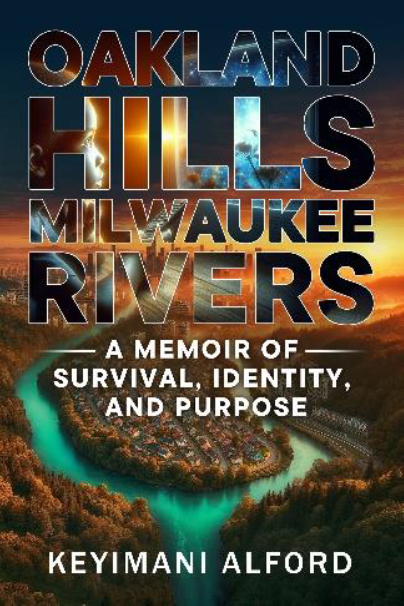
Oakland Hills, Milwaukee Rivers: A Memoir of Survival, Identity, and Purpose

In Oakland Hills, Milwaukee Rivers, I invite readers into the quiet rooms, crowded churches, and complicated family moments that shaped me as a Black boy learning to survive, belong, and believe in his own worth. This memoir walks through childhood trauma, father loss, religious shame, identity questions, and the hidden weight of silence, while tracing how grace kept showing up in unexpected people and places. It reads like sitting across from a friend who is finally telling the whole story, not the edited version.

Readers will see their own questions on these pages. The book helps them name what hurt, grieve what was taken, and begin to reclaim their voice with honesty and dignity. They walk away with language for things they have carried for years, a deeper understanding of how identity and faith can coexist with pain, and a renewed belief that their story is not over. This memoir becomes a mirror and a map for anyone who has ever felt unseen, misunderstood, or afraid to be fully themselves.

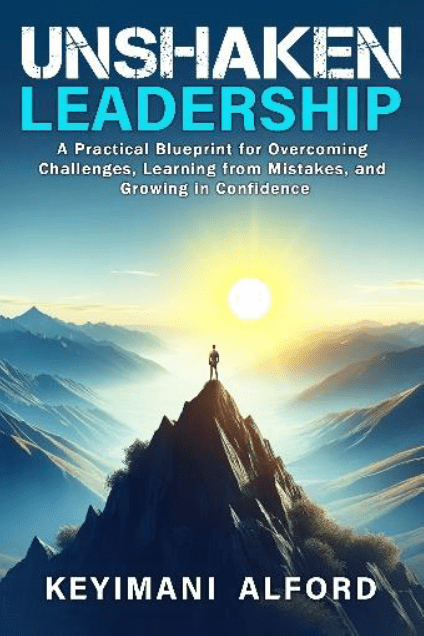
Unshaken Leadership: A Practical Blueprint for Overcoming Challenges, Learning from Mistakes, and Growing in Confidence

Unshaken Leadership pulls back the curtain on what leadership really feels like when the title sounds good, but the pressure is heavy. Drawing from more than two decades in higher education, community, and faith-based spaces, I walk readers through the unspoken realities of leading people, managing politics, navigating conflict, and making hard decisions when you still feel like you are figuring it out yourself. Each chapter blends story, reflection, and practical strategy so readers see the lessons in real situations, not just theory on a page.

This book is written for new and growing leaders who are tired of pretending they have it all together and are ready to lead with honesty, courage, and emotional intelligence. Readers gain language for the challenges they are facing, tools for balancing vision and boundaries, and frameworks they can immediately apply with their teams. The goal is simple: to help leaders stand firm when things shake around them, learn from their missteps without shame, and grow into a version of leadership that feels both effective and authentic.

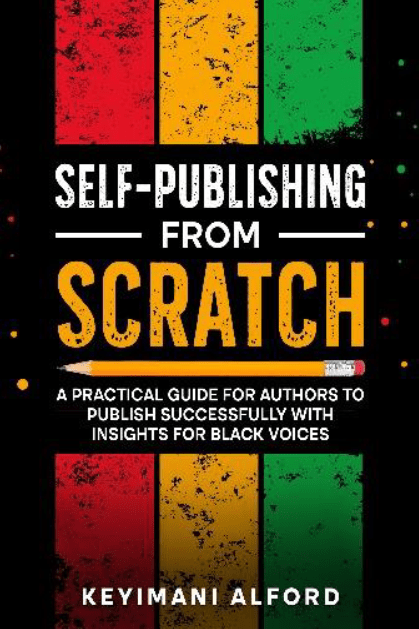
Self-Publishing from Scratch: A Practical Guide for Authors to Publish Successfully with Insights for Black Voices

Self-Publishing from Scratch is a step-by-step roadmap for everyday people who feel called to write a book and have no idea where to start. I walk readers through the full journey from idea to published book in plain language, breaking down what to write, how to edit, how to find a cover, how ISBNs work, what platforms to choose, and how to price and promote their work. Along the way, I share real stories, checklists, and behind-the-scenes lessons from my own publishing journey so readers avoid costly mistakes and gain the confidence to hit “publish” with clarity.

This book especially centers Black and underrepresented voices who have been told their stories are “too much,” “too specific,” or “too risky” for traditional publishing. Readers come away with practical tools, a realistic plan, and the encouragement that they do not have to wait for permission to become an author. By the end, they understand the business and the heart of self-publishing, and they know exactly what to do next to turn a manuscript, a journal, or even a set of notes on their phone into a book in readers’ hands.

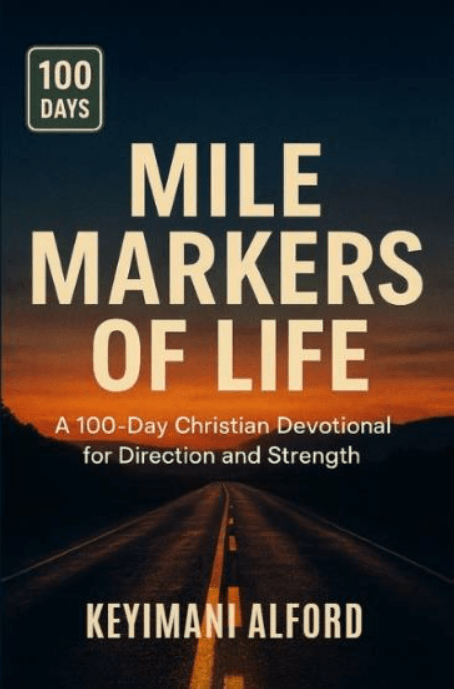
Mile Markers of Life: A 100-Day Christian Devotional for Direction and Strength

Mile Markers of Life is a 100-day devotional born from years of driving Wisconsin highways and noticing how the mile markers along the road mirrored the seasons of my own life. Each entry starts with a real-life scene and then connects it to Scripture, reflection, and a short prayer, helping readers see that God has been present in both the ordinary and painful parts of their journey. The readings are honest and accessible, designed for people who are carrying a lot and need encouragement that fits into real schedules and real emotions.

Readers will experience a devotional that speaks to fatigue, grief, uncertainty, hope, and new beginnings with gentle clarity. Every day offers direction for the heart and a small step they can take to move forward, whether that is letting something go, forgiving themselves, or daring to dream again. By the time they reach Day 100, they have traced their own “mile markers,” recognized how far they have come, and rediscovered that even in detours and delays, God has been guiding them toward healing and purpose.

A Voice of Hope and Action

Whether speaking in lecture halls, boardrooms, sanctuaries, or behind a microphone, Dr. Alford blends truth-telling with practical tools. His keynote themes, leadership with integrity, healing from trauma, equity in higher education, and empowering everyday voices, resonate because they are lived experiences, not abstract theories. Audiences leave not only inspired but equipped with frameworks and next steps to move forward.

Across every platform, Dr. Alford reminds people that their story still has chapters left and that hope is always within reach. His work as an author and advocate continues to light the way for underserved communities, proving that beginnings do not define destinies.

Connect with Dr. Keyimani Alford

Name: Dr. Keyimani Alford

Email: drkeyspeaks@gmail.com

Speaking & Books: www.drkeyspeaks.com

Publishing Company: www.keywordsunlocked.com

Social Media:

  • YouTube: @drkeyspeaks
  • Instagram: @drkeyspeaks
  • TikTok: @drkeyspeaks
  • Facebook: @drkeyspeaks
  • LinkedIn: Dr. Keyimani Alford (search on LinkedIn by name)