Lenacapavir: A Breakthrough HIV Prevention Tool Held Back by Global Funding Cuts

Adapted from reporting by Rachel Schraer, The Independent (Rethinking Global Aid Project)

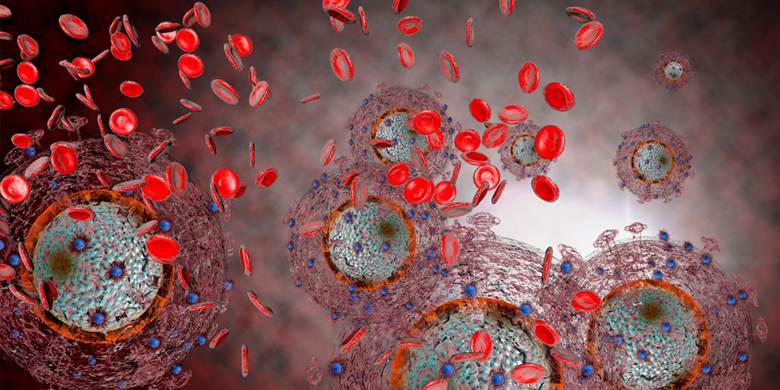
The closest thing we have to an HIV vaccine has finally arrived. Lenacapavir, a long-acting injectable medication that can prevent nearly 100% of HIV infections when administered twice yearly, is being hailed as revolutionary. Yet despite its promise, only a fraction of the people who need it will gain access.

The Numbers Behind the Breakthrough

  • Current plans by Gilead and international funders will provide lenacapavir to 2 million people over three years, about 666,000 annually.
  • Research by Dr. Andrew Hill (University of Liverpool) shows this rollout could avert 165,000 infections, but scaling up to 10 million people annually could prevent half a million infections and put us on track to ending HIV transmission.
  • The challenge: funding cuts, particularly from the U.S. under President Donald Trump, have left prevention efforts severely under-resourced.

The Cost and Access Challenge

  • In the U.S., a course of lenacapavir costs $28,000.
  • Thanks to advocacy and licensing agreements, the drug will be sold at no profit in low-income countries, with costs reduced to around $40 per person per year.
  • Gilead’s plan to reach 2 million people by 2028 is described as an “initial step,” with hopes that generic manufacturers will expand access further.

Why This Matters Globally

Anne Aslett, CEO of the Elton John AIDS Foundation, called the rollout “unprecedented,” noting that doses are arriving in Eswatini at the same time as in the U.S., a sharp contrast to the early AIDS crisis, when African nations waited more than a decade for antiretroviral drugs.

Still, she warns that funding gaps threaten progress. Vulnerable populations, young women, LGBTQ communities, sex workers, and people who use drugs, are often excluded from prevention services. Without reaching these groups, the epidemic cannot be contained.

Innovation in Delivery

  • Foundations are experimenting with drone deliveries of drugs and testing kits.
  • Digital pilots in London are making PrEP accessible directly to consumers, by passing traditional clinics.
  • Sub-Saharan Africa is now pioneering models of care that are more advanced than those in parts of the Global North.

🇬🇧 The UK’s Role

Mike Podmore, CEO of STOPAIDS, emphasizes that UK contributions are not just charity, they fuel domestic research and innovation. Agencies like Unitaid have invested £250m into UK universities over the past decade, strengthening both global and local HIV responses.

The UK has set a goal to end new HIV transmissions by 2030, and expanding access to lenacapavir will be critical to achieving it.

The Call to Action

Ending HIV is within reach, but only if global leaders step up. Dr. Hill and advocates worldwide are urging wealthy nations to contribute to a proposed $400m fund to expand access without undermining existing HIV programs.

This is a pivotal moment: decades of research and advocacy have brought us closer than ever to a cure. But without adequate funding, only 7% of those who need lenacapavir will receive it.

What you can do:

  • Sign petitions demanding governments protect and expand HIV funding.
  • Share this story widely to raise awareness.
  • Pressure policymakers to prioritize vulnerable populations in prevention programs.

Together, we can ensure that this breakthrough doesn’t stall at the starting line. Let’s end HIV and make life better for all.

Original reporting by Rachel Schraer, The Independent, as part of the “Rethinking Global Aid” project.


Seventh HIV Remission Sparks Hope, and Raises Questions About U.S. LeadershipOriginal reporting by Michelle Starr, Nature

A German man known as “Berlin 2 (B2)” has remained in remission from HIV for six years after a stem cell transplant to treat leukemia. This marks the seventh known case of long-term HIV remission worldwide. Unlike earlier cases, B2’s donor carried only one copy of the CCR5 Δ32 mutation, previously thought insufficient for durable resistance. His remission challenges assumptions and opens new pathways for understanding how HIV reservoirs can be eliminated.

Globally, 40.8 million people were living with HIV in 2024, with 1.3 million new infections and 630,000 AIDS-related deaths. In the U.S., 39,201 new diagnoses were reported in 2023, disproportionately impacting Black and Latino communities, especially in the South.

These breakthroughs abroad raise urgent questions:

  • Why are Germany and Switzerland leading in remission cases, while the U.S. lags behind?
  • Why does America, supposedly the global leader in R&D, appear to be playing second fiddle in HIV cure research?
  • Is the lack of universal healthcare in the U.S. a factor in limiting access to experimental treatments?
  • Why does Big Pharma continue to prioritize lifelong drug regimens over potential cures?

For those living with HIV/AIDS, these questions are not abstract, they are about survival. If you are reading this and living with HIV, ask your doctor about the current status of cure research. Demand transparency.

Stem cell transplants are not scalable cures, but they prove that reservoir reduction, graft-versus-reservoir responses, and partial CCR5 protection can lead to remission. The challenge now is whether America will invest in replicating these mechanisms through gene editing and pharmaceutical innovation or continue to let others lead while its citizens wait.

World AIDS Day is more than a commemoration, it is a call to action, reflection, and hope. Observed every year on December 1, it reminds us of the lives lost, the progress made, and the work still ahead in ending HIV/AIDS.

The Meaning of World AIDS Day

World AIDS Day was first established in 1988 by the World Health Organization (WHO) and UNAIDS, making it the first-ever global health day Wikipedia Britannica. Its purpose is to raise awareness about HIV/AIDS, show solidarity with people living with HIV, and honor the millions who have died from AIDS-related illnesses. The red ribbon, adopted in 1991, remains the universal symbol of support and remembrance Britannica.

Each year, the day carries a theme. In 2025, the theme is “Overcoming disruption, transforming the AIDS response”, a reminder that funding cuts, stigma, and inequality threaten decades of progress Moneycontrol.

Historical Context and Data

  • In the 1980s and 1990s, HIV/AIDS was a rapidly escalating crisis. By 1997, new infections peaked at 3.3 million annually, and AIDS-related deaths peaked in 2004 at 2.1 million per year Britannica.
  • Since then, antiretroviral therapy (ART) transformed HIV from a fatal disease into a manageable chronic condition, reducing deaths by more than 64% since 2004 Wikipedia.
  • As of 2024, an estimated 40.8 million people worldwide were living with HIV, with 1.3 million new infections and 630,000 AIDS-related deaths that year Business Standard Moneycontrol.
  • In the U.S., about 1.2 million people live with HIV, with ongoing disparities in testing and treatment Las Vegas Sun.

Strides in Treatment and Prevention

The fight against HIV/AIDS has seen remarkable progress:

  • ART advancements: From early AZT in 1987 to today’s single-pill regimens and long-acting injectables, treatment now allows near-normal lifespans Las Vegas Sun.
  • Prevention tools: Pre-exposure prophylaxis (PrEP) and post-exposure prophylaxis (PEP) have proven highly effective in preventing infection Business Standard.
  • U=U (Undetectable = Untransmittable): People on effective ART who maintain undetectable viral loads cannot sexually transmit HIV Business Standard.
  • Mother-to-child transmission: Once a major concern, it has been drastically reduced through targeted interventions Las Vegas Sun.

The Future Outlook

While progress is undeniable, challenges remain:

  • Funding cuts and inequality threaten to reverse gains, especially in vulnerable communities Moneycontrol.
  • Late diagnoses continue to hinder progress, with over half of new cases in Europe detected too late for optimal treatment News-Medical.Net.
  • Research breakthroughs offer hope: trials with engineered antibodies, CRISPR gene editing, and long-acting injectables like lenacapavir suggest that a functional cure may be within reach Smithsonian Magazine AIDS.ORG.
  • The global goal remains clear: end AIDS as a public health threat by 2030, a target set by UNAIDS and the UN Sustainable Development Goals Britannica UNAIDS.

Closing Reflection

World AIDS Day is not just about remembrance, it is about renewed commitment. We have turned HIV from a death sentence into a chronic condition, but stigma, inequity, and funding gaps still stand in the way of ending the epidemic. The future depends on global solidarity, scientific innovation, and community-led action.

Ending AIDS is possible but only if we choose compassion, equity, and sustained investment.

Sources: Wikipedia Britannica Business Standard Las Vegas Sun Smithsonian Magazine AIDS.ORG UNAIDS Moneycontrol

The Empowerment and Resilience Framework: A New Era of Healing for Black Women

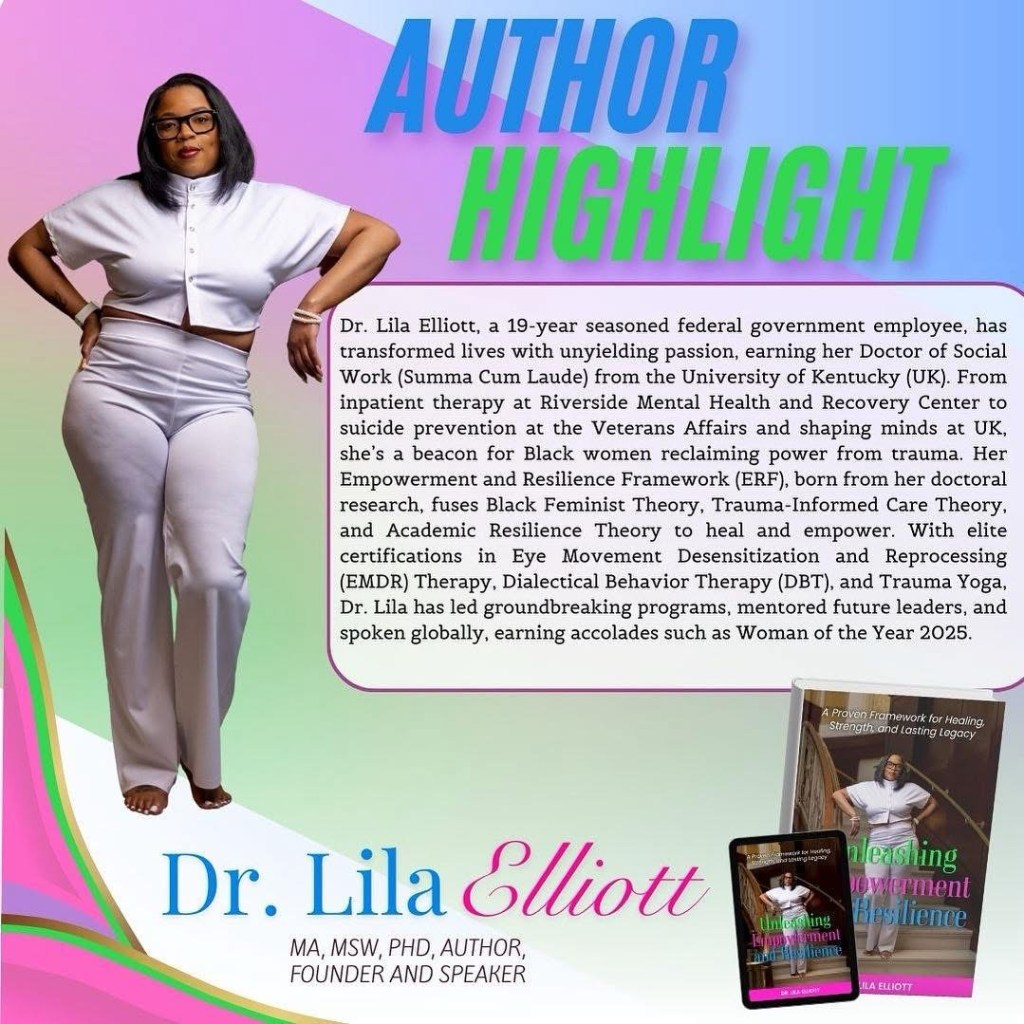
Climbers, y’all know I love amplifying powerful Black women who are doing transformational work and today I’m honored to spotlight my colleague, friend, and fellow doctor, Dr. Lila Elliott.

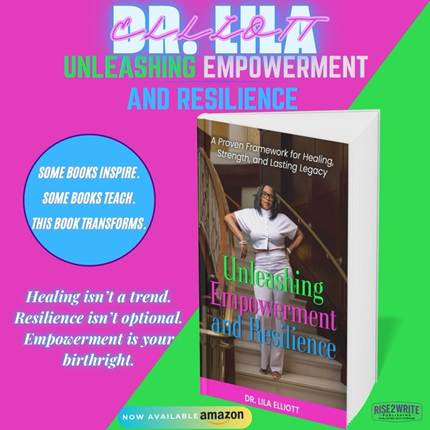
Her brand-new self-help journal, Unleashing Empowerment and Resilience, is officially OUT on Amazon and it is a must-have for anyone serious about healing, breaking cycles, and stepping into their birthright of strength.

Dr. Elliott is more than an author, she’s a visionary. With 19 years of clinical practice, research, and her doctoral capstone, she created the Empowerment and Resilience Framework (ERF), a groundbreaking model that blends Black Feminist Theory, Trauma-Informed Care, and Academic Resilience into a practical blueprint for real life.

This journal is not just for social workers or therapists. It’s for:

  • Black women healing childhood trauma
  • Corporate leaders rising above burnout
  • Teachers building safe spaces
  • Hairstylists listening to stories every day
  • Veterans, parents, and anyone ready to stop surviving and start thriving

Inside, you’ll find:

  • Practical strategies you can apply immediately
  • Journaling prompts to guide reflection and growth
  • Stories from women who reclaimed their power
  • Tools you can use in your home, workplace, community, and relationships

Dr. Elliott recently joined me on America in Black and White, where she shared how her work is rooted in truth-telling, resilience, and the power of Black women’s voices. Her insights reminded us that healing is not just personal, it’s communal, and it’s historical.

This book transforms you from the inside out. Imagine having a guide that teaches you to turn your pain into power, your voice into your weapon, and your story into a legacy. That’s exactly what Unleashing Empowerment and Resilience delivers.

Grab your copy today: Amazon link
Learn more about Dr. Elliott’s work: Her website

If you have a sister, coworker, friend, or colleague who needs a reminder of who she is, gift her this journal. Healing starts with one choice. One self-help journal. One moment.

Let’s support this incredible Black woman author and help get this book into the hands of every person ready to rise. 

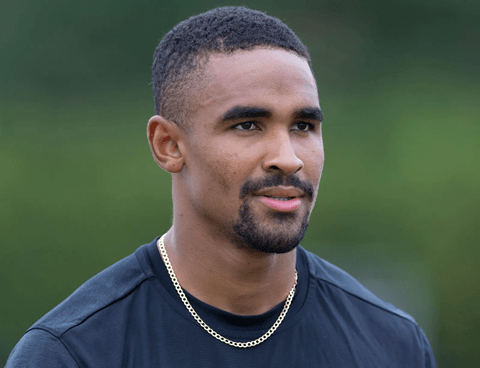
Jalen Hurts has become the face of the Philadelphia Eagles, but recent drama raises questions about the team’s unity. Is the organization truly behind its franchise quarterback, or are outside voices stirring unnecessary doubt?

Jalen Hurts: The Relentless Leader

Since arriving in Philadelphia in 2020, Jalen Hurts has never had the same offensive coordinator in back-to-back seasons, a challenge dating back to his college days at Alabama and Oklahoma. Yet, he has never complained. Instead, he has put in the work, adapted, and excelled. His leadership carried the Eagles to two Super Bowl appearances in five years, including a Super Bowl LIX victory in 2025, where he was named Super Bowl MVP media.nfl.com The Hilltop.

AJ Brown vs. Team Unity

Fresh off that championship, wide receiver A.J. Brown has publicly voiced frustration about being left out of the offensive game plan Sports Illustrated. His complaints echo the infamous Terrell Owens saga with Donovan McNabb after the Eagles’ 2005 Super Bowl loss. Owens’ selfishness fractured the team, leading to Andy Reid’s firing, McNabb’s trade, and Owens’ departure.

Brown’s lack of effort on contested catches and his media outbursts have drawn criticism. Meanwhile, DeVonta Smith has emerged as a true WR1, battling for every ball and proving his reliability. The Eagles gambled by keeping Brown past the trade deadline, but his behavior continues to cast a shadow.

Outside Voices: Seth Joyner & LeSean McCoy

Former Eagles Seth Joyner and LeSean McCoy have suggested that some in the organization are unhappy with Hurts. But let’s be clear: letting Hurts walk would be unthinkable. Every other NFL team would break the bank to sign him. Joyner was a solid linebacker but never a game-changer, while McCoy’s career fizzled after early promise. Their critiques seem more rooted in bitterness than fact.

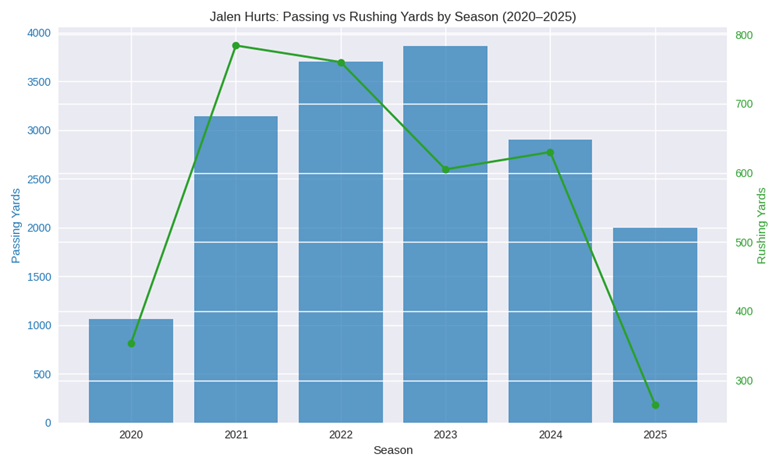
Jalen Hurts Career Stats (NFL) ESPN NFL Pro-Football-Reference.com

SeasonGPComp%Pass YardsTDINTRush YardsRush TD
20201552.0%1,061643543
20211561.3%3,14416978410
20221566.5%3,70122676013
20231765.4%3,858231560515
20241568.7%2,90318563014
20251066.9%1,9951612656
Career8764.7%16,662101403,39861

a chart comparing Jalen Hurts’ passing and rushing yards by season.

This dual-axis chart highlights how Hurts has balanced his game since entering the NFL. His passing yards steadily climbed from 2020 to 2023, peaking at nearly 3,900, while his rushing yards consistently added another dimension to the Eagles’ offense. Even in seasons with coordinator changes, Hurts adapted and delivered.

Jalen Hurts’ Accomplishments media.nfl.com Sportskeeda The Hilltop

  • Super Bowl LIX Champion & MVP (2025)
  • Super Bowl LVII appearance (2023)
  • 2× Pro Bowl selection (2022, 2023)
  • Second-team All-Pro (2022)
  • Bert Bell Award (2022)
  • Holds NFL record for most rushing TDs in a season by a QB (15)
  • Career playoff record: 5–3, with 1,592 passing yards and 9 rushing TDs

Final Thoughts

The Eagles’ success is inseparable from Jalen Hurts. He has proven himself as a franchise leader, overcoming instability at coordinator, silencing critics, and delivering championships. The real question isn’t whether Hurts is the problem, it’s whether the organization can keep the locker room united and silence distractions.

Readers, what do you think? Is Jalen Hurts the long-term answer for Philadelphia, or do the Eagles risk repeating history by letting drama overshadow their success? Comment below, subscribe, and join the conversation.

Sources: Sports Illustrated media.nfl.com Sportskeeda The Hilltop ESPN NFL Pro-Football-Reference.com

When Does It Stop? Black Women Deserve Dignity, Not Discrimination

Credit: Original reporting by Jeroslyn JoVonn

On November 6th, nine Black women gathered at the Cork and Bull Chophouse in Chesapeake, Virginia for what was meant to be a joyful Friendsgiving celebration. Instead, their evening turned into humiliation and pain.

According to reporting by Jeroslyn JoVonn, a fight broke out between two women who were not part of their group. Yet, despite having no involvement, the nine friends were told to leave. When one of them asked why, a manager allegedly responded: “Because you all like to fight.”

The women, who had simply come together for fellowship, were forced to stand up in front of other patrons and exit the restaurant, while the actual individuals involved in the altercation had already left. As one of the women, Shakoya Holt, explained, “We were all put in a negative spotlight in that moment. It was all eyes on us, very embarrassing.”

Now, the group has hired attorney Joyvan Malbon-Griffin, who has stated that this treatment was discriminatory and violated their rights. “All nine of these women were treated more harshly than the two people who were actually engaged in the misdemeanor action,” Malbon-Griffin said. The women are seeking accountability and justice.

The Bigger Picture

This incident is not isolated. It reflects a broader pattern of how Black people, especially Black women, continue to be disrespected, stereotyped, and discriminated against in public spaces. To assume guilt based on race, and to punish those who were minding their own business, is not only unjust but deeply harmful.

How do you justify removing nine women who were not involved, while excusing the actual participants in the fight? How do you justify humiliating them in front of an entire restaurant?

This is not just bad judgment, it is systemic bias. And when establishments act this way, they are not only violating the dignity of their customers, but also potentially violating constitutional protections and the Commerce Clause, which ensures equal access and fair treatment in public accommodations.

The Questions We Must Ask

  • When does this stop?
  • When will establishments be held accountable for discriminatory actions?
  • How many more incidents must occur before businesses recognize that treating customers with dignity and respect is not optional, it is a legal and moral obligation?

A Call for Accountability

The women involved have said “enough is enough.” And they are right. We must demand accountability from businesses that perpetuate discrimination. We must call out injustice when we see it. And we must remind every establishment: Black women, and all marginalized communities, deserve respect, safety, and dignity.

Until accountability is enforced, these incidents will continue. But by shining a light on them, by refusing to stay silent, and by demanding justice, we can push for change.

Closing Thought

This is about more than one restaurant. It is about a culture that too often stereotypes and mistreats Black people. It is about ensuring that our communities are not humiliated, dismissed, or denied their rights.

Treat your customers with dignity and respect. Period.

17 Shots in the Back, When Will Justice Come?

Credit: Original reporting by Joe Walker (@joewalkr, The Independent)

Atlanta rapper B Green, born Linton Blackwell, was shot and killed on October 11th outside Five Paces Inn in Buckhead. The autopsy revealed a chilling truth: he was shot 17 times in the back by off-duty police officer Gerald Walker, who was working security at the bar.

Police claim Walker was responding to reports of a “disruptive person.” They allege that Green attempted to re-enter the bar through a rear entrance and later placed an item in the small of his back. Commands were issued “in reference to a gun,” and moments later, Green was gunned down. Investigators later found a firearm, but the autopsy makes clear: every single bullet entered his back.

Green’s manager and friend, Timothy Coleman, expressed disbelief: “I just couldn’t believe it was 17 times in the back. There’s not one shot in the front. If he wasn’t pointing a gun at you or doing anything, what does that have to do with shooting him in the back 17 times? That means he wasn’t facing you. He wasn’t a threat.”

Green was a father of twin girls, a family man, and an artist who left behind a legacy, including his final album PTSD: Vietnam Vet released in 2020.

The Larger Issue

This is not just about one man. This is about a system that continues to allow police officers, sworn to protect, to kill Black men with impunity.

  • Seventeen shots in the back is not self-defense. It is execution.
  • When officers fire this many times, it reveals not fear, but intent.
  • The justice system has repeatedly failed to hold officers accountable, creating what feels like a license to kill.

And what makes this even more painful is the reality that Black officers, too, have participated in this cycle of violence against their own communities. The badge, in too many cases, has become a shield for abuse rather than a symbol of protection.

The Questions We Must Confront

  • What will make a person shoot another human being 17 times in the back?
  • How can the justice system continue to justify these killings?
  • Why are Black men still being killed, while the officers responsible walk free?
  • When will police departments stop operating like mafia hit squads, taking lives whenever they feel like it?

A Call for Accountability

It is long past time to demand change. Calls to “defund” are not about chaos, they are about redirecting resources away from militarized policing and toward community safety, mental health, education, and opportunity.

Every time another Black man is killed, we are reminded that reform alone is not enough. Accountability must be real. Justice must be enforced. And communities must be empowered to protect themselves from the very institutions that claim to serve them.

Timeline of Police Killings of Black Men (2014–2025)

2014 – Michael Brown (Ferguson, Missouri)

  • Shot and killed by Officer Darren Wilson.
  • His death sparked nationwide protests and helped ignite the Black Lives Matter movement Statista.

2015 – Walter Scott (North Charleston, South Carolina)

  • Shot five times in the back while fleeing a traffic stop.
  • Officer Michael Slager was eventually sentenced to 20 years in prison CBC.

2016 – Alton Sterling (Baton Rouge, Louisiana)

  • Shot outside a convenience store while pinned to the ground.
  • Federal prosecutors declined to charge the officers involved CBC.

2016 – Philando Castile (Falcon Heights, Minnesota)

  • Shot during a traffic stop after informing the officer he was legally carrying a firearm.
  • The aftermath was streamed live on Facebook by his girlfriend. Officer Jeronimo Yanez was acquitted CBC.

2016 – Terence Crutcher (Tulsa, Oklahoma)

  • Shot while his hands were raised near his stalled vehicle.
  • Officer Betty Shelby was acquitted of manslaughter CBC.

2020 – George Floyd (Minneapolis, Minnesota)

  • Murdered when Officer Derek Chauvin knelt on his neck for over nine minutes.
  • His death sparked global protests against police brutality Wikipedia.

2020 – Rayshard Brooks (Atlanta, Georgia)

  • Shot in the back by police after being found asleep in his car at a Wendy’s drive-thru.
  • His killing reignited protests in Atlanta Wikipedia.

2022 – Patrick Lyoya (Grand Rapids, Michigan)

  • Shot in the back of the head during a traffic stop.
  • Officer Christopher Schurr was charged with second-degree murder Wikipedia.

2025 – Linton “B Green” Blackwell (Atlanta, Georgia)

  • Shot 17 times in the back by off-duty officer Gerald Walker outside Five Paces Inn.
  • His autopsy confirmed no shots to the front, raising questions of execution rather than defense mappingpoliceviolence.us.

https://www.statista.com/statistics/585152/people-shot-to-death-by-us-police-by-race/

https://www.cbc.ca/news/world/list-police-related-deaths-usa-1.4438618

https://mappingpoliceviolence.us/

What This Timeline Shows

  • Pattern of excessive force: From Ferguson to Atlanta, Black men are disproportionately killed by police.
  • Lack of accountability: Many officers are acquitted or never charged, reinforcing systemic impunity.
  • Escalation of violence: Shooting someone 17 times in the back, as in B Green’s case, is not policing — it is execution.
  • Community impact: Each killing leaves families devastated and communities traumatized, fueling mistrust of law enforcement.

Closing Thought

This timeline makes clear: B Green’s killing is not an isolated tragedy. It is part of a decades-long crisis of police violence against Black men. Until accountability is real and systemic change is enforced, these killings will continue.

Sources: Wikipedia CBC Statista mappingpoliceviolence.us

Closing Thought

B Green’s death is not just a tragedy, it is a symptom of a system that continues to devalue Black lives. Seventeen shots in the back is not policing. It is murder.

The question remains: When will justice finally come?

“When Familiarity Becomes a Filter: CBS, Race, and the Cost of Corporate Realignment”

Credit: Original reporting by Ariel Zilber for the New York Post. Additional sourcing from Yahoo News, Deadline, and NewscastStudio. Radio & Television Business Report Yahoo NewscastStudio Deadline

In a moment that demands clarity, courage, and accountability, former CBS News associate producer Trey Sherman has ignited a firestorm with his viral TikTok alleging race-based layoffs at CBS News following sweeping cuts by its new parent company, Paramount Skydance. Sherman, who is Black, claims that every producer laid off from his team was a person of color, while white colleagues were reassigned or retained, a pattern he says reflects not just bias, but systemic exclusion.

This post is based on reporting by Ariel Zilber for the New York Post, and we encourage readers to review the original article for full context Yahoo.

https://www.facebook.com/reel/1499782587879656

Sherman’s allegations come on the heels of a corporate merger that has reshaped the media landscape. David Ellison, son of tech billionaire and Trump ally Larry Ellison, now serves as Chairman and CEO of Paramount, which controls a vast portfolio of media brands including:

  • CBS News
  • CBS Entertainment
  • CBS Sports
  • Paramount Pictures
  • Paramount Television
  • Nickelodeon
  • MTV
  • Paramount+
  • Pluto TV
  • Showtime Networks
  • CBS Media Ventures (home to Entertainment Tonight, Inside Edition, The Mike Douglas Show, and The Insider) Radio & Television Business Report NewscastStudio Deadline

The new executive team includes:

  • Jeff Shell – President
  • Andy Gordon – Chief Strategy Officer & COO
  • George Cheeks – Chair of TV Media
  • Dana Goldberg – Co-Chair of Paramount Pictures & Chair of Paramount Television
  • Josh Greenstein – Co-Chair of Paramount Pictures & Vice Chair of Platforms
  • Cindy Holland – Chair of Direct-to-Consumer
  • Stephanie Kyoko McKinnon – General Counsel
  • Jim Sterner – Chief People Officer
  • Melissa Zukerman – Chief Communications Officer
  • Andrew Warren – Interim CFO NewscastStudio Deadline

But the real story isn’t just about names, it’s about values.

Sherman’s account paints a troubling picture: a Race & Culture Unit dissolved, African coverage shifted from Johannesburg to London, and a CBS executive allegedly admitting that retention decisions were based on “familiarity”, not merit, not equity, not excellence. Familiarity, in this case, seems to have favored whiteness.

And while Bari Weiss, the newly appointed editor-in-chief of CBS News, claims she wasn’t involved in the layoffs, her public stance against DEI initiatives, calling them “illiberal” and “anti-merit”, aligns with the broader dismantling of diversity efforts across the network Yahoo.

This raises urgent questions:

  • Why wasn’t CBS sold to someone like Byron Allen, whose media empire centers Black voices and legacy storytelling?
  • Why are major networks increasingly aligning with conservative agendas, including what some describe as a “repression bid” by President Donald Trump?
  • What does it mean when legacy media platforms silence the very voices they once promised to uplift?

We invite our readers, especially those who care about equity, truth, and representation, to reflect and respond:

 Do you still support CBS, Paramount+, and their affiliated media brands?
 Do you believe these layoffs reflect racial bias or corporate pragmatism?
 Should we be demanding ownership shifts toward leaders who reflect our communities and values?

This isn’t just a media story. It’s a legacy story. And legacy, as we know at AMIBW, must be protected, not erased.

Let us know your thoughts. Comment below. Share widely. And stay tuned for more coverage in Changing Trends and Times, America in Black and White, and AMIBW The Magazine.

Black Fathers Are Kings: Reclaiming the Integrity of the Black Household

There is no complete family structure without the presence and leadership of a father. This truth is especially poignant in Black households around the world, where fatherhood has been under siege—not by choice, but by design.

Beginning with slavery and continuing through Jim Crow, redlining, mass incarceration, and economic gatekeeping, Black families have endured generational repression. Systems were built to break the home—emasculate the father, overload the mother, and confuse the child.

The Breaking Point

  • Fathers stripped of jobs, dignity, and access to opportunity
  • Mothers forced into dual roles without adequate support
  • Children growing up witnessing survival-mode instead of stability

It wasn’t uncommon for families to crumble under pressures they weren’t equipped to navigate. The pain wasn’t personal—it was systemic.

It’s time to break down this destruction decade by decade. We must understand:

  • Who orchestrated these policies
  • When they took root
  • Where the pressure hit hardest
  • Why these patterns persist
  • How we can repair, reclaim, and rebuild

The Damage is Economic and Emotional

Rifts run deep. Family members divided by shame, silence, or survival. Communities stereotyped and criminalized. The planting of drugs in Black neighborhoods wasn’t coincidence—it was a strategy. The criminalization of poverty birthed the “thug” narrative. Redlining was a red flag we still live beneath.

And through it all, the Black Father stood tall—whether he was seen or not.

Celebrating Black Fathers: Kings in Every Sense

Today, we stand to declare: Black Fathers are Kings. They are not failures—they are foundational.

  • They navigate impossible odds with courage.
  • They pour into communities with wisdom and strength.
  • They deserve not just celebration, but reverence.

The time to honor them isn’t next month, next year, or someday. It’s now. And it starts with us.

“When the Badge Is a Mask: White Violence, Political Terror, and the Cost of Silence”

On a quiet June morning in Minnesota, the illusion of safety shattered.

State Representative Melissa Hortman and her husband, Mark, were assassinated in their Brooklyn Park home. Just hours earlier, State Senator John Hoffman and his wife, Yvette, were shot multiple times in their Champlin residence. Both couples were targeted by a man who wore the uniform of trust—a police vest, a badge, a Taser—and carried the intent of terror.

The gunman, Vance Luther Boelter, 57, was no stranger to public service. A former appointee to the Governor’s Workforce Development Council and a security contractor, Boelter used his knowledge of law enforcement to orchestrate what officials now call a “politically motivated assassination”2.

He stalked his victims like prey. He drove a black SUV outfitted with police lights. He wore a hyper-realistic mask. He knocked on doors claiming to be an officer responding to a shooting. And when those doors opened, he opened fire.

Melissa and Mark Hortman died in their home. The Hoffmans survived after emergency surgery. Their daughter’s quick call to 911 may have saved countless lives.

Authorities found a manifesto in Boelter’s vehicle—a hit list with nearly 70 names, including abortion providers, lawmakers, and activists across multiple states. This wasn’t random. It was ideological. It was white violence, cloaked in authority, fueled by grievance, and executed with chilling precision.

Why Did It Take So Long?

Despite early warnings and a shootout with police, Boelter evaded capture for nearly two days. He fled on foot, ditching his weapon, body armor, and mask behind the Hortman home. The manhunt—described as the largest in Minnesota history—involved local police, the FBI, and federal marshals. He was eventually found near his rural property in Green Isle, Minnesota, after a neighbor spotted him on a trail camera2.

The delay in apprehension raises painful questions: How does a man with a known political agenda, military-style gear, and a fake police cruiser slip through the cracks? What systems failed to flag his radicalization? And why is it so hard to name this for what it is—domestic white terrorism?

A Pattern, Not an Anomaly

This is not an isolated incident. Over the past five years, white supremacist violence has surged. From the 2022 Buffalo supermarket massacre to the 2023 Jacksonville shooting targeting Black shoppers, the pattern is clear: white grievance, often masked as patriotism, is metastasizing into political violence.

According to the Pew Research Center, public support for racial justice movements has declined since the 2020 murder of George Floyd—ironically, also in Minnesota. DEI programs have been rolled back. Extremist rhetoric has gone mainstream. And many Americans now express doubt that Black people will ever achieve equal rights.

This erosion of empathy is not accidental. It is the soil in which white violence grows.

The Cost to Community

Minnesota is grieving. Flowers and flags now mark the Capitol steps. Children are asking why someone dressed like a protector became a predator. And lawmakers are wondering if their names are on the next list.

But this isn’t just about Minnesota. It’s about a nation that refuses to confront the violence it breeds. A nation where white men with guns are too often seen as “troubled” instead of “terrorists.” A nation where the badge can be a mask—and the silence, complicit.

Call to Action: Name It. Confront It. Dismantle It.

  • Name it: This was white domestic terrorism. Say it.
  • Confront it: Demand accountability from law enforcement and elected officials.
  • Dismantle it: Support policies that track and prosecute hate crimes with the same urgency as foreign threats.

We cannot heal what we refuse to name. And we cannot protect our future if we keep rewriting our past.

Melissa and Mark deserved more. The Hoffmans deserve justice. And our communities deserve the truth.