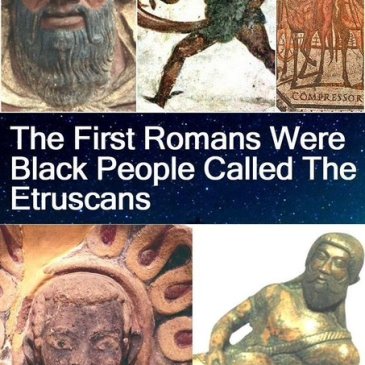
The Forgotten Founders: Reclaiming the Legacy of the Etruscans
Long before the grandeur of Rome dazzled the world, there thrived a mysterious and affluent civilization on the Italian peninsula: the Etruscans. Flourishing between the 8th and 3rd centuries BCE, the Etruscans laid the bedrock for much of what the Roman Empire would later claim as its own. Yet history has quietly erased them—leaving only fragments of their brilliance buried beneath the empire that swallowed them.
A People of Sophistication and Spirit
The Etruscans were more than just precursors to Rome—they were innovators in urban planning, religion, art, and governance. Their cities, nestled in what is now Tuscany and parts of Umbria and Lazio, featured advanced road systems, drainage infrastructure, and public squares. They introduced the arch into architecture and influenced many religious rituals the Romans adopted, from augury (interpreting the will of the gods) to gladiatorial games, which began as funerary rites.
Women in Etruscan society held unusually high status for the ancient world—participating in banquets, owning property, and maintaining independent identity. This, of course, scandalized the patriarchal Greeks and Romans, who later rewrote Etruscan narratives through their own biased lenses.
Wealth and the Wounds of Conquest
Etruscan cities prospered through metalwork, trade, and cultural ingenuity. Their tombs were filled with gold, jewelry, and finely crafted pottery, testifying to their immense wealth. But with prosperity came peril. As Rome grew hungry for expansion, it absorbed and suppressed the Etruscans over a few centuries—confiscating lands, pillaging tombs, and eventually erasing their language and identity.
The final blow wasn’t just military—it was historiographical. Much of what we know about the Etruscans comes from the victors who subdued them. And like many erased peoples across time, their story was rewritten, then forgotten.
Legacy in the Shadows
Despite the attempted erasure, traces of Etruscan influence remain etched into Italy’s DNA. The Romans built their republic—its laws, its rituals, its military customs—upon Etruscan blueprints. The toga? Etruscan. The Roman alphabet? Adapted from Etruscan script, which itself was adapted from Greek. Even the cultural ideal of dignitas, a Roman virtue of honor and worth, echoes the Etruscan spirit.
Their disappearance is a stark reminder that wealth and brilliance alone don’t preserve a people’s memory—only storytelling does.
Why We Must Remember
In many ways, the Etruscans mirror others throughout history who were culturally rich yet politically overrun—societies like those of West Africa before colonization, or Black Wall Street before the 1921 Tulsa massacre. Their fall reveals the fragility of legacy without vigilance.
Let us remember the Etruscans not as a footnote to Rome, but as visionaries in their own right—a people of ceremony, city-building, and sacred purpose, whose silence today speaks volumes about the way history is written.
 Changing Trends and Times