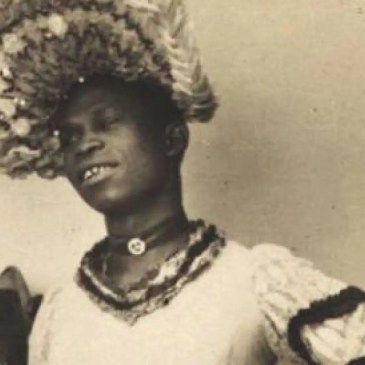
From Chains to Crowns: The Legacy of William Dorsey Swann

By Charles Zackary King
America in Black and White | Changing Trends and Times

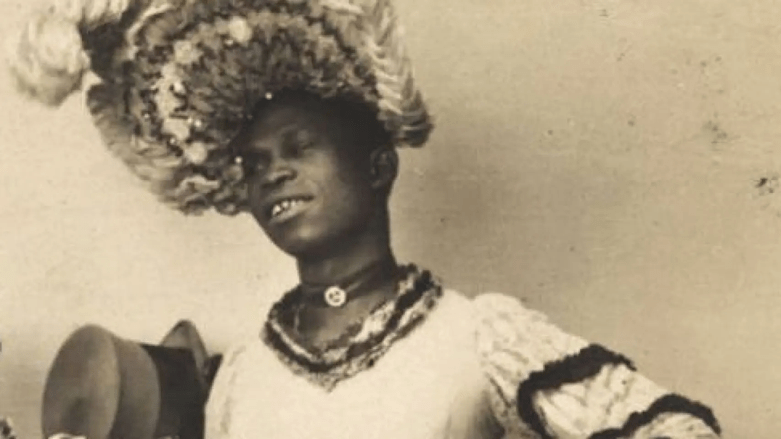
In the tapestry of Black history and LGBTQ+ resistance, few threads shine as defiantly as that of William Dorsey Swann. Born into slavery in March 1860 in Hancock, Maryland, Swann would become the first known American to self-identify as a “queen of drag”—and the first to lead a documented queer resistance group in the United States Wikipedia Smithsonian Magazine.
Childhood in Chains

Swann was the fifth of thirteen children in a Protestant family enslaved by Ann Murray. His mother, Mary Jane Younker, was a housekeeper, and his father, Andrew Jackson Swann, farmed wheat. After emancipation, the Swann family purchased land and began farming, but poverty and racial barriers loomed large. William, like many formerly enslaved children, was denied formal education and began working young Boundary Stones.

Early Adulthood & Convictions

In his twenties, Swann moved to Washington, D.C., working as a hotel waiter and janitor. He was arrested in 1882 for petty larceny—stealing books and household items—but his employers and even the sentencing judge vouched for his character, describing him as “industrious, refined, gentle, and courteous.” This moment revealed Swann’s hunger for knowledge and dignity, even in the face of criminalization Rediscovering Black History.
The Queen of Drag

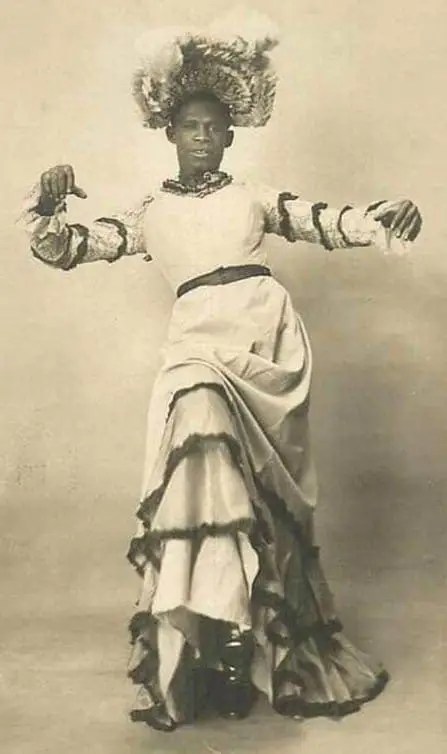
By the late 1880s, Swann was hosting secret drag balls in D.C.—lavish, defiant celebrations of identity and joy. These gatherings, attended by formerly enslaved Black men, featured silk gowns, corsets, and the iconic cakewalk dance, a precursor to modern voguing. Swann called himself the “queen of drag,” and his events became sanctuaries of self-expression and resistance Wikipedia Smithsonian Magazine.

On April 12, 1888, during his 30th birthday celebration, police raided the party. Swann, dressed in cream-colored satin, resisted arrest and famously declared to an officer, “You is no gentleman.” This act of defiance is now recognized as one of the earliest documented instances of queer resistance in U.S. history Wikipedia.

Legal Resistance & Legacy

In 1896, Swann was convicted of “keeping a disorderly house”—a euphemism for running a brothel, though he was simply hosting another drag ball. He petitioned President Grover Cleveland for a pardon, making him the first American to take legal action to defend the LGBTQ+ community’s right to gather. Though denied, his courage laid the groundwork for future civil rights battles Rediscovering Black History.

Swann’s later years were quieter, but his legacy endured. His brother Daniel continued making drag costumes for decades. Swann died around December 23, 1925, at age 65. After his death, local officials burned his home—a final act of erasure that history is now reversing Wikipedia.

Influence on Today’s LGBTQ+ Culture
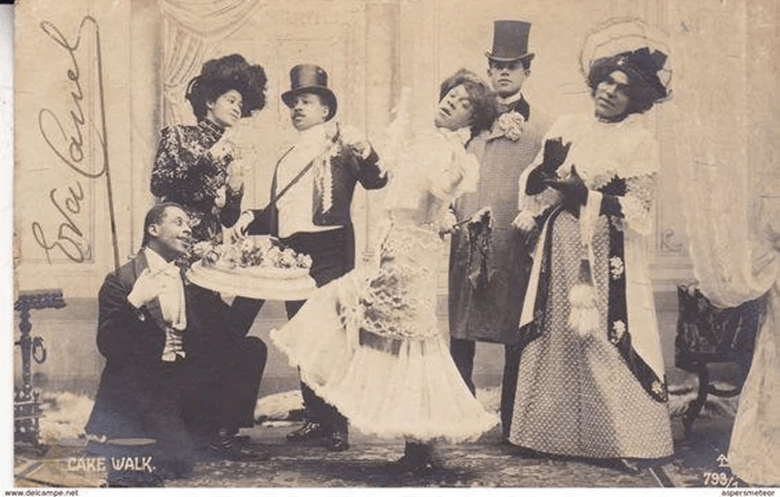
Swann’s drag balls were the blueprint for the ballroom culture that flourished in Harlem and beyond. His use of the cakewalk, his unapologetic identity, and his insistence on joy and community in the face of oppression echo in today’s voguing, drag pageantry, and queer activism.

In an era where drag is both celebrated and politicized, Swann’s story reminds us that Black queer resistance is not new—it is foundational.


Jussie Smollett: From Scandal to Strength A Journey of Resilience, Artistry, and Truth

In the ever-evolving narrative of Black celebrity, few stories have been as polarizing and as quietly redemptive as that of Jussie Smollett. Once celebrated for his role as Jamal Lyon on Fox’s Empire, Smollett became the center of a national firestorm in 2019 after reporting a homophobic and racist attack in Chicago. What followed was a legal saga that tested the boundaries of justice, media bias, and public perception.

But today, Smollett stands not just as a survivor of controversy but as a creator, a truth-teller, and a proud voice within the Black LGBTQ+ community.

The Incident That Shook a Nation

In January 2019, Smollett alleged that he was assaulted by two men who hurled racial and homophobic slurs, poured a chemical substance on him, and tied a rope around his neck. The initial outpouring of support quickly turned into skepticism as Chicago police accused Smollett of staging the attack. He was charged with 16 felony counts of disorderly conduct for filing a false police report.

Though the charges were dropped in March 2019 after a plea agreement, Smollett was re-indicted in 2020. In 2021, he was convicted on five counts and sentenced to 150 days in jail, probation, and restitution. But in a dramatic turn, the Illinois Supreme Court reversed the conviction in 2024, ruling that Smollett had fulfilled the terms of his original plea deal.

Reclaiming the Narrative Through Art

Rather than retreat, Smollett returned to the public eye with purpose. He directed and starred in The Lost Holliday (2024), his first film since the controversy, showcasing his continued commitment to storytelling. He also participated in Jussie Smollett: Anatomy of a Hoax (2023), a provocative docuseries that examined the case from multiple angles.

But it was Netflix’s The Truth About Jussie Smollett? (August 2025) that marked his most personal and powerful comeback. In the documentary, Smollett shares his side of the story, unwavering in his claim of innocence and reflecting on the toll of public scrutiny. “My story has never changed,” he says. “Flaws and greatness, whatever you think, the fact is, I didn’t do that. And that’s all that matters”.

A Voice for the Queer Black Community

Throughout his journey, Smollett has remained deeply connected to the communities that shaped him. “It means a great deal to have the love and support of my queer Black community and equally to have the love and support of the Black community as a whole,” he told The Hollywood Reporter in 2024.

His resilience is a reminder that Black LGBTQ+ voices deserve not only visibility but grace, complexity, and space to heal.

Love, Healing, and What’s Next

In June 2025, Smollett announced his engagement to Jabari Redd, a moment of joy and affirmation after years of turmoil. He’s also set to appear in Season 3 of Fox’s Special Forces, continuing to push boundaries in entertainment and representation.

Legacy Beyond the Headlines

Jussie Smollett’s story is not just about scandal, it’s about survival, artistry, and the fight to reclaim one’s truth. It’s about the power of Black queer resilience in a system that often seeks to erase it.

At Changing Trends and Times, we honor stories like Smollett’s because they reflect the complexity of our humanity. They challenge us to look deeper, listen harder, and uplift those who dare to stand in their truth, even when the world turns its back.

Call to Action: Support, Share, Empower

Stream Jussie’s Projects
Watch The Truth About Jussie Smollett? on Netflix and The Lost Holliday on select streaming platforms. These works offer insight, healing, and a bold reclaiming of narrative.

Champion Black LGBTQ+ Creators
Support artists, entrepreneurs, and storytellers who reflect the richness of our community. Your engagement fuels visibility and legacy.

Share This Post
Let this story spark dialogue. Let it remind us that justice isn’t always linear but truth, when spoken boldly, can still rise.

The Dying Music Industry: A Journey Through Time

The music industry has undergone a seismic shift from the 1950s through the late 1990s, evolving through myriad styles, influential artists, and the introduction of new technology—all of which have significantly shaped how we listen to and appreciate music. However, a deeper concern looms: has the industry lost its spark? As we delve into the decades that shaped modern music, we can’t help but notice a decline in longevity and creativity amongst today’s artists.

The Foundations: 1950s to 1970s

The 1950s laid the groundwork for rock and roll, with artists like Otis Redding, Sam Cooke, and Aretha Franklin breaking barriers with their soulful melodies and powerful performances. Franklin’s anthemic “Respect” became a cornerstone of not only music but also civil rights and feminism. Coming from the 1960s, groups like The Supremes and solo artists like Diana Ross showcased the power of Motown. Their catchy hooks and polished images captivated the world. The 1970s introduced funk with bands such as Sly and the Family Stone and Earth, Wind & Fire, whose grooves set dance floors ablaze. Barry White popularized the “Love Unlimited” sound, blending orchestral arrangements with powerful basslines, creating timeless classics. This decade also saw the emergence of disco, influencing the music landscape and nightlife culture.

The 1980s: Explosion of New Genres

The 1980s were particularly revolutionary for music. This era saw the explosion of genres like hip-hop, pop, and R&B. Prince redefined what it meant to be a solo artist, combining rock, funk, and pop in ways that had never been done before. Songs like “Purple Rain” emphasized not just musical skill but also theatricality, shaping how artists interacted with their audience. Michael Jackson emerged as a global icon, with “Thriller” breaking records and paving the way for future pop phenomena. His music videos transformed into art forms of their own. Meanwhile, the likes of Anita Baker and Sade brought smooth jazz and soul into the mainstream, proving that emotional depth could resonate with audiences. This decade is often celebrated for its vibrant creativity, with the emergence of new technologies such as the synthesizer, which introduced entire new sounds and textures. Artists like Madonna, a quintessential pop star, used the music video format to express social issues and personal identity—an approach that pushed boundaries.

The 1990s: Enter the Digital Age

As we moved into the 1990s, the music landscape continued to diversify with the arrival of grunge and hip-hop, spearheaded by iconic figures such as Tupac Shakur and Notorious B.I.G. R&B artists like R. Kelly and TLC crafted hits that defined the sound of a generation. The era was marked by lyrical depth and musical experimentation, blending styles and influences into a unique tapestry. However, the late 1990s also marked a pivotal downturn for the music industry. With the rise of digital music formats and the internet, music listening became more about consuming singles rather than albums. The traditional revenue models began to crumble, sparking legal battles and leading to the pivot toward auto-tuned vocals and electronic beats. As a consequence, artistry began to drift, giving way to a reliance on sampling and rehashing classic sounds rather than creating new ones.

The Decline: The Rise of Short-Lived Fame

Fast forward to today, and the music industry faces a crucial challenge. The artists who once commanded the charts, such as Prince, Michael Jackson, and Marvin Gaye, were not just musicians; they were cultural icons who created movements. Today’s music scene seems dominated by transient stars producing a plethora of hooks with little substance beyond their debut record. The prevalence of digital tools often sacrifices originality for formulaic music-making. Many contemporary artists emerge with one hit and then fade into obscurity, a stark contrast to the old school stars who still thrive in sold-out arenas around the world, performing their classic hits. These legends—like Gladys Knight, Diana Ross, and Earth, Wind & Fire—prove that while music may evolve, the essence of true artistry remains timeless. The audience craves that deep connection that music brings—something that today’s quick hits often fail to provide.

Conclusion: The Future of Music

So, what lies ahead for the music industry? As we reflect on the achievements and transformations of the past, we must acknowledge the talents and innovations that have come and gone. While technology offers unprecedented access and avenues for emerging artists, it is essential to hold on to the authenticity and creativity that have historically defined great music. For the music industry to thrive once again, it may need to cycle back to its roots—celebrating artistry, innovation, and the human experience over mere commercial success. Only then can we find new voices that resonate and endure in the hearts of listeners for generations to come.

Empowering Voices and Communities: A Spotlight on “I Fit The Description” and B.R.U.H.

In a world where representation matters more than ever, Smitty Russell’s book I Fit The Description emerges as a powerful testament to the resilience, identity, and strength of Black men. This compelling work challenges the Eurocentric narratives that have long overshadowed the authentic experiences of Black individuals. Through its pages, readers are invited to confront societal biases and embrace a deeper understanding of what it truly means to “fit the description.”

But Smitty Russell’s impact doesn’t stop at the written word. His nonprofit organization, Brothers Restoring Urban Hope (B.R.U.H.), is a beacon of hope and transformation for urban communities. Founded on the principle that every student, regardless of their background, deserves a chance at a bright future, B.R.U.H. is dedicated to mentorship, leadership training, and spiritual guidance. The organization’s mission is clear: to restore urban communities by empowering youth to discover their unique talents, overcome challenges, and thrive as engaged adults.

Through initiatives like group mentoring programs, virtual workshops, and leadership camps, B.R.U.H. fosters personal connections that inspire growth and resilience. The vision is to create a world where urban youth can rise above circumstances and achieve their fullest potential. Whether it’s through academic support, professional development workshops, or community engagement events, B.R.U.H. is making a tangible difference in the lives of countless young individuals.

By supporting I Fit The Description and B.R.U.H., you’re not just investing in a book or an organization—you’re championing a movement. A movement that celebrates identity, challenges stereotypes, and builds bridges of understanding and hope. Together, we can amplify voices, restore communities, and pave the way for a brighter, more inclusive future.

Are you ready to be part of this transformative journey? Dive into I Fit The Description and explore the impactful work of B.R.U.H. today!

You can purchase the book on amazon: https://a.co/d/7nteb0Z

Ways of connecting or contacting Smitty are:

Email: mail4bruh@gmail.com

Book link: https://a.co/d/7nteb0Z

Youtube channel: http://www.youtube.com/@SmitTheSpeaker

FB: https://www.facebook/SmittyRussell

X: @SmitTheSpeaker

IG: @SmitTheSpeaker

Business: https://mymostbeautifulllc.godaddysites.com/