The “Big Beautiful” Bill Is a Devastating Blow to Everyday Americans

By Charles Zackary King | AMIBW Magazine Blog


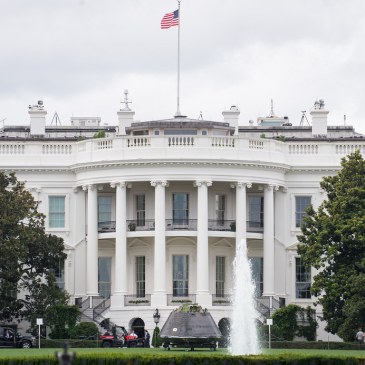
On July 4, 2025, while fireworks lit the sky, the United States quietly enacted one of the most sweeping cuts to its social safety net in decades. Dubbed the “One Big Beautiful Bill,” this legislation has a name that evokes hope — but its true impact could be catastrophic for millions of Americans. Seniors, working-class families, and impoverished communities now face an uncertain future as Medicaid, Medicare, and SNAP undergo deep structural reductions.

As headlines celebrate “economic discipline” and “government efficiency,” communities on the margins brace for what may become a humanitarian crisis. This blog post explores what’s at stake, who is most vulnerable, and what steps we must take to protect our neighbors and our nation.


What’s Being Cut — and Who Pays the Price

Medicaid

  • Cuts totaling $930 billion over the next decade
  • Imposed work requirements of 80 hours/month for adults aged 19–64
  • Heightened eligibility reviews and reduced state flexibility
  • Strained provider budgets, risking access to care

Medicare

  • $533 billion slashed due to automatic PAYGO reductions
  • Shrinking provider reimbursements and higher out-of-pocket costs
  • Seniors may struggle to maintain critical care and medication regimens

SNAP (Supplemental Nutrition Assistance Program)

  • Reductions of $295 billion
  • New work rules apply to recipients up to age 64
  • States now must partially fund SNAP, risking coverage gaps
  • School meal programs also face uncertainty

Real-Life Consequences: Health, Hunger, and Homelessness

For seniors living on fixed incomes, these cuts aren’t just policy shifts — they’re life-altering.

  • Over 17 million older adults rely on Medicaid
  • Nearly 11 million use SNAP to combat food insecurity
  • Thousands of veterans, disabled individuals, and rural residents depend on these programs for survival

With fewer protections:

  • Mental health and substance abuse services will disappear
  • Food banks will become overwhelmed
  • Families will face impossible choices — rent or medicine, dinner or doctor’s appointments
  • A spike in homelessness and medical emergencies is likely

How You Can Prepare

While lawmakers battle in Washington, communities must mobilize on the ground:

For Individuals

  • Organize your documents: Health records, work hours, income proofs — they’ll be critical for eligibility reviews
  • Tap into local aid: Visit food banks, free clinics, and legal aid organizations
  • Explore ACA alternatives: The Health Insurance Marketplace may still offer options

For Communities

  • Churches and nonprofits: Provide meals, shelter, and spiritual care
  • Local clinics: Prepare to see increased demand — support their expansion efforts
  • Advocacy networks: Share resources and unite across racial, generational, and economic divides

How We Can Prevent This Disaster

It’s not too late — but it demands collective action.

Policy Remedies

  • Congress can repeal or delay the bill’s harshest provisions
  • State governors may apply for waivers to protect their residents
  • Litigation by civil rights and health advocacy groups may challenge legality

Civic Activism

  • Call and write your representatives. Let them know you’re watching.
  • Support organizations defending seniors, children, and marginalized groups
  • Mobilize voters ahead of the 2026 midterm elections

Final Thoughts: Will We Stand Up for One Another?

What’s beautiful about America isn’t austerity — it’s compassion, community, and care. The “Big Beautiful Bill” may claim to balance budgets, but it does so on the backs of those least able to bear it. This blog isn’t just a warning — it’s a rallying cry.

History will ask: when the most vulnerable were under attack, did we speak out? Did we organize? Did we rise?

Let’s answer with action.

Displaced by Design: The Ugly Truth Behind Redlining and Gentrification in America

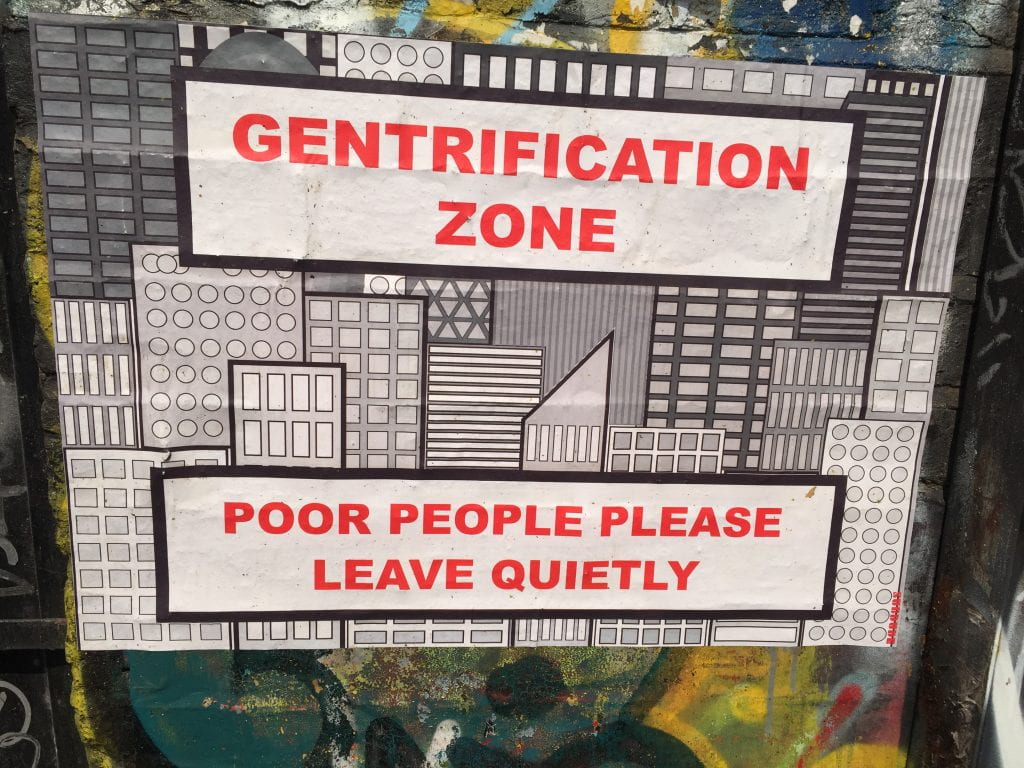
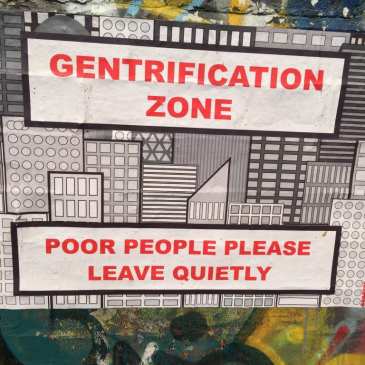
When we think of gentrification, we picture shiny new coffee shops and bike lanes popping up in “revitalized” urban neighborhoods. But scratch beneath the surface and you’ll find a brutal truth: those same neighborhoods were once thriving Black communities—reduced by decades of redlining and now reshaped for white comfort. This isn’t development. It’s a takeover.

Mainstream media sensationalizes Black neighborhoods, painting them as dangerous wastelands. But has anyone stopped to ask why? How do generations of systemic neglect, economic exclusion, and criminalization magically become cause for removal instead of repair?

The answer starts with Redlining.


Redlining: The Blueprint of Exclusion

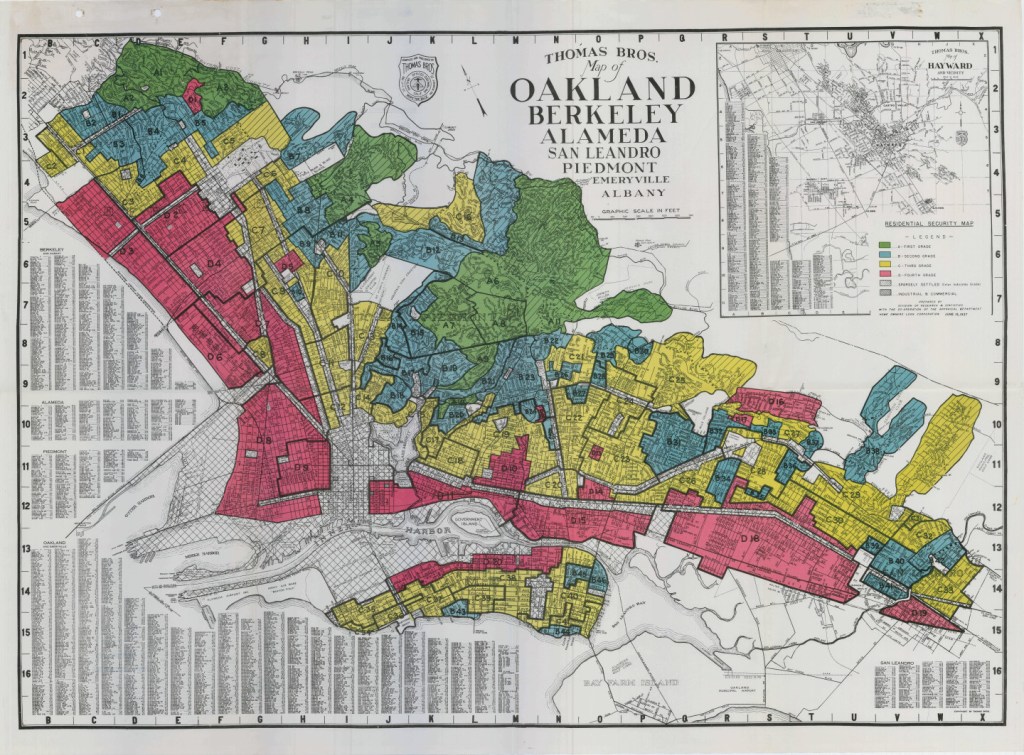
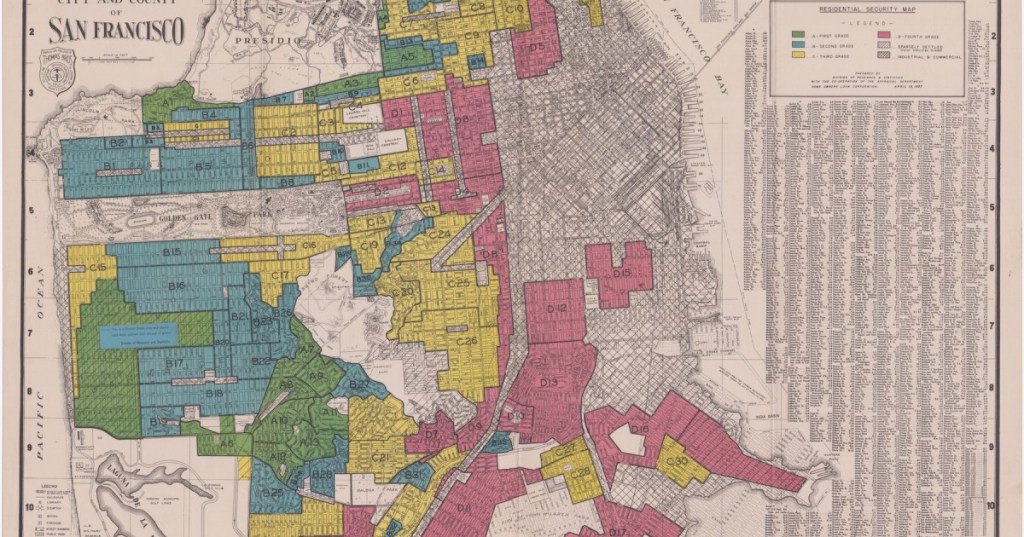
In the 1930s, the Home Owners’ Loan Corporation created color-coded maps to rank neighborhoods by “investment risk.” Black neighborhoods—regardless of actual economic strength or community value—were labeled “hazardous,” outlined in red, and denied loans and public resources. Chicago became the template for this practice, and cities from coast to coast followed.

Redlining wasn’t just about denying mortgages. It was about denying opportunity. While white neighborhoods expanded with parks, schools, and hospitals, Black communities were blocked from investment, overpoliced, and under-resourced. And yes, despite paying taxes like everyone else, those dollars rarely came back home.


Gentrification: The New Colonization

Today, those same neglected neighborhoods are suddenly “valuable.” But not for the communities that built them. Property developers and city planners now frame gentrification as “urban renewal,” ushering in new businesses, new buildings—and new people. Translation: Black displacement.

Families who weathered the storms of structural violence—policing, wage theft, environmental racism—are priced out of their own communities. Their cultural anchors turned into boutique yoga studios and wine bars. And the original residents? Forgotten. Evicted. Erased.

This isn’t progress. It’s erasure disguised as elevation.


Why It Hurts So Deep

Gentrification is not just about losing your apartment. It’s losing generational memory. It’s losing the corner store that gave out free water in the summer, the church that kept the youth out of trouble, the mural that told the neighborhood’s story. It’s being told—once again—that your existence is disposable.

Meanwhile, white newcomers are praised for “discovering” these areas. Culture becomes commodity. History becomes real estate. And the trauma? Continues.


Call to Action

We can’t afford to be passive. It’s time to challenge city budgets, demand fair housing policies, and support Black-owned development. We must:

  • Sponsor community land trusts to keep neighborhoods in the hands of residents.
  • Support housing justice organizations and eviction defense.
  • Hold urban planning boards accountable for displacement outcomes.
  • Elevate media platforms that show real Black narratives—not sensationalized fiction.

If Black lives matter, then so must Black neighborhoods.


#RedliningIsReal #GentrificationIsViolence #DisplacementIsPolicy #ChicagoRedlined #JusticeForOurCommunities #BlackNeighborhoodsMatter #UrbanErasure #AmericaInBlackAndWhite #FightForFairHousing #LandBackToThePeople #WhoOwnsTheBlock


The War on Truth: How the American Education System Continues to Betray Black History


Since the founding of America, the education system has served not as a beacon of truth, but as a tool of erasure. For generations, Black children have sat in classrooms designed not to empower, but to mislead—shaped by curricula that glorify European conquest while silencing African legacy.

Let’s be clear: the lie began with religion. American schools rarely teach that Christianity’s origins trace back to Ethiopia, where the oldest known Bible—written in Ge’ez—is preserved. Instead, they peddle the King James Version, a European interpretation that paints Jesus as white and frames whiteness as divine. This isn’t just a distortion; it’s a calculated form of supremacy. When Black children are taught this version of faith, it sets the stage for self-erasure and the normalization of inequality.

And then there’s history—or rather, the selective fragments of it. American slavery, one of the most defining atrocities in this nation’s past, is either sanitized or omitted entirely. Books that tell the raw truth about lynching, rape, and systemic theft are being banned under the guise of “protecting children.” But who is really being protected? Not the descendants of enslaved people—who need these stories to understand their power and their pain—but the descendants of oppressors, who fear the reckoning.

Here’s what they won’t teach:

  • Black civilizations predate European ones by thousands of years.
  • Moors taught Europeans hygiene, mathematics, and architecture during their rule in Spain.
  • Black inventors have created technologies that power daily American life, from traffic lights to gas masks.
  • The first university in the world, Sankore in Timbuktu, was built by Black scholars.
  • Wall Street was built over the bones of enslaved Africans.

Despite centuries of displacement, sabotage, and systemic violence, Black people continue to persevere. Black students outperform their peers when given equitable resources. Black culture—music, fashion, language, innovation—is mimicked globally. And Black resilience has turned survival into excellence.

So why teach European history as American heritage? Why frame the Holocaust as more relevant than the Transatlantic Slave Trade? Why amplify other cultures while silencing the truth about Black royalty, Black intellect, and Black triumph?

Because truth dismantles power.

When we know we are descendants of kings and queens—not the enslaved, but the enslaved AND the builders, dreamers, warriors, scientists, healers, and revolutionaries—the entire system of white supremacy begins to crack.

It’s no accident that books are banned. That accurate history is replaced by propaganda. That educational standards are manipulated to mask brilliance. This is an ideological war, and its battlefield is the mind.


Call to Action:

We must challenge our schools. Demand real curricula. Sponsor Black-led educational initiatives. Teach your children at home, in communities, in churches and mosques. Tell the story your ancestors didn’t get to tell.

Knowledge is the most radical form of resistance. And in a system built on lies, telling the truth is a revolution.


#RealBlackHistory #UnbanBlackBooks #EducationNotErasure #BlackExcellence #AfricanLegacy #RewriteTheCurriculum #TeachTheTruth #BlackIntellectMatters #TruthToPower #DecolonizeEducation #AmericaInBlackAndWhite #SankofaWisdom #BlackKingsAndQueens


When Justice Is Blindfolded: The Case of William McNeil Jr. and Jacksonville’s Deepening Crisis

The Jacksonville Sheriff’s Office (JSO) has long been under scrutiny for its violent encounters with Black men. From documented incidents going back to 2000, a troubling pattern emerges—one that has evolved, not toward accountability, but toward escalating brutality. The recent case of William McNeil Jr. is a chilling reminder of how state-sanctioned violence against Black citizens continues with impunity.

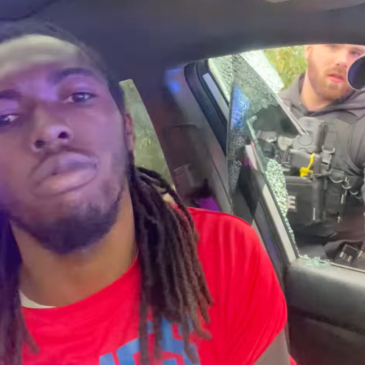
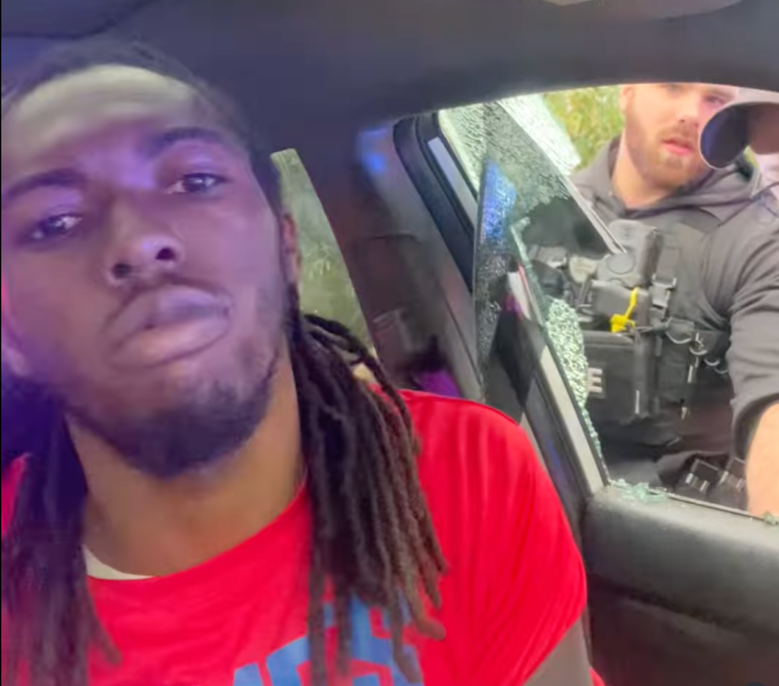
McNeil, a biology student and member of his college marching band, was pulled over by JSO deputies for allegedly not having his daylight running lights on—a minor infraction that spiraled into terror. Footage clearly shows McNeil requesting a supervisor out of fear for his life. Instead, deputies smashed his driver-side window, punched him, forcibly opened his door, unbuckled his seatbelt, dragged him out, and savagely beat him. And despite all this, authorities declared the deputies’ actions “justified.”

Please click the link below

This is what systemic racism looks like in action. When the justice system consistently rules in favor of law enforcement—regardless of the trauma inflicted—it sends a clear message: Black pain is permissible. Black fear is ignored. Black voices are muted. And white juries, time and again, reinforce this silence through verdicts that deny humanity.

Governor Ron DeSantis’s dismissive remarks, suggesting that the viral video was merely a “narrative,” reflect an even deeper issue—one where elected officials defend brutality instead of defending the Constitution.

What does it say about a society when brutality becomes routine for one race, and due diligence is reserved for another? What does it say when cultural theft is dismissed, but cultural survival is criminalized?

This is not justice. This is normalized abuse—endorsed by silence and strengthened by indifference.

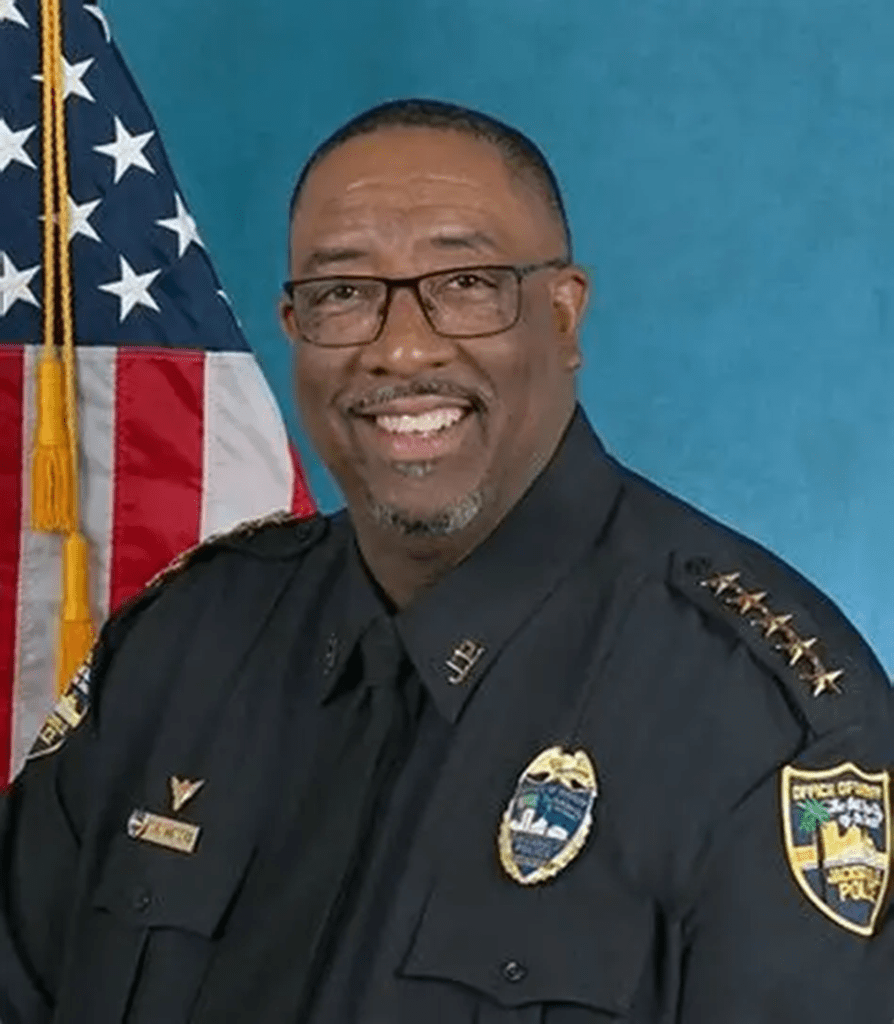
This is the Sheriff at JSO who stated in the press conference that the Deputies did their jobs properly:

Should Black People in Jacksonville be afraid for their lives? According to this man yes they should because there is no way these guys should be getting away with this. It is ok until it hits home!!!

Please click the link below

Call to Action:

We cannot afford to be spectators to injustice. It is time to mobilize. Raise your voice. Share this story. Demand independent investigations. Push for civilian review boards. Insist on diversifying juries and ending qualified immunity. Support organizations fighting for accountability and justice.

Most importantly: Organize within your community. Build networks of trust. Invest in Black-led platforms and amplify Black voices—like those of William McNeil Jr., who deserve to be heard, not brutalized.

#JusticeForWilliamMcNeil #StopJSOViolence #BlackLivesMatter #PoliceAccountability #EndQualifiedImmunity #PowerToThePeople #BlackPainIsReal #WeAreNotSafe #ProtectBlackMen #SavageSystem #AmericaInBlackAndWhite #OrganizeForJustice #MobilizeOurTribe

Real Stories. Real Breakthroughs. Now Seeking Guests for “America in Black and White”

At America in Black and White, we’re not chasing headlines—we’re chasing heart. If you’ve endured adversity, risen above it, and now stand in your truth as a builder, a healer, or a voice for your community, we want to hear from you.

We’re searching for individuals who are making real impact—uplifting others, contributing to community strength, and walking the road less traveled toward breakthrough. This podcast is your space to share that journey.

Here’s what we’re looking for:

  • You have a webcam-enabled computer.
  • You’re comfortable speaking live and sharing your story with purpose.
  • You’ll actively promote your episode using our promo packets and tag Charles King in all social media posts.
  • Attire: Men—collared shirts. Women—dress comfortably (just no tank tops or shorts, please).
  • You’re prepared for a thorough vetting process. We take this seriously—because your story deserves that kind of respect.

If this speaks to you or someone you know, reach out. Email:

americainblackandwhitepodcast@gmail.com or czkenterprise7@gmail.com Subject Line: Podcast Guest Include: Full Name, Address, Phone Number, and a short description of your work and community contributions.

We’re not for show—we’re for the soul.

Follow and subscribe to our podcast family:

  • @americainblackandwhite8299
  • @ChangingTrendsandTimes-zx8te
  • @CKStoriesFromTheHeart

And don’t forget to stay connected through our blog: changingtrendsandtimesblog.wordpress.com

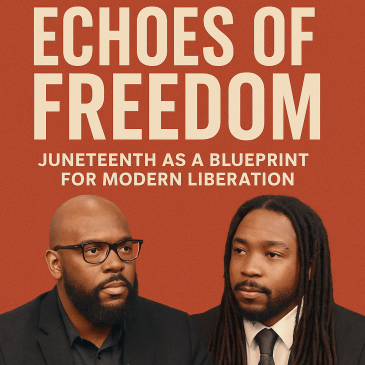
“Echoes of Freedom: Juneteenth as a Blueprint for Modern Liberation”


Juneteenth is more than a historical marker—it is a mirror and a mandate. A mirror to reflect how far we’ve come, and a mandate to carry the work forward. Through Season 3, Episodes 59 and 60 of America in Black and White, we hear two voices—Anthony Potter Jr. and Councilman Maurice Hairston—who embody this truth with urgency and grace.

Part 1: Financial Literacy as Freedom – A Conversation with Anthony Potter Jr.

Anthony Potter Jr. paints a vivid picture of economic resilience, rooted in personal struggle and generational responsibility. In his view, Juneteenth is not only the end of slavery, but the beginning of economic emancipation. He reframes financial literacy as a birthright—something to be passed down alongside our stories, our culture, and our survival.

“Every budgeted dollar is an act of protest. Every savings account, a brick in the foundation of generational wealth,” Anthony says. His message is both practical and revolutionary. For communities historically excluded from the wealth-building conversation, he insists we must not just participate—we must lead.

Charles Zackary King skillfully draws out the connection between financial autonomy and historical justice, reinforcing that true emancipation cannot be declared without economic equity.

Part 2: Bridging the Gap with Revolutionary Love – A Conversation with Councilman Maurice Hairston

Councilman Hairston’s words are laced with heart and heritage. Coming from Glenarden, Maryland, his journey as both policymaker and local artist bridges generational and ideological divides. He speaks of lost family values, disconnection among youth, and the urgency to restore identity within the Black community.

Hairston doesn’t just talk about change—he lives it. As a rapper, he speaks their language. As a legislator, he enacts their hopes. “You can’t lead a community you haven’t served,” he says. His concept of revolutionary love urges us to radically invest in each other—with truth, presence, and accountability.

Under Charles’s guidance, this conversation moves beyond politics. It becomes a soul-deep discussion about healing fractured communities and reclaiming cultural agency.


The Pulse of Juneteenth: Why These Stories Matter

These aren’t just interviews. They’re blueprints. They show us how Juneteenth isn’t confined to 1865—it’s alive today, in our decisions, our advocacy, and our vision for tomorrow.

Potter teaches us that financial literacy is the new civil rights frontier. Hairston reminds us that unity is the cornerstone of that frontier. And through these dialogues, America in Black and White becomes a platform not only for remembrance but for realignment.


Call to Action: Your Freedom Requires Fuel

  • Teach financial literacy. Start in your home, your church, your schools.
  • Bridge the gaps. Listen to your elders. Mentor the youth. Lead with love.
  • Support Black leadership. Vote. Donate. Share stories that uplift truth.

Let Juneteenth be more than reflection. Let it be a resolution.


“What America Refuses to Owe: The Price of Black Suffering”


“What America Refuses to Owe: The Price of Black Suffering”

In the heart of every empire lies a contradiction. In America, it is this: We teach about justice, but we rarely practice it for the people who built the foundation of this country—enslaved Africans and their descendants.

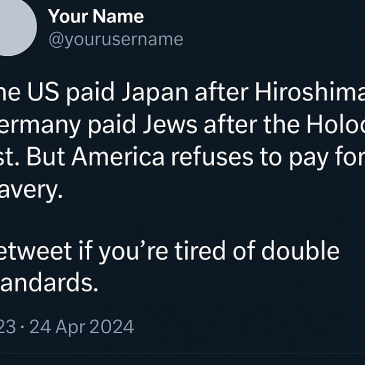
America has written checks for tragedies abroad. But for slavery—a horror that happened here, in the soil, sweat, and blood of the South—there is no apology, no compensation, no closure.

When Injustice Was International, America Opened Its Wallet

Let’s look at the historical receipts.

  • After the U.S. dropped the atomic bomb on Hiroshima, Japan received billions in aid, development grants, and favorable trade agreements. A nation devastated by American military might was helped back onto its feet.
  • Following the Holocaust, Germany began reparations in 1952. To date, it has paid over $90 billion to Holocaust survivors and the Israeli state. An atrocity committed in Europe.
  • Even Japanese Americans, who were unjustly interned during WWII on U.S. soil, received a formal apology and $20,000 per survivor in 1988.

Yet descendants of enslaved Africans—whose entire existence was commodified and whose labor built the wealth of the United States—have received nothing.

Why?

The American Lie: That Slavery Is Over, And Therefore Forgotten

Slavery was not merely a period—it was a system of trauma. For 246 years, Black people were whipped, raped, auctioned, beaten, and banned from reading and writing. Their children were sold. Their backs bore the burden of a nation’s ascent.

But the injustice didn’t stop in 1865. It mutated.
From Jim Crow laws to redlining, from COINTELPRO to mass incarceration, America has continued to extract from Black communities while denying restitution.

Meanwhile, schoolchildren are more likely to learn the names of European dictators than the enslaved people who shaped their country’s highways, railroads, and economy. To add insult to injury, in some states, teachers are banned from even discussing this legacy with nuance.

We are forced to learn about atrocities that happened elsewhere, while those that happened here are buried beneath patriotic myth.

How Much Is Owed? The Rough Numbers Tell a Billion-Dollar Truth

Economists and scholars, including Dr. William Darity, estimate that the U.S. government owes Black Americans anywhere from $13 trillion to $17 trillion when adjusting for stolen labor, compounded over centuries, and exclusion from land ownership and wealth accumulation.

Compare that to the $90 billion Germany has paid for the Holocaust—an atrocity the U.S. had no direct part in causing.

Let’s be clear: reparations for one people should never preclude reparations for another. But the refusal to acknowledge Black suffering while uplifting other global tragedies reveals a truth too many are afraid to face:

America is more comfortable condemning crimes it didn’t commit than atoning for the ones it did.

What Can Be Done? Here’s Where the Cry Gets Louder

If we want justice, we must demand it. Silence has never saved us. Politeness never bought us freedom. We need more than conversations—we need disruption.

Take Action:

  • Email your representatives: Demand support for reparations legislation like H.R. 40.
  • Speak up locally: Press school boards and libraries to teach the full truth of slavery and Reconstruction.
  • Vote with purpose: Elect candidates who aren’t afraid to talk about systemic repair.
  • Support Black-led orgs fighting for economic equity and educational justice.
  • Use your platform—podcast, IG, YouTube, or block parties—to spread truth, not silence.

🖤 America doesn’t have an amnesia problem—it has an empathy problem.
And until this country sees Black pain as worthy of repair, the debt remains.

Let the cry get louder.


The Forgotten Founders: Reclaiming the Legacy of the Etruscans

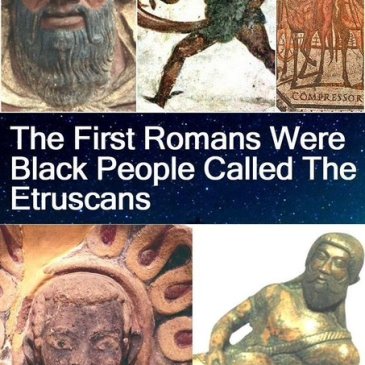
Long before the grandeur of Rome dazzled the world, there thrived a mysterious and affluent civilization on the Italian peninsula: the Etruscans. Flourishing between the 8th and 3rd centuries BCE, the Etruscans laid the bedrock for much of what the Roman Empire would later claim as its own. Yet history has quietly erased them—leaving only fragments of their brilliance buried beneath the empire that swallowed them.

A People of Sophistication and Spirit

The Etruscans were more than just precursors to Rome—they were innovators in urban planning, religion, art, and governance. Their cities, nestled in what is now Tuscany and parts of Umbria and Lazio, featured advanced road systems, drainage infrastructure, and public squares. They introduced the arch into architecture and influenced many religious rituals the Romans adopted, from augury (interpreting the will of the gods) to gladiatorial games, which began as funerary rites.

Women in Etruscan society held unusually high status for the ancient world—participating in banquets, owning property, and maintaining independent identity. This, of course, scandalized the patriarchal Greeks and Romans, who later rewrote Etruscan narratives through their own biased lenses.

Wealth and the Wounds of Conquest

Etruscan cities prospered through metalwork, trade, and cultural ingenuity. Their tombs were filled with gold, jewelry, and finely crafted pottery, testifying to their immense wealth. But with prosperity came peril. As Rome grew hungry for expansion, it absorbed and suppressed the Etruscans over a few centuries—confiscating lands, pillaging tombs, and eventually erasing their language and identity.

The final blow wasn’t just military—it was historiographical. Much of what we know about the Etruscans comes from the victors who subdued them. And like many erased peoples across time, their story was rewritten, then forgotten.

Legacy in the Shadows

Despite the attempted erasure, traces of Etruscan influence remain etched into Italy’s DNA. The Romans built their republic—its laws, its rituals, its military customs—upon Etruscan blueprints. The toga? Etruscan. The Roman alphabet? Adapted from Etruscan script, which itself was adapted from Greek. Even the cultural ideal of dignitas, a Roman virtue of honor and worth, echoes the Etruscan spirit.

Their disappearance is a stark reminder that wealth and brilliance alone don’t preserve a people’s memory—only storytelling does.

Why We Must Remember

In many ways, the Etruscans mirror others throughout history who were culturally rich yet politically overrun—societies like those of West Africa before colonization, or Black Wall Street before the 1921 Tulsa massacre. Their fall reveals the fragility of legacy without vigilance.

Let us remember the Etruscans not as a footnote to Rome, but as visionaries in their own right—a people of ceremony, city-building, and sacred purpose, whose silence today speaks volumes about the way history is written.

Juneteenth: The Freedom That Echoed Late, but Never Lost Power

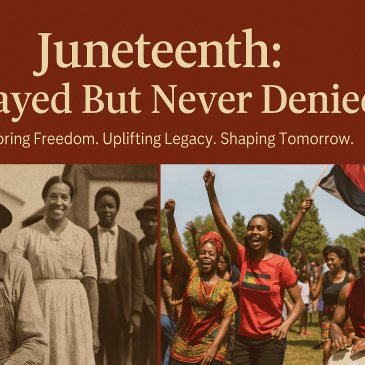
On June 19, 1865, Union troops arrived in Galveston, Texas, delivering a message that should have been old news: enslaved Black Americans were free. That message—long delayed—was not simply a declaration. It was liberation, finally delivered by force, not goodwill. And so, Juneteenth was born—not from celebration, but from necessity.

More than two years after Lincoln signed the Emancipation Proclamation, justice still hadn’t reached the last corners of this country. But when it did, it came with the force of righteous reckoning. Since then, Juneteenth has become a symbol not just of emancipation, but of resilience, delayed justice, and the unshakable spirit of a people who dared to dream of freedom in the shadow of slavery.

Today, we’re still reckoning. We’re still pushing against systems that delay freedom in more subtle forms—economic injustice, generational trauma, educational disparity. But just as our ancestors gathered to sing, feast, and speak names out loud that history tried to forget, we gather today not just to remember—but to reclaim.

So what does Juneteenth mean now, in this era of shifting cultural narratives and historical erasure? It means we double down on truth-telling. We turn platforms into pulpits. We ensure our stories aren’t just told—they’re owned.

At Changing Trends and Times, we aren’t simply observing a holiday—we’re honoring a movement. And through America in Black and White, we continue to highlight the voices, victories, and visions shaping our shared legacy.

This is not just history. These are the instructions. This is the blueprint. This is us.

This Juneteenth, the work continues. Through Changing Trends and Times and America in Black and White, we’re committed to remembering boldly, speaking truthfully, and uplifting relentlessly.

Subscribe to stay engaged. Listen to the stories that shape our struggle and celebrate our strength.

Share this post. Share the history. Share the torch.

Because freedom delayed… is a story still being written.

#Juneteenth #ChangingTrendsAndTimes #LegacyOfLiberation #AmericaInBlackAndWhite #TruthTellers #BlackHistory365

[🔗 Link to Podcast Episode]

June 19, 2025, @6PM EST PT1 Just click to join the show live

June 20, 2025, @6PM EST PT2 Just click to join the show live

[🔗 Link to Subscribe]

Please follow/subscribe/get all notifications on our YouTube Channels:

Each Channel broadcasts the show live

@americainblackandwhite8299

@ChangingTrendsandTimes-zx8te

@CKStoriesFromTheHeart

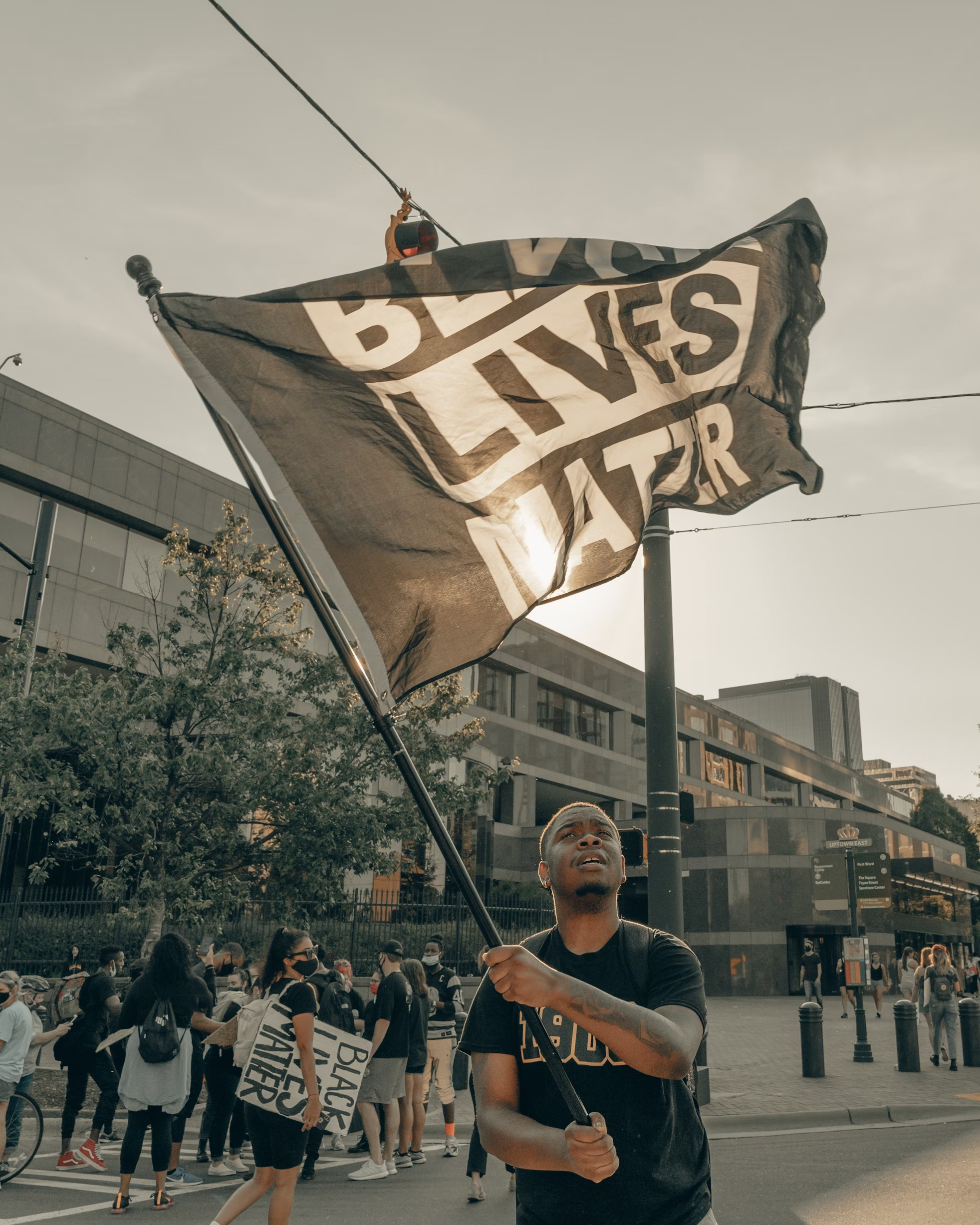
The Enduring Truth: Black Lives Matter and the Resilience of Black Culture

In the tapestry of American history, the struggles and triumphs of Black people are woven with threads of resilience, pain, and unmatched creativity. The journey began with the brutal enslavement of our ancestors, who were forcibly ripped from their homes and subjected to unimaginable horrors. Ever since, the legacy of those struggles has echoed through generations, shaping an identity that is rich, vibrant, and unyielding. Today, as we navigate the complexities of modern life, we stand in solidarity under the banner that Black Lives Matter—a reminder that our lives, our stories, and our culture deserve recognition and respect.

The Historical Context of the Black Struggle

The fight for Black liberation is a long and arduous road paved with countless sacrifices. From the shackles of slavery to the civil rights movement and the ongoing battles against systemic racism, we have witnessed a relentless cycle of oppression. Yet, in the face of such adversity, we have consistently demonstrated our capability to persevere. Many in our community juggle multiple jobs, often working 3-4 simultaneously, to provide for families under the constant pressure of financial insecurity and societal expectations. All while knowing that we remain targets of systemic injustice and violence.

An Ongoing Attack from Within and Without

Sadly, this struggle is not just against systemic barriers. It extends into the interactions with other minority groups. Whether it is Hispanic/Latino, Jewish, Asian, Haitian, Jamaican, or African communities, there exists a troubling tendency to overlook the unique narratives of Black history. Instead of solidarity, we often face competition and misunderstanding, sometimes leading to divisive rhetoric that exacerbates tensions. It’s a complex dynamic that needs addressing, but it is imperative to remind everyone that the Black narrative is rooted in struggle and resilience, not a commodity to be traded for convenience or perceived social capital.

Cultural Appropriation: The Theft of Black Creativity

The irony of our resilience is often overshadowed by a painful truth: the cultural contributions of Black Americans have been widely appropriated and capitalist entities have profited from our struggles. From the soul of Southern cooking to the rhythms of jazz, hip-hop, and R&B, our innovations have been co-opted by others who capitalize on our creativity while ignoring our struggles. The Hispanic/Latino community has, at points, engaged in this appropriation as well, often taking cultural elements like music, dance, and language styles from Black culture while not recognizing or acknowledging the original sources. Many popular artists and cultural icons have benefited from styles pioneered by Black entertainers without giving appropriate credit. Additionally, the adoption of Black slang, dance, and fashion trends by various groups often occurs without acknowledgment of their origins, leading to a sense of cultural dissonance.

The Political Landscape: A Fractured Community

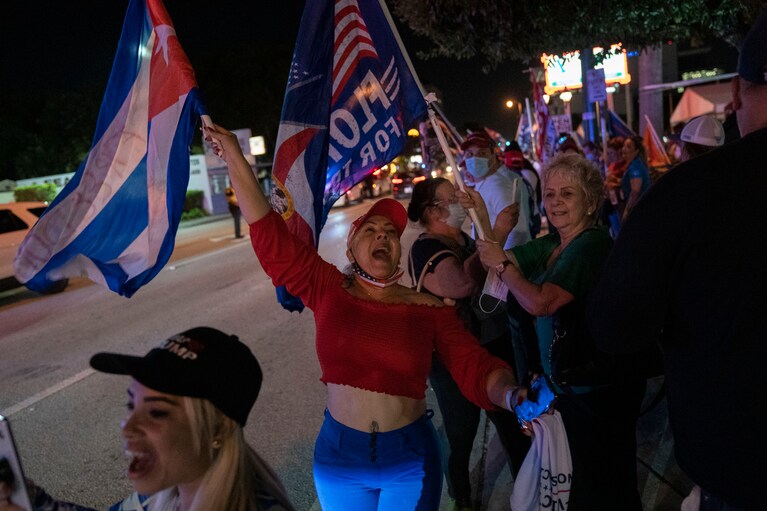
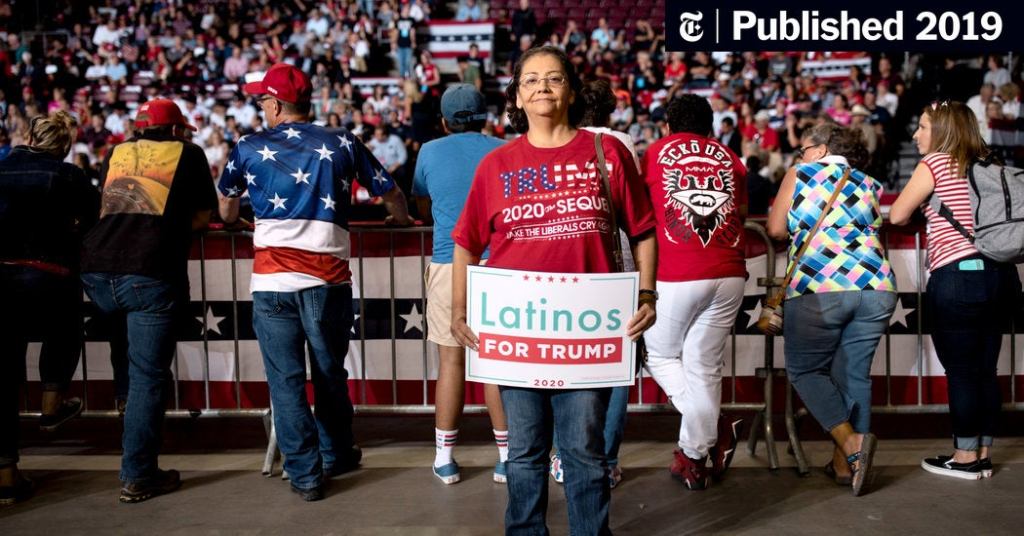
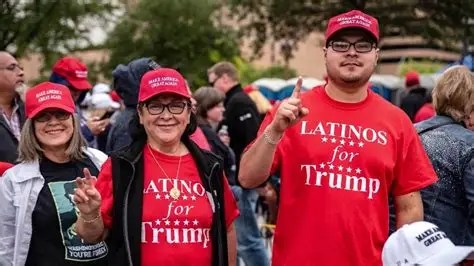
In the political arena, the decision by segments of the Hispanic community, notably Puerto Ricans, Dominicans, and Cubans, to align with candidates like Trump speaks volumes about the complexities of race relations in America. Many chose to support a figure who explicitly promised policies detrimental to Black lives, demonstrating a willingness to overlook the ramifications of their choices for the sake of perceived self-interest. When the consequences of those political decisions became apparent—rampant ICE raids, deportations, and a crackdown on immigrant rights—calls for solidarity towards Black individuals suddenly emerged. However, this raises profound questions: Why not reach out to influential figures within their own community like Jennifer Lopez, Gloria Estefan, and Eva Longoria? These figures, often championed for their success, remain conspicuously silent when it comes to the struggles faced by the broader community, especially Black individuals.

The Call for Unity and Accountability

As we stand firmly in our identity, it is crucial to confront this divide honestly. We must ask: How can healing occur from wounds inflicted by political choices and cultural theft? What message does it send when communities do not support their own representatives, leaving those in dire situations seeking help from groups they once turned their backs on? In moving forward, understanding and trust must be rebuilt on both sides. The Black community has been more than willing to support others in their struggles, but we need to have honest conversations about accountability and the reckoning that comes with shared space.

Conclusion: Can We Make it Make Sense?

This post serves as an invitation for dialogue—a chance to clarify misunderstandings and foster genuine connections. Together, we can address the historical wounds and work towards a future that celebrates diversity without appropriation, solidarity without betrayal. Let’s engage, respond, and reflect on how we can move from division to unity. The time for honest conversations is now; the future of our communities depends on it. Black Lives Matter, and so does the truth of our culture. Let’s make it count.