Michigan’s Double Standard: Harbaugh, Moore, and the Question of Racial Bias

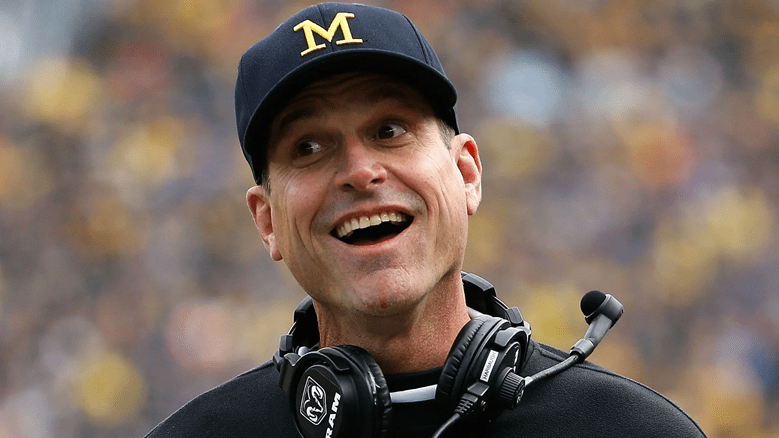
The University of Michigan has become a case study in contradictions. When Jim Harbaugh was implicated in two consecutive scandals, first violating recruiting rules during the COVID dead period, then presiding over the Connor Stalions sign‑stealing scheme, the university stood by him. Even as the NCAA dragged its feet for years before finally issuing historic fines and a 10‑year show‑cause penalty in 2025, Harbaugh was allowed to leave gracefully for the NFL. His reputation, though tarnished, was never destroyed.

  • 2015 – Hired as Michigan Head Coach
  • 2016 – Rose Bowl appearance
  • 2021 – Big Ten Championship win
  • 2022 – College Football Playoff appearance
  • 2023BurgerGate recruiting violations suspension
  • 2023 – Connor Stalions sign‑stealing scandal erupts
  • 2024 – Michigan wins National Championship
  • 2024 – Harbaugh departs for the NFL
  • 2025 – NCAA issues 10‑year show‑cause penalty
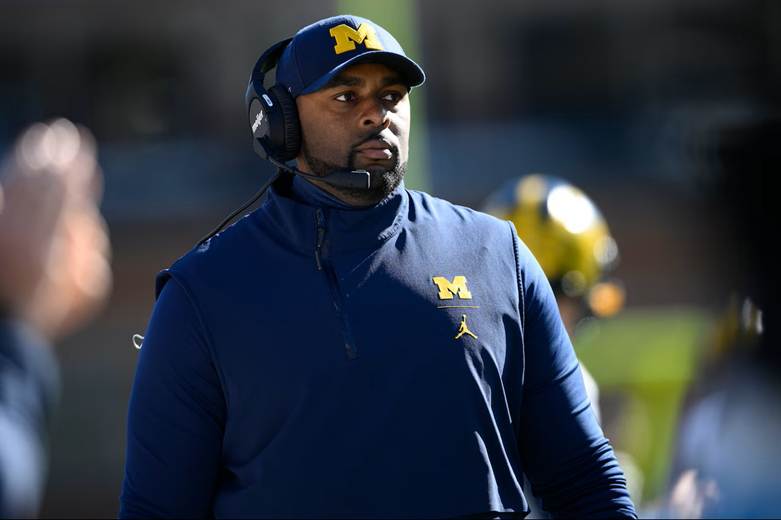
Now compare that to Sherrone Moore. Elevated to head coach in 2024, Moore was fired for cause in December 2025 after allegations of an inappropriate relationship with a staff member. The facts remain unclear, yet the university acted swiftly and decisively, ending his career overnight. Within hours, Moore faced criminal charges, his name splashed across headlines, his future in coaching effectively erased.
Michigan Coaching Controversies: Harbaugh vs. Moore

CoachTenureMajor Scandal(s)OutcomeImpact on Program
Jim Harbaugh2015–2024– Recruiting violations (BurgerGate) during COVID dead period<br>- Connor Stalions sign‑stealing scheme (illegal scouting, signal recording)– Multiple suspensions<br>- Left for NFL in 2024<br>- NCAA issued 10‑year show‑cause penalty in 2025Despite winning the 2023 National Championship, Michigan’s success was overshadowed by historic NCAA penalties and reputational damage
Sherrone Moore2024–2025– Inappropriate relationship with staff member<br>- Criminal charges: felony home invasion, stalking, breaking & entering– Fired for cause in Dec 2025<br>- Released on bond with restrictions<br>- Lost remaining $12.3M contract valuePlayers felt “betrayed” and emotionally shaken before the Citrus Bowl; Michigan forced into another coaching search just two years after Harbaugh’s exit

Wrong is wrong. But the disparity in treatment is glaring. Harbaugh’s systemic violations undermined the integrity of the game itself, yet Michigan protected him. Moore’s alleged misconduct, personal, contested, and far less clear, was immediately weaponized to destroy him. It looks, smells, and feels like a smear campaign, one that ensures he never coaches again. And when you look at who was shielded and who was sacrificed, the shadow of racial bias is impossible to ignore.

Why do the differences between Black and White always surface at the ugliest times? Why do institutions like Michigan continue to fail at ethics, accountability, and due diligence when it matters most?

Call to Action

It’s time to hold the University of Michigan accountable. Like so many other institutions, they must be boycotted, exposed, and put on front street for their double standards and racial bias.

We want to hear from you:

  • Do you see the same contradictions in how Harbaugh and Moore were treated?
  • Is there a deeper right and wrong here that the public needs to confront?
  • How should communities respond when institutions fail to uphold fairness and justice?

Your voice matters. Share your thoughts, challenge the narrative, and let’s demand accountability together.
Alabama Football: Championships, Black Excellence, and the Head Coach They’ve Never Had

The University of Alabama’s football program, known as the Crimson Tide, is one of the most storied and successful in college football history, with 18 claimed national championships and 29 SEC titles spanning from its founding in 1892 to the modern era

Introduction
The University of Alabama football program is celebrated as one of the greatest dynasties in sports history. From Wallace Wade’s Rose Bowl triumph in 1925 to Nick Saban’s six national championships in the modern era, the Crimson Tide has defined college football dominance. But beneath the trophies and tradition lies a deeper story: the contributions of Black athletes who carried Alabama to glory, and the glaring absence of a Black head coach in its 133-year history.

Timeline of Success and Integration

  • 1892–1969: All-white rosters, 10 national championships.
  • 1970–71: Integration begins with Wilbur Jackson and John Mitchell.
  • 1970s–1980s: Black athletes rise to prominence, reaching ~40–50% of the roster.
  • 1992: Gene Stallings wins a title with a roster nearly half Black.
  • 2000s–Present: Nick Saban’s dynasty built on rosters ~60–75% Black, producing Heisman winners Mark Ingram, Derrick Henry, DeVonta Smith, and Bryce Young.

Timeline: Championships + Racial Integration

Era / CoachChampionshipsRacial Makeup
1892–1969 (Pre‑Integration)1925, 1926, 1930 (Wade); 1945 (Thomas); 1961, 1964, 1965, 1973, 1978, 1979 (Bryant)100% white players
1970–1971 (Integration Begins)1970: Wilbur Jackson signed (first Black scholarship player). 1971: Jackson & John Mitchell play (first Black varsity players).
1970s–1980s (Gradual Growth)By late 1970s, ~10–20% Black players. By 1980s, ~40–50%.
1992 (Gene Stallings)National Championship~40–50% Black players
2000s–Present (Nick Saban Era)2009, 2011, 2012, 2015, 2017, 2020~60–75% Black players; majority of roster, including Heisman winners Ingram, Henry, Smith, Young

The Contribution of Black Players

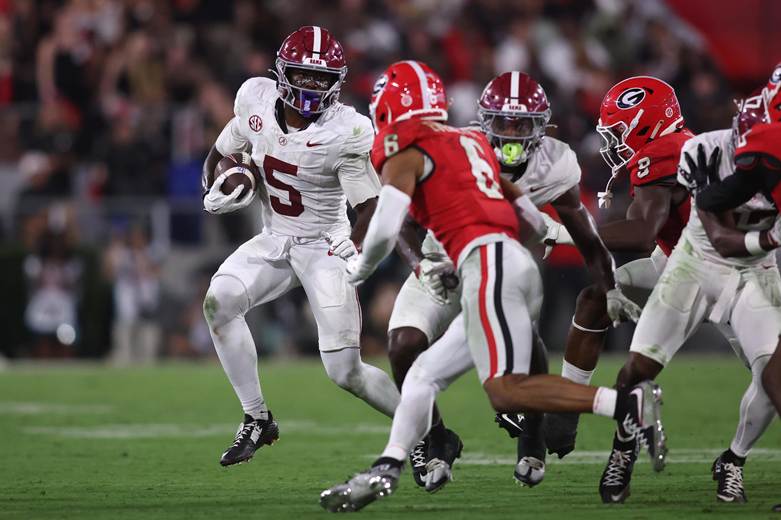
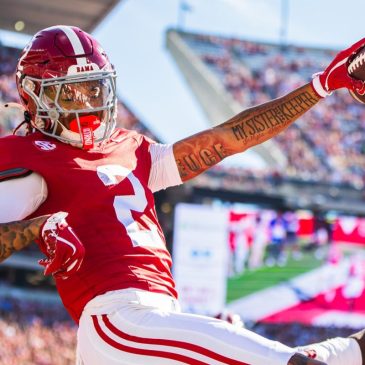
From Jackson and Mitchell breaking barriers in 1971 to Derrick Henry bulldozing his way to a Heisman in 2015, Black athletes have not only participated — they have defined Alabama football. They are the stars, the playmakers, the faces of the program. Without them, Alabama’s dynasty would not exist.

Yet, despite their central role, Alabama has never entrusted its program to a Black head coach. The message is clear: Black athletes are good enough to win games, sell tickets, and generate millions, but not to lead.

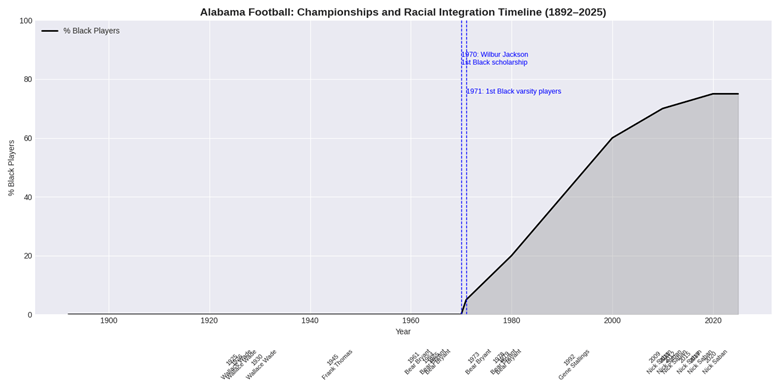
  • Layer 1 (Red dots): Marks championship years and the coach who led them.
  • Layer 2 (Black line): Shows the percentage of Black players, from 0% before 1970 to ~75% today.
  • Blue markers: Highlight the breakthrough years of Wilbur Jackson (1970) and John Mitchell (1971).

This visualization makes the contrast undeniable: Alabama’s dynasty was built on Black athletes after integration, yet leadership has remained exclusively white.

Why No Black Head Coach?

This is the uncomfortable truth. Alabama football thrives on the labor, talent, and brilliance of Black athletes, but leadership remains guarded by tradition. The program reflects a broader pattern in college football: Black players dominate the field, but white coaches dominate the sidelines.

Is this simply “tradition”? Or is it exploitation, using Black faces to win and profit, while denying them the authority to lead? As the saying goes: if you can get the milk for free, why buy the cow? Alabama has built its empire on Black excellence, but refuses to acknowledge that excellence in leadership.

  • Wallace Wade (1923–1930): 3 national titles, including the landmark 1925 Rose Bowl win.
  • Frank Thomas (1931–1946): Guided Alabama through WWII, winning the 1945 championship.
  • Bear Bryant (1958–1982): Built a dynasty with 6 national titles, cementing Alabama’s dominance.
  • Gene Stallings (1990–1996): Captured the 1992 championship, restoring Alabama’s glory.
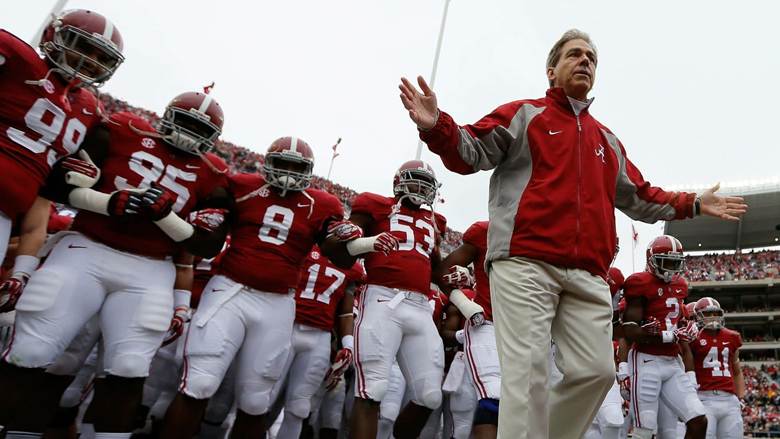
  • Nick Saban (2007–2023): Another dynasty, with 6 national titles in the modern playoff era.

Call to Action

Football is supposed to be about unity, teamwork, and trust. But Alabama’s refusal to hire a Black head coach reveals a deeper fracture. If the Crimson Tide truly believes in “team,” then it must extend that belief beyond the field. Until then, the program’s legacy will remain incomplete, a dynasty built on Black talent but limited by old traditions.