Michigan’s Double Standard: Harbaugh, Moore, and the Question of Racial Bias

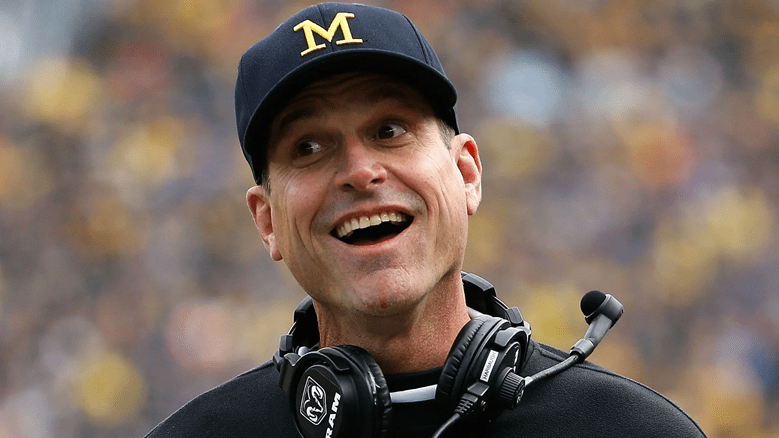
The University of Michigan has become a case study in contradictions. When Jim Harbaugh was implicated in two consecutive scandals, first violating recruiting rules during the COVID dead period, then presiding over the Connor Stalions sign‑stealing scheme, the university stood by him. Even as the NCAA dragged its feet for years before finally issuing historic fines and a 10‑year show‑cause penalty in 2025, Harbaugh was allowed to leave gracefully for the NFL. His reputation, though tarnished, was never destroyed.

  • 2015 – Hired as Michigan Head Coach
  • 2016 – Rose Bowl appearance
  • 2021 – Big Ten Championship win
  • 2022 – College Football Playoff appearance
  • 2023BurgerGate recruiting violations suspension
  • 2023 – Connor Stalions sign‑stealing scandal erupts
  • 2024 – Michigan wins National Championship
  • 2024 – Harbaugh departs for the NFL
  • 2025 – NCAA issues 10‑year show‑cause penalty
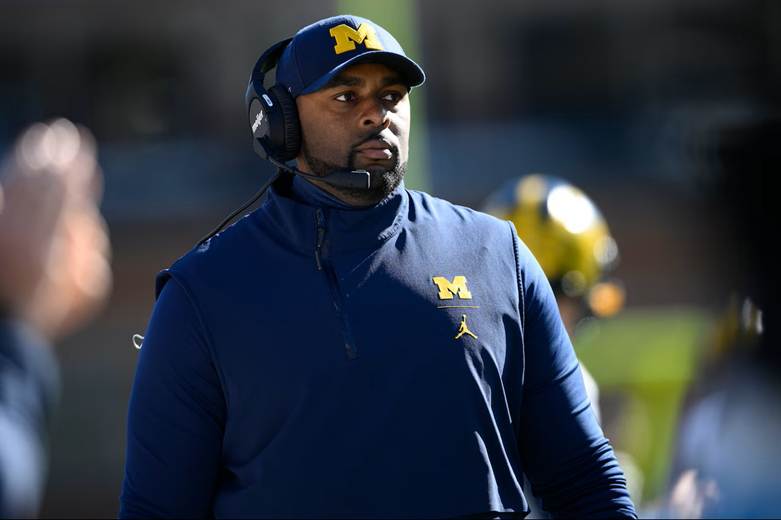
Now compare that to Sherrone Moore. Elevated to head coach in 2024, Moore was fired for cause in December 2025 after allegations of an inappropriate relationship with a staff member. The facts remain unclear, yet the university acted swiftly and decisively, ending his career overnight. Within hours, Moore faced criminal charges, his name splashed across headlines, his future in coaching effectively erased.
Michigan Coaching Controversies: Harbaugh vs. Moore

CoachTenureMajor Scandal(s)OutcomeImpact on Program
Jim Harbaugh2015–2024– Recruiting violations (BurgerGate) during COVID dead period<br>- Connor Stalions sign‑stealing scheme (illegal scouting, signal recording)– Multiple suspensions<br>- Left for NFL in 2024<br>- NCAA issued 10‑year show‑cause penalty in 2025Despite winning the 2023 National Championship, Michigan’s success was overshadowed by historic NCAA penalties and reputational damage
Sherrone Moore2024–2025– Inappropriate relationship with staff member<br>- Criminal charges: felony home invasion, stalking, breaking & entering– Fired for cause in Dec 2025<br>- Released on bond with restrictions<br>- Lost remaining $12.3M contract valuePlayers felt “betrayed” and emotionally shaken before the Citrus Bowl; Michigan forced into another coaching search just two years after Harbaugh’s exit

Wrong is wrong. But the disparity in treatment is glaring. Harbaugh’s systemic violations undermined the integrity of the game itself, yet Michigan protected him. Moore’s alleged misconduct, personal, contested, and far less clear, was immediately weaponized to destroy him. It looks, smells, and feels like a smear campaign, one that ensures he never coaches again. And when you look at who was shielded and who was sacrificed, the shadow of racial bias is impossible to ignore.

Why do the differences between Black and White always surface at the ugliest times? Why do institutions like Michigan continue to fail at ethics, accountability, and due diligence when it matters most?

Call to Action

It’s time to hold the University of Michigan accountable. Like so many other institutions, they must be boycotted, exposed, and put on front street for their double standards and racial bias.

We want to hear from you:

  • Do you see the same contradictions in how Harbaugh and Moore were treated?
  • Is there a deeper right and wrong here that the public needs to confront?
  • How should communities respond when institutions fail to uphold fairness and justice?

Your voice matters. Share your thoughts, challenge the narrative, and let’s demand accountability together.
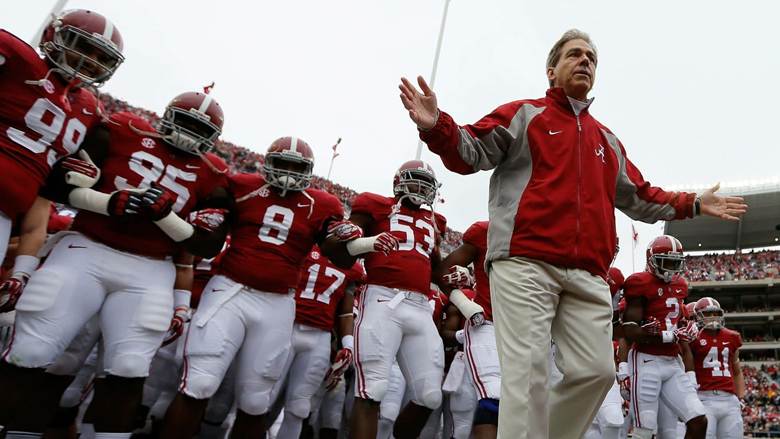
Alabama Football: Championships, Black Excellence, and the Head Coach They’ve Never Had

The University of Alabama’s football program, known as the Crimson Tide, is one of the most storied and successful in college football history, with 18 claimed national championships and 29 SEC titles spanning from its founding in 1892 to the modern era

Introduction
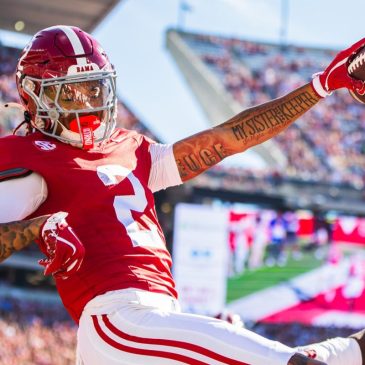
The University of Alabama football program is celebrated as one of the greatest dynasties in sports history. From Wallace Wade’s Rose Bowl triumph in 1925 to Nick Saban’s six national championships in the modern era, the Crimson Tide has defined college football dominance. But beneath the trophies and tradition lies a deeper story: the contributions of Black athletes who carried Alabama to glory, and the glaring absence of a Black head coach in its 133-year history.

Timeline of Success and Integration

  • 1892–1969: All-white rosters, 10 national championships.
  • 1970–71: Integration begins with Wilbur Jackson and John Mitchell.
  • 1970s–1980s: Black athletes rise to prominence, reaching ~40–50% of the roster.
  • 1992: Gene Stallings wins a title with a roster nearly half Black.
  • 2000s–Present: Nick Saban’s dynasty built on rosters ~60–75% Black, producing Heisman winners Mark Ingram, Derrick Henry, DeVonta Smith, and Bryce Young.

Timeline: Championships + Racial Integration

Era / CoachChampionshipsRacial Makeup
1892–1969 (Pre‑Integration)1925, 1926, 1930 (Wade); 1945 (Thomas); 1961, 1964, 1965, 1973, 1978, 1979 (Bryant)100% white players
1970–1971 (Integration Begins)1970: Wilbur Jackson signed (first Black scholarship player). 1971: Jackson & John Mitchell play (first Black varsity players).
1970s–1980s (Gradual Growth)By late 1970s, ~10–20% Black players. By 1980s, ~40–50%.
1992 (Gene Stallings)National Championship~40–50% Black players
2000s–Present (Nick Saban Era)2009, 2011, 2012, 2015, 2017, 2020~60–75% Black players; majority of roster, including Heisman winners Ingram, Henry, Smith, Young

The Contribution of Black Players

From Jackson and Mitchell breaking barriers in 1971 to Derrick Henry bulldozing his way to a Heisman in 2015, Black athletes have not only participated — they have defined Alabama football. They are the stars, the playmakers, the faces of the program. Without them, Alabama’s dynasty would not exist.

Yet, despite their central role, Alabama has never entrusted its program to a Black head coach. The message is clear: Black athletes are good enough to win games, sell tickets, and generate millions, but not to lead.

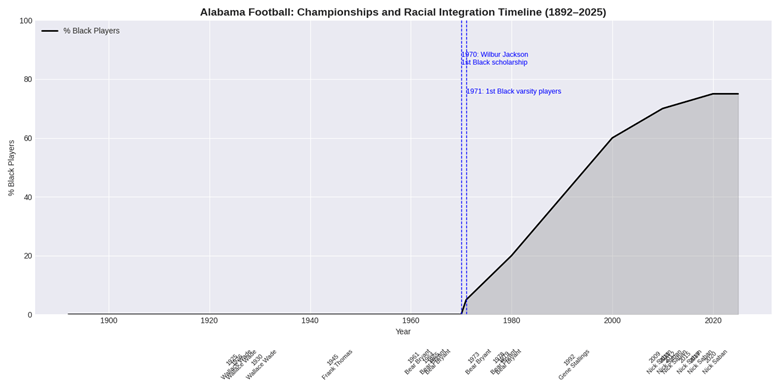
  • Layer 1 (Red dots): Marks championship years and the coach who led them.
  • Layer 2 (Black line): Shows the percentage of Black players, from 0% before 1970 to ~75% today.
  • Blue markers: Highlight the breakthrough years of Wilbur Jackson (1970) and John Mitchell (1971).

This visualization makes the contrast undeniable: Alabama’s dynasty was built on Black athletes after integration, yet leadership has remained exclusively white.

Why No Black Head Coach?

This is the uncomfortable truth. Alabama football thrives on the labor, talent, and brilliance of Black athletes, but leadership remains guarded by tradition. The program reflects a broader pattern in college football: Black players dominate the field, but white coaches dominate the sidelines.

Is this simply “tradition”? Or is it exploitation, using Black faces to win and profit, while denying them the authority to lead? As the saying goes: if you can get the milk for free, why buy the cow? Alabama has built its empire on Black excellence, but refuses to acknowledge that excellence in leadership.

  • Wallace Wade (1923–1930): 3 national titles, including the landmark 1925 Rose Bowl win.
  • Frank Thomas (1931–1946): Guided Alabama through WWII, winning the 1945 championship.
  • Bear Bryant (1958–1982): Built a dynasty with 6 national titles, cementing Alabama’s dominance.
  • Gene Stallings (1990–1996): Captured the 1992 championship, restoring Alabama’s glory.
  • Nick Saban (2007–2023): Another dynasty, with 6 national titles in the modern playoff era.

Call to Action

Football is supposed to be about unity, teamwork, and trust. But Alabama’s refusal to hire a Black head coach reveals a deeper fracture. If the Crimson Tide truly believes in “team,” then it must extend that belief beyond the field. Until then, the program’s legacy will remain incomplete, a dynasty built on Black talent but limited by old traditions.

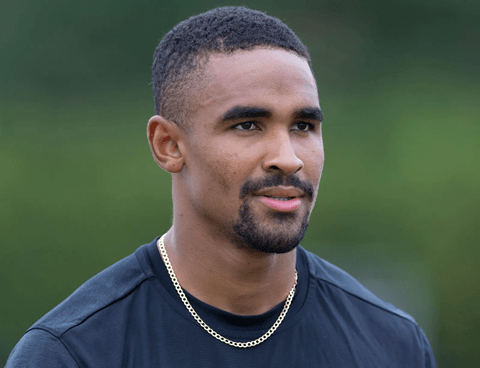
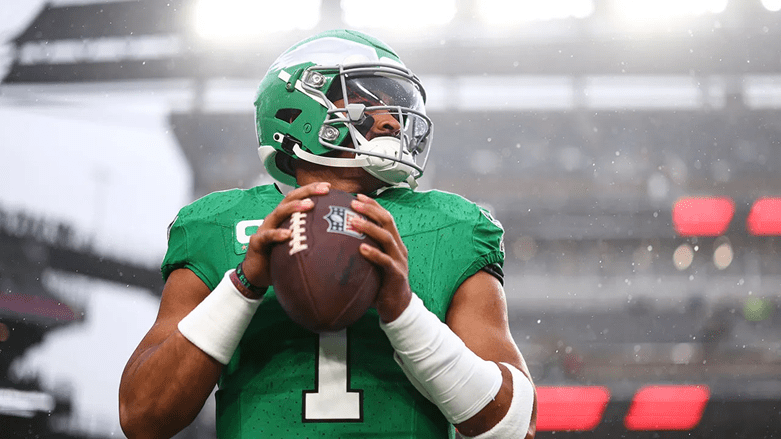
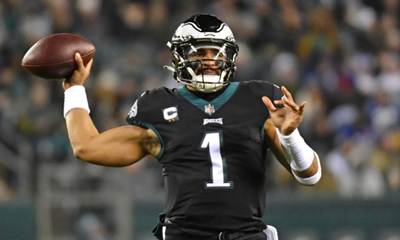
Jalen Hurts has become the face of the Philadelphia Eagles, but recent drama raises questions about the team’s unity. Is the organization truly behind its franchise quarterback, or are outside voices stirring unnecessary doubt?

Jalen Hurts: The Relentless Leader

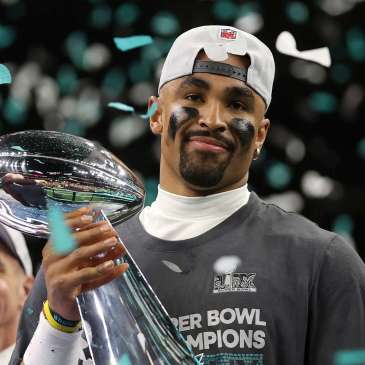
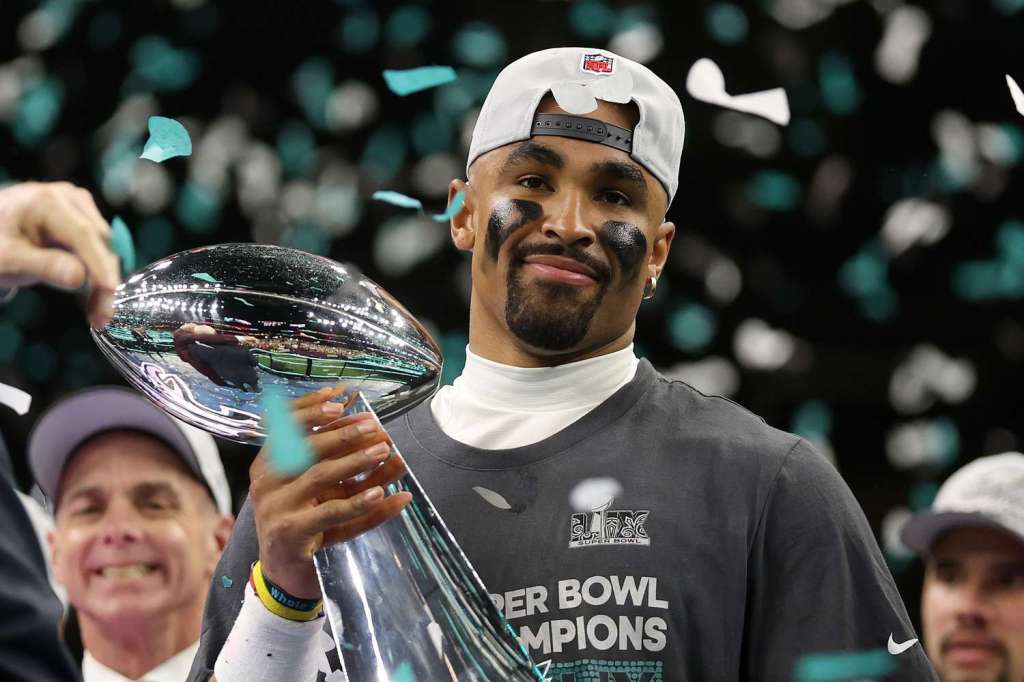
Since arriving in Philadelphia in 2020, Jalen Hurts has never had the same offensive coordinator in back-to-back seasons, a challenge dating back to his college days at Alabama and Oklahoma. Yet, he has never complained. Instead, he has put in the work, adapted, and excelled. His leadership carried the Eagles to two Super Bowl appearances in five years, including a Super Bowl LIX victory in 2025, where he was named Super Bowl MVP media.nfl.com The Hilltop.

AJ Brown vs. Team Unity

Fresh off that championship, wide receiver A.J. Brown has publicly voiced frustration about being left out of the offensive game plan Sports Illustrated. His complaints echo the infamous Terrell Owens saga with Donovan McNabb after the Eagles’ 2005 Super Bowl loss. Owens’ selfishness fractured the team, leading to Andy Reid’s firing, McNabb’s trade, and Owens’ departure.

Brown’s lack of effort on contested catches and his media outbursts have drawn criticism. Meanwhile, DeVonta Smith has emerged as a true WR1, battling for every ball and proving his reliability. The Eagles gambled by keeping Brown past the trade deadline, but his behavior continues to cast a shadow.

Outside Voices: Seth Joyner & LeSean McCoy

Former Eagles Seth Joyner and LeSean McCoy have suggested that some in the organization are unhappy with Hurts. But let’s be clear: letting Hurts walk would be unthinkable. Every other NFL team would break the bank to sign him. Joyner was a solid linebacker but never a game-changer, while McCoy’s career fizzled after early promise. Their critiques seem more rooted in bitterness than fact.

Jalen Hurts Career Stats (NFL) ESPN NFL Pro-Football-Reference.com

SeasonGPComp%Pass YardsTDINTRush YardsRush TD
20201552.0%1,061643543
20211561.3%3,14416978410
20221566.5%3,70122676013
20231765.4%3,858231560515
20241568.7%2,90318563014
20251066.9%1,9951612656
Career8764.7%16,662101403,39861

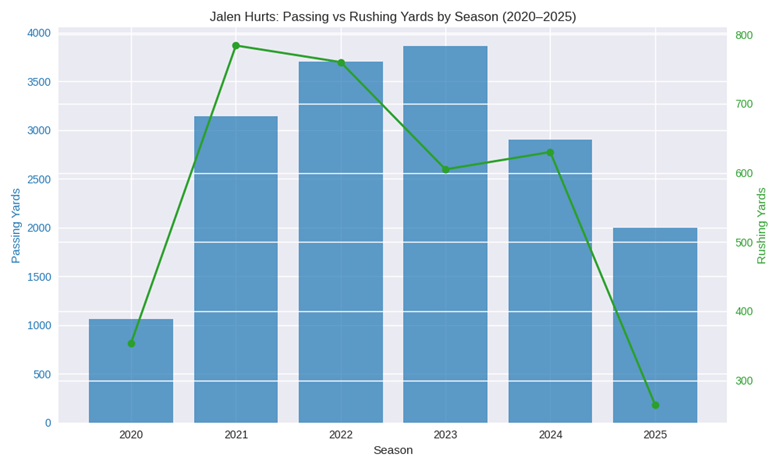
a chart comparing Jalen Hurts’ passing and rushing yards by season.

This dual-axis chart highlights how Hurts has balanced his game since entering the NFL. His passing yards steadily climbed from 2020 to 2023, peaking at nearly 3,900, while his rushing yards consistently added another dimension to the Eagles’ offense. Even in seasons with coordinator changes, Hurts adapted and delivered.

Jalen Hurts’ Accomplishments media.nfl.com Sportskeeda The Hilltop

  • Super Bowl LIX Champion & MVP (2025)
  • Super Bowl LVII appearance (2023)
  • 2× Pro Bowl selection (2022, 2023)
  • Second-team All-Pro (2022)
  • Bert Bell Award (2022)
  • Holds NFL record for most rushing TDs in a season by a QB (15)
  • Career playoff record: 5–3, with 1,592 passing yards and 9 rushing TDs

Final Thoughts

The Eagles’ success is inseparable from Jalen Hurts. He has proven himself as a franchise leader, overcoming instability at coordinator, silencing critics, and delivering championships. The real question isn’t whether Hurts is the problem, it’s whether the organization can keep the locker room united and silence distractions.

Readers, what do you think? Is Jalen Hurts the long-term answer for Philadelphia, or do the Eagles risk repeating history by letting drama overshadow their success? Comment below, subscribe, and join the conversation.

Sources: Sports Illustrated media.nfl.com Sportskeeda The Hilltop ESPN NFL Pro-Football-Reference.com

The NFL vs. The BFL: A Call to Legacy, Ownership, and Truth

By Charles Zackary King

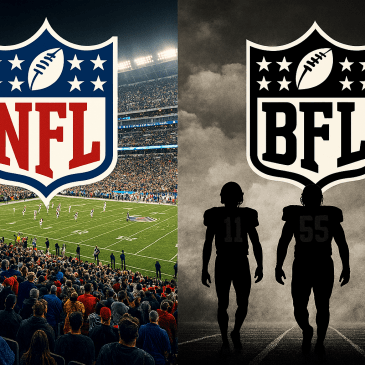
For decades, Black athletes have been the soul of American football—yet they remain excluded from ownership, leadership, and legacy. It’s time to change that. It’s time for the BFL.

For nearly a century, the NFL has stood as a billion-dollar monument to American sports culture. But beneath the glitz and glamour lies a legacy rooted in exclusion, exploitation, and racial hierarchy. The league was built on the premise that only White men were fit to play, lead, and be celebrated. Black men were not just excluded, they were deemed incapable, inferior, and unworthy of the spotlight.

As the game evolved in the 1950s and ’60s, Black athletes were slowly integrated, not to be honored, but to protect and elevate White players. Quarterbacks, wide receivers, and running backs were shielded by Black bodies, while the myth of White superiority remained intact. Even as Black players electrified the sport and filled stadiums, they were paid less, respected less, and denied the recognition they deserved.

Let’s be clear: this wasn’t just about football. It was about power. It was about ownership. It was about maintaining a system where Black excellence was commodified but never truly valued.

Take Joe Gilliam and James Harris, two quarterbacks whose talent was undeniable, yet whose careers were stifled by a league that refused to see them as leaders. Gilliam backed up Terry Bradshaw, a man Hollywood Henderson famously called “dumb as rocks.” Harris sat behind Dan Fouts and Joe Namath, despite outplaying them in key moments. These weren’t isolated incidents. They were systemic.

Fast forward to today: the NFL is 85% African American. Black athletes are the heartbeat of the league. They are the reason fans tune in, the reason merchandise flies off shelves, the reason billions are made. And yet, there are still no Black owners. Still only a handful of Black head coaches. Still a media machine that uplifts White leadership while undermining Black brilliance.

So I ask: if the people come to see you, why not own the stage?

Why not build the BFL, the Black Football League?

A league where Black athletes are paid their true worth.
A league where Colin Kaepernick’s knee is honored, not punished.
A league where free speech isn’t a liability, but a right.
A league where ownership reflects the talent on the field.
A league where legacy is built by those who live it.

A league where you do not have to celebrate a racist like Charlie Kirk.

This isn’t just a dream. It’s a call to action.

To every player who’s ever been told they weren’t smart enough, weren’t good enough, weren’t “marketable” enough—this is your moment. To every fan who sees the truth and wants change—this is your movement.

Let’s stop asking for seats at tables built to exclude us. Let’s build our own.

The NFL vs. BFL isn’t just a competition. It’s a reckoning.
It’s time.

Call to Action

A powerful call to action for Black athletes to reclaim ownership, legacy, and truth in a sport built on exclusion. Charles Zackary King challenges the NFL’s historical and ongoing racial dynamics and proposes a bold alternative: the BFL.

If you believe in this vision, share this post.
Tag your favorite players.
Challenge the status quo.
Let the world know: we’re ready.

NFL 2025–2026 Season Preview: The Road to Glory Starts Now

It’s that time of year again, FOOTBALL. Fans across the nation and around the globe are glued to their screens, ready for the action, the drama, and the chase for the Lombardi Trophy. The energy is electric. The predictions are flying. And every fan is convinced: this is our year.

The defending Super Bowl Champion Philadelphia Eagles are the team to beat. They’ve reloaded through the draft, made strategic moves in free agency, and look even stronger than last year’s squad. But the rest of the league isn’t backing down. Let’s break down what’s ahead, division by division, as we prepare for kickoff.

NFC Breakdown

🔹 NFC East: Philly’s Throne to Defend

  • Philadelphia Eagles: Still the kings. With a stacked roster and championship swagger, they’re the clear favorite.
  • Washington Commanders: Jayden Daniels may face a sophomore slump, but this team is quietly the second-best in the division.
  • Dallas Cowboys: After trading Micah Parsons to Green Bay, they’re on a downward spiral. A predicted free fall.
  • New York Giants: Rebuilding mode. They’ll fight, but likely finish third.

🔹 NFC West: A Three-Team Race

  • Los Angeles Rams: Strong, balanced, and ready to contend.
  • Seattle Seahawks: Gritty and dangerous.
  • Arizona Cardinals: Rising fast with young talent.
  • San Francisco 49ers: Surprisingly in the cellar this year.

🔹 NFC South: Wide Open Turf

  • Tampa Bay Buccaneers: Consistent and opportunistic. Last year’s division champs.
  • Atlanta Falcons: Pennix Jr. brings promise, but needs time.
  • Carolina Panthers: Bryce Young is ready to roar. Expect a fight.
  • New Orleans Saints: A few surprises, but clearly the weakest team in the division.

🔹 NFC North: The Power Shift

  • Green Bay Packers: With Micah Parsons added, they’re now the team to beat in the North—and the biggest threat to Philly.
  • Chicago Bears: Caleb Williams needs time, but the Bears will climb.
  • Detroit Lions: Talented but playoff-stalled. Third place.
  • Minnesota Vikings: In the basement.

NFC Championship Prediction: Eagles defeat Packers to return to the Super Bowl.

 AFC Breakdown

🔹 AFC East: A Two-Team War

  • Buffalo Bills: Dominant in the regular season, but playoff ghosts linger.
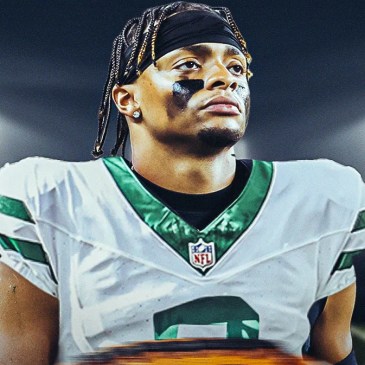
  • New York Jets: Justin Fields is ready to make noise. A fierce contender.
  • Miami Dolphins & New England Patriots: Fighting for relevance. Not significant this year.

🔹 AFC West: The Crown Under Siege

  • Kansas City Chiefs: Still elite, but the division is no longer theirs alone.
  • Las Vegas Raiders: Hungry and dangerous. Push KC to the wire.
  • Denver Broncos: Strong defense, but youth will cost them.
  • Los Angeles Chargers: In the cellar.

Division Decider: Chiefs edge Raiders on the final day.

🔹 AFC South: Texans Still Reign

  • Houston Texans: Three-time division champs. Still the team to beat.
  • Jacksonville Jaguars: Competitive, but not enough.
  • Tennessee Titans: Making strides, but finish third.
  • Indianapolis Colts: Daniel Jones brings his struggles. Last place.

🔹 AFC North: Grit and Grind

  • Pittsburgh Steelers: Mike Tomlin and Aaron Rodgers finally get their division crown.
  • Baltimore Ravens: Neck-and-neck with Pittsburgh. A playoff lock.
  • Cincinnati Bengals: Spent big on Burrow, Chase, and Higgins, but depth is lacking.
  • Cleveland Browns: In the cellar, but capable of upsets.

AFC Championship Prediction: Chiefs defeat Steelers in a thriller.


Super Bowl Prediction

Philadelphia Eagles vs. Kansas City Chiefs
The rubber match. The revenge game. The legacy-definer.
Result: Eagles dominate and repeat as Super Bowl Champions.

Season Prep Variables

  • Fantasy Football: Watch for breakout stars like Bryce Young, Bo Nix, and Jayden Daniels.
  • Betting Lines: Eagles, Bills, and Chiefs are early favorites. Watch the Packers and Jets for value.
  • Injuries & Trades: Keep an eye on mid-season moves, especially in Dallas and Cincinnati.
  • Coaching Changes: New systems could impact rookies like Caleb Williams and Pennix Jr.

The Illusion of Integrity: What the NFL Doesn’t Want You to See


It’s that time of year again, football season. High school lights are flickering, college rivalries are heating up, and the NFL is back to dominate screens, headlines, and barbershop debates. For many men and now women, this is the season of passion, pride, and prediction. From fantasy leagues to betting odds, fans are all in. But beneath the roar of the crowd and the glitter of primetime matchups lies a truth that’s harder to swallow: the NFL isn’t just a sport. It’s a production. And its integrity is on trial.


NFL Entertainment LLC: The Fine Print That Says It All

Before kickoff, before the anthem, before the first snap—look closely. The NFL logo doesn’t just represent a league. It represents a brand: NFL Entertainment LLC. That’s not a coincidence. It’s a declaration. Like WWE, the NFL is a scripted spectacle where narratives are curated, stars are manufactured, and outcomes are influenced—not always by talent, but by agenda.


Jalen Hurts and the Bias of Broadcast

Let’s talk about last year’s Super Bowl. The Philadelphia Eagles and Jalen Hurts didn’t just show up—they dominated. They dismantled the Kansas City Chiefs and Patrick Mahomes. Yet, the media spin was relentless. ESPN analysts and FS1 commentators downplayed Hurts’ performance, calling him a “system quarterback.” But here’s the truth: every quarterback is a system quarterback. The difference? Hurts has had three offensive coordinators in three years and still made it to two Super Bowls—winning one, losing one—both against the so-called dynasty in Kansas City.

Meanwhile, Josh Allen, Lamar Jackson, Justin Herbert, and Joe Burrow are praised endlessly despite lacking championship hardware. Allen has never been to a Super Bowl. Herbert has one playoff appearance in eight seasons. Jackson and Burrow have MVPs and stats, but no rings. Hurts? He’s 4-for-5 in playoff appearances and has proven he can carry a team when it matters most. Yet, he’s paid less and respected less. Why?


The Double Standard of Greatness

Let’s be real. The NFL has a history of rewriting the definition of greatness to fit its preferred narrative. Jim Kelly never won a Super Bowl but made it to Canton. Tom Brady was caught deflating footballs and still crowned the GOAT. Bill Belichick filmed opposing teams’ practices and stole signals—but was never banned. Meanwhile, other coaches and players are penalized for far less.

The hypocrisy is staggering. Belichick’s assistant was fired for cheating, rehired, then rewarded with another head coaching job—only to fail again. Jim Harbaugh, now the highest-paid coach in NFL history, left Michigan under a cloud of scandal and a looming 10-year penalty. Yet, he faces no consequences. Integrity? Where?


Suggestions for the Conscious Fan

If you’re tired of the manipulation, the bias, and the selective accountability, here’s how you can reclaim your power as a fan:

  • Watch with discernment: Don’t just consume the broadcast—question it. Who’s being elevated? Who’s being erased?
  • Support independent sports media: Seek out voices that tell the full story, not just the league-approved version.
  • Celebrate players for impact, not just image: Jalen Hurts, Patrick Mahomes, and others who show up in big moments deserve more than stats—they deserve respect.
  • Hold networks accountable: Demand balanced coverage. Call out bias. Share your voice.
  • Remember: it’s entertainment: The NFL is a business. Don’t confuse production with purity.

Final Word: The Game Behind the Game

Football is supposed to be about competition, grit, and glory. But when cheating is rewarded, truth is twisted, and narratives are bought and sold, we must ask: what are we really watching?

The NFL may be the biggest stage in sports, but it’s also one of the most manipulated. Until integrity becomes more than a slogan, fans must be the ones to demand better. Because if we don’t, the game we love will become just another scripted show—and the players, pawns in a billion-dollar performance.


In Defense of Justin Fields: The NFL’s Most Undervalued Talent


When history is written on this era of the NFL, let it be known: Justin Fields was built for greatness. A freak athlete with a high football IQ, arm strength that can deliver every throw in the book, and legs that turn broken plays into highlights — Fields isn’t just a quarterback, he’s a weapon.

Yet somehow, the conversation around him is shaped by skeptics who choose criticism over context.

A Talent Undermined

From the jump, Chicago didn’t understand what they had. Drafting a dynamic playmaker like Fields only to surround him with subpar weapons and a defensive-minded head coach was malpractice. Despite that, Fields managed to shine — winning games off sheer instinct and grit, flashing potential that terrified defensive coordinators and excited true analysts.

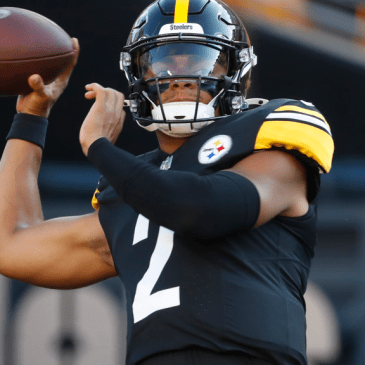
Chicago’s decision to decline his fifth-year option was baffling. Worse yet was Pittsburgh’s failure to maximize him when given the opportunity. After leading the team to a strong 4–2 start while playing clean football, Fields was benched for Russell Wilson — a move that ultimately cost them momentum, their season, and their credibility.

No spark. No accountability. No justice for the QB who gave them life.

The Rebirth in New York

Then came redemption. The New York Jets — now under Head Coach Aaron Glenn — saw what others overlooked. Fields was signed to a well-deserved 2-year, $40 million contract ($30M guaranteed) and handed the keys. Finally, a franchise is building around him with intention, belief, and vision.

But even now, in this moment of rebirth, the media noise is deafening.

Calling Out the Critics

Commentators like LeSean McCoy constantly tear Fields down — but when did a running back become the voice of quarterback expertise? McCoy’s own playing days were riddled with drama and questionable leadership. If this is brotherhood, it’s broken.

Eric Mangini — whose head coaching career boasts a sub-.500 record and playoff futility — claimed Fields “isn’t an NFL quarterback.” The same Mangini who led teams to irrelevance and only holds Super Bowl rings thanks to Belichick’s genius. That’s not credibility; that’s proximity to success.

And then there’s Craig Carton from FS1, suggesting Fields should be a wide receiver. Let’s be honest — Fields has more athleticism in one toe than Carton has in his entire résumé. It’s embarrassing that this kind of commentary dominates airwaves while real football minds stay silent.

The Truth They Can’t Deny

Justin Fields is the kind of quarterback who redefines matchups, demands respect, and plays with heart. You don’t teach what he brings — you build around it. And when that happens, championship-caliber teams emerge.

Let the critics eat crow when the lights shine brightest. Because Justin Fields isn’t just here to prove people wrong — he’s here to show what belief, talent, and opportunity can do.


#RespectJustinFields #FieldsEra #NFLQuarterback #BlackQBExcellence #LetJustinCook #NYJetsNation #LegacyInMotion #BuiltForThis #TrueDualThreat #QB1 #AthleteNotAfterthought #WeSeeYouJustin #BreakTheBias #MediaAccountability #FootballJustice #SupportBlackQuarterbacks


The State of Sports in Pittsburgh: A City at a Crossroads

Pittsburgh has long been known as a sports city, with a rich history in professional athletics and a passionate fan base that lives and breathes for the Steelers, Penguins, and Pirates. However, in recent years, the once-proud franchises have all experienced a notable decline, leaving fans concerned about the future. As the city grapples with its identity as a sports powerhouse, it’s hard not to notice the mediocrity that seems to have taken hold.

The Steelers: From Dominance to Despondency

For decades, the Pittsburgh Steelers were synonymous with success in the NFL. Under the leadership of legendary coaches Chuck Noll and Bill Cowher, the team set a standard for excellence, winning a combined six Super Bowl titles. But after winning their last championship in 2006, the team finds itself at a pivotal juncture. The glory days appear to be behind them, and the once-feared franchise has now become a team that other squads approach with optimism rather than trepidation. Head Coach Mike Tomlin has played an integral role in this transition, leading the team for over 19 years, making him the third-longest tenured coach in the franchise’s history. However, Tomlin’s tenure begs the question: Has the time come for a change at the helm? Fan frustrations have mounted, particularly regarding the Steelers’ inability to secure a playoff win since 2011. As other franchises in smaller markets—like the Green Bay Packers and Kansas City Chiefs—have made strategic moves that kept them competitive, the Steelers seem to have fallen into a rut.

Quarterback Conundrum

One area where ineffectiveness has been most glaring is at the quarterback position. Tomlin’s decisions regarding player development have left much to be desired. The case of Justin Fields is particularly telling: after leading the team to a promising start at 4-2, Tomlin’s reluctance to fully commit to Fields ultimately cost the franchise a chance at development and success. Similarly, the choice to trade away George Pickens—one of the league’s promising young wide receivers—only adds to the discontent. With the team’s reliance on older quarterbacks like Aaron Rodgers, who has communicated hesitancy in joining the Steelers, the franchise’s future at the position appears bleak.

The Penguins: A Rollercoaster of Hope and Disappointment

The Pittsburgh Penguins have seen more recent success, winning the Stanley Cup in 2016 and 2017, but their competitive edge has dulled in the last few seasons. With the team failing to make the playoffs in the past three years and recently parting ways with their coach, the organization is now in a state of flux. Once known for their electric offense and playoff prowess, the Penguins struggle to stay relevant in a increasingly competitive league.

The Pirates: A Longing for Passionate Play

The Pirates have a storied history that boasts five World Series championships, yet it has been a long time since the city felt the thrill of postseason baseball. The team last hoisted the championship trophy in 1979. While they occasionally show flashes of competitiveness, these moments often end in disappointment. The recent departure of their manager indicates that the Pirates are searching for an identity amid relentless mediocrity.

The Changing Landscape of Pittsburgh Sports

As fans of the Steelers, Penguins, and Pirates look around at more successful franchises across the league, it’s impossible not to feel a twinge of frustration. Teams in smaller markets, like the Cincinnati Bengals and Nashville Predators, have managed to thrive and remain competitive, proving that smart decision-making, teamwork, and a dedicated coaching staff can lead to success regardless of a team’s market size. The landscape of Pittsburgh sports is crying out for change: whether it’s a fresh coaching direction for the Steelers or new leadership for the Pirates, the city can’t afford to sit idly by while its teams sink deeper into mediocrity. The time has come for the city of bridges to build some pathways to success once again, embracing the winning legacy while adapting to remain relevant in the 21st century.

Final Thoughts: A Call to Action

As Pittsburgh embraces therapeutic change, it’s essential for fans and stakeholders alike to advocate for strategic decisions that prioritize long-term success. The Steelers may stand at a crossroads with Mike Tomlin, while the Penguins and Pirates must also find their footing. Pittsburgh’s proud sports history deserves a bright future where its teams can once again inspire fear in their opponents and pride in their fans. As the city watches how these organizations navigate their respective dilemmas, there lies an open question: Will Pittsburgh once again become the fierce sports land it used to be, or will mediocrity continue to reign? The collective spirit of Pittsburgh sports fans speaks loud and clear: they crave success, and it’s time for their teams to deliver.

The 2025 NFL Draft: A Life-Changing Moment Overshadowed by Controversy

The NFL Draft is more than just a spectacle of sports—it’s a life-altering event for young athletes who have poured their blood, sweat, and tears into the game. For many, this moment represents the culmination of years of hard work, sacrifice, and resilience. It’s a chance to rewrite their stories, to rise above challenging circumstances, and to secure a future that once seemed out of reach. Yet, the 2025 NFL Draft, a stage meant to celebrate these incredible journeys, became a polarizing event dominated by narratives that left many fans disheartened.

The Real Stories of the Draft

Behind every name called on draft night lies a story of perseverance. Some of these young men have overcome unimaginable odds—growing up in poverty, facing systemic challenges, and navigating environments where survival was the primary goal. For them, football was not just a game; it was a lifeline, a way out, and a beacon of hope. The draft is their reward for years of relentless effort, a testament to their grit and determination.

Take Cam Ward, for example, the first overall pick by the Tennessee Titans. Ward’s journey from a zero-star recruit to the top of the draft board is nothing short of inspiring. His rise through the ranks, marked by standout performances and unwavering leadership, embodies the spirit of the draft. Yet, his story, like many others, was overshadowed by the media’s singular focus on one player.

The Shedeur Sanders Show

Shedeur Sanders, a quarterback from Colorado and the son of NFL legend Deion Sanders, became the center of attention during the draft. While Sanders’ talent and potential are undeniable, the narrative surrounding him felt disproportionate. The coverage painted the draft as his personal stage, sidelining the achievements and stories of other players. This one-dimensional focus left many fans feeling alienated and frustrated.

Critics argue that Sanders’ performance in the Big 12 Conference, while impressive, did not consistently measure up to the competition faced by other top quarterbacks in the draft. His statistics, often highlighted, were scrutinized for being padded against weaker opponents. Moreover, concerns about his ability to handle pressure, his improvisational skills, and his readiness to lead an NFL franchise were raised. Reports of missed meetings and poor interviews further fueled skepticism about his draft stock.

A Missed Opportunity for Inclusivity

The draft should have been a celebration of all the young men stepping into professional football, not just one. By focusing so heavily on Sanders, the media missed an opportunity to highlight the diverse and compelling stories of other players. This imbalance not only detracted from the event but also sparked unnecessary debates about race and favoritism, overshadowing the true essence of the draft.

Honoring the Unsung Heroes

As we reflect on the 2025 NFL Draft, let’s not forget the players who didn’t receive the spotlight they deserved. Cam Ward’s journey to becoming the Titans’ new quarterback is a story of resilience and leadership. His ability to connect with teammates and his determination to succeed make him a player to watch. Ward’s story, along with those of countless others, reminds us that the draft is about more than just rankings and statistics—it’s about dreams realized and futures transformed.

In the end, the draft is a celebration of potential, hard work, and the promise of a brighter tomorrow. Let’s ensure that every player’s story is told, and every journey is honored. After all, the NFL Draft is not just about one man—it’s about the collective triumph of many.

The Pittsburgh Steelers’ Quarterback Conundrum: A Missed Opportunity?

The Pittsburgh Steelers have long been a powerhouse in the NFL, but recent decisions regarding their quarterback position have left fans and analysts alike scratching their heads. The evolution of the quarterback role in the NFL has been dramatic, with modern quarterbacks needing to be mobile, agile, and capable of making plays on the run. Yet, the Steelers seem to be stuck in the past, making questionable choices that have left them lagging behind.

The Changing Face of the Quarterback Position

Gone are the days when quarterbacks stood in the pocket, scanning the field for an open receiver. Today’s quarterbacks are expected to be dual threats, capable of both passing and running the ball effectively. This shift has been driven by the success of mobile quarterbacks like Patrick Mahomes, Lamar Jackson, and Jalen Hurts, who have redefined what it means to play the position.

Missed Opportunities: Mahomes and Hurts

The Steelers had a golden opportunity to draft Patrick Mahomes in 2017 but passed on him, opting instead for other players. Mahomes has since become one of the most dynamic quarterbacks in the league, leading the Kansas City Chiefs to multiple playoff appearances and a Super Bowl victory. Similarly, in 2020, the Steelers had the chance to draft Jalen Hurts but chose Chase Claypool instead. The Philadelphia Eagles picked up Hurts with the 53rd pick, and he has since become a key player for them.

The Russell Wilson and Justin Fields Experiment

In an attempt to address their quarterback issues, the Steelers signed Russell Wilson and traded for Justin Fields in 2024. However, this decision has been anything but smooth. Wilson was given the starting job despite Fields’ hot start to the season, leading to controversy and mixed results. The Steelers’ season has been a rollercoaster, with Wilson’s performance falling short of expectations and Fields showing flashes of brilliance.

The Future of the Steelers’ Quarterback Room

As the 2024 season winds down, the Steelers face a crucial decision: who will be their quarterback moving forward? Fields has shown potential and could be the long-term solution, but Wilson’s experience and veteran presence cannot be ignored. The Steelers must decide whether to stick with Wilson, give Fields another chance, or explore other options in the draft or free agency.

The Mike Tomlin Factor

One factor that cannot be overlooked is head coach Mike Tomlin’s influence on these decisions. Tomlin has been with the Steelers for 18 years and has a significant say in roster decisions. His loyalty to Wilson has been cited as a potential roadblock to bringing Fields back. With mounting criticism and the Steelers’ recent struggles, some are even speculating that Tomlin’s job could be on the line.

What Should the Steelers Do?

The Steelers need to make a bold move to secure their future at the quarterback position. Whether it’s sticking with Fields, giving Wilson another shot, or drafting a new quarterback, the decision must be made with the future in mind. The Steelers have a proud history, and it’s time to return to their winning ways by making the right choice at quarterback.

What do you think the Steelers should do? Do you have a favorite quarterback in mind for them?