Jellybean Johnson, a Pioneer of the Minneapolis Sound, Remembered

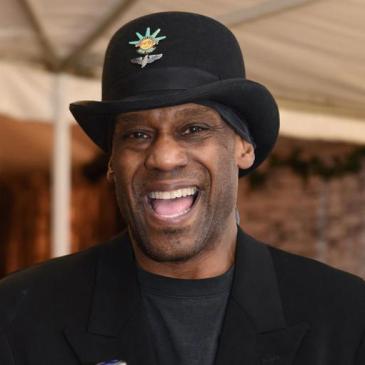
Garry George “Jellybean” Johnson, legendary drummer, guitarist, producer, and founding member of The Time, has passed away at the age of 69, just two days after celebrating his birthday. His sudden death marks the loss of one of the architects of the Minneapolis Sound, a genre-defining fusion of funk, rock, R&B, and new wave that continues to influence music today Rolling Stone FOX 9 Minneapolis-St. Paul Wikipedia Bring Me The News.

Honoring His Legacy

Jellybean Johnson was born in Chicago in 1956 and moved to Minneapolis at age 13. It was there that he befriended future icons like Prince, Morris Day, Jimmy Jam, and Terry Lewis, forming the creative nucleus that would shape an entire era of music Rolling Stone FOX 9 Minneapolis-St. Paul.

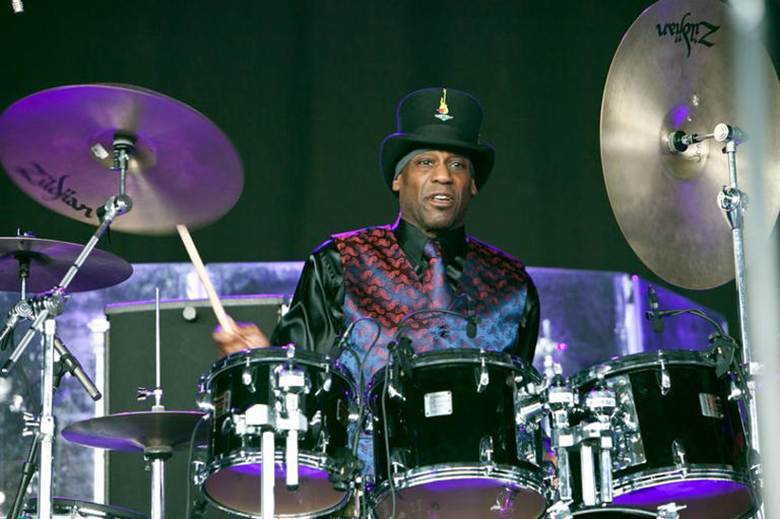
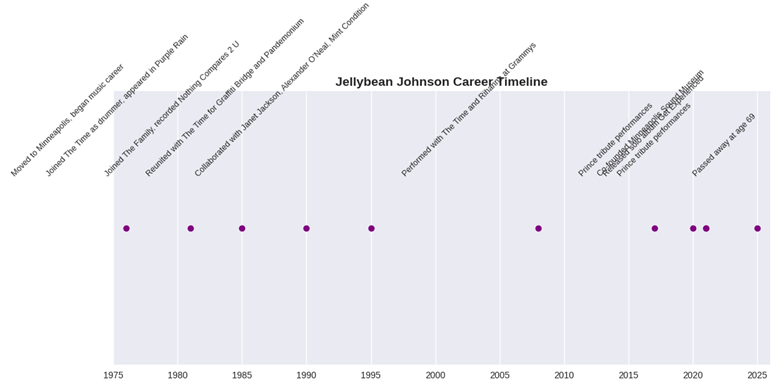
  • The Time (1981–1984): Johnson was the original and only drummer for Prince’s band The Time, appearing in Purple Rain and helping deliver hits like 777-9311, Jungle Love, and The Bird. His drumming style became a cornerstone of the Minneapolis Sound Rolling Stone Yahoo Wikipedia.
  • The Family (1985): After The Time split, Johnson joined Prince’s short-lived project The Family, which released the original version of Nothing Compares 2 U AOL Wikipedia.
  • Graffiti Bridge & Pandemonium (1990): Johnson reunited with The Time for Prince’s film Graffiti Bridge and their album Pandemonium, which included the chart-topping single Jerk Out AOL Wikipedia.
  • Collaborations & Production: Beyond Prince, Johnson worked with Janet Jackson (Black Cat), New Edition (Crucial), Alexander O’Neal (Criticize), Mint Condition (Breakin’ My Heart), and Nona Hendryx (Why Should I Cry) Wikipedia Discogs. His versatility as both drummer and guitarist made him an in-demand session musician and producer.
  • Solo Work: In 2021, he released his long-awaited solo album Get Experienced: The Jellybean Johnson Experience, showcasing his guitar artistry Wikipedia Bring Me The News.
  • Later Performances: Johnson performed with The Time and Rihanna at the 2008 Grammys, and returned for Prince tributes in 2017 and 2020 Billboard Wikipedia.
Visual Timeline of His Career

Here’s a timeline chart capturing his milestones from 1976 to 2025:
Preserving the Minneapolis Sound
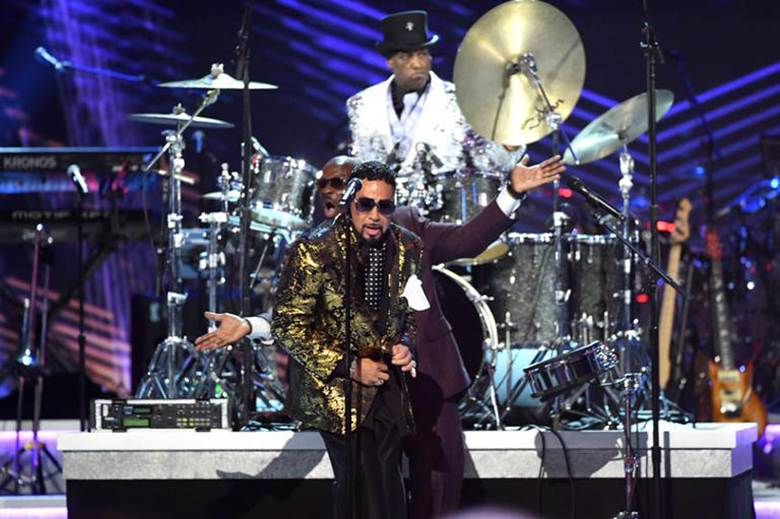
Johnson’s vision extended beyond performance. In 2021, he co-founded the Minneapolis Sound Museum, dedicated to preserving the history and cultural impact of the genre he helped pioneer Bring Me The News. His final reflections on legacy emphasized community, mentorship, and ensuring future generations had access to creative spaces like those that shaped him North News Bring Me The News.

Tributes

Musicians and fans alike have poured out tributes. Morris Day called him “more like a brother than a bandmate,” while Sheila E. remembered him as “a kind human being, extremely talented and funny.” Susannah Melvoin described him as “the master of loving you like no brother could” Rolling Stone Yahoo International Business Times UK.

Closing Thoughts

Jellybean Johnson’s artistry was not confined to the stage—it was embedded in the DNA of modern pop and R&B. His drumming, guitar work, and production shaped hits across decades, while his mentorship and museum project ensured the Minneapolis Sound will live on.

Credit: This blog post is based on reporting by Daniel Bird and expanded with details from Rolling Stone, Billboard, Fox9, and other sources Rolling Stone FOX 9 Minneapolis-St. Paul Yahoo Billboard Wikipedia Bring Me The News Discogs.
When the Music Paused: Remembering D’Angelo’s Genius and Grace

By Charles Zackary King | America in Black and White

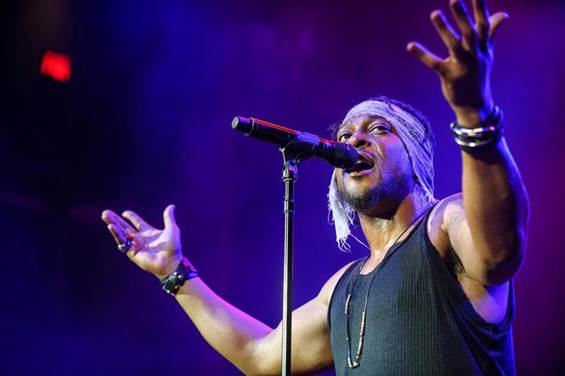
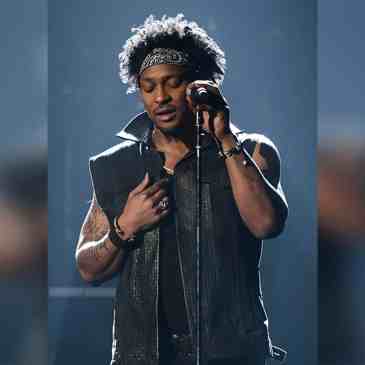
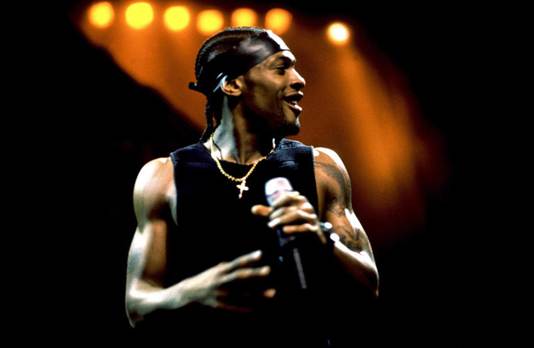
On October 14, 2025, the world lost one of its most enigmatic and electrifying voices. Michael Eugene Archer, known to us as D’Angelo, passed away at the age of 51 after a private and courageous battle with pancreatic cancer. His death marks not just the end of a life, but the silencing of a sound that redefined Black music for a generation.

The Rise of a Neo-Soul Prophet

Born in Richmond, Virginia, D’Angelo was raised in a deeply religious Pentecostal household. His musical gifts emerged early, nurtured by gospel traditions and sharpened by a hunger for authenticity. By 1995, he had already changed the game with Brown Sugar, a debut album that fused the rawness of hip-hop with the sensuality of classic soul. It wasn’t just music, it was a movement.

His follow-up, Voodoo (2000), was a masterclass in musical alchemy. Collaborating with the Soulquarians collective, D’Angelo summoned the spirits of Marvin Gaye, Jimi Hendrix, and Prince, while forging a sound entirely his own. The album’s standout track, “Untitled (How Does It Feel),” became iconic, not just for its stripped, down video, but for its emotional vulnerability and vocal brilliance.

But fame came with a price.

The Vanishing Act

After Voodoo, D’Angelo disappeared. The pressures of being a sex symbol, the weight of public expectation, and personal battles with addiction led him into a long hiatus. He became a recluse, rarely seen, often rumored, and deeply missed.

Then, in 2014, he returned with Black Messiah, an album that was both a political statement and a spiritual reckoning. Released during a time of social unrest, it became a soundtrack for resistance, echoing the cries of a community demanding justice.

The Father Behind the Fame

Though fiercely private, D’Angelo was a devoted father. He leaves behind three children:

  • Michael Archer Jr. (aka Swayvo Twain), his son with the late Angie Stone, who died in a tragic car accident in March 2025
  • Imani Archer, a gifted musician in her own right, who shared a touching tribute to her father after his passing
  • Morocco Archer, his youngest son, who has largely remained out of the public eye

His children now carry the torch of his legacy, not just in music, but in the quiet strength he modeled as a father.

Why the Industry Will Never Be the Same

D’Angelo didn’t flood the market with content. He gave us only three studio albums across three decades. But each one was seismic. He reminded us that Black music could be raw, spiritual, erotic, political, and timeless, all at once.

He was the heartbeat of neo-soul. A bridge between the sacred and the secular. A man who could make a Fender Rhodes whisper and a falsetto scream.

Artists like Lauryn Hill, Questlove, Raphael Saadiq, and Jay-Z collaborated with him, not just because of his talent, but because of his truth. He was one of one.

Rest in Power, D

D’Angelo’s passing leaves a void that no algorithm can fill. His music was never just about melody, it was about memory. About the ancestral pulse that lives in every chord, every lyric, every silence between the notes.

As we mourn, we also celebrate. Because D’Angelo didn’t just make music. He made moments. And those moments will echo for generations.

“We are eternally grateful for the legacy of extraordinarily moving music he leaves behind.” D’Angelo’s family

The Dying Music Industry: A Journey Through Time

The music industry has undergone a seismic shift from the 1950s through the late 1990s, evolving through myriad styles, influential artists, and the introduction of new technology—all of which have significantly shaped how we listen to and appreciate music. However, a deeper concern looms: has the industry lost its spark? As we delve into the decades that shaped modern music, we can’t help but notice a decline in longevity and creativity amongst today’s artists.

The Foundations: 1950s to 1970s

The 1950s laid the groundwork for rock and roll, with artists like Otis Redding, Sam Cooke, and Aretha Franklin breaking barriers with their soulful melodies and powerful performances. Franklin’s anthemic “Respect” became a cornerstone of not only music but also civil rights and feminism. Coming from the 1960s, groups like The Supremes and solo artists like Diana Ross showcased the power of Motown. Their catchy hooks and polished images captivated the world. The 1970s introduced funk with bands such as Sly and the Family Stone and Earth, Wind & Fire, whose grooves set dance floors ablaze. Barry White popularized the “Love Unlimited” sound, blending orchestral arrangements with powerful basslines, creating timeless classics. This decade also saw the emergence of disco, influencing the music landscape and nightlife culture.

The 1980s: Explosion of New Genres

The 1980s were particularly revolutionary for music. This era saw the explosion of genres like hip-hop, pop, and R&B. Prince redefined what it meant to be a solo artist, combining rock, funk, and pop in ways that had never been done before. Songs like “Purple Rain” emphasized not just musical skill but also theatricality, shaping how artists interacted with their audience. Michael Jackson emerged as a global icon, with “Thriller” breaking records and paving the way for future pop phenomena. His music videos transformed into art forms of their own. Meanwhile, the likes of Anita Baker and Sade brought smooth jazz and soul into the mainstream, proving that emotional depth could resonate with audiences. This decade is often celebrated for its vibrant creativity, with the emergence of new technologies such as the synthesizer, which introduced entire new sounds and textures. Artists like Madonna, a quintessential pop star, used the music video format to express social issues and personal identity—an approach that pushed boundaries.

The 1990s: Enter the Digital Age

As we moved into the 1990s, the music landscape continued to diversify with the arrival of grunge and hip-hop, spearheaded by iconic figures such as Tupac Shakur and Notorious B.I.G. R&B artists like R. Kelly and TLC crafted hits that defined the sound of a generation. The era was marked by lyrical depth and musical experimentation, blending styles and influences into a unique tapestry. However, the late 1990s also marked a pivotal downturn for the music industry. With the rise of digital music formats and the internet, music listening became more about consuming singles rather than albums. The traditional revenue models began to crumble, sparking legal battles and leading to the pivot toward auto-tuned vocals and electronic beats. As a consequence, artistry began to drift, giving way to a reliance on sampling and rehashing classic sounds rather than creating new ones.

The Decline: The Rise of Short-Lived Fame

Fast forward to today, and the music industry faces a crucial challenge. The artists who once commanded the charts, such as Prince, Michael Jackson, and Marvin Gaye, were not just musicians; they were cultural icons who created movements. Today’s music scene seems dominated by transient stars producing a plethora of hooks with little substance beyond their debut record. The prevalence of digital tools often sacrifices originality for formulaic music-making. Many contemporary artists emerge with one hit and then fade into obscurity, a stark contrast to the old school stars who still thrive in sold-out arenas around the world, performing their classic hits. These legends—like Gladys Knight, Diana Ross, and Earth, Wind & Fire—prove that while music may evolve, the essence of true artistry remains timeless. The audience craves that deep connection that music brings—something that today’s quick hits often fail to provide.

Conclusion: The Future of Music

So, what lies ahead for the music industry? As we reflect on the achievements and transformations of the past, we must acknowledge the talents and innovations that have come and gone. While technology offers unprecedented access and avenues for emerging artists, it is essential to hold on to the authenticity and creativity that have historically defined great music. For the music industry to thrive once again, it may need to cycle back to its roots—celebrating artistry, innovation, and the human experience over mere commercial success. Only then can we find new voices that resonate and endure in the hearts of listeners for generations to come.

The Arrest of Sean Combs: Charges, Bail Denial, and Ripple Effects

The arrest of Sean “Diddy” Combs has sent shockwaves through the entertainment industry and beyond. The music mogul, known for his influential career in hip-hop and business, now faces a series of serious federal charges that could have far-reaching implications for him and those closely connected to him.

The Charges Against Sean Combs

Sean Combs was arrested and charged with a range of offenses, including sex trafficking, racketeering, transportation to engage in prostitution, kidnapping, forced labor, bribery, and other crimes1These charges stem from an extensive investigation that alleges Combs engaged in these activities over a period of several years, using his power and influence to exploit and control his victims1.

Denial of Bail

In a recent court appearance, Combs pleaded not guilty to the charges. However, his request for bail was denied by U.S. Magistrate Judge Robyn Tarnofsky2The judge cited concerns about witness tampering and the potential danger Combs posed to the community as reasons for the denial2Despite his legal team’s offer of a $50 million bond and assurances of restricted travel and home detention, the judge remained unconvinced that these measures would ensure Combs’ compliance with court orders3.

Impact on Those Closely Connected to Combs

The arrest and subsequent legal proceedings have not only affected Combs but also those closely connected to him. Several individuals within his inner circle could potentially face charges as the investigation continues. Prosecutors have indicated that Combs’ alleged criminal activities involved a network of associates who may have aided or abetted his actions2.

For instance, allegations of witness tampering have surfaced, with claims that Combs attempted to contact and influence individuals who might testify against him2. This has raised concerns about the safety and integrity of the judicial process and has led to increased scrutiny of those in Combs’ orbit.

The Broader Implications

The case against Sean Combs highlights the broader issues of power, influence, and accountability within the entertainment industry. It underscores the importance of protecting vulnerable individuals from exploitation and ensuring that those who abuse their positions of power are held accountable.

As the legal proceedings unfold, the impact on Combs’ career and personal life will undoubtedly be significant. The charges he faces are severe, and the denial of bail suggests that the court views him as a substantial risk. For those who have worked closely with Combs, the fallout could be equally profound, as they navigate the legal and reputational consequences of their association with him.

Conclusion

The arrest of Sean Combs marks a pivotal moment in the ongoing efforts to address and combat serious crimes within the entertainment industry. As the case progresses, it will serve as a critical test of the justice system’s ability to hold powerful individuals accountable and protect the rights of victims. The outcome will not only shape the future of Sean Combs but also send a message about the importance of integrity and justice in all sectors of society.