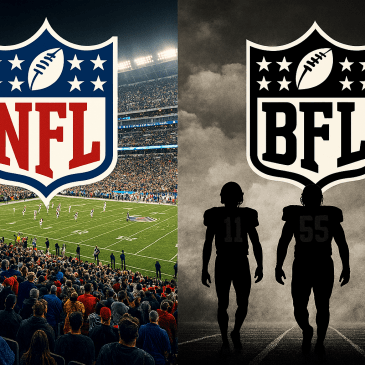
The NFL vs. The BFL: A Call to Legacy, Ownership, and Truth

By Charles Zackary King

For decades, Black athletes have been the soul of American football—yet they remain excluded from ownership, leadership, and legacy. It’s time to change that. It’s time for the BFL.

For nearly a century, the NFL has stood as a billion-dollar monument to American sports culture. But beneath the glitz and glamour lies a legacy rooted in exclusion, exploitation, and racial hierarchy. The league was built on the premise that only White men were fit to play, lead, and be celebrated. Black men were not just excluded, they were deemed incapable, inferior, and unworthy of the spotlight.

As the game evolved in the 1950s and ’60s, Black athletes were slowly integrated, not to be honored, but to protect and elevate White players. Quarterbacks, wide receivers, and running backs were shielded by Black bodies, while the myth of White superiority remained intact. Even as Black players electrified the sport and filled stadiums, they were paid less, respected less, and denied the recognition they deserved.

Let’s be clear: this wasn’t just about football. It was about power. It was about ownership. It was about maintaining a system where Black excellence was commodified but never truly valued.

Take Joe Gilliam and James Harris, two quarterbacks whose talent was undeniable, yet whose careers were stifled by a league that refused to see them as leaders. Gilliam backed up Terry Bradshaw, a man Hollywood Henderson famously called “dumb as rocks.” Harris sat behind Dan Fouts and Joe Namath, despite outplaying them in key moments. These weren’t isolated incidents. They were systemic.

Fast forward to today: the NFL is 85% African American. Black athletes are the heartbeat of the league. They are the reason fans tune in, the reason merchandise flies off shelves, the reason billions are made. And yet, there are still no Black owners. Still only a handful of Black head coaches. Still a media machine that uplifts White leadership while undermining Black brilliance.

So I ask: if the people come to see you, why not own the stage?

Why not build the BFL, the Black Football League?

A league where Black athletes are paid their true worth.
A league where Colin Kaepernick’s knee is honored, not punished.
A league where free speech isn’t a liability, but a right.
A league where ownership reflects the talent on the field.
A league where legacy is built by those who live it.

A league where you do not have to celebrate a racist like Charlie Kirk.

This isn’t just a dream. It’s a call to action.

To every player who’s ever been told they weren’t smart enough, weren’t good enough, weren’t “marketable” enough—this is your moment. To every fan who sees the truth and wants change—this is your movement.

Let’s stop asking for seats at tables built to exclude us. Let’s build our own.

The NFL vs. BFL isn’t just a competition. It’s a reckoning.
It’s time.

Call to Action

A powerful call to action for Black athletes to reclaim ownership, legacy, and truth in a sport built on exclusion. Charles Zackary King challenges the NFL’s historical and ongoing racial dynamics and proposes a bold alternative: the BFL.

If you believe in this vision, share this post.
Tag your favorite players.
Challenge the status quo.
Let the world know: we’re ready.
In Defense of Justin Fields: The NFL’s Most Undervalued Talent


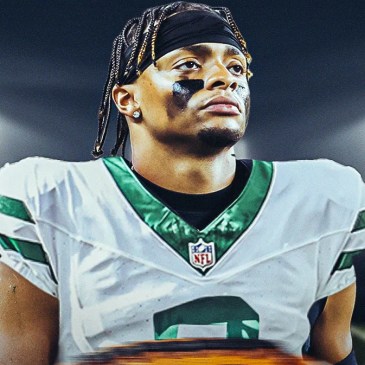
When history is written on this era of the NFL, let it be known: Justin Fields was built for greatness. A freak athlete with a high football IQ, arm strength that can deliver every throw in the book, and legs that turn broken plays into highlights — Fields isn’t just a quarterback, he’s a weapon.

Yet somehow, the conversation around him is shaped by skeptics who choose criticism over context.

A Talent Undermined

From the jump, Chicago didn’t understand what they had. Drafting a dynamic playmaker like Fields only to surround him with subpar weapons and a defensive-minded head coach was malpractice. Despite that, Fields managed to shine — winning games off sheer instinct and grit, flashing potential that terrified defensive coordinators and excited true analysts.

Chicago’s decision to decline his fifth-year option was baffling. Worse yet was Pittsburgh’s failure to maximize him when given the opportunity. After leading the team to a strong 4–2 start while playing clean football, Fields was benched for Russell Wilson — a move that ultimately cost them momentum, their season, and their credibility.

No spark. No accountability. No justice for the QB who gave them life.

The Rebirth in New York

Then came redemption. The New York Jets — now under Head Coach Aaron Glenn — saw what others overlooked. Fields was signed to a well-deserved 2-year, $40 million contract ($30M guaranteed) and handed the keys. Finally, a franchise is building around him with intention, belief, and vision.

But even now, in this moment of rebirth, the media noise is deafening.

Calling Out the Critics

Commentators like LeSean McCoy constantly tear Fields down — but when did a running back become the voice of quarterback expertise? McCoy’s own playing days were riddled with drama and questionable leadership. If this is brotherhood, it’s broken.

Eric Mangini — whose head coaching career boasts a sub-.500 record and playoff futility — claimed Fields “isn’t an NFL quarterback.” The same Mangini who led teams to irrelevance and only holds Super Bowl rings thanks to Belichick’s genius. That’s not credibility; that’s proximity to success.

And then there’s Craig Carton from FS1, suggesting Fields should be a wide receiver. Let’s be honest — Fields has more athleticism in one toe than Carton has in his entire résumé. It’s embarrassing that this kind of commentary dominates airwaves while real football minds stay silent.

The Truth They Can’t Deny

Justin Fields is the kind of quarterback who redefines matchups, demands respect, and plays with heart. You don’t teach what he brings — you build around it. And when that happens, championship-caliber teams emerge.

Let the critics eat crow when the lights shine brightest. Because Justin Fields isn’t just here to prove people wrong — he’s here to show what belief, talent, and opportunity can do.


#RespectJustinFields #FieldsEra #NFLQuarterback #BlackQBExcellence #LetJustinCook #NYJetsNation #LegacyInMotion #BuiltForThis #TrueDualThreat #QB1 #AthleteNotAfterthought #WeSeeYouJustin #BreakTheBias #MediaAccountability #FootballJustice #SupportBlackQuarterbacks


The 2025 NFL Draft: A Life-Changing Moment Overshadowed by Controversy

The NFL Draft is more than just a spectacle of sports—it’s a life-altering event for young athletes who have poured their blood, sweat, and tears into the game. For many, this moment represents the culmination of years of hard work, sacrifice, and resilience. It’s a chance to rewrite their stories, to rise above challenging circumstances, and to secure a future that once seemed out of reach. Yet, the 2025 NFL Draft, a stage meant to celebrate these incredible journeys, became a polarizing event dominated by narratives that left many fans disheartened.

The Real Stories of the Draft

Behind every name called on draft night lies a story of perseverance. Some of these young men have overcome unimaginable odds—growing up in poverty, facing systemic challenges, and navigating environments where survival was the primary goal. For them, football was not just a game; it was a lifeline, a way out, and a beacon of hope. The draft is their reward for years of relentless effort, a testament to their grit and determination.

Take Cam Ward, for example, the first overall pick by the Tennessee Titans. Ward’s journey from a zero-star recruit to the top of the draft board is nothing short of inspiring. His rise through the ranks, marked by standout performances and unwavering leadership, embodies the spirit of the draft. Yet, his story, like many others, was overshadowed by the media’s singular focus on one player.

The Shedeur Sanders Show

Shedeur Sanders, a quarterback from Colorado and the son of NFL legend Deion Sanders, became the center of attention during the draft. While Sanders’ talent and potential are undeniable, the narrative surrounding him felt disproportionate. The coverage painted the draft as his personal stage, sidelining the achievements and stories of other players. This one-dimensional focus left many fans feeling alienated and frustrated.

Critics argue that Sanders’ performance in the Big 12 Conference, while impressive, did not consistently measure up to the competition faced by other top quarterbacks in the draft. His statistics, often highlighted, were scrutinized for being padded against weaker opponents. Moreover, concerns about his ability to handle pressure, his improvisational skills, and his readiness to lead an NFL franchise were raised. Reports of missed meetings and poor interviews further fueled skepticism about his draft stock.

A Missed Opportunity for Inclusivity

The draft should have been a celebration of all the young men stepping into professional football, not just one. By focusing so heavily on Sanders, the media missed an opportunity to highlight the diverse and compelling stories of other players. This imbalance not only detracted from the event but also sparked unnecessary debates about race and favoritism, overshadowing the true essence of the draft.

Honoring the Unsung Heroes

As we reflect on the 2025 NFL Draft, let’s not forget the players who didn’t receive the spotlight they deserved. Cam Ward’s journey to becoming the Titans’ new quarterback is a story of resilience and leadership. His ability to connect with teammates and his determination to succeed make him a player to watch. Ward’s story, along with those of countless others, reminds us that the draft is about more than just rankings and statistics—it’s about dreams realized and futures transformed.

In the end, the draft is a celebration of potential, hard work, and the promise of a brighter tomorrow. Let’s ensure that every player’s story is told, and every journey is honored. After all, the NFL Draft is not just about one man—it’s about the collective triumph of many.

Is There Integrity in the NFL?

The National Football League (NFL) has long been a cornerstone of American sports culture, captivating millions of fans with its high-stakes games and dramatic moments. However, recent controversies have raised questions about the integrity of the league. From questionable officiating to the influence of gambling, and even the personal struggles of coaches, the NFL’s reputation is under scrutiny.

Officiating Controversies

One of the most glaring issues plaguing the NFL is the quality of officiating. There have been numerous instances where bad calls have significantly impacted the outcomes of games, leading to accusations of bias and incompetence. For example, the 2024 season saw several controversial calls that left fans and analysts alike questioning the fairness of the game. These errors have not only affected individual games but have also had broader implications, such as teams missing out on playoff spots due to officiating blunders1.

The Impact of Gambling

The NFL’s embrace of sports betting has added another layer of complexity to the integrity debate. While gambling has brought in substantial revenue, it has also introduced risks that the league once feared. The potential for addiction and the erosion of trust in game outcomes are significant concerns. The league’s partnerships with gambling companies have transformed its sponsorship revenue, but at what cost? The intertwining of gambling and football raises questions about whether the integrity of the sport is being compromised for financial gain3.

Coaches’ Personal Struggles

The personal lives of NFL coaches have also come under the spotlight. Stories of coaches battling addiction to drugs and alcohol have surfaced, painting a troubling picture of the pressures within the league. Miami Dolphins head coach Mike McDaniel, for instance, has been open about his struggle with alcoholism and how it nearly derailed his career. These personal battles raise concerns about the support systems in place for those at the helm of NFL teams and whether these issues are being adequately addressed.

Staged Competition?

The notion that the NFL is a staged competition has gained traction among some fans and critics. Allegations of scripted plays and predetermined outcomes have emerged, casting doubt on the authenticity of the sport. While these claims are often dismissed as conspiracy theories, the frequency of controversial calls and the influence of gambling have fueled skepticism. The idea that the league might manipulate game narratives to boost ratings and revenue is a troubling thought for those who believe in the purity of competition5.

The Toll of Injuries

Injuries are an inevitable part of football, but the toll they take on players is immense. The final week of the 2024 regular season alone saw numerous key players sidelined with injuries. The physical demands of the sport, combined with the pressure to perform, often lead to long-term health issues for players. The question arises: is the relentless pursuit of victory worth the cost to players’ well-being?

Conclusion

The integrity of the NFL is a multifaceted issue, encompassing officiating controversies, the impact of gambling, the personal struggles of coaches, and the physical toll on players. While the league continues to captivate audiences, these underlying issues cannot be ignored. Whether the NFL can address these concerns and restore faith in its integrity remains to be seen. For now, fans are left to ponder whether the game they love is as genuine as it appears.

: Sports Illustrated : Sports Business Journal : Ohio University : Sporting News : The Football Educator : CBS Sports

1www.si.com
2www.sportsbusinessjournal.com
3www.ohio.edu
4www.sportingnews.com
5thefootballeducator.com
6CBSSports.com