In every movement for justice, every march toward freedom, and every prayer for healing, education has stood as both a weapon and a shield. For the Black community, it is not just a pathway to opportunity—it is a sacred tool for survival, liberation, and legacy.
The Historical Weight of Education
From the days of slavery, when reading was forbidden, to the fight for desegregated schools, education has always been a battleground. Our ancestors understood its power. They risked their lives to learn, to teach, and to pass knowledge down like heirlooms. Because they knew: education is the difference between being silenced and being heard.
Today, that truth remains. But the stakes are higher.
The Impact on Marginalized Communities
Marginalized communities, especially Black, Brown, and Indigenous populations continue to face systemic barriers: underfunded schools, biased curricula, and limited access to higher education. These inequities don’t just stunt academic growth they perpetuate cycles of poverty, trauma, and disenfranchisement.
When education is denied or diluted, entire communities suffer. But when it is reclaimed, reimagined, and rooted in truth, it becomes a force of transformation.
Why We Must Work Together
Unity among marginalized communities isn’t just a nice idea—it’s a necessity. Our struggles are interconnected. Our victories must be, too.
When we collaborate across cultures and causes, we amplify our voices. We build coalitions that challenge oppressive systems. We share resources, strategies, and stories that empower the next generation to rise stronger than the last.
Together, we are unstoppable.
From Knowledge to Generational Wealth
Education is the first step—but it cannot be the last. We must move from learning to earning, from surviving to thriving.
Generational wealth isn’t just about money. It’s about ownership. Land. Businesses. Intellectual property. It’s about passing down assets, values, and visions that outlive us.
To build generational wealth, we must:
Invest in financial literacy from a young age
Support Black-owned businesses and institutions
Create platforms that celebrate and monetize our stories
Mentor and uplift youth with tools for entrepreneurship and innovation
Education gives us the blueprint. Unity gives us the strength. Wealth gives us the freedom.
Final Word
We are the architects of our future. Every book we read, every lesson we teach, every young mind we inspire—these are bricks in the foundation of a new legacy.
Let us educate. Let us unify. Let us build.
Because when the Black community rises, the world shifts.
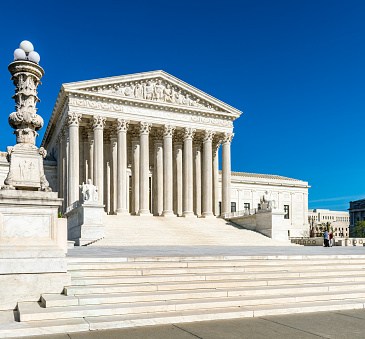
The Supreme Court has once again placed the Voting Rights Act on the operating table—this time in a case out of Louisiana that could redefine how race is considered in redistricting. The Court has requested supplemental briefs and scheduled a re-argument for the fall term, asking whether the creation of a second majority-Black district violates the Fourteenth or Fifteenth Amendments.
Let’s be clear: this is not just a legal debate. It’s a moral reckoning.
Civil rights groups and legal scholars have sounded the alarm. If the Court narrows protections under Section 2 of the Voting Rights Act—the last remaining shield after Shelby County v. Holder gutted Section 5—we could see a rollback of minority voting power across the South. Alabama, Louisiana, Mississippi, and South Carolina are already in the crosshairs. And while some federal courts have upheld the need for race-conscious remedies, the Supreme Court’s posture suggests a willingness to revisit—and potentially reverse—decades of precedent.
What the People Are Saying
Public sentiment is growing restless. Many voters, especially in Black communities, feel betrayed by a system that seems more invested in preserving power than protecting rights. Legal experts warn that the Court’s actions could “turn the clock back to the early 1960s,” as Professor Richard Hasen put it. Justice Elena Kagan cautioned that unchecked gerrymandering could “irreparably damage our system of government.”
And yet, where is the outrage from Democratic governors? Where is the coordinated resistance from blue states that claim to champion equity and justice?
California has taken steps to protect minority representation. Texas, under Trump-aligned leadership, continues to redraw maps with impunity. But too many Democratic-led states remain silent, watching from the sidelines as the foundation of democracy is chipped away.
A Call to Action
We cannot afford complacency. This is a moment for moral courage—not political calculation.
To Democratic Governors: Use your platforms. File amicus briefs. Mobilize your legal teams. Speak out publicly.
To Civil Rights Organizations: Amplify the voices of those most affected. Host town halls. Educate communities.
To Everyday Citizens: Call your representatives. Share this story. Demand accountability.
To Faith Leaders and Advocates: Remind the nation that justice is not negotiable. That silence is complicity.
This is not just about Louisiana. It’s about every voter whose voice is being diluted, dismissed, or denied. It’s about the soul of our democracy.
Let us not wait for history to judge us. Let us act now—boldly, unapologetically, and together.
This week, the U.S. Treasury confirmed what many economists feared: the national debt has officially crossed the $37 trillion mark. That’s not just a number—it’s a flashing red light on America’s fiscal dashboard. And it’s happening years ahead of schedule, thanks to pandemic-era borrowing and a new wave of government spending.
But here’s the twist: this milestone arrives just weeks after the passage of the so-called “Big Beautiful Bill,” a budget law championed by President Trump that promises tax relief for overtime workers. On the surface, it sounds like a win for hardworking Americans. Dig deeper, though, and you’ll find a policy that’s more cosmetic than corrective.
Debt Is Rising—Fast
The Congressional Budget Office had projected we wouldn’t hit $37 trillion until after 2030. But between COVID-19 stimulus packages, economic recovery efforts, and now a $4.1 trillion tax-and-spending law signed earlier this year, we’ve accelerated into dangerous territory.
Michael Peterson of the Peter G. Peterson Foundation warns that we’re now adding a trillion dollars to the debt every five months—twice the rate of the last 25 years.
The Big Beautiful Bill: A Mirage of Relief
The “Big Beautiful Bill” was marketed as a game-changer: no federal income tax on overtime pay. Retroactive to January 2025, it promised workers a bigger slice of their paycheck. But the reality is far more limited:
Only the “half” portion of “time-and-a-half” pay is tax-free.
State and local taxes still apply.
Social Security and Medicare taxes are untouched.
There’s a cap: $12,500 per person annually.
High earners are excluded entirely.
In short, it’s a partial tax break wrapped in political branding. And while it may offer modest relief to some, it does little to address the structural issues driving our debt skyward.
What’s Really at Stake?
Unchecked debt has real consequences:
Higher interest rates on mortgages, car loans, and credit cards.
Lower wages as businesses scale back investment.
Reduced public services as interest payments crowd out funding for education, infrastructure, and healthcare.
Wendy Edelberg of Brookings warns that the new law means “we’re going to borrow a lot over the course of 2026, we’re going to borrow a lot over the course of 2027, and it’s just going to keep going”.
A Call for Real Reform
Maya MacGuineas of the Committee for a Responsible Federal Budget put it bluntly: “Hopefully this milestone is enough to wake up policymakers to the reality that we need to do something, and we need to do it quickly”.
Call to Action: From Debt to Dignity
This isn’t just about numbers—it’s about values. It’s about whether our government prioritizes short-term optics or long-term equity. If we want a future where economic justice is more than a slogan, we must demand:
Transparent fiscal policy that serves people, not politics.
Equitable tax reform that uplifts working families.
Community-centered budgeting that invests in education, housing, and health—not just interest payments.
Let’s raise our voices. Let’s organize. Let’s hold leaders accountable—not just for what they spend, but for who they serve.
Join the movement. Share this post. Start the conversation. And let’s build a future where our national budget reflects our national values.
On July 4, 2025, while fireworks lit the sky, the United States quietly enacted one of the most sweeping cuts to its social safety net in decades. Dubbed the “One Big Beautiful Bill,” this legislation has a name that evokes hope — but its true impact could be catastrophic for millions of Americans. Seniors, working-class families, and impoverished communities now face an uncertain future as Medicaid, Medicare, and SNAP undergo deep structural reductions.
As headlines celebrate “economic discipline” and “government efficiency,” communities on the margins brace for what may become a humanitarian crisis. This blog post explores what’s at stake, who is most vulnerable, and what steps we must take to protect our neighbors and our nation.
What’s Being Cut — and Who Pays the Price
Medicaid
Cuts totaling $930 billion over the next decade
Imposed work requirements of 80 hours/month for adults aged 19–64
Heightened eligibility reviews and reduced state flexibility
Strained provider budgets, risking access to care
Medicare
$533 billion slashed due to automatic PAYGO reductions
Shrinking provider reimbursements and higher out-of-pocket costs
Seniors may struggle to maintain critical care and medication regimens
SNAP (Supplemental Nutrition Assistance Program)
Reductions of $295 billion
New work rules apply to recipients up to age 64
States now must partially fund SNAP, risking coverage gaps
School meal programs also face uncertainty
Real-Life Consequences: Health, Hunger, and Homelessness
For seniors living on fixed incomes, these cuts aren’t just policy shifts — they’re life-altering.
Over 17 million older adults rely on Medicaid
Nearly 11 million use SNAP to combat food insecurity
Thousands of veterans, disabled individuals, and rural residents depend on these programs for survival
With fewer protections:
Mental health and substance abuse services will disappear
Food banks will become overwhelmed
Families will face impossible choices — rent or medicine, dinner or doctor’s appointments
A spike in homelessness and medical emergencies is likely
How You Can Prepare
While lawmakers battle in Washington, communities must mobilize on the ground:
For Individuals
Organize your documents: Health records, work hours, income proofs — they’ll be critical for eligibility reviews
Tap into local aid: Visit food banks, free clinics, and legal aid organizations
Explore ACA alternatives: The Health Insurance Marketplace may still offer options
For Communities
Churches and nonprofits: Provide meals, shelter, and spiritual care
Local clinics: Prepare to see increased demand — support their expansion efforts
Advocacy networks: Share resources and unite across racial, generational, and economic divides
How We Can Prevent This Disaster
It’s not too late — but it demands collective action.
Policy Remedies
Congress can repeal or delay the bill’s harshest provisions
State governors may apply for waivers to protect their residents
Litigation by civil rights and health advocacy groups may challenge legality
Civic Activism
Call and write your representatives. Let them know you’re watching.
Support organizations defending seniors, children, and marginalized groups
Mobilize voters ahead of the 2026 midterm elections
Final Thoughts: Will We Stand Up for One Another?
What’s beautiful about America isn’t austerity — it’s compassion, community, and care. The “Big Beautiful Bill” may claim to balance budgets, but it does so on the backs of those least able to bear it. This blog isn’t just a warning — it’s a rallying cry.
History will ask: when the most vulnerable were under attack, did we speak out? Did we organize? Did we rise?
Since the founding of America, the education system has served not as a beacon of truth, but as a tool of erasure. For generations, Black children have sat in classrooms designed not to empower, but to mislead—shaped by curricula that glorify European conquest while silencing African legacy.
Let’s be clear: the lie began with religion. American schools rarely teach that Christianity’s origins trace back to Ethiopia, where the oldest known Bible—written in Ge’ez—is preserved. Instead, they peddle the King James Version, a European interpretation that paints Jesus as white and frames whiteness as divine. This isn’t just a distortion; it’s a calculated form of supremacy. When Black children are taught this version of faith, it sets the stage for self-erasure and the normalization of inequality.
And then there’s history—or rather, the selective fragments of it. American slavery, one of the most defining atrocities in this nation’s past, is either sanitized or omitted entirely. Books that tell the raw truth about lynching, rape, and systemic theft are being banned under the guise of “protecting children.” But who is really being protected? Not the descendants of enslaved people—who need these stories to understand their power and their pain—but the descendants of oppressors, who fear the reckoning.
Here’s what they won’t teach:
Black civilizations predate European ones by thousands of years.
Moors taught Europeans hygiene, mathematics, and architecture during their rule in Spain.
Black inventors have created technologies that power daily American life, from traffic lights to gas masks.
The first university in the world, Sankore in Timbuktu, was built by Black scholars.
Wall Street was built over the bones of enslaved Africans.
Despite centuries of displacement, sabotage, and systemic violence, Black people continue to persevere. Black students outperform their peers when given equitable resources. Black culture—music, fashion, language, innovation—is mimicked globally. And Black resilience has turned survival into excellence.
So why teach European history as American heritage? Why frame the Holocaust as more relevant than the Transatlantic Slave Trade? Why amplify other cultures while silencing the truth about Black royalty, Black intellect, and Black triumph?
Because truth dismantles power.
When we know we are descendants of kings and queens—not the enslaved, but the enslaved AND the builders, dreamers, warriors, scientists, healers, and revolutionaries—the entire system of white supremacy begins to crack.
It’s no accident that books are banned. That accurate history is replaced by propaganda. That educational standards are manipulated to mask brilliance. This is an ideological war, and its battlefield is the mind.
Call to Action:
We must challenge our schools. Demand real curricula. Sponsor Black-led educational initiatives. Teach your children at home, in communities, in churches and mosques. Tell the story your ancestors didn’t get to tell.
Knowledge is the most radical form of resistance. And in a system built on lies, telling the truth is a revolution.
The Jacksonville Sheriff’s Office (JSO) has long been under scrutiny for its violent encounters with Black men. From documented incidents going back to 2000, a troubling pattern emerges—one that has evolved, not toward accountability, but toward escalating brutality. The recent case of William McNeil Jr. is a chilling reminder of how state-sanctioned violence against Black citizens continues with impunity.
McNeil, a biology student and member of his college marching band, was pulled over by JSO deputies for allegedly not having his daylight running lights on—a minor infraction that spiraled into terror. Footage clearly shows McNeil requesting a supervisor out of fear for his life. Instead, deputies smashed his driver-side window, punched him, forcibly opened his door, unbuckled his seatbelt, dragged him out, and savagely beat him. And despite all this, authorities declared the deputies’ actions “justified.”
Please click the link below
This is what systemic racism looks like in action. When the justice system consistently rules in favor of law enforcement—regardless of the trauma inflicted—it sends a clear message: Black pain is permissible. Black fear is ignored. Black voices are muted. And white juries, time and again, reinforce this silence through verdicts that deny humanity.
Governor Ron DeSantis’s dismissive remarks, suggesting that the viral video was merely a “narrative,” reflect an even deeper issue—one where elected officials defend brutality instead of defending the Constitution.
What does it say about a society when brutality becomes routine for one race, and due diligence is reserved for another? What does it say when cultural theft is dismissed, but cultural survival is criminalized?
This is not justice. This is normalized abuse—endorsed by silence and strengthened by indifference.
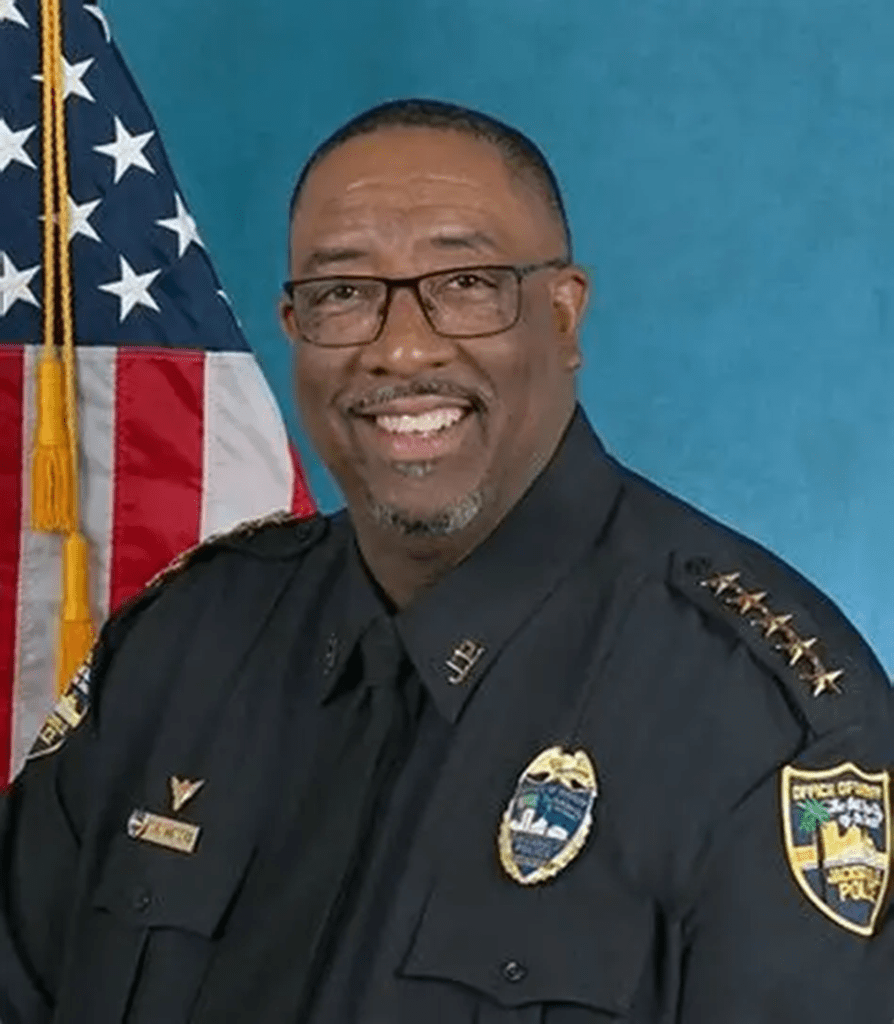
This is the Sheriff at JSO who stated in the press conference that the Deputies did their jobs properly:
Should Black People in Jacksonville be afraid for their lives? According to this man yes they should because there is no way these guys should be getting away with this. It is ok until it hits home!!!
Please click the link below
Call to Action:
We cannot afford to be spectators to injustice. It is time to mobilize. Raise your voice. Share this story. Demand independent investigations. Push for civilian review boards. Insist on diversifying juries and ending qualified immunity. Support organizations fighting for accountability and justice.
Most importantly: Organize within your community. Build networks of trust. Invest in Black-led platforms and amplify Black voices—like those of William McNeil Jr., who deserve to be heard, not brutalized.
In the heart of Milwaukee, Wisconsin, a quiet revolution in community education is taking shape — led by Integrated Community Education Consultants LLC, a firm committed to transforming lives through strategic educational support and advocacy.
Who They Are
Founded in July 2021, Integrated Community Education Consultants LLC is a Wisconsin-based limited liability company that believes education is not just a system — it’s a tool for liberation, equity, and community empowerment. The organization is helmed by Walter E. Cullin Jr., who also serves as the registered agent and primary contact for the firm.
Integrated Community Education Consultants (ICEC) is a mission-driven consultancy committed to transforming communities through equitable, culturally responsive, and sustainable educational solutions. We specialize in partnering with schools, nonprofits, and community-based organizations to develop innovative strategies that close opportunity gaps, empower educators, and elevate student success—especially in historically marginalized populations.
At ICEC, we believe that authentic change begins with collaboration. Our team of experienced educators, administrators, and community leaders brings deep expertise in curriculum development, school climate improvement, leadership coaching, and stakeholder engagement. We integrate data-driven insights with grassroots perspectives to design actionable solutions tailored to each community’s unique needs.
Whether supporting strategic planning, professional development, family engagement initiatives, or student-centered programming, ICEC stands at the intersection of education, equity, and impact. We help our partners build stronger systems, forge meaningful connections, and foster environments where all learners thrive.
In a city rich with history and resilience, Walter Cullin Jr. stands as a beacon of transformative leadership. As the founder of Integrated Community Education Consultants (ICEC) and host of the What’s Your Motive? podcast, Cullin has carved out a space where education meets equity, and collaboration replaces competition.
A Leader Rooted in Purpose
Walter’s journey spans healthcare administration, classroom teaching, and leadership roles as a dean and associate principal. With degrees in Healthcare Administration, Urban Education, and Educational Leadership, he brings a multidimensional lens to every initiative he leads. His mantra — “Intrinsically motivated with no excuses” — isn’t just a slogan; it’s a call to action for educators, students, and communities alike.
Impacting Milwaukee and Beyond
From moderating panels at Milwaukee Area Technical College to leading professional development workshops, Walter’s influence is felt across classrooms, boardrooms, and community spaces. He’s known for helping educators connect meaningfully with students, especially in urban settings, and for designing strategies that close opportunity gaps.
A Voice for Equity and Empowerment
Walter’s leadership is not just administrative — it’s deeply personal. As a devoted husband, father, and community advocate, he brings empathy and lived experience to every conversation. His work reflects the legacies of leaders like Dr. Herman Wrice and Dr. Martin Luther King Jr., blending historical reverence with modern urgency.
Expanding the Vision with Co-Founder Wyll Holloway
Integrated Community Education Consultants is not a one-man mission—it’s a dynamic partnership grounded in purpose and lived experience. Alongside Walter E. Cullin Jr., co-founder Wyll Holloway, B.S., M.S. brings over 25 years of educational leadership within Milwaukee’s inner-city schools and communities.
Wyll’s career has spanned nearly every corner of the educational landscape. Currently serving in higher education, he previously spent 13 years as a school counselor at a local elementary school, where he cultivated lasting relationships and fostered generational impact. His calm, down-to-earth demeanor and holistic approach have empowered students, families, and colleagues to discover their voices, passions, and pathways to success.
From mentoring and coaching to classroom instruction and administrative leadership, Wyll has always centered community care and personal connection. His work reflects a philosophy that educational transformation begins with trust—and thrives through collaboration.
As a mentor, tutor, basketball coach, teacher, counselor, and part-time administrator, Wyll has touched lives across diverse backgrounds. His strength lies in his ability to listen deeply, solve challenges creatively, and guide others toward meaningful growth.
Now, through ICEC, Wyll is channeling his decades of expertise into equipping educators with the skills and mindset needed to thrive in urban classrooms and beyond. He remains committed to bridging opportunity gaps and nurturing resilience through professional development and community-based solutions.
What They Do
Integrated Community Education Consultants offers a range of services designed to uplift students, families, and institutions alike. Their work includes:
Education Consulting: Tailored guidance for schools, educators, and families navigating academic challenges and opportunities.
Community Engagement: Programs that connect educational goals with local needs, fostering collaboration between schools and neighborhoods.
Strategic Planning: Support for institutions seeking to improve outcomes, equity, and long-term sustainability.
Mentorship & Advocacy: Empowering youth and educators through mentorship rooted in cultural awareness and historical context.
Professional learning workshops for educators and leaders
Student empowerment and motivation programs
Where They’re Located
The organization is based at Milwaukee, WI 53219, placing it squarely within a community that benefits from its mission-driven approach.
Why It Matters
In a time when educational equity is more urgent than ever, Integrated Community Education Consultants stands out for its commitment to Black history, community legacy, and transformative learning. Their work echoes the spirit of leaders like Dr. Herman Wrice and Dr. Martin Luther King Jr., whose influence continues to shape the educational landscape.
Podcast episodes: Please click the link and watch these episodes and subscribe to our YouTube Channel
The Big Beautiful Bill is poised to wreak havoc on the American economy — not in subtle ways, but through deep, direct harm that will ripple through generations. From cuts to essential social programs to permanent tax handouts for the ultra-rich, this bill isn’t just bad policy. It’s a betrayal of the very people who make America work.
Seniors and Struggling Families on the Chopping Block
Let’s be clear: slashing Medicare, Medicaid, and SNAP will devastate seniors, retirees, low-income families, and the working poor. These programs are often lifelines — not luxuries.
Without Medicare and Medicaid, many seniors and low-income individuals will be left untreated, unfed, and unseen.
Without SNAP, families will go hungry, children will suffer, and local economies will crumble.
Retirement communities will face collapse as residents can no longer afford housing, healthcare, or basic needs.
America was built on the promise of caring for its people. This bill burns that promise to the ground.
Unraveling the Fabric of Society
Social programs form the social safety net — a system designed to prevent mass poverty and homelessness. Cutting them unleashes a domino effect:
Homelessness surges.
Families fall into survival mode.
Local economies suffer as spending power disappears.
This is not a hypothetical future. The fear is real, and the inevitable collapse is knocking on the door.
Economic Breakdown: Micro and Macro Impacts
To understand the gravity of this bill, we must look at how economies function:
Microeconomics: The Individual Fallout
Microeconomics examines the decisions and well-being of individuals, families, and small businesses.
Cutting support means reduced consumer spending, fewer economic choices, and mounting financial stress.
Local shops, health clinics, and services will feel the squeeze as their customers disappear.
Macroeconomics: National Consequences
Macroeconomics evaluates the economy as a whole — GDP, unemployment, inflation.
Slashing aid while handing tax breaks to the rich shrinks national demand, risking recession.
GDP falls, inequality rises, and the country’s economic health deteriorates.
The Policy That Fuels the Fire
Let’s break down the mechanisms driving this bill’s destructive force:
Fiscal Policy: Taxation and Spending
Fiscal policy should drive growth through strategic spending and fair taxation.
This bill entrenches a regressive system, privileging the elite while pushing the working class deeper into survival mode.
Instead of stimulating economic resilience, it funnels wealth upward, leaving the rest to crumble.
Monetary Policy: Too Little, Too Late
Monetary policy affects interest rates and money supply — but it can’t fix poor fiscal choices.
Even if the Federal Reserve lowers rates, it won’t restore SNAP or ensure Grandma can afford her insulin.
In short: the Fed can’t repair a shredded safety net.
⚠️ A Warning to America
Many who voted for Donald Trump are facing the stark reality of broken promises. He told us what he intended to do — and now it’s happening. Whether you feel blindsided or not, the truth is here.
This bill also:
Makes tax cuts for the top 1% permanent, pushing the burden to the middle class and poor.
Downgrades America’s credit rating by worsening debt and killing revenue.
Weakens small businesses despite enshrining their tax structure — temporary relief, permanent pain.
Undermines manufacturing through misguided tariffs, slowing production and raising costs.
Time to Rise
We must organize, advocate, and demand accountability. The everyday man and woman — the teachers, caregivers, cashiers, veterans, and dreamers — must come together to fix what’s being broken in plain sight.
On a quiet June morning in Minnesota, the illusion of safety shattered.
State Representative Melissa Hortman and her husband, Mark, were assassinated in their Brooklyn Park home. Just hours earlier, State Senator John Hoffman and his wife, Yvette, were shot multiple times in their Champlin residence. Both couples were targeted by a man who wore the uniform of trust—a police vest, a badge, a Taser—and carried the intent of terror.
The gunman, Vance Luther Boelter, 57, was no stranger to public service. A former appointee to the Governor’s Workforce Development Council and a security contractor, Boelter used his knowledge of law enforcement to orchestrate what officials now call a “politically motivated assassination”2.
He stalked his victims like prey. He drove a black SUV outfitted with police lights. He wore a hyper-realistic mask. He knocked on doors claiming to be an officer responding to a shooting. And when those doors opened, he opened fire.
Melissa and Mark Hortman died in their home. The Hoffmans survived after emergency surgery. Their daughter’s quick call to 911 may have saved countless lives.
Authorities found a manifesto in Boelter’s vehicle—a hit list with nearly 70 names, including abortion providers, lawmakers, and activists across multiple states. This wasn’t random. It was ideological. It was white violence, cloaked in authority, fueled by grievance, and executed with chilling precision.
Why Did It Take So Long?
Despite early warnings and a shootout with police, Boelter evaded capture for nearly two days. He fled on foot, ditching his weapon, body armor, and mask behind the Hortman home. The manhunt—described as the largest in Minnesota history—involved local police, the FBI, and federal marshals. He was eventually found near his rural property in Green Isle, Minnesota, after a neighbor spotted him on a trail camera2.
The delay in apprehension raises painful questions: How does a man with a known political agenda, military-style gear, and a fake police cruiser slip through the cracks? What systems failed to flag his radicalization? And why is it so hard to name this for what it is—domestic white terrorism?
A Pattern, Not an Anomaly
This is not an isolated incident. Over the past five years, white supremacist violence has surged. From the 2022 Buffalo supermarket massacre to the 2023 Jacksonville shooting targeting Black shoppers, the pattern is clear: white grievance, often masked as patriotism, is metastasizing into political violence.
According to the Pew Research Center, public support for racial justice movements has declined since the 2020 murder of George Floyd—ironically, also in Minnesota. DEI programs have been rolled back. Extremist rhetoric has gone mainstream. And many Americans now express doubt that Black people will ever achieve equal rights.
This erosion of empathy is not accidental. It is the soil in which white violence grows.
The Cost to Community
Minnesota is grieving. Flowers and flags now mark the Capitol steps. Children are asking why someone dressed like a protector became a predator. And lawmakers are wondering if their names are on the next list.
But this isn’t just about Minnesota. It’s about a nation that refuses to confront the violence it breeds. A nation where white men with guns are too often seen as “troubled” instead of “terrorists.” A nation where the badge can be a mask—and the silence, complicit.
Call to Action: Name It. Confront It. Dismantle It.
Name it: This was white domestic terrorism. Say it.
Confront it: Demand accountability from law enforcement and elected officials.
Dismantle it: Support policies that track and prosecute hate crimes with the same urgency as foreign threats.
We cannot heal what we refuse to name. And we cannot protect our future if we keep rewriting our past.
Melissa and Mark deserved more. The Hoffmans deserve justice. And our communities deserve the truth.
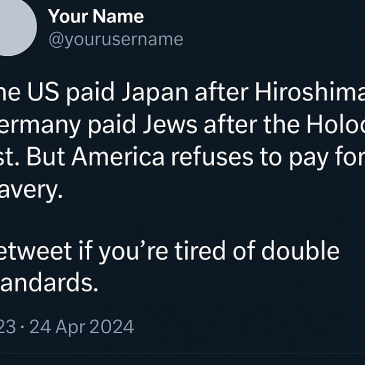
“What America Refuses to Owe: The Price of Black Suffering”
In the heart of every empire lies a contradiction. In America, it is this: We teach about justice, but we rarely practice it for the people who built the foundation of this country—enslaved Africans and their descendants.
America has written checks for tragedies abroad. But for slavery—a horror that happened here, in the soil, sweat, and blood of the South—there is no apology, no compensation, no closure.
When Injustice Was International, America Opened Its Wallet
Let’s look at the historical receipts.
After the U.S. dropped the atomic bomb on Hiroshima, Japan received billions in aid, development grants, and favorable trade agreements. A nation devastated by American military might was helped back onto its feet.
Following the Holocaust, Germany began reparations in 1952. To date, it has paid over $90 billion to Holocaust survivors and the Israeli state. An atrocity committed in Europe.
Even Japanese Americans, who were unjustly interned during WWII on U.S. soil, received a formal apology and $20,000 per survivor in 1988.
Yet descendants of enslaved Africans—whose entire existence was commodified and whose labor built the wealth of the United States—have received nothing.
Why?
The American Lie: That Slavery Is Over, And Therefore Forgotten
Slavery was not merely a period—it was a system of trauma. For 246 years, Black people were whipped, raped, auctioned, beaten, and banned from reading and writing. Their children were sold. Their backs bore the burden of a nation’s ascent.
But the injustice didn’t stop in 1865. It mutated. From Jim Crow laws to redlining, from COINTELPRO to mass incarceration, America has continued to extract from Black communities while denying restitution.
Meanwhile, schoolchildren are more likely to learn the names of European dictators than the enslaved people who shaped their country’s highways, railroads, and economy. To add insult to injury, in some states, teachers are banned from even discussing this legacy with nuance.
We are forced to learn about atrocities that happened elsewhere, while those that happened here are buried beneath patriotic myth.
How Much Is Owed? The Rough Numbers Tell a Billion-Dollar Truth
Economists and scholars, including Dr. William Darity, estimate that the U.S. government owes Black Americans anywhere from $13 trillion to $17 trillion when adjusting for stolen labor, compounded over centuries, and exclusion from land ownership and wealth accumulation.
Compare that to the $90 billion Germany has paid for the Holocaust—an atrocity the U.S. had no direct part in causing.
Let’s be clear: reparations for one people should never preclude reparations for another. But the refusal to acknowledge Black suffering while uplifting other global tragedies reveals a truth too many are afraid to face:
America is more comfortable condemning crimes it didn’t commit than atoning for the ones it did.
What Can Be Done? Here’s Where the Cry Gets Louder
If we want justice, we must demand it. Silence has never saved us. Politeness never bought us freedom. We need more than conversations—we need disruption.
Take Action:
Email your representatives: Demand support for reparations legislation like H.R. 40.
Speak up locally: Press school boards and libraries to teach the full truth of slavery and Reconstruction.
Vote with purpose: Elect candidates who aren’t afraid to talk about systemic repair.
Support Black-led orgs fighting for economic equity and educational justice.
Use your platform—podcast, IG, YouTube, or block parties—to spread truth, not silence.
🖤 America doesn’t have an amnesia problem—it has an empathy problem. And until this country sees Black pain as worthy of repair, the debt remains.






 Changing Trends and Times