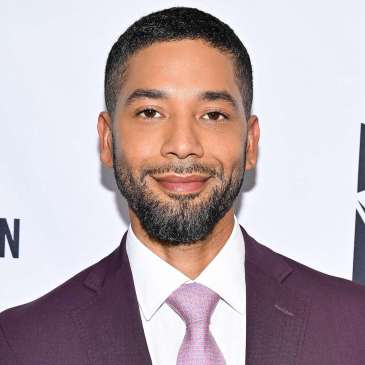
Jussie Smollett: From Scandal to Strength A Journey of Resilience, Artistry, and Truth

In the ever-evolving narrative of Black celebrity, few stories have been as polarizing and as quietly redemptive as that of Jussie Smollett. Once celebrated for his role as Jamal Lyon on Fox’s Empire, Smollett became the center of a national firestorm in 2019 after reporting a homophobic and racist attack in Chicago. What followed was a legal saga that tested the boundaries of justice, media bias, and public perception.

But today, Smollett stands not just as a survivor of controversy but as a creator, a truth-teller, and a proud voice within the Black LGBTQ+ community.

The Incident That Shook a Nation

In January 2019, Smollett alleged that he was assaulted by two men who hurled racial and homophobic slurs, poured a chemical substance on him, and tied a rope around his neck. The initial outpouring of support quickly turned into skepticism as Chicago police accused Smollett of staging the attack. He was charged with 16 felony counts of disorderly conduct for filing a false police report.

Though the charges were dropped in March 2019 after a plea agreement, Smollett was re-indicted in 2020. In 2021, he was convicted on five counts and sentenced to 150 days in jail, probation, and restitution. But in a dramatic turn, the Illinois Supreme Court reversed the conviction in 2024, ruling that Smollett had fulfilled the terms of his original plea deal.

Reclaiming the Narrative Through Art

Rather than retreat, Smollett returned to the public eye with purpose. He directed and starred in The Lost Holliday (2024), his first film since the controversy, showcasing his continued commitment to storytelling. He also participated in Jussie Smollett: Anatomy of a Hoax (2023), a provocative docuseries that examined the case from multiple angles.

But it was Netflix’s The Truth About Jussie Smollett? (August 2025) that marked his most personal and powerful comeback. In the documentary, Smollett shares his side of the story, unwavering in his claim of innocence and reflecting on the toll of public scrutiny. “My story has never changed,” he says. “Flaws and greatness, whatever you think, the fact is, I didn’t do that. And that’s all that matters”.

A Voice for the Queer Black Community

Throughout his journey, Smollett has remained deeply connected to the communities that shaped him. “It means a great deal to have the love and support of my queer Black community and equally to have the love and support of the Black community as a whole,” he told The Hollywood Reporter in 2024.
His resilience is a reminder that Black LGBTQ+ voices deserve not only visibility but grace, complexity, and space to heal.

Love, Healing, and What’s Next

In June 2025, Smollett announced his engagement to Jabari Redd, a moment of joy and affirmation after years of turmoil. He’s also set to appear in Season 3 of Fox’s Special Forces, continuing to push boundaries in entertainment and representation.

Legacy Beyond the Headlines

Jussie Smollett’s story is not just about scandal, it’s about survival, artistry, and the fight to reclaim one’s truth. It’s about the power of Black queer resilience in a system that often seeks to erase it.

At Changing Trends and Times, we honor stories like Smollett’s because they reflect the complexity of our humanity. They challenge us to look deeper, listen harder, and uplift those who dare to stand in their truth, even when the world turns its back.

Call to Action: Support, Share, Empower

Stream Jussie’s Projects
Watch The Truth About Jussie Smollett? on Netflix and The Lost Holliday on select streaming platforms. These works offer insight, healing, and a bold reclaiming of narrative.

Champion Black LGBTQ+ Creators
Support artists, entrepreneurs, and storytellers who reflect the richness of our community. Your engagement fuels visibility and legacy.

Share This Post
Let this story spark dialogue. Let it remind us that justice isn’t always linear but truth, when spoken boldly, can still rise.
Celebrating Pride Month: Honoring Black LGBTQ Trailblazers

As we celebrate Pride Month, it’s essential to reflect on the journey of the LGBTQ community, particularly the trailblazers from the Black community whose courage and creativity laid the groundwork for others to follow. These remarkable individuals not only fought for their rights but also shaped culture, literature, and social justice, leaving a lasting impact that resonates today.

Trailblazers of the Black LGBTQ Community

  1. James Baldwin (1924-1987)
    A celebrated novelist, playwright, and essayist, James Baldwin used his words to confront racial and sexual injustice. His groundbreaking works, such as “Go Tell It on the Mountain” and “The Fire Next Time,” explored the complexities of identity, race, and sexuality. Baldwin’s eloquence and bravery in discussing his own experiences as a gay Black man have inspired generations to embrace their truths.
  2. Marsha P. Johnson (1945-1992)
    A pivotal figure in the Stonewall uprising, Marsha P. Johnson was an activist, drag queen, and co-founder of the Street Transvestite Action Revolutionaries (STAR). Johnson dedicated her life to advocating for LGBTQ rights and providing support to homeless queer and transgender youth. Her fearless spirit and unwavering commitment to justice continue to inspire activists today.
  3. Audre Lorde (1934-1992)
    Poet, essayist, and civil rights activist, Audre Lorde fought tirelessly for social justice, embracing her identities as a Black woman, lesbian, feminist, and activist. Her powerful writings, including “Sister Outsider” and “The Black Unicorn,” challenge oppression and advocate for the inclusion of marginalized voices. Lorde’s conviction in using her voice as a tool for change remains a beacon of hope for many.
  4. Willie Ninja (1961-2006)
    Known as the “Godfather of Vogue,” Willie Ninja was a dancer and choreographer who brought prominence to the ballroom culture in New York City. His influence can be seen in the art of voguing, a dance form that celebrates individuality, confidence, and self-expression. Ninja’s legacy lives on through the countless performers he mentored and the vibrant LGBTQ culture he helped to cultivate.
  5. Stormé DeLarverie (1920-2014)
    Often referred to as the “Rosa Parks of the queer movement,” Stormé DeLarverie was a singer, bouncer, and activist who played a vital role in the Stonewall uprising. Her fearless defiance against harassment and discrimination inspired countless others to stand up for their rights. DeLarverie’s courage and resilience have solidified her place in history as an icon of the LGBTQ movement.
  6. Gladys Bentley (1907-1960)
    A trailblazing blues singer and performer, Gladys Bentley was known for her powerful voice and gender-fluid style in the 1920s and 1930s. Bentley broke barriers in a time when society deemed her behavior unacceptable. With her captivating performances, she challenged traditional gender roles and celebrated her identity with pride, paving the way for future artists.
  7. Bayard Rustin (1912-1987)
    An accomplished civil rights strategist, Bayard Rustin was instrumental in organizing the 1963 March on Washington. Rustin’s activism was grounded in his identity as a Black gay man, and he often spoke out about the intersectionality of race, class, and sexuality. His legacy calls for an understanding of the complexities within social justice movements, reminding us that all voices matter.
  8. Ernestine Eckstein (1933-2017)
    An influential advocate for LGBTQ rights, Ernestine Eckstein was one of the first Black organizations to use the term “gay” in its name. She was a key figure in the fight for gay rights and worked with organizations such as the Mattachine Society, influencing change within a movement that often sidelined people of color.
  9. Barbara Jordan (1936-1996)
    A groundbreaking politician and orator, Barbara Jordan was the first Black woman elected to the Texas Senate and the first Southern Black woman elected to the U.S. Congress. While she was primarily known for her political work, Jordan also stood as a proud figure in the LGBTQ community, pushing for inclusion and justice.
  10. Alvin Ailey (1931-1989)
    A revered choreographer and founder of the Alvin Ailey American Dance Theater, Ailey transformed the arts by showcasing African American cultural heritage through dance. His works often conveyed themes of struggle, love, and hope, reflecting his own experiences as a Black gay man. Ailey’s legacy continues to inspire dancers and artists around the globe.

The Struggles and Triumphs

While the contributions of these trailblazers are celebrated today, it’s critical to remember the repression that LGBTQ individuals have faced—and still face. Throughout history, the community has endured discrimination, violence, and marginalization. However, as we honor Pride Month, we see a community rising with strength, pride, and determination to reclaim their narratives and fight for equality. Today’s generation of Black LGBTQ men and women stands on the shoulders of these giants, embracing their identities and advocating for true representation and rights in all spheres of life. This Pride Month, let’s acknowledge the past, celebrate the present, and commit ourselves to a future of inclusivity and justice.

Unity and Love

As we reflect on this month, let us foster love for one another, understanding that our shared humanity transcends race, gender, and sexual orientation. The LGBTQ community is not just fighting for acceptance; it’s building alliances and working alongside the broader society to create a loving, inclusive world for everyone. Together, with the echoes of our trailblazers guiding us, we can forge a path toward equity and understanding, ensuring that every voice is uplifted, every story is told, and every identity celebrated. Happy Pride Month! Let’s honor our heroes, embrace our truth, and continue to champion love, respect, and unity for all.