From Bondage to Brotherhood: The Enduring Legacy of Lyon Farm and the Unhealed Wounds of Slavery

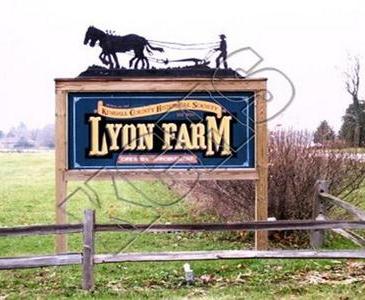
In the quiet hills of Georgia’s Arabia Mountain National Heritage Area stands Lyon Farm—a place where pain and perseverance are etched into the soil. What began as a site of bondage in the 1820s became the birthplace of Flat Rock, one of Georgia’s oldest African American communities. But beneath the triumph of survival lies a deeper truth: slavery leaves a scar that time cannot erase.

A Farm Built on Forced Labor

Joseph Emmanuel Lyon, a former British soldier turned landowner, won his property through the Georgia Land Lottery. He brought 17 enslaved Africans to toil on his farm, forcing them to build the very home they were crammed into. For nearly four decades, Lyon Farm produced cotton, apples, muscadines, and sorghum—all harvested through the brutal labor of people denied their humanity.

This was not just agriculture. It was exploitation. It was trauma. And it was the beginning of a legacy that would shape generations.

Freedom Came—But So Did Hard Choices

When the Civil War ended and the Emancipation Proclamation took effect, the enslaved people of Lyon Farm faced a cruel paradox: freedom in a land that had never treated them as free. Many chose to stay—not out of comfort, but out of necessity. They clung to the only land they knew, forming a tight-knit community for protection and survival.

That decision birthed Flat Rock—a place where Black families built schools, churches, and civic groups during Reconstruction. But even as they laid the foundation for progress, the shadow of slavery loomed large.

Building Community Amidst Hostility

The newly freed families shared everything—tools, knowledge, labor. They turned sharecropping into a lifeline and created informal networks of support. Families like the Hill Lyons, Shumakes, Christians, and Syphos migrated to Flat Rock, drawn by whispers of safety and solidarity.

Flat Rock Methodist Episcopal Church, founded in 1896, became the heartbeat of the community. It wasn’t just a place of worship—it was a school, a meeting hall, a sanctuary from the racism that surrounded them.

Yet even education was a battleground. White Georgians opposed Black literacy, and when Flat Rock School was burned down in the 1930s, the community refused to surrender. They kept teaching, kept learning, kept resisting.

Land Ownership as Liberation

In the 1920s, Theodore Arthur Bryant Sr. changed the game. He bought 45 acres from a former slave-owning family and sold parcels to neighbors at fair prices. His vision was clear: keep families together, build wealth, and fight the tide of the Great Migration that threatened to empty the South of its Black soul.

Bryant’s farm was burned down by jealous white neighbors—but he rebuilt. Because land wasn’t just property. It was power. It was proof that Black people could own, thrive, and lead.

Joy, Resistance, and Legacy

Weekend baseball games, church picnics, and community gatherings became acts of joy and resistance. Spenser Bryant rented the field to Atlanta churches, turning recreation into revenue. These moments of celebration were not distractions—they were declarations of dignity.

Today, the Flat Rock Archives preserve this story. Founded by T.A. Bryant Jr. and Johnny Waits, the museum stands in the very house Bryant Sr. built in 1917. Visitors walk through slave quarters, view family photographs, and trace the lineage of a people who refused to be erased.

Why Slavery Still Hurts

Slavery wasn’t just physical bondage—it was psychological warfare. It stripped generations of their names, their languages, their gods, and their dreams. Even after emancipation, Black communities faced systemic barriers designed to keep them poor, uneducated, and invisible.

The scars of slavery show up in housing disparities, educational gaps, health outcomes, and the criminal justice system. They show up in the trauma passed down through stories, silences, and survival strategies.

Flat Rock is a miracle—but it’s also a reminder. A reminder that the resilience of Black people does not erase the cruelty they endured. That healing requires truth-telling. And that honoring the past means confronting the pain, not just celebrating the progress.

The War on Truth: How the American Education System Continues to Betray Black History


Since the founding of America, the education system has served not as a beacon of truth, but as a tool of erasure. For generations, Black children have sat in classrooms designed not to empower, but to mislead—shaped by curricula that glorify European conquest while silencing African legacy.

Let’s be clear: the lie began with religion. American schools rarely teach that Christianity’s origins trace back to Ethiopia, where the oldest known Bible—written in Ge’ez—is preserved. Instead, they peddle the King James Version, a European interpretation that paints Jesus as white and frames whiteness as divine. This isn’t just a distortion; it’s a calculated form of supremacy. When Black children are taught this version of faith, it sets the stage for self-erasure and the normalization of inequality.

And then there’s history—or rather, the selective fragments of it. American slavery, one of the most defining atrocities in this nation’s past, is either sanitized or omitted entirely. Books that tell the raw truth about lynching, rape, and systemic theft are being banned under the guise of “protecting children.” But who is really being protected? Not the descendants of enslaved people—who need these stories to understand their power and their pain—but the descendants of oppressors, who fear the reckoning.

Here’s what they won’t teach:

  • Black civilizations predate European ones by thousands of years.
  • Moors taught Europeans hygiene, mathematics, and architecture during their rule in Spain.
  • Black inventors have created technologies that power daily American life, from traffic lights to gas masks.
  • The first university in the world, Sankore in Timbuktu, was built by Black scholars.
  • Wall Street was built over the bones of enslaved Africans.

Despite centuries of displacement, sabotage, and systemic violence, Black people continue to persevere. Black students outperform their peers when given equitable resources. Black culture—music, fashion, language, innovation—is mimicked globally. And Black resilience has turned survival into excellence.

So why teach European history as American heritage? Why frame the Holocaust as more relevant than the Transatlantic Slave Trade? Why amplify other cultures while silencing the truth about Black royalty, Black intellect, and Black triumph?

Because truth dismantles power.

When we know we are descendants of kings and queens—not the enslaved, but the enslaved AND the builders, dreamers, warriors, scientists, healers, and revolutionaries—the entire system of white supremacy begins to crack.

It’s no accident that books are banned. That accurate history is replaced by propaganda. That educational standards are manipulated to mask brilliance. This is an ideological war, and its battlefield is the mind.


Call to Action:

We must challenge our schools. Demand real curricula. Sponsor Black-led educational initiatives. Teach your children at home, in communities, in churches and mosques. Tell the story your ancestors didn’t get to tell.

Knowledge is the most radical form of resistance. And in a system built on lies, telling the truth is a revolution.


#RealBlackHistory #UnbanBlackBooks #EducationNotErasure #BlackExcellence #AfricanLegacy #RewriteTheCurriculum #TeachTheTruth #BlackIntellectMatters #TruthToPower #DecolonizeEducation #AmericaInBlackAndWhite #SankofaWisdom #BlackKingsAndQueens


“What America Refuses to Owe: The Price of Black Suffering”


“What America Refuses to Owe: The Price of Black Suffering”

In the heart of every empire lies a contradiction. In America, it is this: We teach about justice, but we rarely practice it for the people who built the foundation of this country—enslaved Africans and their descendants.

America has written checks for tragedies abroad. But for slavery—a horror that happened here, in the soil, sweat, and blood of the South—there is no apology, no compensation, no closure.

When Injustice Was International, America Opened Its Wallet

Let’s look at the historical receipts.

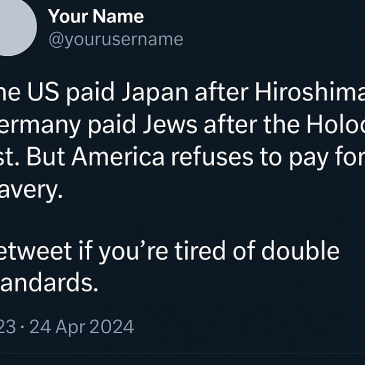
  • After the U.S. dropped the atomic bomb on Hiroshima, Japan received billions in aid, development grants, and favorable trade agreements. A nation devastated by American military might was helped back onto its feet.
  • Following the Holocaust, Germany began reparations in 1952. To date, it has paid over $90 billion to Holocaust survivors and the Israeli state. An atrocity committed in Europe.
  • Even Japanese Americans, who were unjustly interned during WWII on U.S. soil, received a formal apology and $20,000 per survivor in 1988.

Yet descendants of enslaved Africans—whose entire existence was commodified and whose labor built the wealth of the United States—have received nothing.

Why?

The American Lie: That Slavery Is Over, And Therefore Forgotten

Slavery was not merely a period—it was a system of trauma. For 246 years, Black people were whipped, raped, auctioned, beaten, and banned from reading and writing. Their children were sold. Their backs bore the burden of a nation’s ascent.

But the injustice didn’t stop in 1865. It mutated.
From Jim Crow laws to redlining, from COINTELPRO to mass incarceration, America has continued to extract from Black communities while denying restitution.

Meanwhile, schoolchildren are more likely to learn the names of European dictators than the enslaved people who shaped their country’s highways, railroads, and economy. To add insult to injury, in some states, teachers are banned from even discussing this legacy with nuance.

We are forced to learn about atrocities that happened elsewhere, while those that happened here are buried beneath patriotic myth.

How Much Is Owed? The Rough Numbers Tell a Billion-Dollar Truth

Economists and scholars, including Dr. William Darity, estimate that the U.S. government owes Black Americans anywhere from $13 trillion to $17 trillion when adjusting for stolen labor, compounded over centuries, and exclusion from land ownership and wealth accumulation.

Compare that to the $90 billion Germany has paid for the Holocaust—an atrocity the U.S. had no direct part in causing.

Let’s be clear: reparations for one people should never preclude reparations for another. But the refusal to acknowledge Black suffering while uplifting other global tragedies reveals a truth too many are afraid to face:

America is more comfortable condemning crimes it didn’t commit than atoning for the ones it did.

What Can Be Done? Here’s Where the Cry Gets Louder

If we want justice, we must demand it. Silence has never saved us. Politeness never bought us freedom. We need more than conversations—we need disruption.

Take Action:

  • Email your representatives: Demand support for reparations legislation like H.R. 40.
  • Speak up locally: Press school boards and libraries to teach the full truth of slavery and Reconstruction.
  • Vote with purpose: Elect candidates who aren’t afraid to talk about systemic repair.
  • Support Black-led orgs fighting for economic equity and educational justice.
  • Use your platform—podcast, IG, YouTube, or block parties—to spread truth, not silence.

🖤 America doesn’t have an amnesia problem—it has an empathy problem.
And until this country sees Black pain as worthy of repair, the debt remains.

Let the cry get louder.


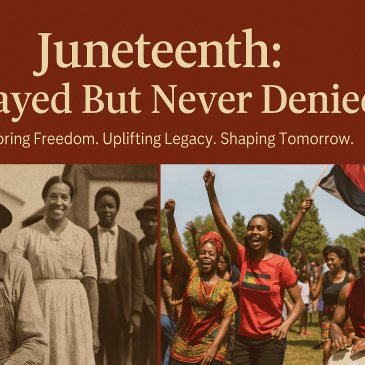
Juneteenth: The Freedom That Echoed Late, but Never Lost Power

On June 19, 1865, Union troops arrived in Galveston, Texas, delivering a message that should have been old news: enslaved Black Americans were free. That message—long delayed—was not simply a declaration. It was liberation, finally delivered by force, not goodwill. And so, Juneteenth was born—not from celebration, but from necessity.

More than two years after Lincoln signed the Emancipation Proclamation, justice still hadn’t reached the last corners of this country. But when it did, it came with the force of righteous reckoning. Since then, Juneteenth has become a symbol not just of emancipation, but of resilience, delayed justice, and the unshakable spirit of a people who dared to dream of freedom in the shadow of slavery.

Today, we’re still reckoning. We’re still pushing against systems that delay freedom in more subtle forms—economic injustice, generational trauma, educational disparity. But just as our ancestors gathered to sing, feast, and speak names out loud that history tried to forget, we gather today not just to remember—but to reclaim.

So what does Juneteenth mean now, in this era of shifting cultural narratives and historical erasure? It means we double down on truth-telling. We turn platforms into pulpits. We ensure our stories aren’t just told—they’re owned.

At Changing Trends and Times, we aren’t simply observing a holiday—we’re honoring a movement. And through America in Black and White, we continue to highlight the voices, victories, and visions shaping our shared legacy.

This is not just history. These are the instructions. This is the blueprint. This is us.

This Juneteenth, the work continues. Through Changing Trends and Times and America in Black and White, we’re committed to remembering boldly, speaking truthfully, and uplifting relentlessly.

Subscribe to stay engaged. Listen to the stories that shape our struggle and celebrate our strength.

Share this post. Share the history. Share the torch.

Because freedom delayed… is a story still being written.

#Juneteenth #ChangingTrendsAndTimes #LegacyOfLiberation #AmericaInBlackAndWhite #TruthTellers #BlackHistory365

[🔗 Link to Podcast Episode]

June 19, 2025, @6PM EST PT1 Just click to join the show live

June 20, 2025, @6PM EST PT2 Just click to join the show live

[🔗 Link to Subscribe]

Please follow/subscribe/get all notifications on our YouTube Channels:

Each Channel broadcasts the show live

@americainblackandwhite8299

@ChangingTrendsandTimes-zx8te

@CKStoriesFromTheHeart