2025 Year‑End Reflections: A Season of Healing, Growth, and Community Power
As we close out 2025, I want to take a moment to speak directly to the people who made this year unforgettable, you.
This year was one of the most transformative seasons of my life. Season 3 of America in Black and White and the continued growth of Changing Trends and Times were not just professional milestones. They were lifelines. They were reminders that community is not something we talk about, it’s something we build together.
And I want you to know how deeply grateful I am.
To My Guests: You Carried Me This Year
Every guest who joined me on the show brought something powerful, truth, vulnerability, humor, brilliance, and heart. You didn’t just show up for an interview. You showed up for me.
Many of you may not know this, but 2024 was the year I lost my mother. Her passing left a space in my life that felt impossible to fill. But every conversation, every story, every moment of connection on the show helped me breathe again. You helped me heal in ways I didn’t expect.
Your presence reminded me that even in grief, there is purpose. Even in loss, there is community. Even in pain, there is possibility.
Thank you for being part of my healing.
Season 3: A Testament to Our Collective Power
This season wasn’t just successful, it was meaningful.
We tackled real issues. We uplifted real voices. We created real impact.
And none of it would have happened without you, the guests, the viewers, the supporters, the people who believe in the mission of telling our stories with honesty and dignity.
You are the engine behind this machine. You are the heartbeat of this platform. Together, we are making a difference.
Looking Ahead to 2026
I’m excited for what’s coming next.
More conversations. More community. More truth. More growth.
And yes, I’m working toward taking the show on the road. I want to meet you where you are. I want to bring these conversations into your cities, your communities, your spaces. Because this platform belongs to all of us.
Let’s Build Together: SYTM Accounting & Consulting Inc.
As we move into a new year, I also want to extend a personal invitation.
Many of you know me as a host and storyteller, but I am also the founder of SYTM Accounting & Consulting Inc., where we support individuals and businesses with:
Personal tax preparation
Business tax services
Accounting and bookkeeping
Entrepreneur consulting
Financial strategy and planning
If you need support in 2026, I would be honored to serve you. Let’s build your financial future with clarity, confidence, and care.
Whether you’re a guest, a supporter, a listener, or a future client, you are part of this family. And together, we will continue to uplift our communities, tell our stories, and build something that lasts.
Thank You
Thank you for your time. Thank you for your trust. Thank you for your stories. Thank you for your love. Thank you for helping me turn a difficult year into a meaningful one.
Here’s to 2026, a year of expansion, healing, and community power.
We don’t talk enough about what it means to love someone who is lying, not because they’re malicious, but because they’re terrified.
Terrified of being rejected. Terrified of losing family, career, community, or safety. Terrified of being fully seen.
In Dee Carr’s short “Loving a Liar,” we’re invited to look beyond the surface of deception and into the emotional architecture behind it. And when we connect this to the LGBTQ community, the conversation becomes even more urgent.
Because the truth is this:
Some people aren’t lying to deceive you. They’re lying to survive you.
The Code-Switching Closet
For many LGBTQ people, athletes, politicians, entertainers, clergy, business owners, and everyday folks, life becomes a constant performance. A carefully curated version of themselves is presented to the world, while their true identity stays tucked away, waiting for a safer moment that may never come.
This isn’t just “being private.” This is code-switching as self‑protection.
It’s the athlete who dates publicly but loves privately. The pastor who preaches authenticity but fears living his own. The business owner who avoids pronouns in every conversation. The entertainer who smiles on stage but cries in the dressing room. The everyday person who edits their life to fit someone else’s comfort.
And the people who love them? They often end up loving a version of someone that isn’t fully real, not because that person is dishonest, but because the world has taught them that honesty is dangerous.
The Emotional Cost
Loving someone who is hiding can feel like loving a ghost, present, but not fully here.
But imagine the cost on the other side:
Carrying two identities
Monitoring every word
Performing every day
Living in fear of exposure
Feeling unworthy of real love
This isn’t lying for manipulation. This is lying for survival.
And survival shouldn’t have to look like this.
What Does Love Look Like Here?
Love, in this context, becomes a bridge, not a demand.
It asks:
How can I make space for your truth?
How can I be a safe place for your becoming?
How can we build a relationship where honesty isn’t a risk?
Love doesn’t force someone out of hiding. Love creates a world where hiding is no longer necessary.
Let’s Talk About It
This is where you come in.
Have you ever loved someone who was afraid to be themselves? Have you ever BEEN that person? What does safety look like for you? What does honesty cost in your world?
Drop your thoughts in the comments, your voice might be the one someone else needs to hear.
And if conversations like this matter to you, hit subscribe so you don’t miss the next post in this series inspired by Dee Carr’s powerful shorts.
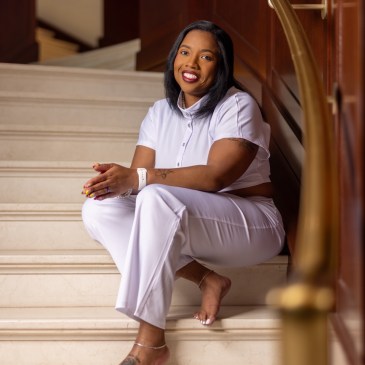
Dr. Keyimani Alford is more than a leader; he is a storyteller, healer, and advocate whose life’s work bridges the worlds of education, authorship, and empowerment. Born in Oakland, California, and raised in Milwaukee, Wisconsin, Dr. Alford grew up navigating instability, poverty, and family absence. Those early challenges shaped his belief that education is not only a pathway to freedom but also a tool for rewriting one’s story.
As a first-generation college graduate who went on to earn his Ph.D. in Education, Dr. Alford understands the barriers faced by students from marginalized backgrounds. His research focuses on retention and persistence for first-generation and minority male students at predominantly White institutions, emphasizing that relationships and belonging are critical to success. Today, as Associate Vice President of Student Access & Success at Madison College, he leads initiatives that help students overcome financial, systemic, and personal obstacles so they can thrive. His leadership is rooted in empathy, accountability, and the conviction that systems should serve students, not the other way around.
Championing Underserved Communities
Dr. Alford’s commitment extends far beyond campus walls. Through his involvement in organizations such as WASFAA, College Goal Wisconsin, and MASFAA (where he serves as President-Elect), he advocates for policies that expand access and equity in higher education. His work ensures that underserved students, veterans, first-generation learners, and minority communities, have the support they need to persist and graduate.
He also founded Keywords Unlocked, LLC, a publishing and coaching company designed to amplify everyday voices, particularly Black and underrepresented authors. By equipping writers with tools and strategies to move from manuscript to marketplace, Dr. Alford is dismantling barriers in the publishing industry and ensuring that marginalized stories are not only told but celebrated.
Author and Storyteller
Dr. Alford’s own catalog of books reflects the power of storytelling as a tool for healing and leadership:
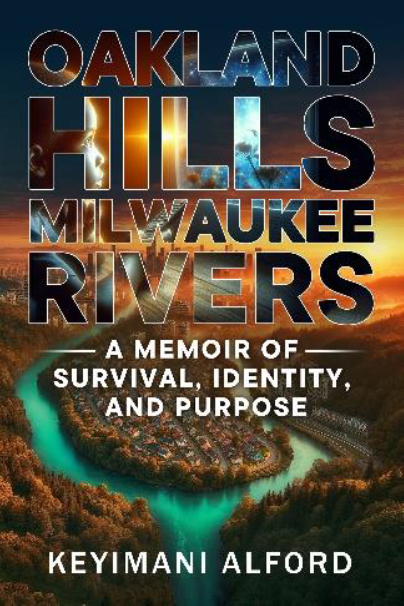
Oakland Hills, Milwaukee Rivers: A Memoir of Survival, Identity, and Purpose
In Oakland Hills, Milwaukee Rivers, I invite readers into the quiet rooms, crowded churches, and complicated family moments that shaped me as a Black boy learning to survive, belong, and believe in his own worth. This memoir walks through childhood trauma, father loss, religious shame, identity questions, and the hidden weight of silence, while tracing how grace kept showing up in unexpected people and places. It reads like sitting across from a friend who is finally telling the whole story, not the edited version.
Readers will see their own questions on these pages. The book helps them name what hurt, grieve what was taken, and begin to reclaim their voice with honesty and dignity. They walk away with language for things they have carried for years, a deeper understanding of how identity and faith can coexist with pain, and a renewed belief that their story is not over. This memoir becomes a mirror and a map for anyone who has ever felt unseen, misunderstood, or afraid to be fully themselves.
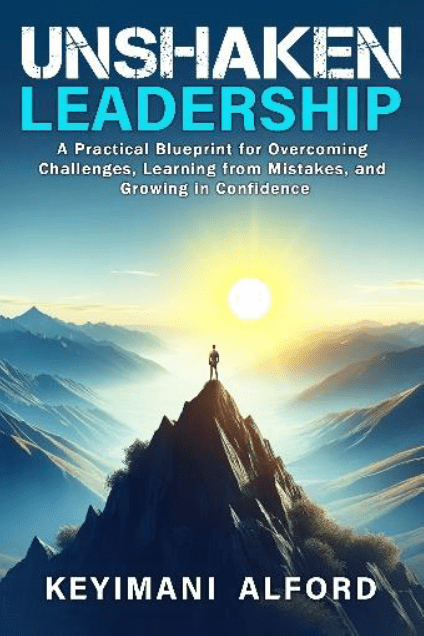
Unshaken Leadership: A Practical Blueprint for Overcoming Challenges, Learning from Mistakes, and Growing in Confidence
Unshaken Leadership pulls back the curtain on what leadership really feels like when the title sounds good, but the pressure is heavy. Drawing from more than two decades in higher education, community, and faith-based spaces, I walk readers through the unspoken realities of leading people, managing politics, navigating conflict, and making hard decisions when you still feel like you are figuring it out yourself. Each chapter blends story, reflection, and practical strategy so readers see the lessons in real situations, not just theory on a page.
This book is written for new and growing leaders who are tired of pretending they have it all together and are ready to lead with honesty, courage, and emotional intelligence. Readers gain language for the challenges they are facing, tools for balancing vision and boundaries, and frameworks they can immediately apply with their teams. The goal is simple: to help leaders stand firm when things shake around them, learn from their missteps without shame, and grow into a version of leadership that feels both effective and authentic.
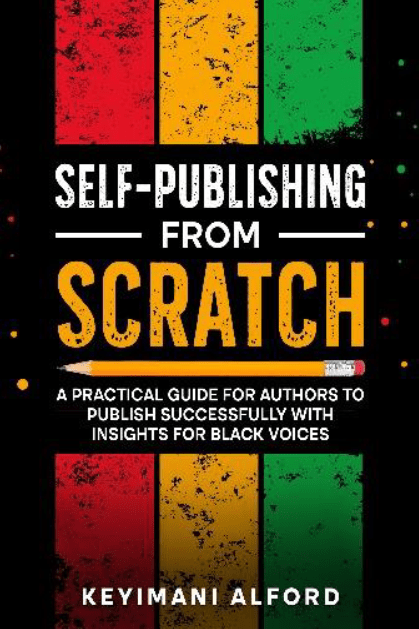
Self-Publishing from Scratch: A Practical Guide for Authors to Publish Successfully with Insights for Black Voices
Self-Publishing from Scratch is a step-by-step roadmap for everyday people who feel called to write a book and have no idea where to start. I walk readers through the full journey from idea to published book in plain language, breaking down what to write, how to edit, how to find a cover, how ISBNs work, what platforms to choose, and how to price and promote their work. Along the way, I share real stories, checklists, and behind-the-scenes lessons from my own publishing journey so readers avoid costly mistakes and gain the confidence to hit “publish” with clarity.
This book especially centers Black and underrepresented voices who have been told their stories are “too much,” “too specific,” or “too risky” for traditional publishing. Readers come away with practical tools, a realistic plan, and the encouragement that they do not have to wait for permission to become an author. By the end, they understand the business and the heart of self-publishing, and they know exactly what to do next to turn a manuscript, a journal, or even a set of notes on their phone into a book in readers’ hands.
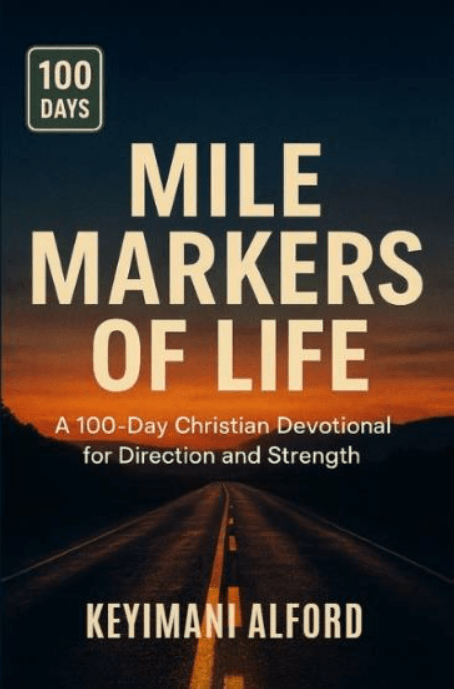
Mile Markers of Life: A 100-Day Christian Devotional for Direction and Strength
Mile Markers of Life is a 100-day devotional born from years of driving Wisconsin highways and noticing how the mile markers along the road mirrored the seasons of my own life. Each entry starts with a real-life scene and then connects it to Scripture, reflection, and a short prayer, helping readers see that God has been present in both the ordinary and painful parts of their journey. The readings are honest and accessible, designed for people who are carrying a lot and need encouragement that fits into real schedules and real emotions.
Readers will experience a devotional that speaks to fatigue, grief, uncertainty, hope, and new beginnings with gentle clarity. Every day offers direction for the heart and a small step they can take to move forward, whether that is letting something go, forgiving themselves, or daring to dream again. By the time they reach Day 100, they have traced their own “mile markers,” recognized how far they have come, and rediscovered that even in detours and delays, God has been guiding them toward healing and purpose.
A Voice of Hope and Action
Whether speaking in lecture halls, boardrooms, sanctuaries, or behind a microphone, Dr. Alford blends truth-telling with practical tools. His keynote themes, leadership with integrity, healing from trauma, equity in higher education, and empowering everyday voices, resonate because they are lived experiences, not abstract theories. Audiences leave not only inspired but equipped with frameworks and next steps to move forward.
Across every platform, Dr. Alford reminds people that their story still has chapters left and that hope is always within reach. His work as an author and advocate continues to light the way for underserved communities, proving that beginnings do not define destinies.
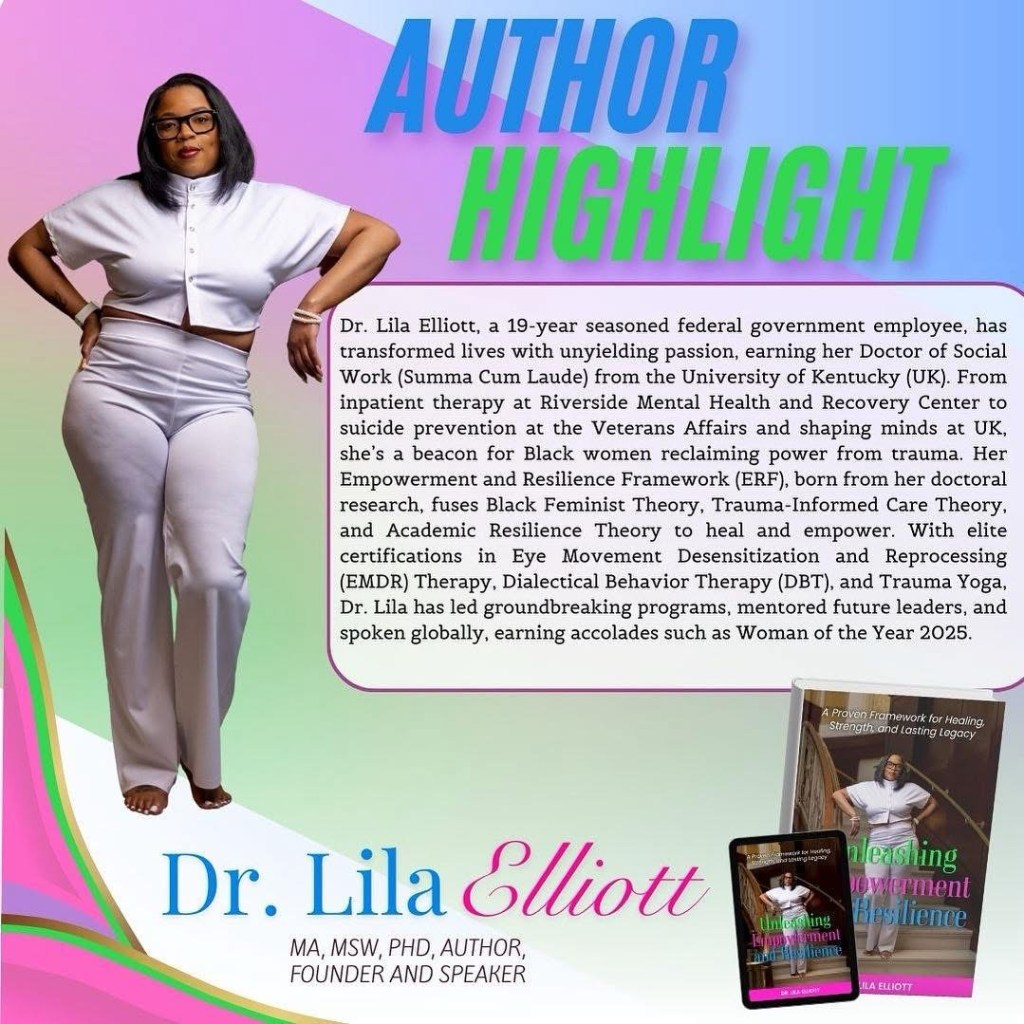
Climbers, y’all know I love amplifying powerful Black women who are doing transformational work and today I’m honored to spotlight my colleague, friend, and fellow doctor, Dr. Lila Elliott.
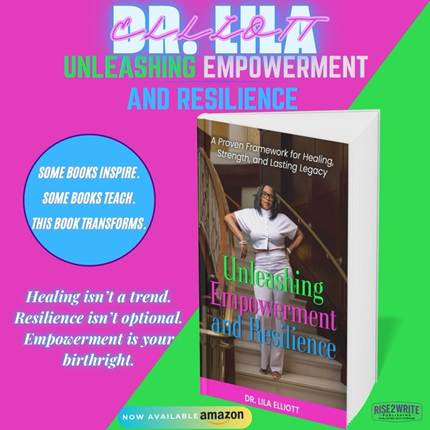
Her brand-new self-help journal, Unleashing Empowerment and Resilience, is officially OUT on Amazon and it is a must-have for anyone serious about healing, breaking cycles, and stepping into their birthright of strength.
Dr. Elliott is more than an author, she’s a visionary. With 19 years of clinical practice, research, and her doctoral capstone, she created the Empowerment and Resilience Framework (ERF), a groundbreaking model that blends Black Feminist Theory, Trauma-Informed Care, and Academic Resilience into a practical blueprint for real life.
This journal is not just for social workers or therapists. It’s for:
Black women healing childhood trauma
Corporate leaders rising above burnout
Teachers building safe spaces
Hairstylists listening to stories every day
Veterans, parents, and anyone ready to stop surviving and start thriving
Inside, you’ll find:
Practical strategies you can apply immediately
Journaling prompts to guide reflection and growth
Stories from women who reclaimed their power
Tools you can use in your home, workplace, community, and relationships
Dr. Elliott recently joined me on America in Black and White, where she shared how her work is rooted in truth-telling, resilience, and the power of Black women’s voices. Her insights reminded us that healing is not just personal, it’s communal, and it’s historical.
This book transforms you from the inside out. Imagine having a guide that teaches you to turn your pain into power, your voice into your weapon, and your story into a legacy. That’s exactly what Unleashing Empowerment and Resilience delivers.
If you have a sister, coworker, friend, or colleague who needs a reminder of who she is, gift her this journal. Healing starts with one choice. One self-help journal. One moment.
Let’s support this incredible Black woman author and help get this book into the hands of every person ready to rise.
On November 6th, nine Black women gathered at the Cork and Bull Chophouse in Chesapeake, Virginia for what was meant to be a joyful Friendsgiving celebration. Instead, their evening turned into humiliation and pain.
According to reporting by Jeroslyn JoVonn, a fight broke out between two women who were not part of their group. Yet, despite having no involvement, the nine friends were told to leave. When one of them asked why, a manager allegedly responded: “Because you all like to fight.”
The women, who had simply come together for fellowship, were forced to stand up in front of other patrons and exit the restaurant, while the actual individuals involved in the altercation had already left. As one of the women, Shakoya Holt, explained, “We were all put in a negative spotlight in that moment. It was all eyes on us, very embarrassing.”
Now, the group has hired attorney Joyvan Malbon-Griffin, who has stated that this treatment was discriminatory and violated their rights. “All nine of these women were treated more harshly than the two people who were actually engaged in the misdemeanor action,” Malbon-Griffin said. The women are seeking accountability and justice.
The Bigger Picture
This incident is not isolated. It reflects a broader pattern of how Black people, especially Black women, continue to be disrespected, stereotyped, and discriminated against in public spaces. To assume guilt based on race, and to punish those who were minding their own business, is not only unjust but deeply harmful.
How do you justify removing nine women who were not involved, while excusing the actual participants in the fight? How do you justify humiliating them in front of an entire restaurant?
This is not just bad judgment, it is systemic bias. And when establishments act this way, they are not only violating the dignity of their customers, but also potentially violating constitutional protections and the Commerce Clause, which ensures equal access and fair treatment in public accommodations.
The Questions We Must Ask
When does this stop?
When will establishments be held accountable for discriminatory actions?
How many more incidents must occur before businesses recognize that treating customers with dignity and respect is not optional, it is a legal and moral obligation?
A Call for Accountability
The women involved have said “enough is enough.” And they are right. We must demand accountability from businesses that perpetuate discrimination. We must call out injustice when we see it. And we must remind every establishment: Black women, and all marginalized communities, deserve respect, safety, and dignity.
Until accountability is enforced, these incidents will continue. But by shining a light on them, by refusing to stay silent, and by demanding justice, we can push for change.
Closing Thought
This is about more than one restaurant. It is about a culture that too often stereotypes and mistreats Black people. It is about ensuring that our communities are not humiliated, dismissed, or denied their rights.
Treat your customers with dignity and respect. Period.
Credit: Original reporting by Joe Walker (@joewalkr, The Independent)
Atlanta rapper B Green, born Linton Blackwell, was shot and killed on October 11th outside Five Paces Inn in Buckhead. The autopsy revealed a chilling truth: he was shot 17 times in the back by off-duty police officer Gerald Walker, who was working security at the bar.
Police claim Walker was responding to reports of a “disruptive person.” They allege that Green attempted to re-enter the bar through a rear entrance and later placed an item in the small of his back. Commands were issued “in reference to a gun,” and moments later, Green was gunned down. Investigators later found a firearm, but the autopsy makes clear: every single bullet entered his back.
Green’s manager and friend, Timothy Coleman, expressed disbelief: “I just couldn’t believe it was 17 times in the back. There’s not one shot in the front. If he wasn’t pointing a gun at you or doing anything, what does that have to do with shooting him in the back 17 times? That means he wasn’t facing you. He wasn’t a threat.”
Green was a father of twin girls, a family man, and an artist who left behind a legacy, including his final album PTSD: Vietnam Vet released in 2020.
The Larger Issue
This is not just about one man. This is about a system that continues to allow police officers, sworn to protect, to kill Black men with impunity.
Seventeen shots in the back is not self-defense. It is execution.
When officers fire this many times, it reveals not fear, but intent.
The justice system has repeatedly failed to hold officers accountable, creating what feels like a license to kill.
And what makes this even more painful is the reality that Black officers, too, have participated in this cycle of violence against their own communities. The badge, in too many cases, has become a shield for abuse rather than a symbol of protection.
The Questions We Must Confront
What will make a person shoot another human being 17 times in the back?
How can the justice system continue to justify these killings?
Why are Black men still being killed, while the officers responsible walk free?
When will police departments stop operating like mafia hit squads, taking lives whenever they feel like it?
A Call for Accountability
It is long past time to demand change. Calls to “defund” are not about chaos, they are about redirecting resources away from militarized policing and toward community safety, mental health, education, and opportunity.
Every time another Black man is killed, we are reminded that reform alone is not enough. Accountability must be real. Justice must be enforced. And communities must be empowered to protect themselves from the very institutions that claim to serve them.
Timeline of Police Killings of Black Men (2014–2025)
2014 – Michael Brown (Ferguson, Missouri)
Shot and killed by Officer Darren Wilson.
His death sparked nationwide protests and helped ignite the Black Lives Matter movement Statista.
2015 – Walter Scott (North Charleston, South Carolina)
Shot five times in the back while fleeing a traffic stop.
Officer Michael Slager was eventually sentenced to 20 years in prison CBC.
2016 – Alton Sterling (Baton Rouge, Louisiana)
Shot outside a convenience store while pinned to the ground.
Federal prosecutors declined to charge the officers involved CBC.
2016 – Philando Castile (Falcon Heights, Minnesota)
Shot during a traffic stop after informing the officer he was legally carrying a firearm.
The aftermath was streamed live on Facebook by his girlfriend. Officer Jeronimo Yanez was acquitted CBC.
2016 – Terence Crutcher (Tulsa, Oklahoma)
Shot while his hands were raised near his stalled vehicle.
Officer Betty Shelby was acquitted of manslaughter CBC.
2020 – George Floyd (Minneapolis, Minnesota)
Murdered when Officer Derek Chauvin knelt on his neck for over nine minutes.
His death sparked global protests against police brutality Wikipedia.
2020 – Rayshard Brooks (Atlanta, Georgia)
Shot in the back by police after being found asleep in his car at a Wendy’s drive-thru.
His killing reignited protests in Atlanta Wikipedia.
2022 – Patrick Lyoya (Grand Rapids, Michigan)
Shot in the back of the head during a traffic stop.
Officer Christopher Schurr was charged with second-degree murder Wikipedia.
Pattern of excessive force: From Ferguson to Atlanta, Black men are disproportionately killed by police.
Lack of accountability: Many officers are acquitted or never charged, reinforcing systemic impunity.
Escalation of violence: Shooting someone 17 times in the back, as in B Green’s case, is not policing — it is execution.
Community impact: Each killing leaves families devastated and communities traumatized, fueling mistrust of law enforcement.
Closing Thought
This timeline makes clear: B Green’s killing is not an isolated tragedy. It is part of a decades-long crisis of police violence against Black men. Until accountability is real and systemic change is enforced, these killings will continue.
B Green’s death is not just a tragedy, it is a symptom of a system that continues to devalue Black lives. Seventeen shots in the back is not policing. It is murder.
The question remains: When will justice finally come?
By Charles Zackary King America in Black and White | Changing Trends and Times
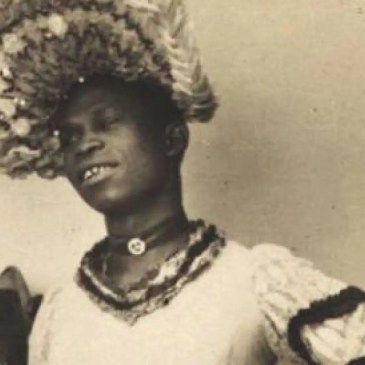
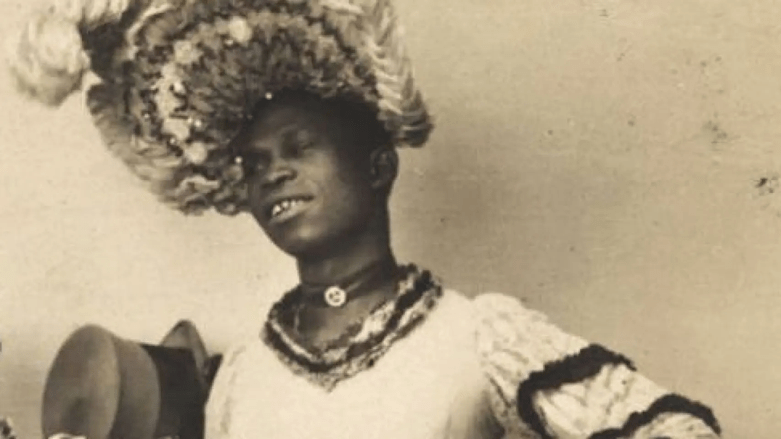
In the tapestry of Black history and LGBTQ+ resistance, few threads shine as defiantly as that of William Dorsey Swann. Born into slavery in March 1860 in Hancock, Maryland, Swann would become the first known American to self-identify as a “queen of drag”—and the first to lead a documented queer resistance group in the United States WikipediaSmithsonian Magazine.
Childhood in Chains
Swann was the fifth of thirteen children in a Protestant family enslaved by Ann Murray. His mother, Mary Jane Younker, was a housekeeper, and his father, Andrew Jackson Swann, farmed wheat. After emancipation, the Swann family purchased land and began farming, but poverty and racial barriers loomed large. William, like many formerly enslaved children, was denied formal education and began working young Boundary Stones.
Early Adulthood & Convictions
In his twenties, Swann moved to Washington, D.C., working as a hotel waiter and janitor. He was arrested in 1882 for petty larceny—stealing books and household items—but his employers and even the sentencing judge vouched for his character, describing him as “industrious, refined, gentle, and courteous.” This moment revealed Swann’s hunger for knowledge and dignity, even in the face of criminalization Rediscovering Black History.
The Queen of Drag
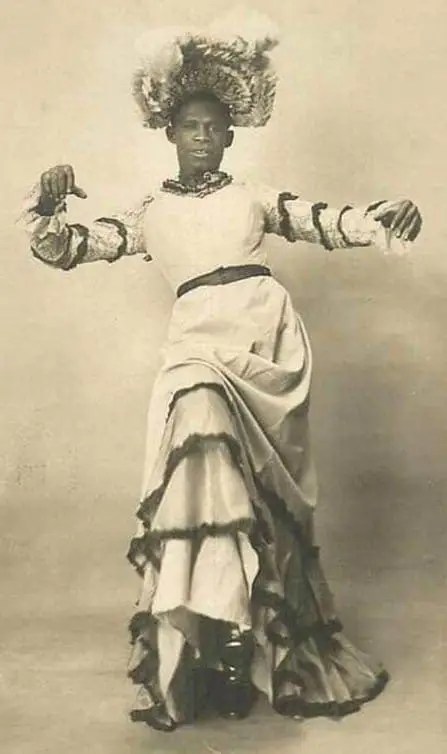
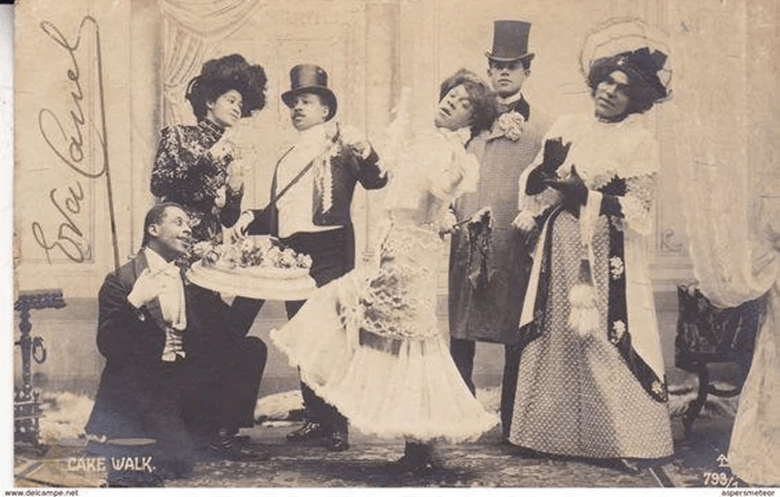
By the late 1880s, Swann was hosting secret drag balls in D.C.—lavish, defiant celebrations of identity and joy. These gatherings, attended by formerly enslaved Black men, featured silk gowns, corsets, and the iconic cakewalk dance, a precursor to modern voguing. Swann called himself the “queen of drag,” and his events became sanctuaries of self-expression and resistance WikipediaSmithsonian Magazine.
On April 12, 1888, during his 30th birthday celebration, police raided the party. Swann, dressed in cream-colored satin, resisted arrest and famously declared to an officer, “You is no gentleman.” This act of defiance is now recognized as one of the earliest documented instances of queer resistance in U.S. history Wikipedia.
Legal Resistance & Legacy
In 1896, Swann was convicted of “keeping a disorderly house”—a euphemism for running a brothel, though he was simply hosting another drag ball. He petitioned President Grover Cleveland for a pardon, making him the first American to take legal action to defend the LGBTQ+ community’s right to gather. Though denied, his courage laid the groundwork for future civil rights battles Rediscovering Black History.
Swann’s later years were quieter, but his legacy endured. His brother Daniel continued making drag costumes for decades. Swann died around December 23, 1925, at age 65. After his death, local officials burned his home—a final act of erasure that history is now reversing Wikipedia.
Influence on Today’s LGBTQ+ Culture
Swann’s drag balls were the blueprint for the ballroom culture that flourished in Harlem and beyond. His use of the cakewalk, his unapologetic identity, and his insistence on joy and community in the face of oppression echo in today’s voguing, drag pageantry, and queer activism.
In an era where drag is both celebrated and politicized, Swann’s story reminds us that Black queer resistance is not new—it is foundational.
By Charles Zackary King | America in Black and White
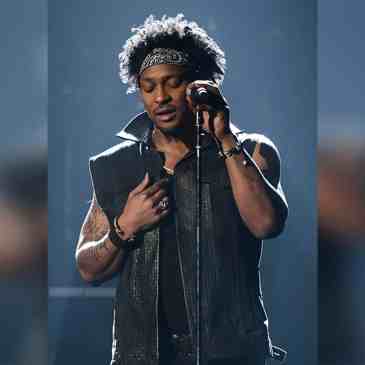
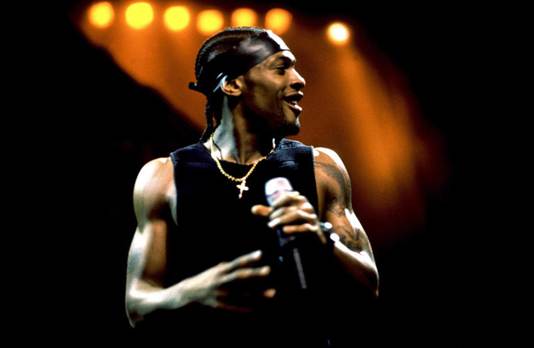
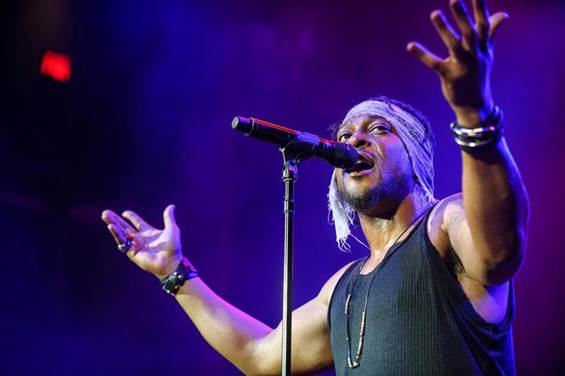
On October 14, 2025, the world lost one of its most enigmatic and electrifying voices. Michael Eugene Archer, known to us as D’Angelo, passed away at the age of 51 after a private and courageous battle with pancreatic cancer. His death marks not just the end of a life, but the silencing of a sound that redefined Black music for a generation.
The Rise of a Neo-Soul Prophet
Born in Richmond, Virginia, D’Angelo was raised in a deeply religious Pentecostal household. His musical gifts emerged early, nurtured by gospel traditions and sharpened by a hunger for authenticity. By 1995, he had already changed the game with Brown Sugar, a debut album that fused the rawness of hip-hop with the sensuality of classic soul. It wasn’t just music, it was a movement.
His follow-up, Voodoo (2000), was a masterclass in musical alchemy. Collaborating with the Soulquarians collective, D’Angelo summoned the spirits of Marvin Gaye, Jimi Hendrix, and Prince, while forging a sound entirely his own. The album’s standout track, “Untitled (How Does It Feel),” became iconic, not just for its stripped, down video, but for its emotional vulnerability and vocal brilliance.
But fame came with a price.
The Vanishing Act
After Voodoo, D’Angelo disappeared. The pressures of being a sex symbol, the weight of public expectation, and personal battles with addiction led him into a long hiatus. He became a recluse, rarely seen, often rumored, and deeply missed.
Then, in 2014, he returned with Black Messiah, an album that was both a political statement and a spiritual reckoning. Released during a time of social unrest, it became a soundtrack for resistance, echoing the cries of a community demanding justice.
The Father Behind the Fame
Though fiercely private, D’Angelo was a devoted father. He leaves behind three children:
Michael Archer Jr. (aka Swayvo Twain), his son with the late Angie Stone, who died in a tragic car accident in March 2025
Imani Archer, a gifted musician in her own right, who shared a touching tribute to her father after his passing
Morocco Archer, his youngest son, who has largely remained out of the public eye
His children now carry the torch of his legacy, not just in music, but in the quiet strength he modeled as a father.
Why the Industry Will Never Be the Same
D’Angelo didn’t flood the market with content. He gave us only three studio albums across three decades. But each one was seismic. He reminded us that Black music could be raw, spiritual, erotic, political, and timeless, all at once.
He was the heartbeat of neo-soul. A bridge between the sacred and the secular. A man who could make a Fender Rhodes whisper and a falsetto scream.
Artists like Lauryn Hill, Questlove, Raphael Saadiq, and Jay-Z collaborated with him, not just because of his talent, but because of his truth. He was one of one.
Rest in Power, D
D’Angelo’s passing leaves a void that no algorithm can fill. His music was never just about melody, it was about memory. About the ancestral pulse that lives in every chord, every lyric, every silence between the notes.
As we mourn, we also celebrate. Because D’Angelo didn’t just make music. He made moments. And those moments will echo for generations.
“We are eternally grateful for the legacy of extraordinarily moving music he leaves behind.” D’Angelo’s family
By Charles Zackary King Founder/CEO of America in Black and White and AMIBW The Magazine
Introduction
To be a Black man in America is to live with a dual reality: one shaped by brilliance, resilience, and legacy, and another shaped by suspicion, exclusion, and systemic violence. It’s not just difficult. It’s deliberate. And yet, we continue to rise.
This post is not a cry for pity. It’s a declaration of truth.
The Burden of Being Seen
Criminalized Before We Speak: From childhood, we’re labeled “aggressive,” “disruptive,” or “dangerous.” Our tone is policed. Our presence is questioned. Our humanity is often denied.
Economic Gatekeeping: We are told to “work twice as hard,” but the doors still close. Black men face higher unemployment, lower wages, and fewer opportunities, regardless of education or experience.
Policing and Surveillance: We are over-policed, over-incarcerated, and under-protected. The justice system was not built to serve us, it was built to control us.
Emotional Suppression: Vulnerability is seen as weakness. We are expected to be silent, stoic, and strong, even when we’re breaking.
This is the example of being Black. Being Black is what happens when you are always stopped for no reason and then being asked “why are you up set”? “You must be guilty of something”, when you are just coming from work or going home from visiting family. The thing that makes this even worse is that you have other Black People including family that don’t believe you because the brain washing of the media has made them think you are guilty. There is nothing worse than having your Mother, Father, Brother, Sister, Wife/Girlfriend thinking you are guilty and refusing to support you because they can not give you the benefit of the doubt. None of these people can see the stress they are causing you but they want you to protect them and do what they need from you. Our own people can not see the harm they cause you. This adds to all kinds of pain and trauma and they still don’t see that.
When we talk about the Economic Gatekeeping we are talking about ever since the 70s when the PayScale represented the White Man, the White Woman, the Black Woman and then the Black Man. This causes your woman to look down on you and the others to think they can use you for pennies on the dollar and get the milk for free. Being put in this position is a major problem for your household but your wife/girlfriend does not see it that way. When you do what is necessary to please her, she complains but when you are not bringing in enough money she complains. Communication is bad and needs to improve because the wrong people have influenced your way of thinking and your love. What is still not seen is this man is struggling and is feeling trapped. This is the thing that has led to Single Parent Households.
The justice system has a precursor that states if you are a Black Man you must be guilty, and we can plant evidence against you and not worry about it. No one cares for you, and people will back the Blue when it comes to you. The bad part about this is some of the officers look just like you. Again, something that is adding to more stress than you can handle and it causes anxiety and mental health disorders. The question that is always there, “will they be here for me when I need them”? Please think about this.
As a Black Man we have pride and refuse to let anyone see us vulnerable. We cannot be weak, and we refuse to let others know we are hurting. The problem with this is Black Men have been carrying this jug of water for more than 100 years. We are not appreciated but are looked upon to protect and serve, we are not respected but expected to solve the most complex problems, and we are the real professionals with so much knowledge but never get the acknowledgement we deserve. All along we are the real strong leaders, thinkers and can do men on the earth that make a real difference.
The Truth They Don’t Teach
Black men are more likely to die prematurely due to systemic neglect in healthcare, housing, and mental health.
We are less likely to receive fair trials, adequate representation, or restorative justice.
Our stories are often told by others, flattened, filtered, and stripped of nuance.
Our health always come into play because we have to be involved in the things that happen to our communities, our families and our people in general. Our leadership is needed to work with the others in our communities instead of against them. In todays time it is all about leadership and we have lots of it. We will continue to provide this until the day we die.
We know we will never get a fair shake which is the thing that makes community and family so important to us. It is clear and evident what the justice system has in store for us but what do we do? This is why we have to make sure we build our communities and keep our families together because when there is no male figure in the household outsiders find ways to take advantage of our people.
This is being told from my eyes because it is important that we do what is necessary to work and build together. Outside ramble is just that but we got to continue to show that we are the real leaders of our people. We have to communicate better but met with the same demeanor from those in our community. No on or nothing is perfect and I know we can grow like everything was intended to be for us all.
This is not accidental. It’s structural.
The Legacy We Build Anyway
Despite it all, we lead. We mentor. We create. We heal. We build platforms like America in Black and White and AMIBW The Magazine to tell our stories on our terms.
We are not just survivors, we are architects of truth.
Personal Reflection
As a Black man, I’ve felt the sting of betrayal, the weight of expectation, and the silence of being misunderstood. I’ve been told to “tone it down,” “wait my turn,” and “be grateful.” But I’ve also seen the power of truth-telling, the healing in storytelling, and the strength in community.
I write this not just for myself, but for every Black man who’s been told he’s too loud, too angry, too ambitious, too Black.
Do what is necessary by your wife/Husband and Family and make sure you are documenting and telling your story. Don’t ever give up just keep pushing because as a Black Man you are really viewed as the KING you really are.
Call to Action
Listen to Black men. Not just when we’re in pain—but when we’re building.
Support Black-led platforms. Subscribe, share, and invest.
Challenge stereotypes. In your workplace, your media, your conversations.
Honor our humanity. Not just our struggle—but our joy, our creativity, our legacy.
In a world flooded with statements, pledges, and curated campaigns, it’s time to ask: who’s really representing Black communities? Because visibility without accountability is just performance. This post contrasts the hollow gestures of institutions with the lived truth of Black-led platforms and movements. It’s not just critique, it’s clarity.
The Performance of Representation
Corporate Statements vs. Community Investment Every February, companies roll out Black History Month graphics and events. But 53% of consumers believe these statements must be backed by real action, or they’re exploitative. Many corporations downsize DEI programs while spotlighting Black employees for one month.
Political Promises vs. Policy Impact Politicians invoke Black pain during campaigns, but policy rarely follows. The CBCF’s Executive Order Tracker shows how recent directives have rolled back civil rights protections, education equity, and economic opportunity for Black communities. Even well-intentioned promises often lack measurable equity outcomes.
Media Coverage vs. Media Ownership Black trauma is headline-worthy, but Black joy, innovation, and leadership are rarely centered. Only 3% of full-power TV stations are Black-owned. Without ownership, our stories are filtered, flattened, and often distorted.
A good example of this would be Stephen A. Smith and Van Jones that represent ESPN and CNN. These guys get on TV and perform for their masters stating that they represent Black People when their words tell us different. Stephen A who is loud and a obvious Republican talks out of both sides of his mouth. He lies about Black representation and how things affect him but at the same time supports Racist like Charlie Kirk and all the nasty things he has to say about Black People especially Black Women. This is not condoning Murder but why should Black People feel sorry for someone that was so divisive. Smith leads a failing network that I am shocked is still around. That network has problems for 25yrs running that has yet to be resolved but is standing on the a trickster like Smith that claims he wants to run for President as a Democrat. The funny thing about this is the Democratic Party is meeting with him!! I am finding this worse than appalling because one this should be condemned but not enough Black People are calling this out. This man makes a living off destroying Black Lives. This is performance but dangerous at the same time.
Van Jones who has had a failed show on CNN and was fired from the Obama Administration for ethics issues is another person that is performing for his Master. This man had the Gaul to get on CNN to tell the world that he got a text from Charlie Kirk and that he was a good man. When you think about this, what is good about a man that speaks about your culture as horrible as this individual did? Yes, we can have our difference but being an Original King, you don’t dare let someone insult you like that and you kiss their butt to say you talked to them. This man said on Anderson Coolper 360 that he was told by his team the day this man was killed that he reached out to him. Why would he do this and why would CNN let him on the air to say that? That is personal but has no place in todays society. Keep that to yourself. This performance was sad and hurtful but was supposed to represent the sentiment of Black People. Wrong, it does not and there is no place in the world for anyone to shoot and kill another person but I do not think the Black Community was accepting of that. Everything the 2 of them say in the media is never going to be favorable for Black People and the world needs to know that.
Authentic Advocacy and Legacy Work
Black-Led Platforms Speak Truth From AMIBW The Magazine to The Clarkson Collective, these platforms don’t just amplify, they dignify. They tell stories rooted in faith, resilience, and generational healing. Michelle Clarkson’s work bridges sacred and civic, reminding us that storytelling is sacred.
Community Organizers vs. Institutional Gatekeepers Real change comes from those who live the struggle. Black-led nonprofits like Movement for Black Lives, BlackPAC, and ABFE’s Black Funds Network are building coalitions, not careers off our pain.
Storytelling as Sacred Practice Michelle Clarkson’s prophetic voice reminds us: healing begins with truth, and transformation requires courage. Her work is a masterclass in narrative activism.
Truth Telling about our Past, Present and Future is very important. When you are used to a standard you must live by that standard. Censorship is a nonstarter.
The Danger of Misrepresentation
Outsiders dilute our demands.
Institutions tokenize our presence.
Media distorts our image, shaping public perception and policy in harmful ways.
When they speak for us, they silence us. We do not need other people speaking for us. We are more than capable of speaking for ourselves. We can do this because it is lived not a perception.
We Are the Authors
Black people are not a monolith, and we are not waiting for permission to tell our stories. We are the architects of our own legacy. We will no longer accept representation that is hollow, exploitative, or disconnected from our lived truth.
If you’re not building with us, you’re building against us.
Call to Action
Support Black-owned media. Share, subscribe, and fund platforms that honor our truth.
Hold institutions accountable. Ask where their money goes after February.
Elevate authentic voices. Follow, repost, and amplify Black-led movements.
Tell your story. Whether through podcast, blog, or pulpit, your truth matters.
Want to contribute to AMIBW The Magazine or share your story with The Clarkson Collective? Reach out. Let’s build legacy together.
 Changing Trends and Times